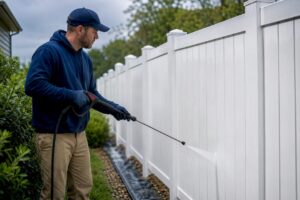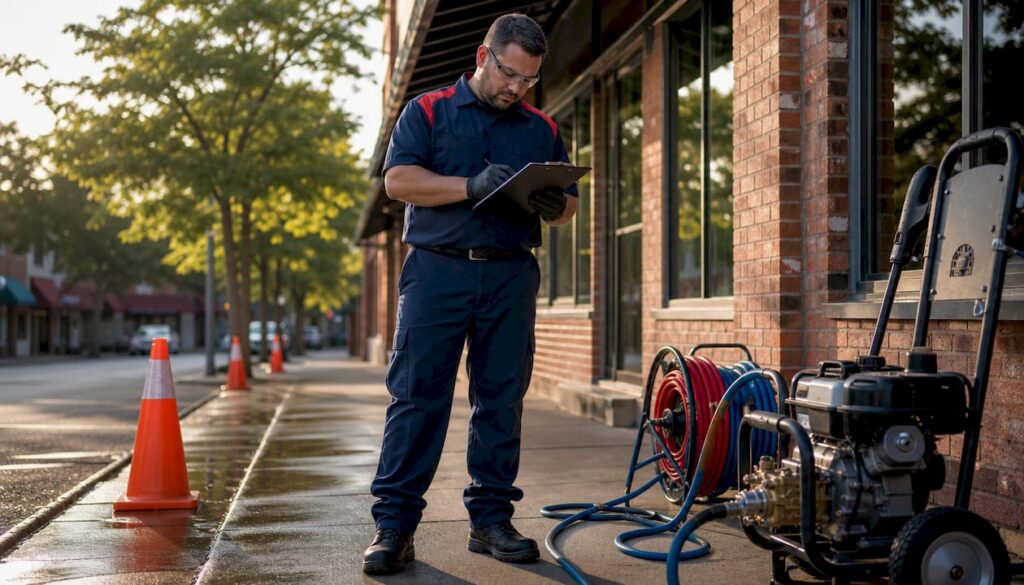
Storefront pressure washing best practices are defined as the combination of correct pressure settings, surface-matched cleaning methods, environmental controls, and scheduled maintenance that keeps commercial facades clean, safe, and legally compliant. Business owners who follow these practices protect their building materials, avoid EPA fines, and project a professional image that draws customers in. This guide covers every step, from choosing the right PSI for concrete versus stucco to managing wastewater runoff under the Clean Water Act.
1. Storefront pressure washing best practices start with surface assessment
Every storefront cleaning job begins with identifying what you are washing. Concrete sidewalks, brick facades, EIFS stucco, vinyl awnings, painted wood, and glass all respond differently to water pressure. Treating them the same way is the fastest route to costly damage.
Storefront cleaning requires high pressure (2,500–3,500 PSI) for hard, porous surfaces like concrete and brick, while sensitive facades demand soft washing under 500 PSI. Applying high pressure to stucco or painted surfaces strips paint and blows out mortar joints. That repair bill will far exceed what you saved by skipping the assessment.
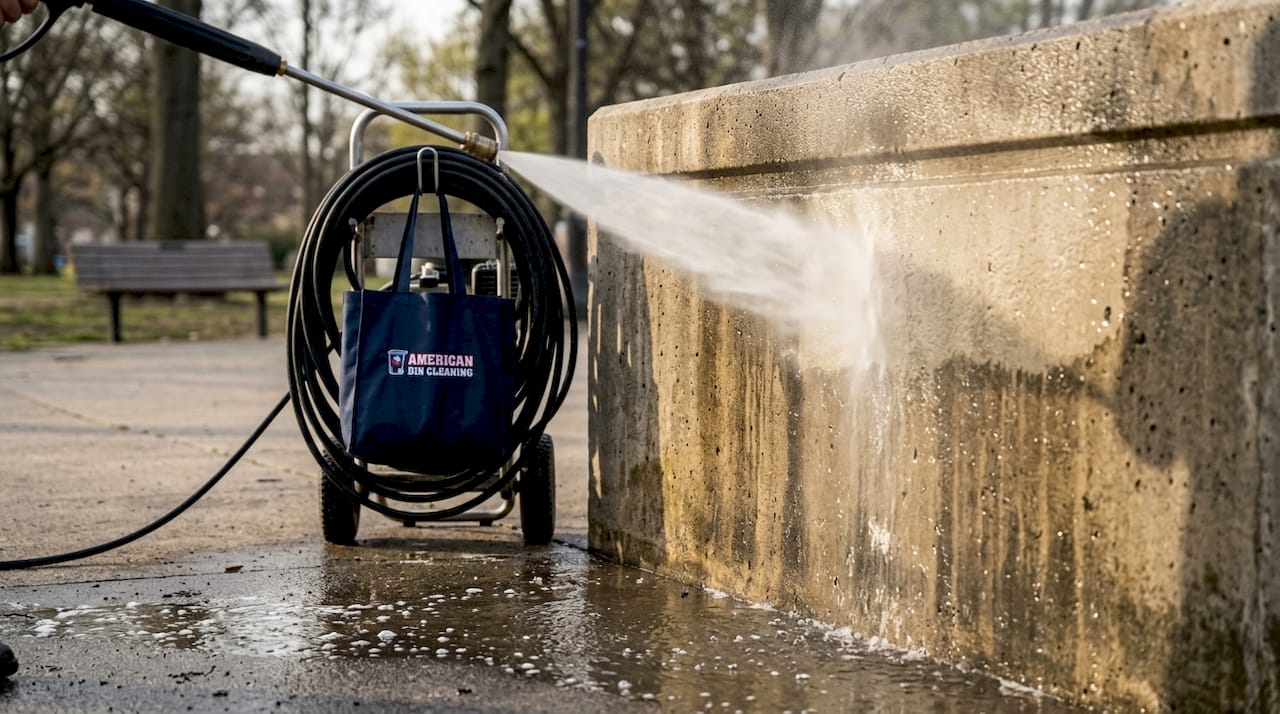
Walk the perimeter before any water touches the building. Note cracked caulk, loose mortar, peeling paint, and any areas where water could intrude behind the facade. Document these spots and address them before washing begins.
2. Match your equipment to the job
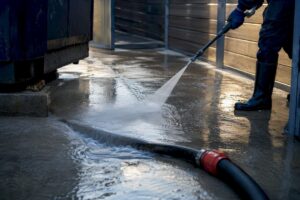
Commercial pressure washing requires a commercial-grade machine rated at 3,000–5,000 PSI and 2.5–5.5 GPM, a surface cleaner attachment, and a water reclamation system for compliant work. Hot water units are the right choice for grease-heavy areas like restaurant entrances and food-service storefronts. A standard cold-water residential unit will not cut it for commercial grime.
Nozzle selection matters as much as PSI. A 0-degree nozzle concentrates all force into a pinpoint stream and will etch concrete or shred wood. A 25-degree or 40-degree nozzle spreads the fan and reduces impact force. Use a rotating turbo nozzle on heavy concrete staining and a low-pressure soap nozzle for applying detergent to any surface.
Surface cleaner attachments spin two nozzles in a circular pattern, which eliminates the streaking that a single wand creates on flat concrete. For storefronts with large sidewalk areas, a surface cleaner cuts cleaning time significantly and produces a uniform finish.
3. Use soft washing for delicate materials
Soft washing is the correct method for fabric awnings, vinyl signage, painted wood trim, and EIFS stucco. Soft washing awnings uses calibrated biodegradable detergents and low-pressure rinses to avoid shrinking materials, lifting seams, or fading colors. High pressure on these surfaces causes damage that no amount of rinsing will reverse.
The detergents used in soft washing work at the cellular level to kill mildew and algae without mechanical stress. This extends the lifespan of awnings and painted surfaces significantly compared to pressure-only cleaning. Always confirm that the detergent is biodegradable and approved for commercial use before applying it near storm drains.
Pro Tip: Test any detergent on a small, hidden section of the surface and wait 10 minutes before proceeding. This confirms colorfastness and material compatibility before you commit to the full facade.
4. Follow EPA and local wastewater regulations
Discharging untreated wash water into storm drains violates the Clean Water Act, with fines ranging from $1,000 to $10,000 per incident. That wash water carries oils, detergents, heavy metals, and biological waste picked up from your storefront. None of that belongs in the municipal storm system.
Most jurisdictions require a municipal wastewater permit, which typically costs $150–$500 annually. Check with your local public works department before your first job of the year. Permit requirements vary by city, so what applies in Chicago may differ from a suburb like Barrington or Lake Zurich.
Incorporating environmental compliance documentation in bids gives contractors a competitive edge, shifting client concerns from price to risk management. Businesses that demand proof of compliance from their service providers reduce their own liability exposure significantly.
Penalties for non-compliance with EPA and local discharge rules can exceed $25,000 per day per violation. That figure makes a $500 annual permit look like the best investment you will make all year.
5. Implement best management practices for runoff control
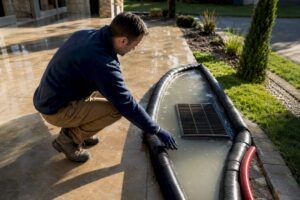
Best Management Practices (BMPs) are the EPA-recognized steps that prevent wash water from reaching storm drains. The three core BMPs for storefront washing are dry sweeping before washing, using containment berms around drain openings, and deploying drain covers or plugs.
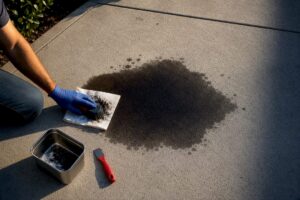
Dry sweeping before washing removes solid debris from the wash area before water is introduced. This single step reduces the pollutant load in your wash water and lowers the risk of a regulatory violation. It takes five minutes and costs nothing.
Containment berms are rubber or foam barriers placed around storm drain openings to block wash water from entering. Pair them with a wet vacuum or water recovery system to collect the pooled water for proper disposal. Document every job with photos of your containment setup and a disposal log.
6. Invest in a water reclamation system
Professional water reclamation systems recover 95% or more of wash water, preventing environmental discharge and keeping you compliant. These systems cost $2,000–$8,000 and include auto-discharge pumps and oil-water separators. For any business owner hiring a pressure washing contractor, asking for proof of a reclamation system is a non-negotiable qualification.
Water recovery units operate on a separate power circuit, so they do not reduce the performance of your pressure washer. They also eliminate standing water hazards on sidewalks, which reduces slip-and-fall liability during and after cleaning. That dual benefit makes the investment straightforward for any commercial property.
A compliant pressure washing bid must clearly document BMPs, wastewater capture methods, regulatory discharge points, and offer proof of compliance after the job. If your contractor cannot provide this documentation, find one who can.
7. Set a cleaning schedule based on your business type
Retail storefronts typically need facade cleaning every 6–12 months, while high-traffic and food-service areas require sidewalk and dumpster pad cleaning monthly or quarterly. Cleaning frequency directly affects curb appeal, sanitation, and how long your building materials last.
Use these benchmarks as your starting point:
- Facades and upper walls: once or twice per year
- Sidewalks and entry areas: quarterly for standard retail, monthly for food-service
- Dumpster pads and grease zones: monthly or after every major event
- Awnings and signage: twice per year or when visibly soiled
Seasonal timing matters too. Spring cleaning removes winter salt, sand, and biological growth that accumulated over cold months. Fall cleaning clears organic debris before it stains concrete over winter. Aligning your pressure washing schedule with other property maintenance tasks, like HVAC servicing or parking lot restriping, reduces the number of vendor visits and keeps your property looking consistent year-round.
Pro Tip: Schedule storefront washing on a Tuesday or Wednesday morning before peak foot traffic. You get a clean surface for the busiest part of the week without disrupting customers.
8. Protect storefront assets before washing begins
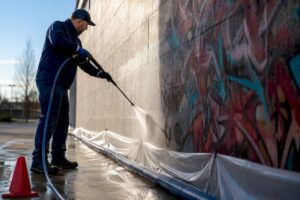
Protecting your property before water starts flowing prevents damage that no cleaning skill can fix. Cover all electrical outlets, light fixtures, and exterior signage with plastic sheeting and waterproof tape. Water intrusion into electrical components creates both a safety hazard and an expensive repair.
OSHA safety requirements for pressure washing include proper PPE: safety glasses or a face shield, waterproof gloves, non-slip boots, and hearing protection when operating commercial-grade equipment. These are not optional. A pressure washer at 3,000 PSI can cut through skin.
Follow these protection steps before every commercial wash:
- Cover all exterior electrical outlets and light fixtures with plastic and tape
- Remove or cover exterior signage that is not waterproof
- Close and seal all windows, doors, and vents facing the wash area
- Alert neighboring businesses and post wet-floor signage on sidewalks
- Identify the location of the nearest electrical shutoff before starting
Working at height on ladders or lifts adds another layer of risk. Never operate a pressure washer from a standard ladder. Use a scaffolding platform or an extension wand from ground level to reach upper-story facades safely.
9. Hire a contractor who documents compliance
Storefront cleaning should be viewed as an investment in building value, customer perception, and foot traffic, not just a maintenance chore. The contractor you hire reflects directly on your business. A provider who cannot explain their wastewater management process is a liability, not an asset.
Ask every contractor for three things before signing: proof of municipal wastewater permits, a written BMP plan for your specific site, and a post-job compliance certificate or disposal log. Material-specific cleaning methods are a sign of genuine expertise. A contractor who proposes the same PSI for your glass entry and your concrete sidewalk does not understand the work.
The benefits of professional pressure washing extend beyond appearance. Proper technique prevents premature material degradation, which delays costly facade repairs. That long-term saving is the real argument for hiring right the first time.
Key Takeaways
Effective storefront pressure washing requires matching pressure settings to surface type, managing wastewater under EPA guidelines, and scheduling cleaning based on traffic volume and business type.
| Point | Details |
|---|---|
| Match PSI to surface | Use 2,500–3,500 PSI for concrete; stay under 500 PSI for stucco, awnings, and painted surfaces. |
| Comply with the Clean Water Act | Discharge violations carry fines of $1,000–$10,000 per incident; obtain local permits before washing. |
| Use water reclamation systems | Professional systems recover 95%+ of wash water and eliminate standing water hazards on-site. |
| Schedule by business type | Facades need annual cleaning; food-service sidewalks and dumpster pads need monthly or quarterly service. |
| Demand compliance documentation | Require BMPs, disposal logs, and post-job compliance certificates from every contractor you hire. |
What I have learned after years of watching storefronts get cleaned wrong
The most common mistake I see business owners make is treating pressure washing as a one-size-fits-all task. They hire the cheapest bidder, who shows up with a residential unit and no containment plan, blasts everything at full pressure, and sends wash water straight into the storm drain. The facade looks clean for a week. Then the paint starts peeling, the mortar cracks, and the city sends a notice about a discharge violation.
Environmental compliance is not a bureaucratic nuisance. It is a genuine competitive advantage. Contractors who document their BMPs and carry wastewater permits are telling you something important: they understand the full scope of the job. When I see a bid that includes a written compliance plan, I know that contractor has done this correctly before.
The other thing I would push back on is the idea that annual cleaning is always enough. If your storefront is near a restaurant, a parking garage, or a high-traffic transit stop, quarterly sidewalk cleaning is the minimum. Grime compounds. A surface that looks “not that bad” in month three looks genuinely bad by month six, and by then you have lost customers who formed their first impression on the way in.
Treat your storefront the same way you treat your commercial property upkeep budget. Schedule it, document it, and hire people who can prove they did it right.
— Jim
Professional storefront cleaning services from Abcbins
Abcbins has provided commercial pressure washing throughout Chicagoland since 1989, with the equipment and compliance protocols that commercial properties require. Every job uses an on-board wastewater recycling system, so wash water never runs off into storm drains or onto neighboring properties.
Whether your storefront needs a one-time deep clean or a recurring maintenance schedule, Abcbins handles the equipment, the environmental compliance, and the documentation. The result is a cleaner facade, a reduced liability exposure, and a property that makes the right first impression. Explore Abcbins’ commercial pressure washing services to get a quote for your location.
FAQ
How often should a storefront be pressure washed?
Retail facades need cleaning every 6–12 months, while food-service storefronts and high-traffic sidewalks require monthly or quarterly service. Dumpster pads and grease zones should be cleaned monthly.
What PSI is safe for storefront pressure washing?
Hard surfaces like concrete and brick handle 2,500–3,500 PSI safely. Sensitive materials including stucco, vinyl awnings, and painted surfaces require soft washing under 500 PSI to prevent damage.
Is pressure washing wash water regulated by the EPA?
Yes. The Clean Water Act prohibits discharging untreated commercial wash water into storm drains, with fines from $1,000 to $10,000 per incident. Most municipalities also require a separate wastewater discharge permit.
What is soft washing and when should it be used?
Soft washing uses biodegradable detergents and low pressure under 500 PSI to clean delicate surfaces without mechanical damage. Use it on awnings, painted wood, EIFS stucco, and any surface where high pressure would strip or deform the material.
What should I ask a pressure washing contractor before hiring them?
Ask for proof of municipal wastewater permits, a written BMP plan for your site, and a post-job disposal log or compliance certificate. A contractor who cannot provide all three is a regulatory liability for your property.