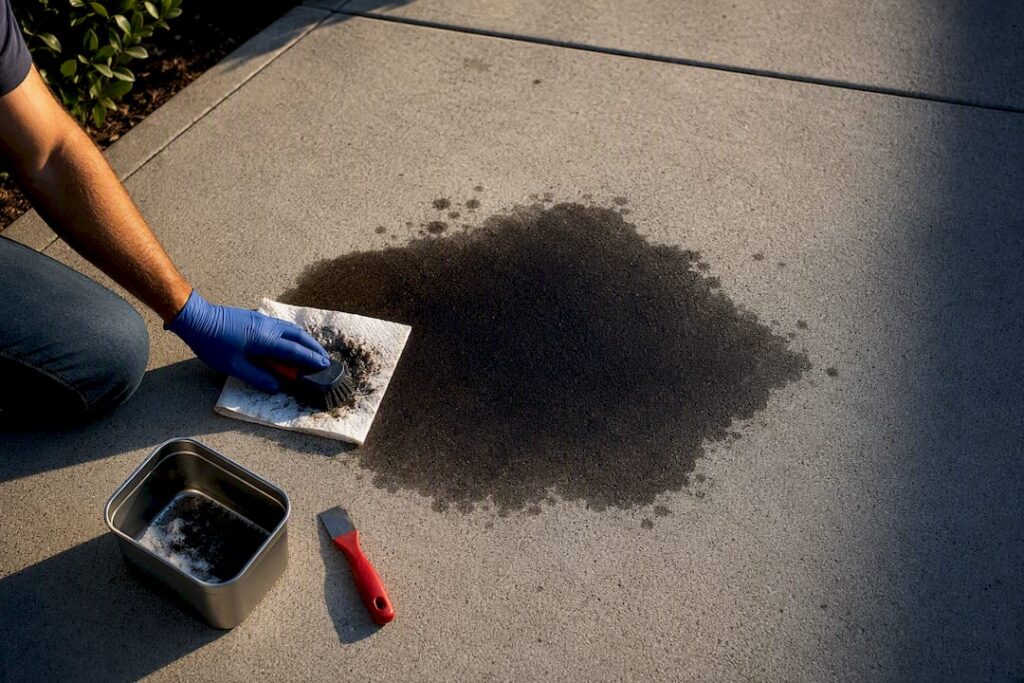
Most oil stains can be significantly faded or fully removed if you match the method to how long the oil has been sitting. Fresh spills respond fastest to a simple absorbent like clay cat litter or baking soda pressed into the concrete or asphalt. Older, set-in stains usually need a degreaser or poultice, sometimes several rounds. Stains that shrug off two or three honest attempts, or that come with soft, crumbling asphalt, are your cue to call a pressure-washing pro instead of reaching for another bottle.
TL;DR:
- Fresh oil stains respond best to immediate absorption with materials like clay litter or baking soda before washing or scrubbing.
- Older stains often require degreasers or poultices, with poultices being most effective for stains that have persisted for months or years.
- Using hot water pressure washing at 180°F to 200°F after applying degreaser improves removal efficiency, especially on concrete surfaces.
- Homeowners should test any chemical product on a hidden spot first to avoid discoloration or damage to the driveway surface.
- Repeated treatments, rather than a single application, yield realistic results for deep or longstanding oil stains.
Table of Contents
- How Do I Get Fresh Oil Stains Off My Driveway?
- DIY Oil Stain Removal By Stain Age And Surface
- Which Commercial Degreasers And Poultices Work Best?
- Should You Pressure Wash Oil Stains, And At What Setting?
- When Should You Call A Professional Driveway Cleaner?
- How Do You Prevent Future Oil Stains On A Driveway?
- A Technician’s Take On Realistic Driveway Stain Results
- Get Your Driveway Professionally Cleaned
- Sources
- FAQ
How Do I Get Fresh Oil Stains Off My Driveway?
The first hour after a spill matters more than anything you do afterward. Oil sits on the surface briefly before it starts soaking into pores, so your job is to pull it back out before it settles in.
Grab whatever absorbent is on hand right away:
- Clay cat litter works best for thicker oil. Pour a generous layer over the spill and press it down with your shoe or a brick so it makes full contact.
- Baking soda handles thinner spills like fresh motor oil drips and is gentler on decorative concrete finishes.
- Clean sawdust is a solid backup if you’re out of the other two.
Leave the absorbent in place anywhere from 30 minutes to overnight, depending on how much oil pooled up. Sweep it into a bag and toss it rather than hosing it into the yard or storm drain. Resist the urge to blast the spot with a hose first. Water spreads oil across a wider area and pushes it deeper into the pores before you’ve had a chance to soak any of it up, which makes removing oil stains from a driveway harder later, not easier.
DIY Oil Stain Removal By Stain Age And Surface
Not every stain calls for the same fight. A drip from yesterday and a stain that’s been baking into your concrete since 2019 are two different projects, and treating them the same way wastes time and product.
Use this rough decision order:
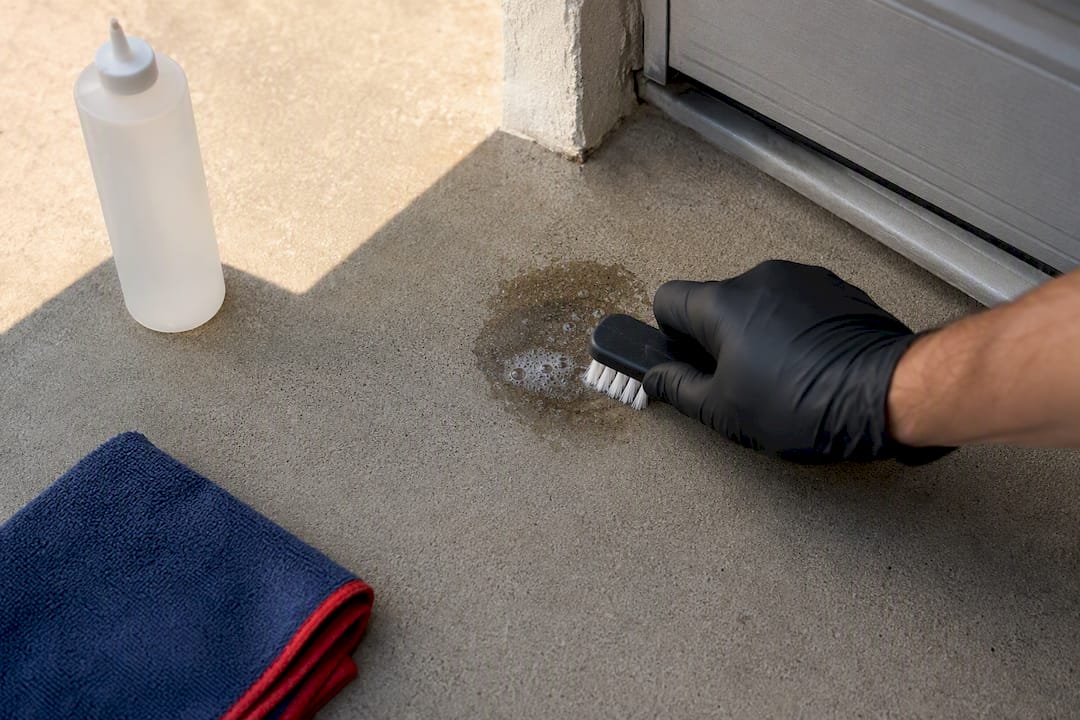
- Fresh (hours to a couple of days old): Absorbent first, then a dish soap and hot water scrub with a stiff bristle brush. Dawn or any degreasing dish soap cuts residual oil surprisingly well.
- Days to weeks old: Skip straight to a degreaser. Apply, let it sit 10 to 15 minutes, scrub in a circular motion, rinse.
- Months to years old: This is poultice territory. A poultice is a paste, often a clay-based powder mixed with a solvent or degreaser, that you spread over the stain, cover with plastic, and let sit for 5 to 12 hours so it dries and cracks. As it dries, it draws the embedded oil up out of the concrete’s pore structure rather than just wiping the surface. PROSOCO’s Oil & Grease Stain Remover method works this way, and it often takes two or three applications for a stain that’s been there for years.
Concrete and asphalt do not behave the same under these treatments. Concrete is porous and lets oil migrate several millimeters deep, which is exactly why poultices exist for it. Asphalt is a different animal entirely: it’s held together with a petroleum-based binder, and aggressive solvent cleaners can soften or dissolve that binder along with the stain. Stick to surfactant-based, biodegradable degreasers on asphalt, and skip anything labeled as a strong solvent or paint thinner. This distinction between oil stains on asphalt versus concrete trips up a lot of homeowners who assume one product works everywhere.
Pro Tip: Test any degreaser or poultice on a small, hidden corner of the driveway first. Some products can lighten surrounding concrete or leave a faint ring, and you want to find that out on a spot nobody sees.
Which Commercial Degreasers And Poultices Work Best?
Not all bottles labeled “driveway cleaner” are built the same, and reading the active ingredient tells you more than the marketing copy does.
- D-limonene (citrus-based) degreasers break down oil effectively and carry lower toxicity than harsh alkaline formulas, making them a reasonable pick if pets or kids use the driveway.
- Alkaline degreasers cut through heavier grease and old oil fast but need a thorough rinse afterward since residue can irritate skin or paws.
- Bio-enzymatic cleaners work slower but keep breaking down oil over hours, which suits stains you can leave alone overnight.
Check the label for concrete versus asphalt compatibility before you buy. Full-strength application suits deep, stubborn stains, while a diluted mix is usually enough for surface grime and lighter discoloration. Most products call for a 10 to 20 minute dwell time before scrubbing and rinsing with a hose or pressure washer on a low setting. Enzymatic and citrus-based degreasers tend to be the safer bet around lawns and garden beds since runoff is less likely to kill grass. A poultice still wins for oil that’s soaked in deep, since a surface degreaser alone can’t reach oil sitting millimeters below the surface.
Should You Pressure Wash Oil Stains, And At What Setting?
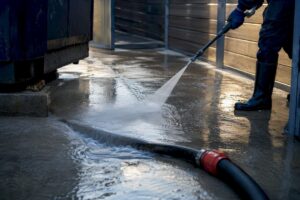
Pressure washing works best as the rinse step after chemistry has already done the heavy lifting, not as a stand-alone fix. Blasting a bare oil stain with plain water rarely lifts embedded oil. Applying degreaser first, letting it dwell, agitating with a brush, then rinsing under pressure is what actually moves the stain.
Setting the machine correctly protects your driveway while still getting results:
| Surface | Safe PSI range | Nozzle | Notes |
|---|---|---|---|
| Concrete | Within safe pressure limits commonly recommended for concrete | 40° fan tip | Avoid the red tip; it can etch or pit the surface |
| Asphalt | Within safe pressure limits recommended for asphalt | 40° fan tip | Higher pressure can damage the softer binder layer |
Water temperature matters as much as pressure. Consumer electric or gas washers run cold, and cold water simply can’t loosen oil the way heat can. Professional units running 180°F to 200°F water soften the oil on contact, letting the degreaser penetrate faster and flush more completely from the pores. That’s a big part of why a homeowner who has scrubbed the same stain three times with a rented cold-water washer still sees a shadow, while a hot-water pass clears it in one visit. If you want the mechanics of why hot water pressure washing outperforms cold water for grease and oil specifically, the physics comes down to viscosity: hot oil flows and rinses; cold oil clings.
When Should You Call A Professional Driveway Cleaner?
A stain bigger than a dinner plate, asphalt that feels soft or crumbly at the edges of the stain, or a spot you’ve already hit with degreaser and a poultice twice without much change are all good reasons to stop DIYing and call someone with heavier equipment.
Professionals bring tools most homeowners don’t own:
- Truck-mounted hot-water units running sustained 180°F to 200°F output at higher flow rates than any consumer machine
- Commercial-grade extraction poultices formulated for oil that’s penetrated years deep
- Surface-specific technique, using gentler passes on asphalt and stronger extraction on concrete
Some eco-friendly, high-pressure cleaning services have been running since 1989, and hot-water pressure washing systems that capture wastewater on board instead of letting oily runoff hit the storm drain or your lawn are available. Before you book anyone for driveway work, ask what water temperature their equipment reaches, whether they capture or contain wastewater, and how they handle asphalt differently from concrete.
Pro Tip: If a company can’t answer what temperature their pressure washer runs at, they’re probably running a cold consumer unit, not commercial equipment. That answer tells you a lot fast.
How Do You Prevent Future Oil Stains On A Driveway?
Cleaning the stain is only half the job. Keeping new ones from forming is the cheaper half.
- Check your car and any equipment stored in the driveway for slow leaks every few months. A $10 drip pan under a known leak beats a $200 cleaning bill later.
- Sweep the driveway regularly so dust and grit don’t trap oil residue against the surface.
- Reseal concrete or asphalt every 2 to 5 years depending on the product and how much traffic the driveway sees. A sealed surface sheds oil instead of absorbing it.
- Wait a few weeks after removing a stain before applying a fresh seal coat, since sealer applied over lingering oil residue won’t bond properly.
A Technician’s Take On Realistic Driveway Stain Results
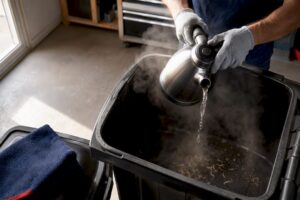
Homeowners often expect one product to erase a five-year-old stain in a single pass, and that’s rarely how it goes. Real progress comes from repeat cycles: degreaser, poultice, rinse, repeat, with visible fading each round rather than instant disappearance. An eco-friendly hot-water service speeds that process considerably, but a stain baked in for years sometimes needs resurfacing, not more cleaning, to disappear completely.
— Jim
Get Your Driveway Professionally Cleaned
Scrubbing degreaser into concrete on a Saturday morning gets old fast, especially when the stain barely budges. Professional hot-water pressure washing services offer the advantage a garden hose and rental pressure washer can’t match: sustained 180°F to 200°F water, commercial-grade equipment, and on-board wastewater recycling systems so nothing oily runs off into your lawn or the storm drain.
Before your visit, clear vehicles and loose items off the driveway and note exactly where the worst spots are so the technician can focus extraction there first. Abcbins handles the rest, and you don’t even need to be home. Our residential pressure washing services cover driveways, decks, and storefronts on a one-time basis or a recurring plan, whichever fits your property better. Check availability and get a quote for your driveway today.
Sources
- How to Remove Oil Stains from Driveways and Garage Floors – PROSOCO
- Can you pressure wash oil stains effectively? – Today’s Homeowner
- Oil stains on asphalt vs concrete – VFPaving
- The complete guide to removing oil stains from driveways – Maintenance At Home
FAQ
How do I get dried oil stains off my driveway?
Apply a degreaser and scrub with a stiff brush for stains a few weeks old, or use a poultice that sits 5 to 12 hours for stains that have set in for months or years, then rinse thoroughly.
What can I use to remove oil stains from my driveway?
Clay cat litter and baking soda handle fresh spills, dish soap and degreasers work on days-old stains, and a clay-based poultice pulls out oil embedded deep in older stains.
Does WD-40 remove oil stains from driveway?
WD-40 is a solvent and lubricant, not a degreaser designed for concrete or asphalt stain removal, so it’s not a reliable substitute for dish soap, a commercial degreaser, or a poultice.
Are oil stains on a driveway permanent?
Most oil stains fade significantly or disappear with the right method and enough repeat treatments, though extremely old, deeply penetrated stains sometimes require resurfacing rather than more cleaning.