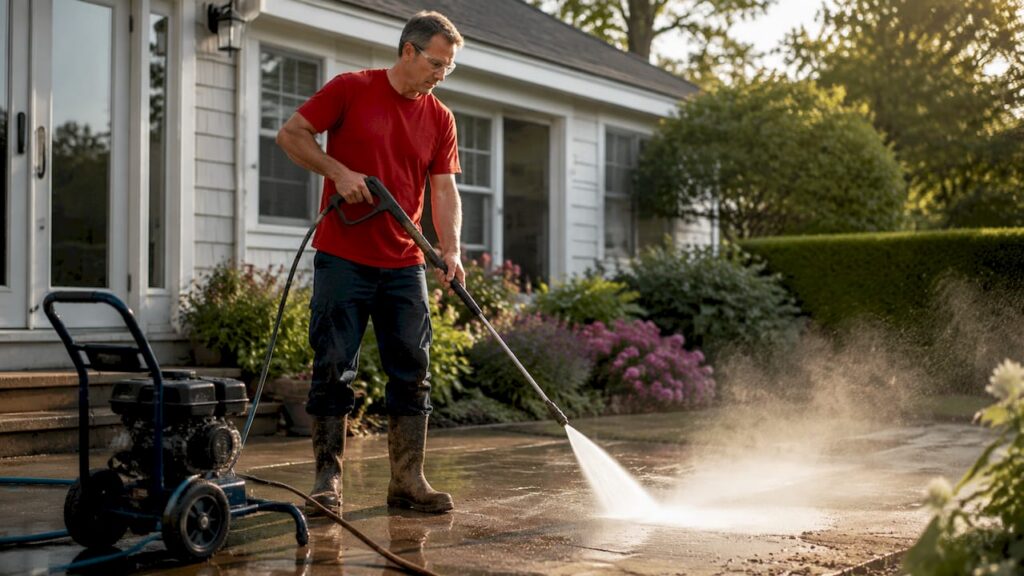
Pressure washing services for homeowners are professional exterior cleaning solutions that remove mold, dirt, algae, and grime to protect your home’s surfaces and boost curb appeal. The industry term is “residential pressure washing,” though soft washing has become the preferred method for most home surfaces because it cleans without the risk of surface damage. Regular exterior cleaning extends the lifespan of siding, concrete, and hardscapes while preventing the moisture buildup that leads to costly structural repairs. Whether you need driveway pressure cleaning, patio washing, or a full home exterior cleaning, knowing what to expect from a professional service saves you time and money.
1. What are the best pressure washing techniques for home exteriors?
Soft washing is the gold standard for residential exterior cleaning. It uses low pressure combined with biodegradable cleaning solutions to kill mold, mildew, and algae at the root rather than blasting them off the surface. High pressure alone strips paint, damages wood grain, and forces water behind siding.
The downstreaming technique is the most widely used professional method. It applies a diluted solution of roughly 80% water and 20% sodium hypochlorite through a low-pressure hose. The chemical does the actual cleaning work, and the water rinses the surface clean.
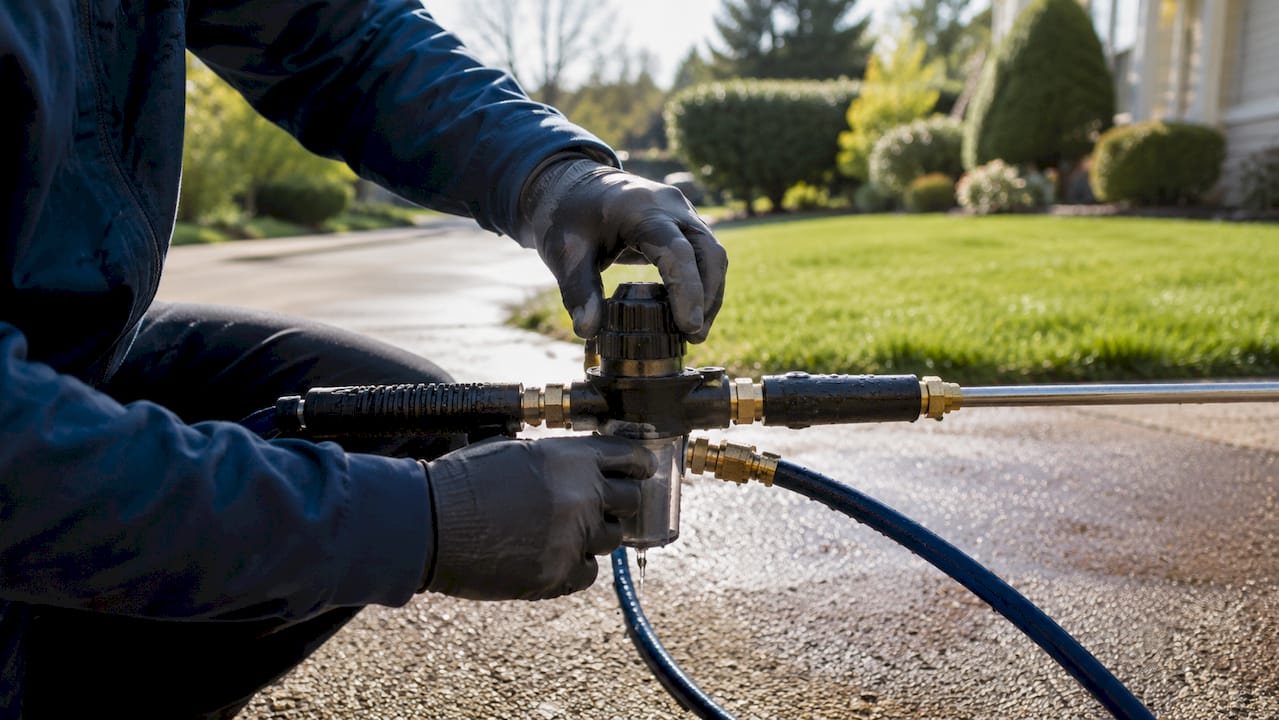
Dwell time matters more than most homeowners realize. Professional soft-wash systems allow cleaning agents a 5–15 minute dwell time before rinsing, which gives the chemistry time to break down biological growth fully. Skipping dwell time means the mold comes back faster.
Key techniques used by professional residential pressure washing crews:
- Soft washing: Low pressure plus chemical solution for siding, roofs, and painted surfaces
- Downstreaming: Diluted bleach applied through the downstream injector for safe, even coverage
- Surface cleaning: Rotating flat-surface attachments for driveways and patios
- Hot water pressure washing: Used for grease and oil stains on concrete or garage floors
- Rinse and neutralize: Post-wash rinse to remove chemical residue from plants and surfaces
Pro Tip: Pre-wet all surrounding vegetation with plain water before applying any cleaning solution. Saturated plants absorb far less chemical runoff, which protects your landscaping without extra effort.
2. Which home surfaces need pressure washing, and how often?
Every major exterior surface on your home benefits from scheduled cleaning. The surfaces that collect the most biological growth are siding, driveways, patios, gutters, and roofs. Each has a different recommended cleaning interval based on material type and exposure.
Homeowners should clean exterior siding every 12–18 months and concrete surfaces like driveways every 1–2 years. Homes in humid climates or under heavy tree cover need more frequent service because shade and moisture accelerate mold and algae growth.
Neglecting these surfaces causes real structural damage. Mold traps moisture against siding and concrete, which accelerates material breakdown. Regular exterior cleaning removes those contaminants before they cause premature deterioration.
Recommended cleaning schedule by surface:
- Vinyl or fiber cement siding: Every 12–18 months
- Concrete driveways and walkways: Every 1–2 years
- Wood or composite decks: Annually, before sealing or staining
- Patios (concrete, pavers, or stone): Every 1–2 years, or after heavy storm seasons
- Gutters (exterior face): Annually, typically in late fall or early spring
- Roofs (shingle or tile): Every 2–3 years using soft wash only
3. What does residential pressure washing cost?
A full exterior professional cleaning package typically costs between $500 and $1,500 depending on home size and the surfaces included. That range reflects real variation in scope. A single driveway pressure cleaning costs far less than a whole-home package that includes siding, gutters, and a deck.
Several factors drive the final price up or down:
- Home size: Larger square footage means more time and more cleaning solution
- Surface type: Soft washing a roof costs more than cleaning a concrete driveway
- Severity of buildup: Heavy mold or years of neglect require longer dwell times and multiple passes
- Geographic location: Labor and material costs vary by market
- Number of surfaces: Bundling multiple surfaces in one visit usually reduces the per-surface cost
| Service | Typical Price Range |
|---|---|
| Driveway pressure cleaning | $100–$250 |
| Patio or deck washing | $150–$350 |
| Full exterior siding wash | $300–$600 |
| Roof soft wash | $300–$600 |
| Complete home exterior package | $500–$1,500 |
DIY pressure washing looks cheaper on the surface, but the risks change the math. Incorrect nozzle choice and pressure settings can permanently etch concrete, strip mortar, and damage siding. One repair bill can easily exceed the cost of hiring a professional from the start.
4. How to choose the best pressure washing company for your home
The best residential pressure cleaning services are licensed, insured, and equipped with commercial-grade machines. A homeowner’s garden-hose pressure washer runs at 1,300–2,000 PSI. Professional units run at 3,000–4,000 PSI with the chemical systems to match. That equipment difference shows up in the result.
Soft washing expertise is non-negotiable for siding and roofs. Ask any company you consider whether they use soft wash for delicate surfaces and whether they pre-wet vegetation before applying chemicals. A company that only offers high-pressure service is not the right choice for painted wood, vinyl siding, or shingle roofs.
Modern professional services offer contactless scheduling through digital booking and automated communication. You do not need to be home for the work to get done. That flexibility matters for busy homeowners who cannot take time off for a service appointment.
What to look for when comparing exterior cleaning services:
- Valid liability insurance and contractor license for your state
- Documented soft washing capability for siding and roofs
- Clear written quote with surfaces and methods listed
- Verifiable customer reviews on Google or the Better Business Bureau
- Satisfaction guarantee or a policy for re-service if results fall short
- Eco-friendly or biodegradable cleaning solutions
- Wastewater capture or containment to prevent runoff
Pro Tip: Ask the company directly: “Do you pre-wet my plants before applying chemicals?” A company that knows what they are doing will answer yes without hesitation. If they pause or say it is not necessary, keep looking.
The benefits of professional pressure washing go beyond clean surfaces. A well-chosen provider protects your landscaping, your siding warranty, and your property value at the same time.
5. DIY vs. professional pressure washing: what homeowners need to know
DIY pressure washing is tempting because rental equipment is widely available. The problem is that high-pressure water-only cleaning risks surface damage when the operator relies on raw PSI instead of the right chemistry and dwell time. Proper cleaning depends on correct technique, not maximum pressure.
Most homeowners do not have access to downstream chemical injectors, commercial-grade surface cleaners, or the biodegradable solutions that professionals use. That gap in equipment leads to uneven results, missed biological growth, and surfaces that look clean but still harbor mold spores.
The seasonal outdoor cleaning checklist for Chicagoland homeowners shows just how many surfaces need attention each year. Tackling all of them with rental equipment is a full weekend project with real risk of damage. A professional crew handles the same scope in a few hours with better results and no liability to you.
Key takeaways
Professional residential pressure washing protects your home’s structure and value by combining the right chemistry, dwell time, and technique rather than relying on pressure alone.
| Point | Details |
|---|---|
| Soft washing is the safest method | Use low pressure with biodegradable chemicals for siding, roofs, and painted surfaces. |
| Clean on a schedule | Wash siding every 12–18 months and concrete every 1–2 years to prevent structural damage. |
| Budget $500–$1,500 for full exterior | Price varies by home size, surface type, and severity of buildup. |
| Verify insurance and soft wash capability | Only hire licensed, insured companies that pre-wet vegetation and use proper chemistry. |
| DIY carries real risk | Incorrect pressure and nozzle choice can permanently etch concrete and strip siding. |
Why I think most homeowners underestimate pressure washing
Most homeowners treat pressure washing as a cosmetic task. They schedule it when the driveway looks embarrassing or when they are listing the house for sale. That is the wrong frame entirely.
Mold and algae do not just look bad. They hold moisture against your siding and concrete, and that moisture is what actually degrades the material over time. A house that gets washed every 18 months ages more slowly than one that gets washed every five years. The cleaning cost is small compared to the repair cost it prevents.
I have also seen homeowners get burned by choosing the cheapest quote without asking the right questions. A crew that uses straight high-pressure water on vinyl siding can void a manufacturer warranty in one visit. You’re paying for expertise, not just labor. The difference between a $200 quote and a $400 quote is often the difference between a company with a downstream injector and soft wash training and one with a rented machine and no chemical knowledge.
My honest advice: schedule a full exterior wash every spring, treat it as part of your annual home maintenance budget, and ask every company you call whether they use soft washing before you ask about price. The answer tells you everything you need to know about their competence.
— Jim
Keep your home’s exterior clean with Abcbins
Abcbins has served Chicagoland homeowners with professional pressure washing since 1989. The team handles driveways, home exteriors, decks, and storefronts using commercial-grade equipment and eco-friendly cleaning solutions. All wastewater is captured on-board, so nothing runs off into your yard or the street.
You do not need to be home for the service. Abcbins uses digital scheduling and automated communication to handle everything while you are away. Whether you need a single driveway cleaning or a full exterior package, the residential pressure washing services page has everything you need to get a quote and book your appointment.
FAQ
What is soft washing, and is it safe for my home?
Soft washing uses low water pressure combined with biodegradable cleaning solutions to remove mold, algae, and dirt from home surfaces. It is safe for vinyl siding, painted wood, and shingle roofs where high pressure would cause damage.
How long does a professional exterior house wash take?
A residential exterior wash typically takes 1–3 hours depending on home size and the number of surfaces included. Cleaning agents require a 5–15 minute dwell time before rinsing, which is built into that timeframe.
How often should I pressure wash my driveway?
Concrete driveways should be cleaned every 1–2 years under normal conditions. Homes in humid climates or with heavy tree cover may need driveway pressure cleaning annually to prevent mold and staining from taking hold.
Can I pressure wash my own home to save money?
You can rent equipment, but DIY pressure washing risks include permanent concrete etching and mortar removal from incorrect nozzle use. Professional crews bring the right chemistry and technique, which produces better results and eliminates the risk of surface damage.
What should I ask before hiring a pressure washing company?
Ask whether they carry liability insurance, whether they use soft washing for siding and roofs, and whether they pre-wet vegetation before applying chemicals. A reputable company answers all three questions clearly and without hesitation.