A home pressure washing service checklist is a precise list of preparation steps homeowners must complete to protect their property, prevent water damage, and get the best results from exterior cleaning. Skipping even one step can mean water intrusion, damaged wood, dead plants, or a cleaning job that misses problem areas. This guide covers every step of the process, from pre-service prep to post-wash care, with expert-backed advice on protecting wood surfaces, landscaping, and utilities. Follow it before your next service and the difference will show.
1. What does a home pressure washing service checklist include?
A complete outdoor cleaning checklist for homeowners covers three phases: preparation before the crew arrives, surface-specific protection during the wash, and a post-service inspection. Each phase has distinct tasks that directly affect the quality and safety of the job. Skipping the prep phase is the most common mistake homeowners make, and it is also the most preventable.
The checklist covers movable items, windows and doors, electrical outlets, plants, pets, water access, and a walkthrough with your technician. Think of it as the difference between a clean house and a damaged one. Professionals who work with Abcbins and similar services consistently report that prepared homes take less time to clean and produce better results.
2. Pre-service prep: what to do 24 hours before the crew arrives
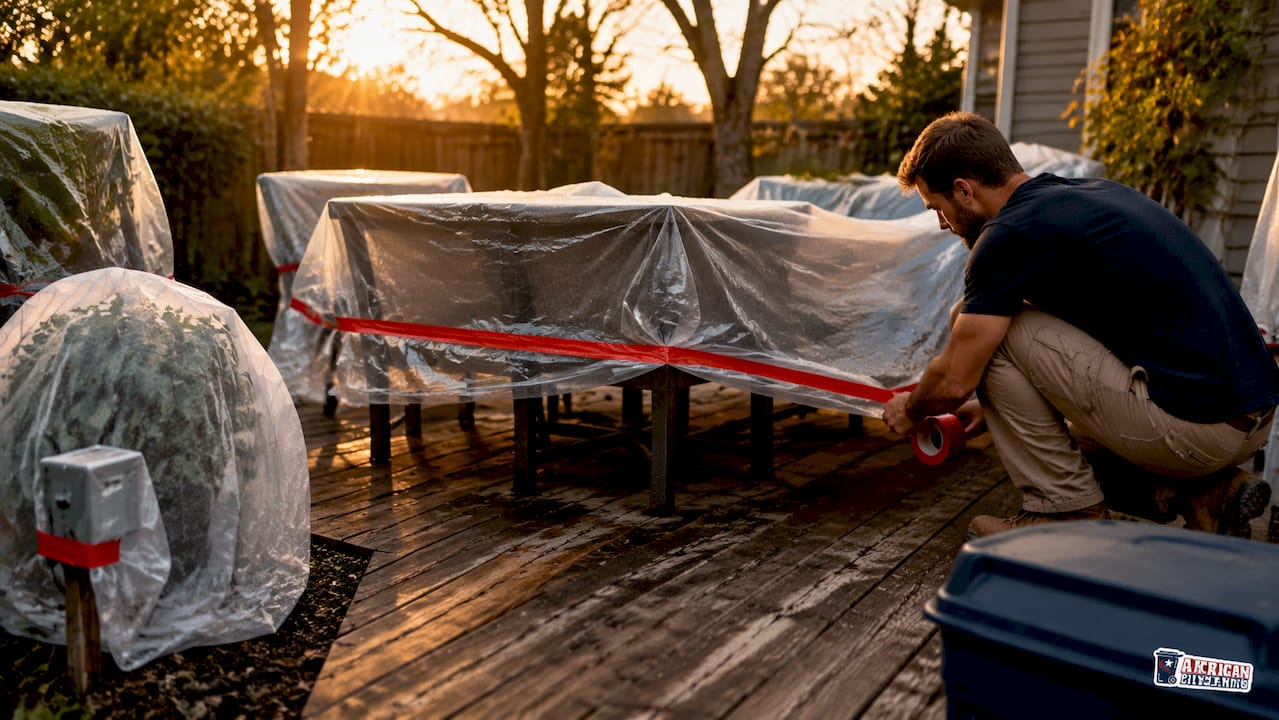
Preparation should begin at least 24 hours before service by clearing all movable items and securing every opening. That timeline gives you enough time to do the job properly without rushing.
Work through this checklist the day before your scheduled service:
- Clear all movable items. Remove patio furniture, outdoor rugs, potted plants, toys, grills, and decorative items from all areas to be washed. Anything left out can be damaged by high-pressure water or become a projectile.
- Close and latch every window and door. Check screens, too. A screen left in place will not stop water from entering.
- Cover outdoor electrical outlets and exposed wiring. Use waterproof tape or plastic sheeting. Water and electricity are a serious safety hazard.
- Move or cover HVAC units and outdoor electronics. Direct pressure on an HVAC condenser can bend fins and reduce efficiency.
- Water your plants the night before. Pre-watered plants dilute any cleaning solution runoff that reaches the soil, reducing chemical uptake.
- Secure pets and notify family members. Pressure washing equipment is loud and the work area is unsafe for children and animals.
- Confirm your outdoor spigot is on and accessible. A functioning outdoor water source is required for the crew to start work. A locked gate or turned-off spigot will delay the entire job.
Pro Tip: Walk the perimeter of your home the morning of service and look for anything you missed. A five-minute check prevents hours of repair work.
3. How to protect wooden surfaces and landscaping during pressure washing
Wood surfaces require a different approach than concrete or brick. Use low pressure between 600–1,500 PSI on wooden decks, fences, and siding to avoid splitting wood fibers or raising the grain. High pressure on wood does not clean better. It just destroys the surface faster.
Nozzle choice matters just as much as pressure. Avoid 0° and 15° nozzles on any wood surface. A 25° or 40° fan tip spreads the water over a wider area and reduces the force at any single point. The table below summarizes the right settings for common surfaces:
| Surface | Recommended PSI | Best Nozzle Tip |
|---|---|---|
| Wood deck or fence | 600–1,500 PSI | 25° or 40° |
| Concrete driveway | 2,500–3,000 PSI | 15° or 25° |
| Vinyl siding | 1,200–1,500 PSI | 25° or 40° |
| Brick or stone | 1,500–2,000 PSI | 25° |
For cleaning agents, oxygen-bleach cleaners like sodium percarbonate are the right choice for wood and plants. Chlorine bleach kills the cellular structure of wood and poisons soil. Sodium percarbonate breaks down into water and oxygen after use, making it safe for landscaping and the environment.
After the wash, wood decks need two more steps before you can stain or seal them. Apply a deck brightener to restore the wood’s natural pH, then wait until the moisture content drops below 15% before applying any finish. Stain applied to wet wood will peel within one season.
Pro Tip: If you have composite decking, check your warranty before scheduling a pressure wash. Some manufacturers void the warranty if pressure washing exceeds a specific PSI.
4. What scheduling frequency should homeowners plan for?
The industry standard is twice yearly, with one cleaning in spring and one in fall. That cadence covers the two biggest threats to home exteriors: pollen and debris buildup in spring, and salt, leaves, and moisture damage heading into winter. Twice yearly is the minimum, not the ideal.
Homeowners in high-humidity climates, including much of the Midwest and Southeast, should consider quarterly cleaning for decks and walkways. Algae and mildew grow faster in humid conditions, and letting them sit accelerates wood deterioration and staining. A quarterly schedule costs more upfront but prevents expensive repairs.
Here is how to fit pressure washing into your broader seasonal home exterior cleaning plan:
- Spring: Remove winter salt deposits, pollen, and debris. Prep surfaces for deck sealing or staining before summer use.
- Fall: Clear mold, mildew, and leaf stains before they set over winter. Protect wood from freeze-thaw damage by cleaning and sealing before temperatures drop.
- After major storms: Inspect and spot-clean areas where debris or standing water caused visible staining or buildup.
Pairing your pressure washing schedule with your outdoor spring cleaning checklist keeps your entire property on a consistent maintenance cycle.
5. Common mistakes homeowners make with pressure washing prep
The most damaging mistake is treating high pressure as a sign of better cleaning. Letting cleaning solutions dwell on a surface breaks down grime far more effectively than blasting it with force. Rushing the process with maximum pressure strips paint, gouges wood, and etches concrete.
Watch out for these common oversights in your outdoor cleaning services checklist:
- Using chlorine bleach near plants or wood. It kills grass, damages soil, and degrades wood fibers. Switch to oxygen-bleach alternatives.
- Skipping the building envelope check. Inspect caulking and weather stripping for gaps larger than 0.25 inches before the crew starts. Use rolled towels to block door thresholds. Water forced through a small gap can soak insulation and drywall.
- Skipping the pre-service walkthrough. A walkthrough with your technician lets you flag cracked siding, loose trim, or areas that need lower pressure. Without it, the crew has no way to know what needs special care.
- Ignoring post-service inspection. Walk the property after the job is done. Check for missed spots, water pooling near the foundation, or any surface that looks damaged.
“Pressure washing done right is about chemistry and patience, not just force. The prep work you do before the crew arrives determines 80% of the outcome.”
6. Soft washing vs. pressure washing: which surfaces need which?
Pressure washing and soft washing are not the same thing. Soft washing uses specialized chemicals and low pressure to clean delicate surfaces like wood siding, painted surfaces, and roofs without causing physical damage. Pressure washing uses high-force water to remove heavy buildup from hard surfaces like concrete and brick.
Knowing which method applies to each surface on your home is part of a complete residential outdoor cleaning service checklist. Wood siding, stucco, and painted trim almost always need soft washing. Driveways, sidewalks, and concrete patios can handle standard pressure washing. Asking your technician which method they plan to use for each surface is a smart question before the job starts.
The benefits of professional pressure washing go beyond a clean surface. Removing mold, mildew, and algae extends the life of paint, siding, and wood finishes, which reduces long-term maintenance costs.
Key takeaways
A complete home pressure washing service checklist protects your property, prevents water damage, and produces better cleaning results when every preparation step is followed before the crew arrives.
| Point | Details |
|---|---|
| Start prep 24 hours early | Clear movable items, close windows, and cover outlets the day before service. |
| Match pressure to the surface | Use 600–1,500 PSI on wood and 25° or 40° nozzles to avoid fiber damage. |
| Use oxygen-bleach cleaners | Sodium percarbonate is safe for wood and landscaping; chlorine bleach is not. |
| Schedule twice yearly at minimum | Spring and fall cleanings prevent mold, mildew, and salt damage to home exteriors. |
| Always do a pre-service walkthrough | Flag sensitive or damaged areas with your technician before the job starts. |
What I have learned from years of watching homeowners prep for pressure washing
The single biggest gap I see is the assumption that preparation is the technician’s job. It is not. The crew shows up ready to clean. What they find when they arrive determines what they can actually do. A homeowner who has moved furniture, checked caulking, and walked the property with the technician gets a fundamentally different result than one who just unlocks the gate and leaves.
The second thing I have noticed is that homeowners consistently underestimate how much damage the wrong cleaning agent causes. Chlorine bleach is cheap and widely available, so people reach for it. But it destroys wood grain, kills grass, and leaves soil chemistry off-balance for months. Oxygen-bleach alternatives cost a little more and work better. That is not a close call.
My honest advice: schedule your pressure washing before spring pollen peaks or right after the first heavy fall leaf drop. Those two windows give you the most visible results and set your surfaces up for the next season. Pair the wash with a deck brightener application and a sealing job, and you are protecting a significant investment for years, not just cleaning for the weekend.
— Jim
Ready to schedule your next exterior cleaning?
Abcbins has provided professional pressure washing services to Chicagoland homeowners since 1989. Trained technicians handle every surface type, from concrete driveways to wood decks, using eco-friendly cleaning solutions that protect your landscaping and the environment. All wastewater is captured in an on-board recycling system, so nothing runs off into your yard or storm drains.
You do not need to be home. Abcbins handles the entire job while you are away, and every service comes with a thorough preparation walkthrough so nothing gets missed. Explore residential pressure washing services from Abcbins and get your home exterior looking its best before the next season hits.
FAQ
What is a home pressure washing service checklist?
A home pressure washing service checklist is a step-by-step list of preparation tasks homeowners complete before a professional exterior cleaning service. It covers clearing furniture, securing windows and doors, protecting plants, and confirming water access.
How far in advance should I prepare for a pressure washing service?
Start at least 24 hours before the scheduled service. That gives you time to move furniture, check caulking, water plants, and confirm the outdoor spigot is accessible.
What PSI is safe for wood decks during pressure washing?
Keep pressure between 600 and 1,500 PSI on wood surfaces and use a 25° or 40° fan nozzle. Anything above 1,500 PSI risks splitting wood fibers and raising the grain.
How often should I schedule pressure washing for my home?
The industry standard is twice yearly, once in spring and once in fall. Homes in high-humidity climates may need quarterly cleaning to prevent algae and mildew buildup on decks and walkways.
What is the difference between pressure washing and soft washing?
Pressure washing uses high-force water for hard surfaces like concrete. Soft washing uses low pressure and specialized cleaning agents for delicate surfaces like wood siding, painted trim, and roofs, where high pressure would cause damage.