
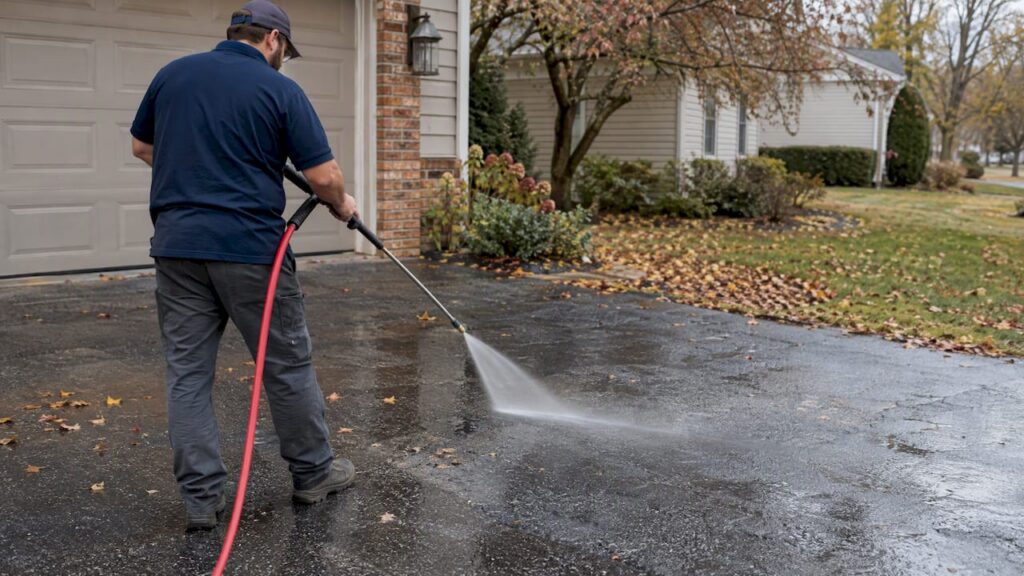
Yes, you can pressure wash an asphalt driveway, but not the way you would blast a concrete slab. Asphalt is held together by an oil-based binder, and too much pressure, a narrow tip or the wrong cleaner can strip that binder and leave the surface loose and rough. Done gently, washing lifts dirt, algae and tire marks and makes the driveway look years younger. Done aggressively, it turns a dirty driveway into a repair bill.
This guide covers the settings that protect asphalt, what to do about oil stains, what professionals charge, and where the wash water goes. That last part matters more than most homeowners expect.
TL;DR
- Asphalt needs low pressure, generally under about 1,500 PSI with a wide 40-degree fan tip. High pressure removes the binder and causes raveling.
- Soften dirt and oil with a cleaner first, then rinse. Do not try to blast stains away.
- Washing is cleaning, not maintenance. Cracks, ponding water and crumbling edges need repair or sealcoating.
- Professional driveway washing typically runs $100 to $350, with a national average of $210.
- Wash water carries oil and detergents and should never flow into a storm drain.
Table of Contents
- Why asphalt is different from concrete
- The settings that protect asphalt
- Oil stains, algae and the limits of washing
- What it costs to have it done
- Where the wash water goes
- Our perspective
- Getting your driveway washed by us
- Timing and prep tips for Chicagoland
- FAQ
- Sources
Why asphalt is different from concrete
Concrete is hard and mineral. You can use a lot of force on it, and most of what you remove is on the surface. Asphalt is a flexible pavement made of stone aggregate glued together with a petroleum-based binder. The Asphalt Institute describes asphalt pavements as constantly stressed by temperature swings, moisture and traffic, which is a good reminder that the surface is already working hard before you add a pressure washer.
When a concentrated jet hits asphalt, it can blast away the top layer and expose the binder underneath, as House Digest explains. Once the binder is gone, small stones start to pop loose. That loss of aggregate is called raveling, and it speeds up deterioration. A stain you could have lived with becomes a rough, pitted patch.

Heat matters too. Asphalt softens in hot weather and is sensitive to petroleum-based products, so harsh solvents can dissolve the binder much like an oil spill does.
The settings that protect asphalt
Here is the setup most guidance converges on.
| Setting | Safe approach for asphalt | What goes wrong |
|---|---|---|
| Pressure | Lowest PSI that lifts the dirt, ideally under 1,500 | Binder stripped, surface raveling |
| Nozzle | 40-degree wide fan | Narrow tips concentrate force and can gouge the surface |
| Distance | Keep the wand moving, hold it back from the surface | Etched lines and “zebra stripes” |
| Cleaner | Mild detergent or a cleaner made for asphalt | Solvents and harsh degreasers soften the binder |
| Rinse | Slow, even passes, working downhill | Dirty water re-soils clean sections |
Some popular guides tell you to use 2,500 PSI or more for driveways. That advice is written for concrete. For asphalt, start low and only go up if the dirt will not budge, testing in an inconspicuous corner first.
A safe DIY sequence
- Inspect on foot. Walk the driveway and look for cracks, soft spots, ponding water and loose fine stone. Anything crumbling should be repaired before you wash, not after.
- Sweep and pre-wet. Remove leaves and grit so you are not grinding debris into the surface.
- Apply cleaner. Use a mild detergent and let it dwell according to the label. The cleaner does the work, not the pressure.
- Scrub stains. Work a stiff-bristle push broom over oil spots and tire marks.
- Rinse with the wide tip. Keep the wand in constant motion and overlap passes.
- Let it dry fully before you drive on it or consider sealing.
The EPA’s stormwater guidance for vehicle washing makes the same point from the environmental side: pre-treat with the right cleaning agents and keep the rinse gentle, rather than forcing grime off with brute pressure.
Oil stains, algae and the limits of washing
Fresh oil drips respond to absorbent material and a degreaser applied before any rinsing. Old stains that have soaked into the pavement are harder, and on asphalt there is a catch: oil is chemically similar to the binder, so aggressive removal can damage the surface you are trying to clean. We cover how stain age changes the approach in our guide on removing driveway oil stains by age.
Green and black patches in shaded areas are usually algae or mildew. These come off with a gentle cleaner and low-pressure rinse, and they tend to come back where the driveway stays damp, such as under trees or along the north side of a house.
When the problem is not dirt
Cleaning only treats symptoms. If you see any of these, pressure washing will not fix them:
- Alligator cracking (a pattern of interconnected cracks)
- Ruts or sunken areas where water pools
- Oil “bleeding” up through the surface on hot days
- Crumbling edges and fine aggregate loss
The Asphalt Institute lists lack of maintenance, poor drainage, inadequate thickness and accumulated wear among the causes of pavement problems. Those call for a paving or sealcoating contractor. If you are weighing how surface protection should be prepared before sealing, this contractor’s sealing prep guide shows how much preparation good sealing depends on, even though it focuses on pavers.
A practical rule: wash first, repair cracks, then seal once the surface is clean and fully dry. Sealing over dirt traps it.
What it costs to have it done
Angi’s 2026 data puts professional driveway pressure washing at $100 to $350, with an average of $210. Pricing usually runs about $0.30 to $0.55 per square foot, so a standard 576-square-foot driveway lands around $175 to $320. Small driveways often hit a minimum service charge to cover travel and setup. Angi also notes that asphalt and concrete cost less than gravel or paver driveways.

Those are national figures, not our quotes. We do not publish a price for driveway pressure washing, because the right number depends on size, condition and stain level. You can read more about what to expect in northern Illinois and what driveway washing involves.
DIY or hire a pro?
Renting or buying a machine looks cheaper on paper. The hidden costs are the risk of damaging asphalt, buying the right cleaners, and handling the dirty water properly. Angi points out that professionals know which cleaning agents suit which stains and manage wastewater compliance, which DIYers often overlook. If your driveway is new, already cracking, or heavily stained, a professional is the safer call.
Where the wash water goes
This is the part nobody thinks about until a neighbor or a village inspector does. Driveway wash water carries oil, grease, detergent and metals. The EPA explains that water flowing into storm drains often reaches local waterways with no treatment, and that detergent-rich wash water can contain nutrients, metals and hydrocarbons.
In practice, that means:
- Do not wash toward a street inlet or storm drain.
- Prefer a lawn or landscaped area where water can soak in, and keep the soap volume small.
- Ask any contractor what they do with their wastewater. A good answer involves capture and recycling, not “it runs down the street.”
Rules vary by municipality, so check with your village or county if you are unsure. For a deeper look, see our explainer on wastewater recovery rules and the containment steps for eco-friendly pressure washing.
Our perspective
We have cleaned bins, pads and driveways around Chicagoland since 1989, and the same lesson comes up on every surface: the gentlest method that works is the right one. With asphalt, the temptation is to chase the satisfying “clean stripe” with more pressure. That is exactly how homeowners end up with a lighter, rougher driveway that is cleaner for one summer and worse for ten.
Our approach is to treat the pavement as the thing we are protecting. We match pressure and technique to the surface, and we tell homeowners honestly when a driveway needs sealing or repair rather than another wash. Illinois winters, with freeze and thaw cycles and road salt, are hard on asphalt already, so we would rather you keep the surface intact.
We also capture all the wastewater in our on-board recycling system, so nothing is dumped or runs off into storm drains. You do not need to be home while we work. That is a standard we hold ourselves to, and it is the question we would ask any contractor you are considering.
— Bill
Getting your driveway washed by us
If you would rather not risk your asphalt, our residential pressure washing service covers driveways, homes, decks and more across northern Illinois and southern Wisconsin. We bring our own equipment and water recovery, and we handle the job while you are away. If your trash bins are also overdue, our recurring bin cleaning plans start at $35 per 4 weeks for monthly service, $45 per quarter for quarterly, or $75 for a one-off on-demand clean.
Timing and prep tips for Chicagoland
- Best season: late spring through early fall, when the pavement is dry and temperatures are mild. Very hot days soften asphalt, so wash in the morning or evening.
- Winter: avoid washing near freezing temperatures. Wet pavement turns to ice. See our note on winter pressure washing.
- Before sealcoating: wash and let the surface dry fully, then repair cracks.
- Move vehicles and bins off the driveway, and close garage doors.
- Check your checklist: our home pressure washing service checklist lists what to confirm before a crew arrives.
FAQ
Is it okay to pressure wash an asphalt driveway?
Yes, if you keep the pressure low and use a wide fan tip. Guidance suggests staying under about 1,500 PSI with a 40-degree nozzle. High pressure can strip the binder and cause raveling.
What is the best way to clean an asphalt driveway?
Sweep, apply a mild cleaner, scrub stains with a stiff broom and rinse with a wide tip at low pressure. Let the cleaner do the work. Keep the water away from storm drains.
What will ruin an asphalt driveway?
Excess pressure, narrow nozzles and harsh solvents can all damage the binder. Standing water, neglected cracks and heavy loads in hot weather also shorten its life, as the Asphalt Institute notes.
How much does it cost to pressure wash a driveway?
Nationally, professionals typically charge $100 to $350, averaging $210. Size, stain level and minimum charges all affect the final quote. Ask for a written estimate that names the method and how the wastewater is handled.
Sources
- Is It Okay To Pressure Wash An Asphalt Driveway? (House Digest)
- How Much Does It Cost to Pressure Wash a Driveway? (Angi)
- Repair of Asphalt Parking Lots and Driveways (Asphalt Institute)
- Stormwater Best Management Practice: Vehicle Maintenance and Washing (US EPA)


