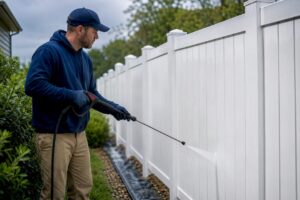
Commercial pressure washing is the targeted cleaning of business-owned surfaces using professional-grade equipment calibrated to the material, contamination type, and regulatory requirements of each site. Property managers and business owners rely on it to maintain storefronts, parking lots, loading docks, and more. Understanding what commercial pressure washing covers helps you plan budgets, schedule services, and protect your property’s long-term value. The scope goes well beyond a garden hose and a scrub brush.
What surfaces does commercial pressure washing cover?
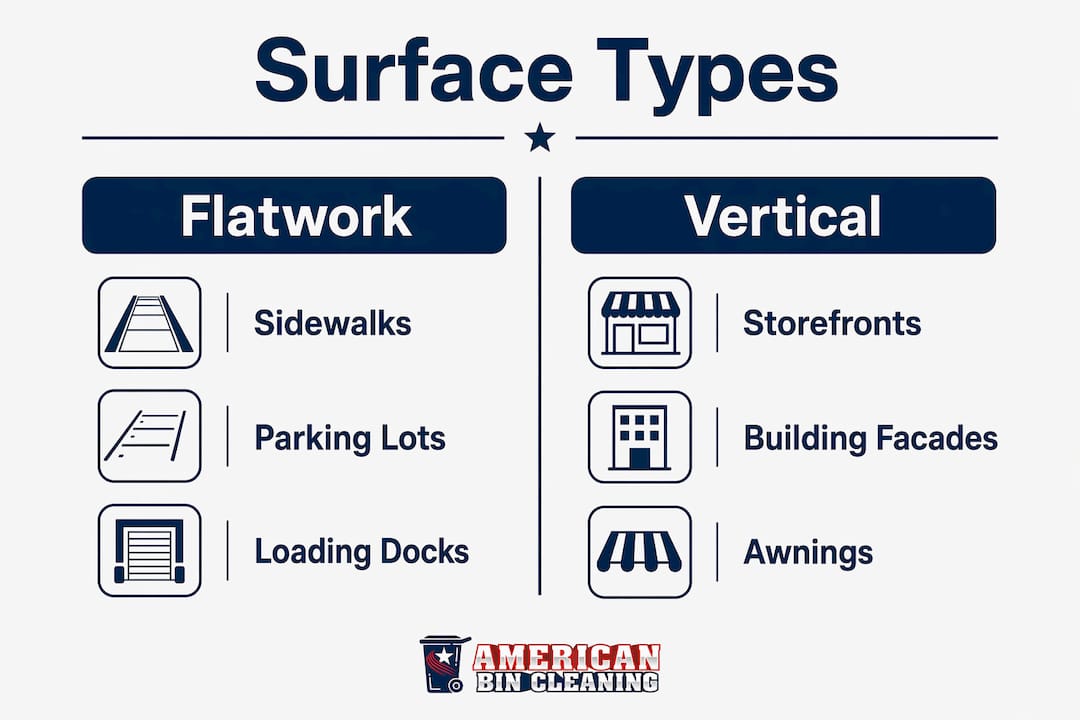
Commercial pressure washing services cover two broad categories: high-traffic flatwork and vertical facades. Each demands a different approach, and confusing the two leads to damaged surfaces or ineffective cleaning.
High-traffic flatwork
Flatwork includes the horizontal surfaces that take the most daily punishment at any commercial property. These areas accumulate grease, tire marks, chewing gum, biological growth, and chemical spills faster than any other surface type.
- Sidewalks and pedestrian walkways: Foot traffic packs in grime and organic matter. Quarterly cleaning keeps them safe and presentable.
- Parking lots and parking structures: Oil drips, tire rubber, and standing water create slip hazards and staining. Surface cleaners with rotating nozzles cover large areas efficiently.
- Loading docks: Grease and food residue build up fast in food-service and distribution environments. Monthly sanitizing is the standard for these areas.
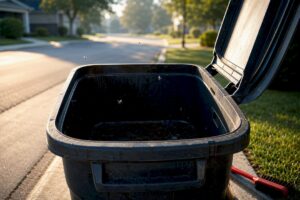
- Dumpster pads: Leaking waste and bacteria accumulate under and around dumpsters. Regular cleaning prevents pest attraction and odor complaints.
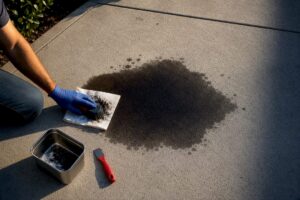
- Drive-through lanes and fuel station pads: Fuel spills and exhaust residue require hot water and degreasers to lift effectively.
Vertical facades and storefronts
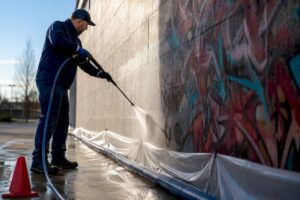
Storefront exteriors, building facades, awnings, and signage fall into the vertical category. Building exterior cleanliness directly affects brand perception and foot traffic. A grimy facade signals neglect before a customer ever walks through the door.
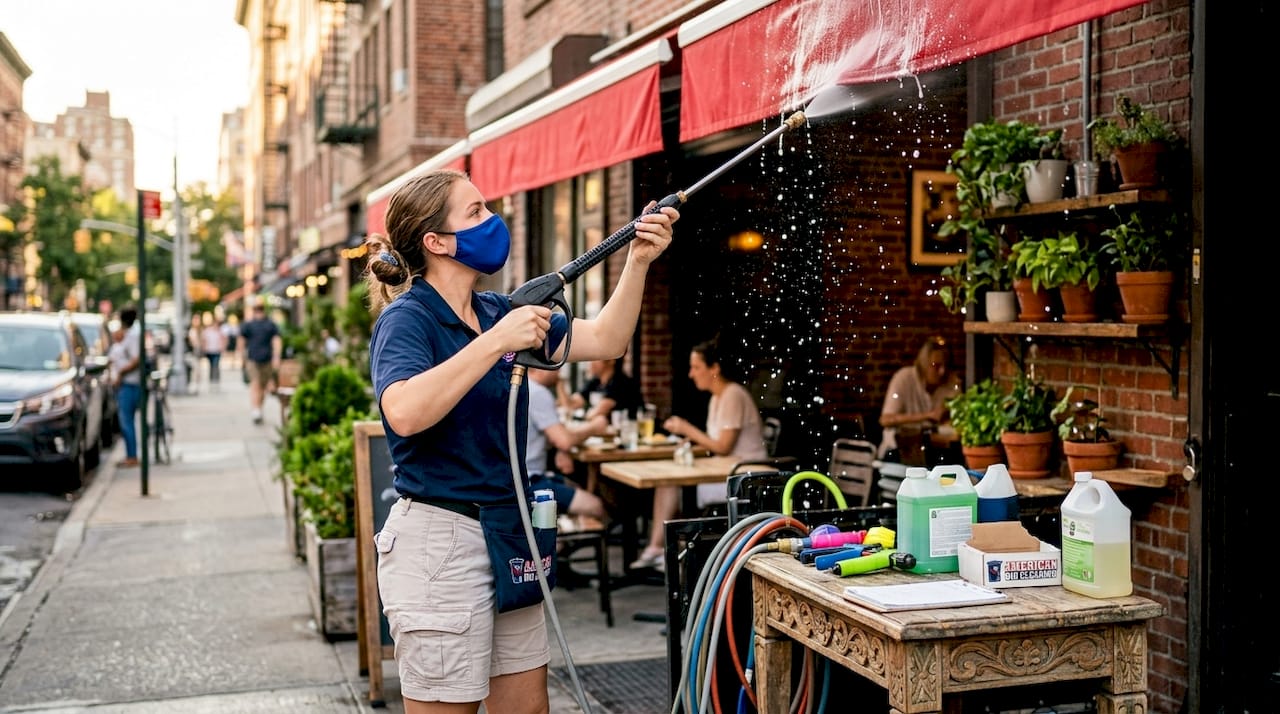
Sensitive materials like EIFS (Exterior Insulation and Finish Systems), stucco, and fabric awnings require soft washing rather than high pressure. High pressure above 3,000 PSI on these surfaces causes water intrusion, denting, and material failure. Soft washing uses pressures under 500 PSI combined with specialized cleaning agents to lift contamination without damage.
Pro Tip: Ask your service provider to document which surfaces on your property require soft washing versus high-pressure methods. That record protects you if a damage dispute ever arises.
What equipment and methods are used?
Professional commercial cleaning uses equipment and techniques matched to each surface. The right combination of pressure, temperature, chemical dwell time, and physical tools determines whether a job is effective or destructive.
Pressure levels by surface type
- Durable concrete and asphalt: 2,500–4,000+ PSI with surface cleaners for uniform coverage and no streaking.
- Brick and masonry: 1,500–2,500 PSI with appropriate detergents to avoid mortar erosion.
- Metal panels and glass: 1,000–1,500 PSI to remove oxidation and grime without warping or scratching.
- Delicate materials (EIFS, stucco, awnings): Under 500 PSI with soft-washing chemicals and extended dwell time.
Pro Tip: Dwell time matters more than pressure on most organic stains. A quality degreaser left on a grease-stained loading dock for 5–10 minutes before rinsing outperforms blasting with raw pressure alone.
Specialized tools and chemical methods
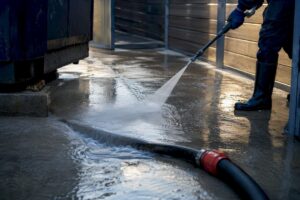
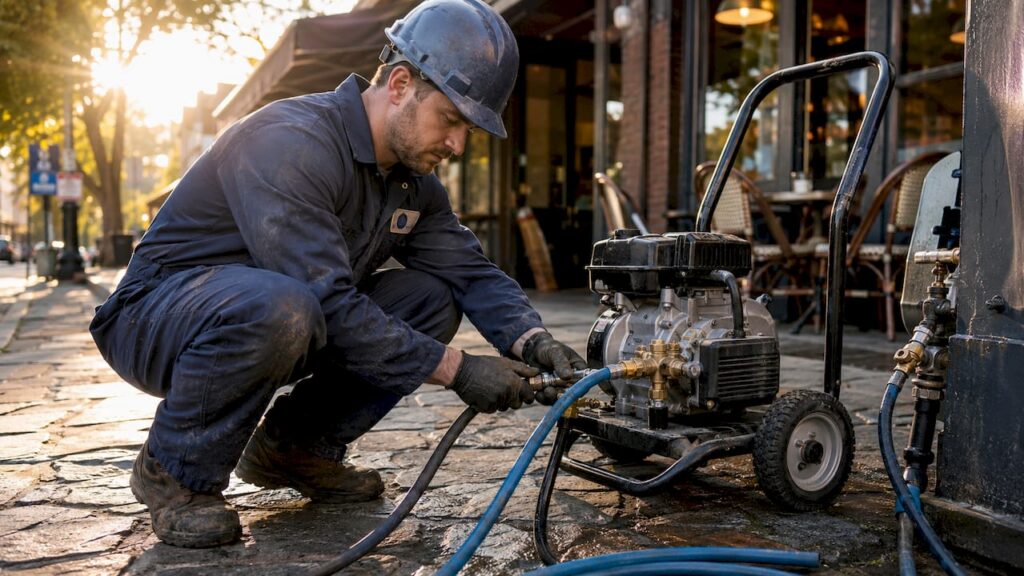
Proper commercial cleaning requires hot water for grease removal and rotary surface cleaners for large flatwork. Hot water breaks the molecular bond between grease and concrete far faster than cold water at the same pressure. Surface cleaners cover 10 to 15 times the area of a single wand pass, making them standard for parking lots and loading docks.
For high facades and multi-story buildings, technicians use lifts or boom equipment to reach surfaces safely. Chemical treatments follow a defined dwell time before rinsing. Balancing dwell time and pressure is the most commonly misunderstood element of professional cleaning. Too much pressure with too little dwell time strips surfaces. Too little pressure with the right chemistry cleans effectively and safely.
Environmental compliance
| Compliance element | What it means for your property |
|---|---|
| Water reclamation systems | Wastewater is captured on-board and disposed of properly |
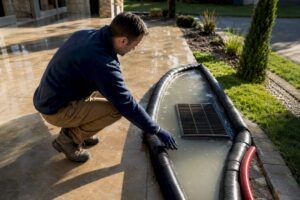
| Containment booms | Prevent wash contaminants from reaching storm drains |
| Chemical selection | Biodegradable agents reduce municipal fine risk |
| Night scheduling | Minimizes disruption and meets local permit requirements |
Environmental liability is the most overlooked risk in commercial cleaning. Wash runoff carrying grease, chemicals, or biological material into a storm drain can trigger municipal fines. Reputable providers use on-board recovery systems and containment booms as standard practice, not optional add-ons.
How often should commercial areas be pressure washed?
Cleaning frequency depends on surface type, business category, and local health codes. A food-service loading dock and a suburban office building sidewalk have very different maintenance needs.
Recommended cleaning cycles by area follow a clear pattern:
- Monthly: Dumpster pads and loading docks at food-service, grocery, and distribution sites. Grease and organic waste accumulate fast enough to create health code violations within weeks.
- Quarterly: High-traffic retail sidewalks and drive-through lanes. Appearance and slip-hazard prevention drive this schedule.
- Biannually (every 6 months): Storefront facades, awnings, and signage at most retail and office properties.
- Annually: Parking lots with moderate traffic and building exteriors in low-pollution environments.
Business type changes everything. A restaurant with outdoor seating needs its patio and surrounding concrete cleaned monthly. A suburban office park may only need sidewalk cleaning twice a year. Local health codes in some municipalities set minimum cleaning standards for food-adjacent surfaces, so check your jurisdiction’s requirements before setting a schedule.
Scheduled maintenance programs consistently outperform ad-hoc service calls on both cost and results. Standardized service contracts reduce management complexity and lock in better pricing than one-off visits. For property managers overseeing multiple tenants, a single contract covering the entire property is far more efficient than coordinating individual tenant requests.
What do commercial pressure washing services typically cost?
Pricing for commercial pressure washing depends on surface area, contamination level, service tier, and contract structure. Single-visit pricing and contract rates differ significantly.
| Service tier | Typical scope | Estimated cost range |
|---|---|---|
| Basic wash | Surface rinse, light grime removal | $150–$250 per visit |
| Deep clean | Degreasers, hot water, dwell time treatment | $200–$600 per visit |
| Full restoration | Deep clean plus sealing, surface protection | $300–$500 per 40m² |
| Retail strip common area | Multi-tenant flatwork and facades | $800–$2,500 per visit |
Ad-hoc storefront cleaning costs $200–$600 for small businesses. Larger retail strip common areas run $800–$2,500 per visit. Full restoration with sealing protects surfaces for up to 5 years and carries higher liability insurance coverage from the provider.
Contract-based programs offer better per-visit rates and guaranteed scheduling. For property managers, bundling all property surfaces under one contract, flatwork, facades, dumpster pads, and parking areas, produces the lowest total cost. Request itemized proposals that specify cleaning methods, pressure levels, and chemical types. Contractual scope documents specifying these details protect you from inconsistent results across service visits.
A useful cost-saving move: schedule dumpster pad cleaning and storefront washing on the same visit. Mobilization costs are shared, and you pay for one crew deployment instead of two.
The pressure washing mistake most property managers make
Property managers often assume that more pressure equals better results. That assumption costs money and damages assets.
The real variable is chemistry. A properly selected degreaser applied with adequate dwell time on a grease-stained loading dock does more work than raw pressure alone. I have seen concrete surfaces etched and pitted by operators who cranked PSI to compensate for weak chemicals or impatience. The damage is permanent and expensive to repair.
Environmental compliance is the second area where I see consistent gaps. Operators using residential-grade equipment or skipping water reclamation expose your property to municipal fines. Using unlicensed operators can lead to regulatory and business risks that dwarf the cost of hiring a proper commercial service. Always ask for proof of insurance, a water reclamation system, and a scope document before signing anything.
The long-term math also favors scheduled maintenance over reactive cleaning. Mold, algae, and grease left on concrete accelerate surface degradation. Regular cleaning extends the life of flatwork, facades, and coatings, reducing capital expenditure on repairs and resurfacing. The benefits of professional cleaning compound over time in ways that a single annual blast never achieves.
— Jim
How Abcbins handles commercial pressure washing
Abcbins has served Chicagoland properties since 1989 with professional pressure washing built around environmental responsibility and consistent results. Every job uses on-board wastewater capture, so nothing runs off into storm drains.
Abcbins offers commercial pressure washing services covering storefronts, dumpster pads, sidewalks, and parking areas, with service plans tailored to your property’s traffic level and cleaning schedule. Pricing is transparent, proposals are itemized, and contracts lock in consistent service without the hassle of repeated one-off calls. Contact Abcbins to get a scope document and quote for your property.
Key takeaways
Commercial pressure washing covers a wide range of surfaces and requires matched equipment, chemistry, and scheduling to protect property assets and meet compliance standards.
| Point | Details |
|---|---|
| Surface categories | Flatwork and vertical facades each require different pressure levels and cleaning methods. |
| Pressure and chemistry | Dwell time and chemical selection matter more than raw PSI for most commercial stains. |
| Cleaning frequency | Dumpster pads need monthly service; storefronts typically need biannual cleaning. |
| Environmental compliance | Water reclamation and containment booms are non-negotiable for regulatory protection. |
| Contract value | Scheduled service contracts reduce total cost and management complexity versus ad-hoc calls. |
FAQ
What does commercial pressure washing include?
Commercial pressure washing covers flatwork such as sidewalks, parking lots, and loading docks, plus vertical surfaces including storefronts, facades, and awnings. Equipment operates at 500–4,000+ PSI depending on the material being cleaned.
How is commercial pressure washing different from residential?
Commercial pressure washing requires professional-grade equipment, environmental compliance measures like water reclamation, and often night-shift scheduling to avoid disrupting business operations. Residential services typically lack these requirements.
How often should a storefront be pressure washed?
Most retail storefronts need cleaning every 6–12 months for appearance maintenance. High-traffic locations may need quarterly cleaning to prevent buildup that affects customer perception.
What is soft washing and when is it used?
Soft washing uses pressures under 500 PSI combined with specialized cleaning agents to clean delicate surfaces like EIFS, stucco, and fabric awnings without causing water intrusion or material damage.
How much does commercial pressure washing cost?
Basic commercial washes start at $150–$250 per visit. Full restoration services with sealing run $300–$500 per 40m². Retail strip common areas cost $800–$2,500 per visit, with contract programs offering lower per-visit rates.