Deck pressure washing is the systematic use of controlled high-pressure water, combined with specialized cleaning agents and technique, to safely remove dirt, mildew, and old stains from wood or composite decks. Understanding what deck pressure washing involves saves you from costly mistakes like splintered boards, voided warranties, and finishes that peel within a season. The process covers five distinct phases: preparation, pre-wetting, chemical application, pressure rinsing, and drying. Get any one of those wrong and the results suffer. This guide walks you through each phase with the specifics that actually matter.
What does deck pressure washing involve, step by step?
Deck pressure washing is not just pointing a wand at dirty wood and pulling the trigger. It is a multi-step cleaning process that combines preparation, chemical action, and controlled mechanical rinsing in a specific order.
Step 1: Clear and prep the deck
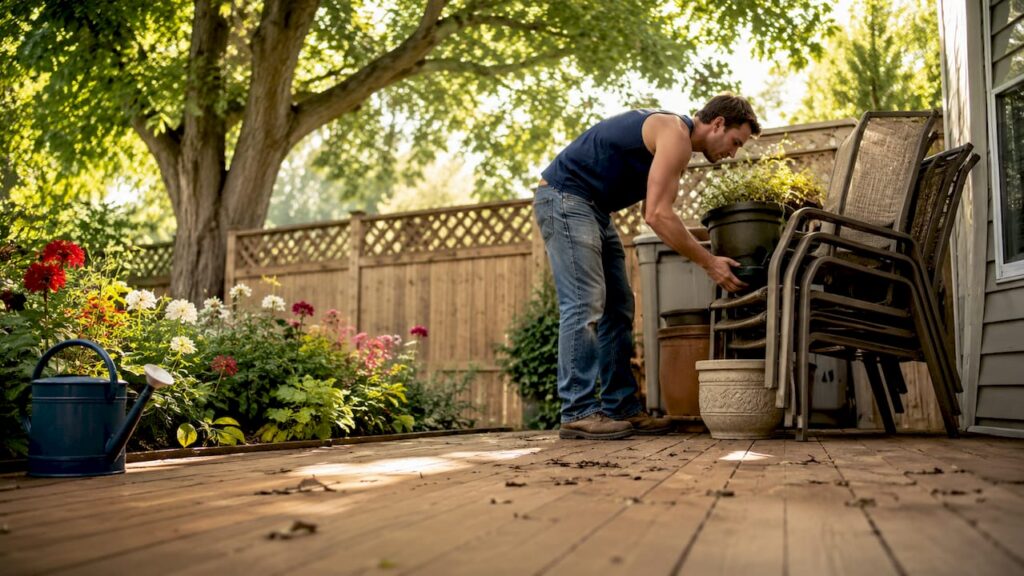
Remove all furniture, planters, grills, and rugs before you touch the pressure washer. Sweep off loose debris like leaves and dirt. Cover nearby plants with plastic sheeting and protect any electrical outlets or fixtures with waterproof tape. Skipping this step causes cleaner runoff to kill plants and forces you to work around obstacles that interrupt your technique.
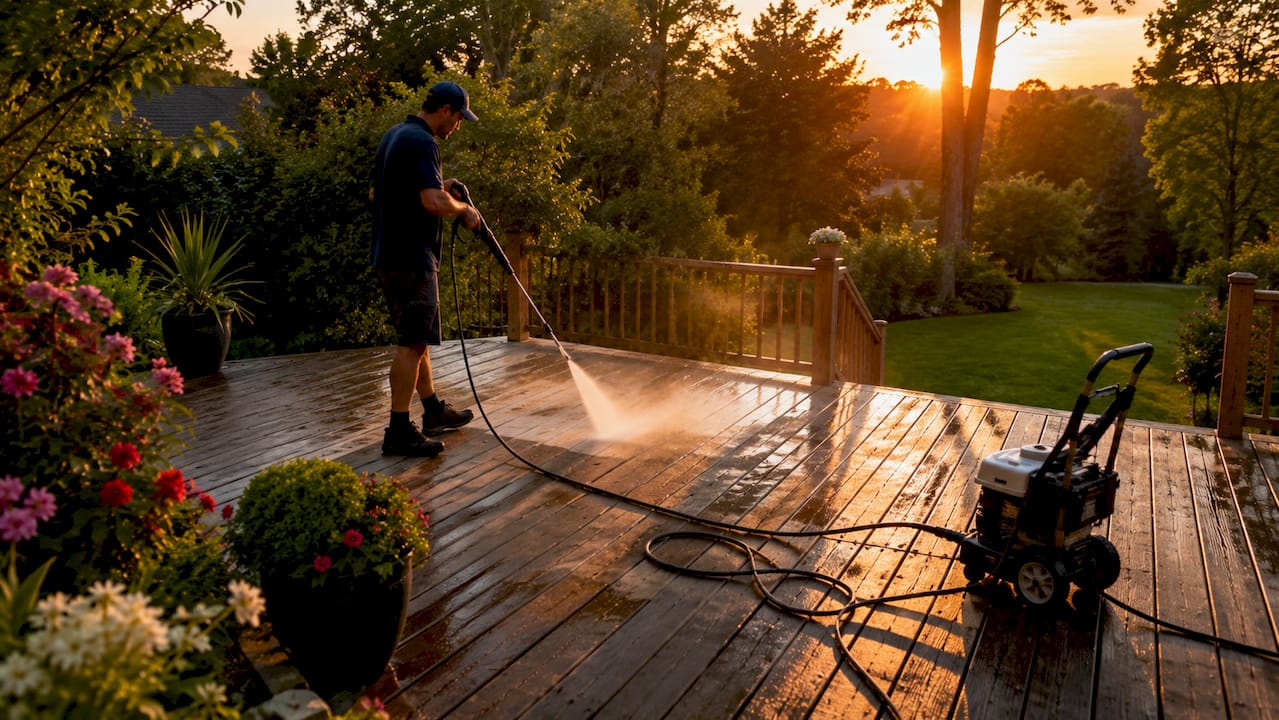
Step 2: Pre-wet the surface
Pre-wetting the deck with plain water before applying any cleaner prevents the wood from absorbing the cleaning solution too fast. A fast-absorbing surface dries out the cleaner before it has time to work. Mist the deck evenly and keep it damp throughout the cleaning process.
Step 3: Apply the cleaner with correct dwell time
Apply your chosen deck cleaner and let it sit for 10–15 minutes without drying out. This dwell time is where most of the actual cleaning happens. The chemical breaks down mold, mildew, algae, and embedded grime so the pressure washer can rinse it away rather than grind it in deeper.
Step 4: Pressure wash with the right settings
Wood decks require 1,800–2,500 PSI for safe, effective cleaning. Pressure above 3,000 PSI permanently damages wood fibers. Use a 25° or 40° fan tip nozzle held 8–12 inches from the surface. Always sweep the wand in the direction of the wood grain, never across it. Keep the nozzle moving at all times.
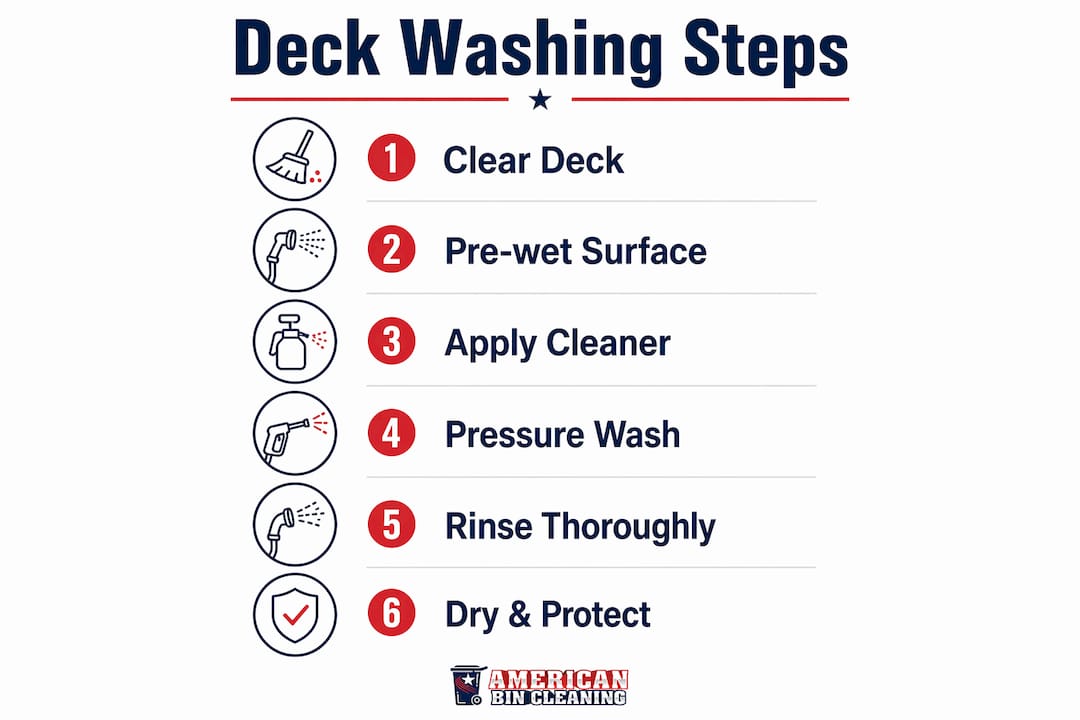
Step 5: Rinse thoroughly
After pressure washing, do a final rinse pass to clear any remaining cleaner residue. Pay attention to corners and between boards where cleaner tends to pool.
Pro Tip: Start at the lowest pressure setting and increase gradually. Damage risk rises sharply with pressure, but cleaning quality levels off. More PSI does not always mean a cleaner deck.
How do pressure washing techniques differ for wood vs. composite decks?
Wood and composite decks are not interchangeable when it comes to pressure washing. The material determines your PSI limit, nozzle choice, and whether pressure washing is even the right method.
Wood decks
Wood decks tolerate pressure washing well when you follow the right technique. The safe range sits between 1,800 and 2,500 PSI. Always test a small, hidden spot first to check how the wood responds. Technique errors cause more damage than PSI alone. Holding the wand too close, using a narrow jet, or stopping in one spot creates gouges and raised grain that cannot be sanded out easily.
Composite decks
Composite decking is far less tolerant of pressure washing. Many manufacturers restrict or prohibit pressure washing in their warranty terms. Composite deck warranties can be voided by pressure washing, even if the cleaning looks effective visually. For composite surfaces, a soft brush with mild soap and a garden hose is usually the safer and warranty-compliant option.
| Feature | Wood decks | Composite decks |
|---|---|---|
| Safe PSI range | 1,800–2,500 PSI | Generally not recommended |
| Nozzle type | 25° or 40° fan tip | Soft brush preferred |
| Warranty risk | Low with proper technique | High; check manufacturer guidelines |
| Chemical cleaners | Oxygen bleach safe | Mild soap only |
| Damage pattern | Raised grain, gouging | Surface scuffing, color fading |
Key risks to avoid on both surfaces:
- Never use a 0° or 15° nozzle on any deck surface
- Never spray perpendicular across the wood grain
- Never hold the wand stationary on one spot
- Always check the manufacturer’s care guide before starting
What cleaning solutions work best with deck pressure washing?
Pressure washing is primarily a rinsing tool. The chemical cleaner does the heavy lifting. Skipping the cleaner and relying on water pressure alone forces you to use higher PSI to compensate, which increases damage risk without improving results.
The two most effective chemical treatments for wood decks are oxygen bleach cleaners and oxalic acid brighteners, used in sequence.
Oxygen bleach cleaners break down mold, mildew, algae, and organic staining without the harsh side effects of chlorine bleach. Chlorine bleach can strip wood color, damage surrounding plants, and corrode metal hardware. Oxygen bleach is the safer and more effective choice for most residential decks.
Oxalic acid brighteners come after the pressure wash rinse. The oxalic acid step neutralizes alkaline residues left by the cleaner, restores the wood’s natural color, and balances the pH of the surface. This matters because stain and sealer adhesion depends on a neutral, clean surface. Skipping the brightener often leads to streaky, uneven staining.
Pro Tip: If the cleaner starts to dry on the deck before you finish, mist the surface with plain water to keep it damp. A dried cleaner leaves residue that is harder to rinse and can cause streaking.
Safety precautions when using chemical cleaners:
- Wear chemical-resistant gloves and eye protection
- Keep children and pets off the deck during application and rinsing
- Rinse surrounding plants and grass with plain water before and after applying cleaners
- Never mix oxygen bleach with chlorine bleach products
What post-washing steps protect your deck long term?
Cleaning the deck is only half the job. What you do in the 48–72 hours after washing determines how long the results last and whether your stain or sealer actually holds.
Drying time is non-negotiable. Decks need 48–72 hours to dry after cleaning and brightening before any stain or sealer goes on. That window extends in humid or cold weather. Applying a finish to damp wood causes premature peeling, bubbling, and adhesion failure within one season.
Post-washing steps that protect your investment:
- Inspect the surface. Walk the deck and look for raised grain, splinters, loose boards, or popped nails. Address these before staining.
- Sand lightly if needed. Pressure washing can raise wood grain slightly. A light sanding with 80-grit sandpaper smooths the surface and improves stain penetration.
- Apply stain or sealer in the right conditions. Temperatures between 50°F and 90°F with low humidity give the best results. Avoid applying in direct sunlight, which causes the finish to dry too fast.
- Plan for annual maintenance. A deck cleaning service every one to two years keeps mildew from building up and extends the life of your finish.
- Know when to call a professional. If the deck has heavy mold growth, significant staining, or you are unsure about the right PSI for your wood species, professional pressure washing reduces the risk of permanent damage.
Proper drying is especially critical in climates like Chicagoland, where humidity and temperature swings are common. Rushing the finish application after washing is the single most common reason homeowners redo their decks within a year.
Key Takeaways
Deck pressure washing works best when chemical cleaners, correct PSI, proper nozzle choice, and adequate drying time are combined in the right sequence.
| Point | Details |
|---|---|
| Technique beats raw PSI | Nozzle type, distance, and grain direction cause more damage than pressure level alone. |
| Chemical cleaners do the real work | Oxygen bleach cleaners break down mold and grime; pressure washing rinses it away. |
| Composite decks need special care | Check manufacturer warranties before pressure washing; many restrict or prohibit it. |
| Drying time protects your finish | Wait 48–72 hours after cleaning before applying any stain or sealer. |
| Brightener is not optional | Oxalic acid restores wood pH and prevents streaky, uneven stain adhesion. |
What I have learned from watching homeowners pressure wash their own decks
The most common mistake I see is treating PSI as the main variable. Homeowners rent the biggest machine available, crank it up, and then wonder why the boards look fuzzy or gouged. The real risk factors are nozzle choice, distance from the surface, and whether you are moving with or across the grain. A 2,000 PSI machine used incorrectly does more damage than a 2,500 PSI machine used well.
The second mistake is skipping the cleaner. I understand the appeal of just blasting the deck with water and calling it done. But water pressure alone cannot break down mildew and embedded organic staining the way an oxygen bleach cleaner can. Skipping it means you either get a mediocre result or you compensate with higher pressure, which damages the wood.
The third mistake is rushing the finish. Homeowners clean the deck on a Saturday and want to stain it Sunday. If the wood is still damp, the stain will not bond properly. Two weeks later, it starts peeling. The patience required for proper drying after washing is not exciting, but it is what separates a deck that looks good for five years from one that needs redoing every season.
My honest advice: read your deck manufacturer’s care guide before you start. For composite decks especially, pressure washing may void your warranty even if it looks fine afterward. That is a costly lesson to learn after the fact.
— Jim
Professional deck washing services worth considering
Knowing the full process is valuable. Executing it correctly with the right equipment is another matter entirely.

Abcbins provides residential pressure washing services throughout Chicagoland, including deck cleaning for homeowners who want professional results without the risk of DIY damage. The team uses calibrated equipment, appropriate PSI settings for each surface, and eco-friendly cleaning agents, with all wastewater captured on-board so nothing runs off into your yard or storm drains. For homeowners who want a clean, protected deck without the guesswork, professional pressure washing is a practical next step. You can also review the full residential services lineup to see what Abcbins covers in your area.
FAQ
What PSI is safe for pressure washing a wood deck?
Wood decks are safe to pressure wash at 1,800–2,500 PSI. Pressure above 3,000 PSI risks permanent damage to wood fibers and should be avoided.
Can you pressure wash a composite deck?
Most composite deck manufacturers restrict or prohibit pressure washing in their warranty terms. A soft brush with mild soap and a garden hose is the recommended cleaning method for composite surfaces.
How long should a deck dry before staining after pressure washing?
A deck needs 48–72 hours to dry after pressure washing and brightening before stain or sealer is applied. Humid or cold conditions extend that drying window further.
Do you need a chemical cleaner when pressure washing a deck?
Yes. Chemical cleaners break down mold, mildew, and organic staining that water pressure alone cannot remove. Skipping the cleaner reduces results and increases the risk of damage from higher pressure.
What nozzle tip should you use to pressure wash a deck?
Use a 25° or 40° fan tip nozzle held 8–12 inches from the surface. Narrow tips like 0° or 15° concentrate too much force and gouge or etch wood surfaces.