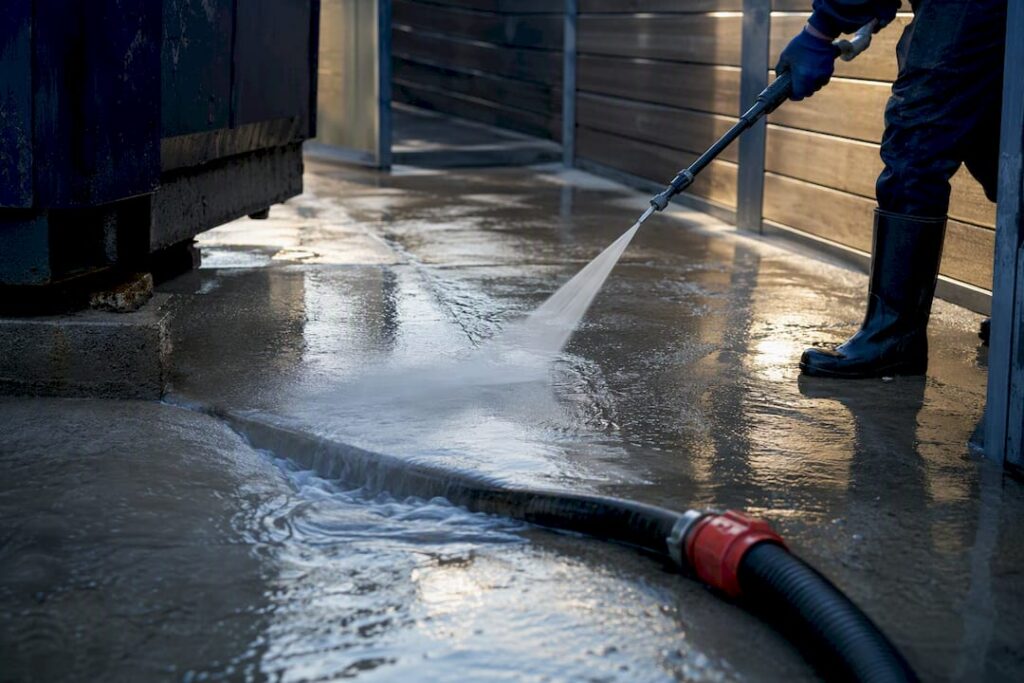
Most commercial dumpster pad cleaning jobs run between $300 and $2,500 per visit, with a typical mid-range job landing around $900. Per-square-foot rates commonly fall between $0.50 and $2.50, which works for rough budgeting on any standard enclosure. Your actual number depends on contamination level, access, and disposal needs, so treat any quote given without a site walkthrough as a placeholder, not a price.
TL;DR:
- Larger dumpster pads or heavily contaminated areas, especially those with grease buildup, significantly increase cleaning costs due to extended dwell time and more passes required.
- Wastewater capture becomes mandatory if a pad drains toward unprotected storm systems, often doubling or tripling mobilization and disposal expenses.
- Quotes given without a site walkthrough can be inaccurate by hundreds of dollars, making inspection and detailed scope essential before accepting an estimate.
- Recurring cleaning for restaurants is recommended weekly to monthly to control odor and pests, while retail properties typically need only quarterly service to maintain cleanliness.
- Basic cleaning jobs often cost between $300 and $600, with mid-range and premium services including sealant, disposal, and permits pushing costs toward the higher end of the scale.
Table of Contents
- What Does Dumpster Pad Cleaning Cost?
- How Does Pricing Vary by Property Type?
- What Drives the Price Up or Down?
- What Do Basic, Mid-Range, and Premium Jobs Actually Look Like?
- What Should You Ask For Before Accepting a Quote?
- Why Does Wastewater Capture Change the Price?
- How Does Recurring Cleaning Pricing Work?
- Why Do Professional Standards Affect What You Pay?
- What Should Managers Prioritize First?
- Get an Accurate Quote From American Bin Cleaning
- Where to Verify These Numbers
- Sources
- FAQ
What Does Dumpster Pad Cleaning Cost?
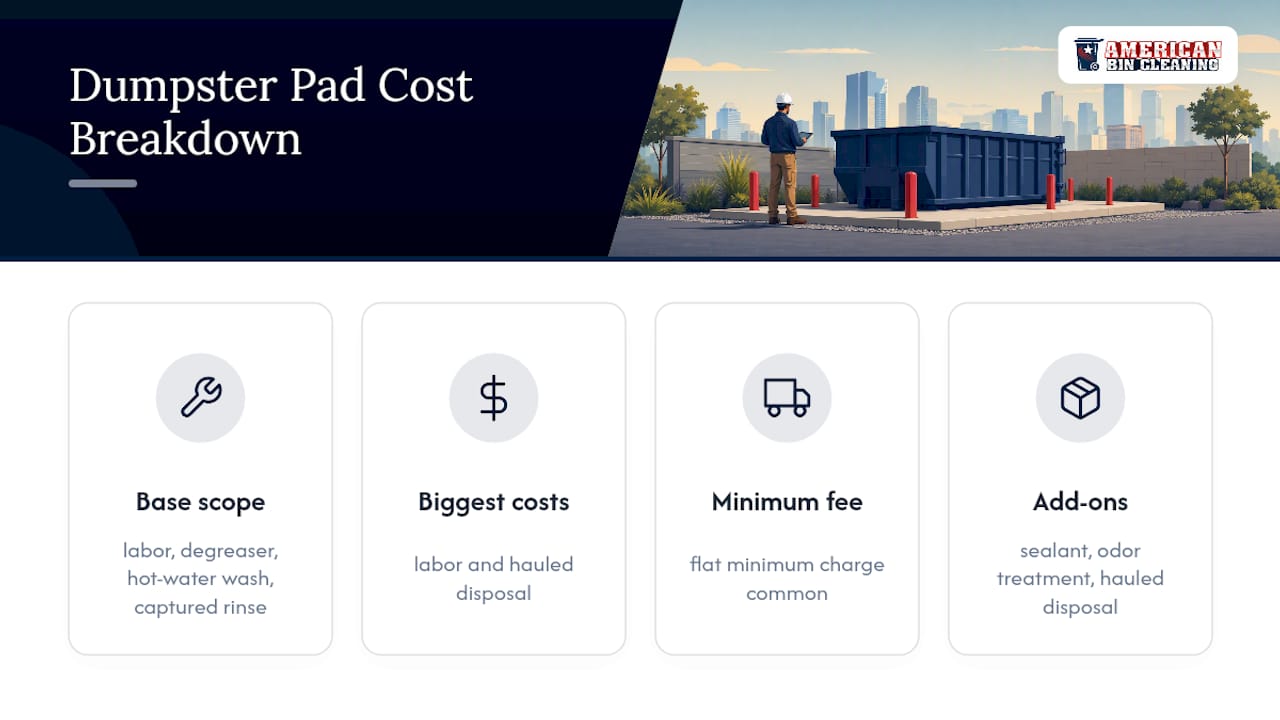
A baseline dumpster pad cleaning typically covers labor, degreasing agents, hot water pressure washing, and a rinse into a captured or approved drainage path. Add-ons like concrete sealant, odor treatment, or hauled disposal push the bill higher and usually get quoted separately.
Selector’s 2026 dumpster pad cleaning cost guide puts labor and disposal as the two biggest line items on most invoices, often outweighing chemical and equipment costs combined. Many regional contractors also set a flat minimum charge regardless of pad size, since mobilizing a crew and truck costs the same whether the job takes twenty minutes or two hours.
Sealant application, permit coordination, and hauled waste disposal typically appear as line items outside these base ranges, not folded into them.
How Does Pricing Vary by Property Type?
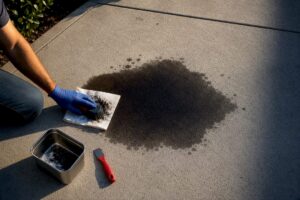
Restaurants and food service sites sit at the top of the price range almost every time, because grease bonds to concrete in a way that surface dirt never does. Retail centers, apartment complexes, and general commercial property tend to land in the low-to-mid range since their dumpster areas mostly deal with dust, cardboard residue, and rainwater staining.
- Restaurant and grease-can areas: expect the higher end of the range, often with a dedicated grease-trap adjacent cleanup.
- Retail, office parks, and property management sites: usually mid-to-low pricing with straightforward rinse-and-degrease work.
- Multi-dumpster or enclosed compactor areas: add time for maneuvering equipment inside walls or gates, which raises labor cost.
- Double-dumpster pads: essentially double the surface area and often double the degreasing passes needed.
If your property runs a shared enclosure with a neighboring tenant, ask whether the quote assumes one cleaning pass or two, since that detail alone can shift the estimate by several hundred dollars.
What Drives the Price Up or Down?
Quotes vary because the underlying job varies, and understanding why helps you compare bids instead of just picking the lowest number.
- Pad size: larger square footage means more passes, more water, and more time on site.
- Contamination type: food grease requires hot water and dwell time to emulsify; surface dirt often just needs a rinse.
- Accessibility: gated enclosures, tight loading docks, or active traffic during business hours slow the crew down.
- Surface condition: cracked or spalled concrete may need repair or sealant before or after cleaning.
- Disposal and wastewater rules: capturing runoff instead of letting it drain adds equipment and time.
Pro Tip: Ask every bidder whether their price assumes a single pass or includes dwell time for grease. A quote that skips dwell time might look cheaper but often means a crew rinses instead of actually breaking down the grime, which leads to a callback and a second charge.
Professional crews using hot water and industrial degreasers with proper dwell time cost more upfront than a quick rinse job, but they tend to finish the work in one visit instead of two.
What Do Basic, Mid-Range, and Premium Jobs Actually Look Like?
- Basic job: a small retail pad with light dust and a few soda stains. A two-person crew finishes in under an hour using standard degreaser and a rinse. Expect a cost at the lower end of the typical cleaning price range.
- Mid-range job: a moderate-size pad behind a grocery store with some grease buildup near a compactor. This typically needs a hot water wash with dwell time before the rinse, usually costing moderately more than basic jobs.
- Premium job: heavy grease buildup at a restaurant, cracked concrete, and a drain that requires wastewater capture. Expect sealant prep, disposal fees, and possibly permit coordination, pushing the total to the higher end of typical dumpster cleaning costs.
The biggest swing factor between scenarios isn’t square footage. It’s how much dwell time and repeat treatment the grease actually needs before the pad passes a visual inspection.
What Should You Ask For Before Accepting a Quote?
A quote given without seeing the site is a guess, not an estimate. Local drainage, existing sealant, and access constraints change the math enough that a phone quote can be off by hundreds of dollars.
- Insist on a site walkthrough or detailed photo and video submission before accepting a bid.
- Request a certificate of insurance (COI) and ask how the crew handles wastewater disposal.
- Get a written scope breaking out labor hours, materials, equipment, and disposal as separate line items.
- Clarify access windows, traffic control needs, and how the crew verifies the job is complete.
- If you manage multiple properties, ask directly about multi-site or recurring discounts.
Requiring an itemized scope also protects you later. If a dispute comes up about what was or wasn’t included, a scope that separates labor from materials from disposal gives you something concrete to point to.
Why Does Wastewater Capture Change the Price?
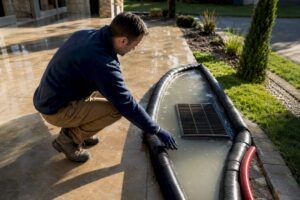
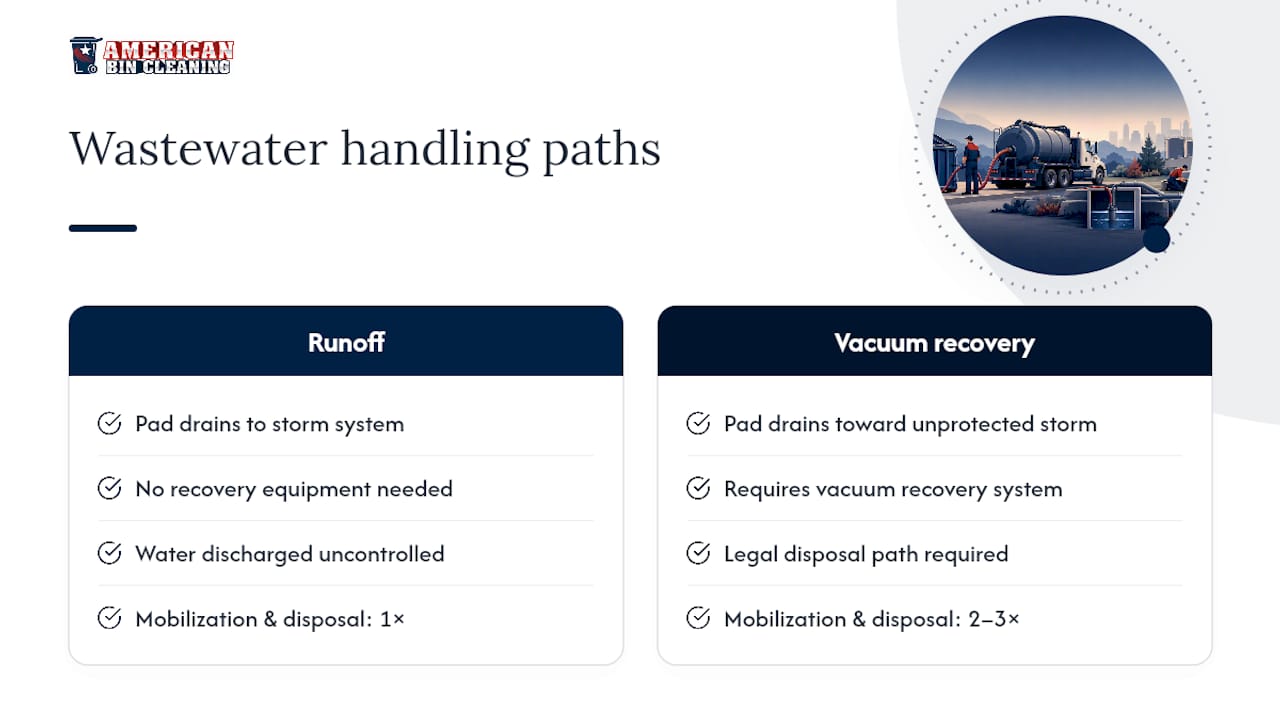
Wastewater capture becomes mandatory, not optional, when a pad drains toward an unprotected storm system. OSHA guidance supports requiring a worksite assessment before work begins precisely because site conditions like drainage and containment determine what safety and environmental steps apply.
The cost impact: arranging proper reclamation can double or triple the mobilization and disposal portion of an estimate, since the crew needs a vacuum recovery system and a legal disposal path for the collected water instead of simply letting it run off. Ask any provider to explain their wastewater recovery process and whether they’re aware of local stormwater code before you sign off on a bid that seems unusually low.
How Does Recurring Cleaning Pricing Work?
Cleaning cadence should match waste type, not just your budget. Prime Dumpster notes that restaurants and high-food-volume sites need tighter cleaning schedules to control odor and pests, while retail or office sites can often stretch to quarterly.
- Restaurants and food service: weekly to monthly cleaning to prevent grease buildup and pest issues.
- Retail and general commercial: monthly to quarterly is usually sufficient.
- Recurring visits typically cost less per visit than the initial deep clean, since ongoing maintenance prevents the heavy buildup that drives premium pricing.
- Multi-site owners can often negotiate volume pricing across properties, worth raising directly with any provider you’re evaluating.
Why Do Professional Standards Affect What You Pay?
American Bin Cleaning has operated as a family-owned business since 1989, using an eco-friendly, high-pressure process that kills 99.99% of bacteria while capturing wastewater onboard instead of letting it run off. Professionals using hot water pressure washers and proper reclamation equipment finish jobs faster and avoid the fines, repairs, and pest problems that come from cutting corners. That standard costs more upfront than a bare rinse, but it’s the difference between paying once and paying again after a compliance complaint.
What Should Managers Prioritize First?
If I’m budgeting for one property, I put the walkthrough and drainage assessment first, before comparing dollar figures. Wastewater capture isn’t a place to cut corners if your local code requires it. After that, weigh a heavier upfront remediation cost against what a recurring maintenance plan would cost you over the same year.
— Jim
Get an Accurate Quote From American Bin Cleaning
There are providers offering dumpster pad cleaning, pressure washing, and wastewater capture for commercial properties, with recurring service plans tailored around needed cleaning cadence.
Skip the sight-unseen guesswork that leads to change orders mid-job. Send us your pad’s square footage, a few photos of the current condition, and whether your drain runs toward a storm system, and we’ll build a scope that breaks out labor, materials, and disposal so you know exactly what you’re paying for. Start by requesting a walkthrough through our trash bin and pressure washing services page, or reach out directly through our main service page to get scheduled.
Where to Verify These Numbers
- OSHA for worksite safety and assessment standards
- Selector’s dumpster pad cost guide and The Maid Society’s commercial cleaning benchmarks for pricing cross-checks
Sources
- Occupational Safety and Health Administration (OSHA)
- Dumpster pad cleaning cost guide — Selector (2026)
- Commercial dumpster cleaning — Prime Dumpster (2026)
- Pressure washing trash enclosures — Business Cleaning Solutions
FAQ
How Much Does Dumpster Pad Cleaning Cost For a Small Site?
A small pad with light grime typically runs $300 to $600, though most providers set a flat minimum to cover mobilization regardless of size.
How Do You Clean a Heavily Contaminated Dumpster Area?
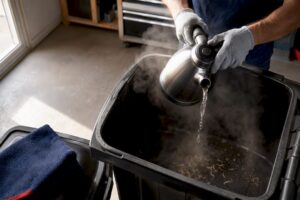
Heavy grease buildup requires hot water, industrial degreaser, and dwell time of roughly 20 to 30 minutes before pressure rinsing, plus wastewater capture if the drain runs toward a storm system.
How Much Does Commercial Cleaning Cost Per Square Foot?
Dumpster pad cleaning commonly runs $0.50 to $2.50 per square foot, with the higher end reflecting grease contamination and wastewater reclamation needs.
How Much Does a Dumpster Itself Cost to Buy?
Buying a dumpster is a separate expense from cleaning it and typically runs into the thousands of dollars depending on size and type, so most properties rent rather than purchase.
How Often Should a Dumpster Pad Be Cleaned?
Restaurants and high-food-waste sites generally need weekly to monthly cleaning, while retail and office properties can often stretch to quarterly without odor or pest issues.