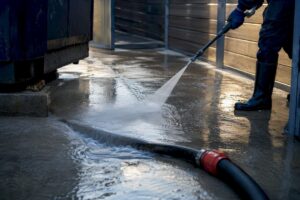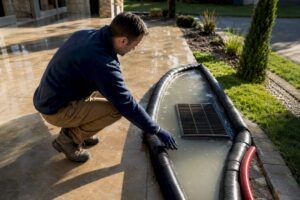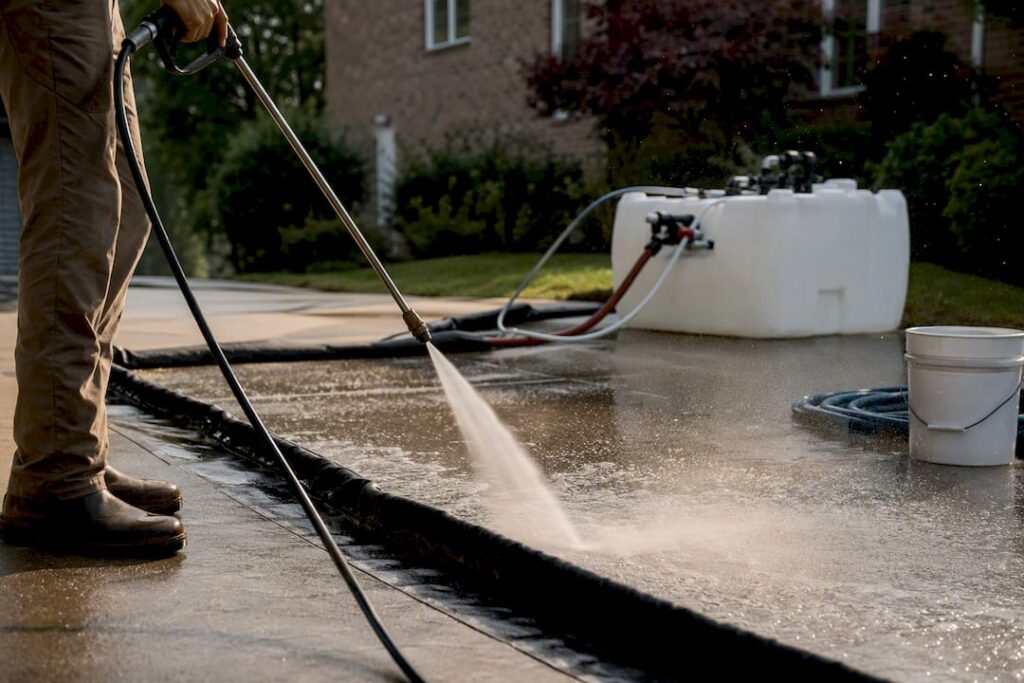
Never let pressure-wash rinse water reach a storm drain. Capture every gallon at the source, then move it through one of three lawful paths: an authorized sanitary sewer connection, a licensed liquid-waste hauler, or an on-site treat-and-reuse system that meets basic water-quality benchmarks. The job-site action is the same every time: block the drain, contain the runoff, and recover it before it travels an inch further.
TL;DR:
- Proper containment and recovery of wash water at every site prevent illegal storm drain discharges and reduce pollution risks.
- Using site-specific containment equipment like berms, drain mats, and sumps can effectively stop contaminated runoff before it reaches storm drains.
- Treatment systems with settling, oil-water separation, and filtration can recycle water, but heavy metals and solvents often require licensed waste hauling.
- Regular maintenance of recovery equipment—including filter checks, pH, and ORP monitoring—is essential to prevent system failures and biofilm buildup.
- Incorporating onboard water recovery into routine operations, as done by professional services like American Bin Cleaning, maximizes efficiency and cost savings during high-frequency jobs.
Table of Contents
- Setting Up Pressure Washing Wastewater Recovery on Every Job
- What Equipment Actually Stops Runoff on Site?
- What Does a Wash Water Treatment System Involve?
- Where Can Pressure Wash Water Legally Go?
- Keeping a Recovery System Running Without Failures
- Is a Wastewater Recovery System Worth the Cost?
- How American Bin Cleaning Handles Recovery on Every Route
- Get Bin Cleaning and Pressure Washing With Built-In Wastewater Recovery
- Sources
Setting Up Pressure Washing Wastewater Recovery on Every Job
A compliant job runs the same sequence whether you’re cleaning a loading dock or a row of curbside bins. Walk the site before you unload equipment, and the order below keeps you out of trouble and keeps the water manageable once it’s captured.
- Scan the site first. Locate every storm drain, grate, and low point where runoff naturally travels, and note whether the property has sanitary sewer access you could use with permission.
- Get permission documented. If a sanitary sewer discharge is even a possibility, get the property owner’s sign-off in writing before you start.
- Deploy containment. Berms, drain mats, or absorbent socks go down before the first trigger pull, not after you notice water running toward the street.
- Pre-clean loose debris. Sweeping gross dirt and trash off the surface first cuts the solids load your recovery system has to handle.
- Capture continuously. Vacuum heads, submersible pumps, or a portable recovery tank should be pulling water into containment as you clean, not mopping up afterward.
- Do a quick field check. Look for visible oil sheen, heavy foaming, or obvious discoloration, and check pH if you’re leaning toward sewer disposal.
- Log everything. Photos of containment, the client’s signed authorization, and any hauler manifest or sewer approval note protect you if a municipal inspector ever asks questions.
This isn’t paperwork for paperwork’s sake. Mobile power-washing best management practices call for collecting all wash water and minimizing what you generate in the first place, with sanitary sewer discharge allowed only when the property owner and local pretreatment rules permit it.
What Equipment Actually Stops Runoff on Site?
Containment is cheaper and more reliable than trying to treat heavily contaminated runoff after the fact, according to guidance compiled for marina and fleet operators. Stopping water at the source beats chasing it downstream every time.
- Inflatable or foam berms work well on uneven or textured surfaces like brick pavers or aggregate concrete, where a rigid barrier would leave gaps.
- Rubber berms hold up better on smooth concrete and asphalt where you need a tight seal against a flat edge.
- Drain guards and mats cover storm grates directly when full berming isn’t practical, such as tight urban sidewalks near a curb inlet.
- Stainless-steel suction heads paired with a low-profile recovery mat let you pull standing water off flat driveways and dumpster pads almost as fast as it pools.
- Temporary sumps dug or built at the low point of a sloped site give pumps and vacuums a single collection point instead of chasing water across the whole surface.
Before any of that gear goes to work, manage the slope of the site and sweep loose debris off the surface. Removing gross solids up front protects the filters and pump seals you’ll rely on later.
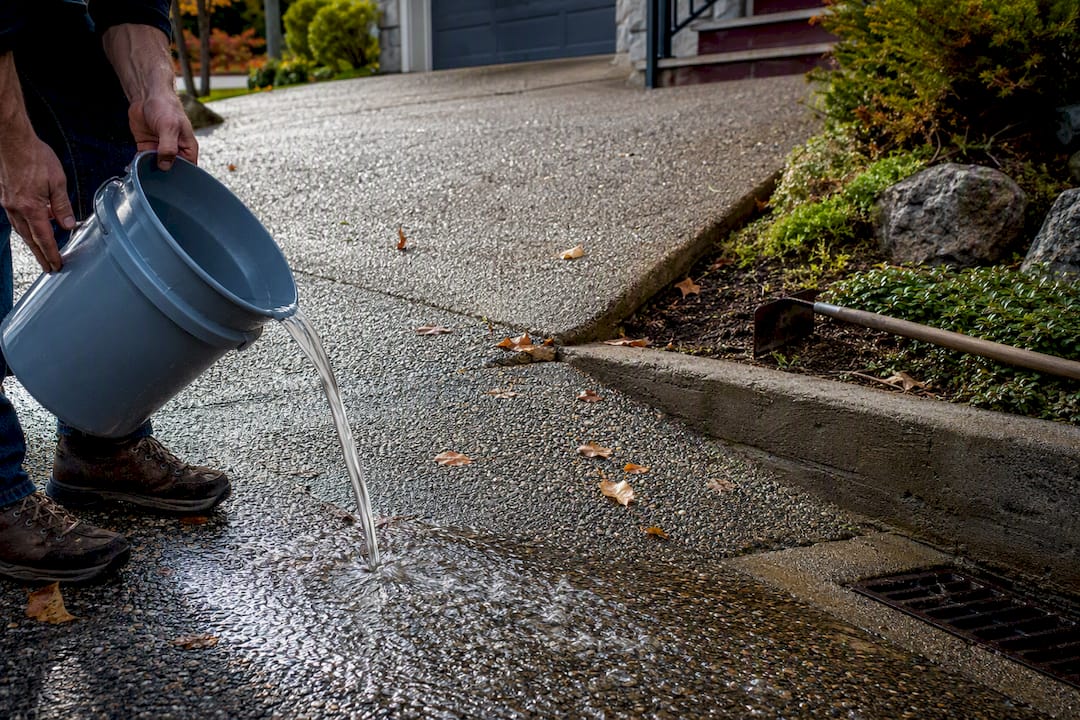
Pro Tip: Walk the site with a bucket of water before you bring out the pressure washer. Pour it near your planned work zone and watch where it actually flows. Slope doesn’t always match what your eyes tell you, and five minutes of testing beats redoing a berm mid-job.
What Does a Wash Water Treatment System Involve?
Treating recovered water follows a fairly standard sequence, and knowing each stage helps you judge whether reuse or sewer discharge is realistic for a given job. Contaminated wash water almost never goes from dirty to clean in one step.
- Settling. Heavier solids drop out first in a holding tank or the front chamber of a multi-stage unit.
- Oil-water separation. A coalescing stage pulls free oils and grease to the surface, where they’re skimmed or absorbed before they can foul downstream filters.
- Media filtration. Sand, bag, or cartridge filters knock down suspended solids, typically stepping progressively finer through the system.
- Carbon or fine polishing. This stage handles remaining fine particulate and some dissolved contaminants, often down into the 1 to 25 micron range on advanced units.
- ORP or ozone control. Oxidation-reduction potential monitoring paired with ozone or a chemical dosing system keeps stored water from turning septic and controls odor.
Advanced rinse-water recycling systems built for contractors combine oil-water separation, ozone or chemical ORP control, and multi-stage media filtration into a single treatment train, producing water clean enough to recirculate through the pressure washer itself.
The contaminants that matter most are oils and grease, heavy metals from siding and roofing runoff, suspended solids, and residual detergent. Even biodegradable soap counts as a pollutant once it’s mixed with wash water and headed toward a storm drain, so “eco-friendly” cleaning products don’t change your disposal obligations.
Not every load is a candidate for simple sewer discharge. If you’re cleaning a site with visible heavy metal staining, industrial grease buildup, or anything that smells like solvent, treat that as a signal to call a licensed hauler or request lab sampling rather than guessing at pH and moving on.
Where Can Pressure Wash Water Legally Go?
Storm drains connect directly to local waterways through municipal separate storm sewer systems, and those systems provide zero treatment. Discharging pollutant-laden wash water into one is generally prohibited under NPDES stormwater program rules tied to the Clean Water Act, and municipalities actively enforce it with fines.
That leaves three real options, and most operators end up using a mix depending on the job:
- Sanitary sewer discharge. This requires the property owner’s permission and, depending on your municipality’s pretreatment program, may require pH testing or a discharge notification before you connect.
- Licensed waste hauler. For jobs producing heavily contaminated water, a hauler picks up sealed containers and handles disposal at a permitted facility, usually with a manifest documenting volume and destination.
- On-site treat-and-reuse. A properly configured closed-loop system can eliminate discharge entirely, since the water gets treated and recirculated instead of leaving the job site.
Before you start a new route or a new commercial account, call the local sewer authority and ask directly what they require for wash water discharge. Keep a simple log of every job’s disposal method. That habit alone answers most inspector questions before they’re even asked.
Keeping a Recovery System Running Without Failures
A reclaim system is only as good as its maintenance schedule. Skip checks for a few weeks and you’ll find out the hard way, usually with a clogged filter mid-job or a tank that smells like a swamp.
- Check vacuum CFM and pump output weekly. A drop in suction usually means a clogged intake screen or a failing seal, not a bigger problem, if you catch it early.
- Watch filter pressure differential. Rising pressure across a filter housing tells you it’s time for a change before it blows past its rated capacity.
- Spot-check ORP and pH on stored water. Recycled water left untreated in a tank turns septic and starts smelling within days without periodic ozone or chemical dosing.
- Deploy oil-absorbing booms first. Putting them ahead of fine filtration protects the more expensive polishing media and stretches its usable life considerably.
- Log every maintenance action. Note filter changes, tank cleanouts, and ORP readings so you can spot a pattern before it becomes a breakdown.
Pro Tip: Pull a tank out of active rotation the moment you notice sustained odor even after ozone treatment. That’s usually biofilm buildup on the tank walls, and running dirty water through a system that’s already fouled just contaminates your next batch of “clean” recycled water.
Is a Wastewater Recovery System Worth the Cost?
Basic portable recovery setups with a suction head, vacuum motor, and containment berms run affordably for a single-crew operation. Trailer-mounted reclaim units with built-in filtration and storage typically cost several thousand dollars, and full industrial systems with ozone treatment and automated ORP control cost considerably more.
- Size for peak load, not average load. Match vacuum CFM and pump gpm to your largest job, not your typical one, since undersized systems lose suction and stall exactly when you need them most.
- Factor in avoided hauler fees. Every gallon you treat and reuse is a gallon you don’t pay someone else to take away.
- Weigh it against fine avoidance. A single storm-drain discharge violation often costs more than a year of recovery-system maintenance.
- Consider commercial bid advantages. Property managers and municipal contracts increasingly ask for proof of compliant wastewater handling before they’ll even accept a bid.
Professional mobile units often specify 200-plus CFM vacuum motors and 2-inch hoses to avoid losing prime over distance, a spec worth checking before you buy based on price alone.
How American Bin Cleaning Handles Recovery on Every Route
Recovery only works if it’s built into daily operations, not treated as an occasional add-on. American Bin Cleaning has run curbside bin and pressure washing routes throughout Chicagoland since 1989, and the on-board recycling system captures wastewater from every stop rather than letting it hit the pavement or a nearby drain.
Recurring routes make the case for onboard reclaim obvious once you run the numbers on a single truck over a full season. A crew hitting dozens of stops a day generates real volume, and hauling or dumping that water job by job adds up fast in both cost and risk exposure. Building capture into the vehicle itself, rather than relying on a portable setup at each stop, keeps the process consistent regardless of which technician is running the route that day.
The bigger lesson for any operator scaling past a one-truck operation: reclaim equipment pays for itself faster on high-frequency work than on occasional jobs, because the fixed cost of the system gets spread across far more gallons recovered.
— Jim
Get Bin Cleaning and Pressure Washing With Built-In Wastewater Recovery
If you’ve read this far as a homeowner or property manager rather than an operator, here’s the practical takeaway: you don’t have to source and manage this equipment yourself to get compliant service. Abcbins runs residential and commercial pressure washing with recovery built into the truck, so every job, from a single driveway to a full commercial route, captures wastewater instead of sending it toward a storm drain.
That matters most for recurring service. Our curbside bin cleaning plans run on monthly, bi-monthly, or quarterly schedules, and you never need to be home for the crew to show up, contain the job, and haul away the wastewater properly. If you’re in the Barrington area, check out our local bin cleaning service and get a quote for your next scheduled cleaning.
This article is general information, not a substitute for advice from a qualified lawyer. Consult a qualified legal professional about your own circumstances before acting on anything here.