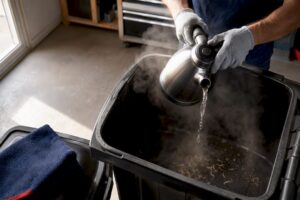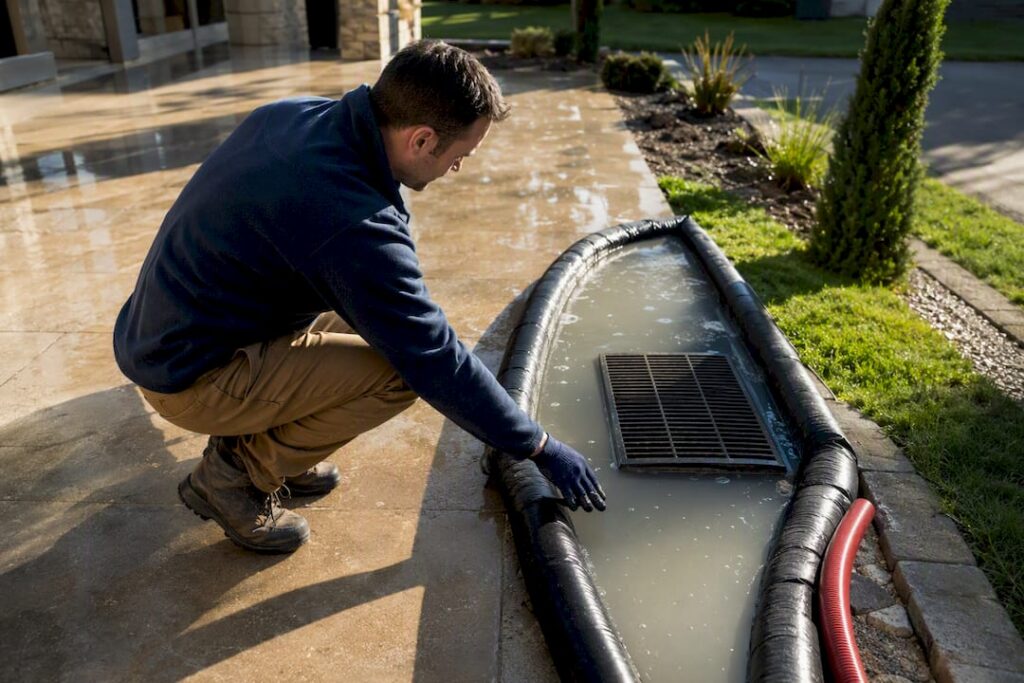
Test the surface with plain water first, since most residential grime lifts without any chemicals at all. When you do need a cleaner, favor a soft wash for algae, mold, and organic stains, and always contain the wastewater so it never reaches a storm drain. Sweep loose debris, locate nearby drains, and pre-wet plants before you start. If the job involves heavy grease, roof treatments, or lead-painted surfaces, call a professional with proper containment equipment.
TL;DR:
- Plain water testing is effective on most residential grime, significantly reducing chemical use and runoff concerns in pressure washing jobs.
- Use soft wash techniques for delicate surfaces like siding and wood to avoid damage, reserving high pressure for concrete and heavily soiled areas.
- Avoid storm drain discharge by pre-wetting plants, blocking drains, and capturing contaminated water with proper equipment, especially in lead or grease jobs.
- Select biodegradable, plant-safe cleaners and avoid harsh chemicals like acids, caustic bases, or undiluted bleach to minimize environmental harm.
- A professional with containment equipment typically produces less runoff pollution and is recommended for complex tasks such as roof washing or lead paint removal.
Table of Contents
- What Does Eco-Friendly Pressure Washing Actually Mean?
- How Do You Choose a Plant-Safe, Biodegradable Cleaner?
- Soft Wash Or High Pressure: Which One Do You Actually Need?
- What Containment Steps Prevent Wash Water From Becoming a Pollution Problem?
- Which Equipment Choices Cut Water Use And Overspray?
- What Safety And Permit Rules Should You Know Before Starting?
- Why A Trained Pro Can Be The Greener Choice
- A Cleaner, Lower-Impact Way To Handle Bin And Property Cleaning
- Sources
What Does Eco-Friendly Pressure Washing Actually Mean?
Eco-friendly pressure washing is not a single product or setting. It is the combination of three choices: the right cleaning method for the job, a product that will not poison a storm drain, and a plan for where the dirty water actually goes. Skip any one of those and you have not really cleaned “green,” even with an organic-labeled soap in the tank.
Start by testing with plain, high-pressure water before reaching for any detergent. Municipal and campus EHS guidance points out that a huge share of residential jobs, from patio dust to loose mildew, come clean with water alone, which means no containment obligations and no runoff to worry about.
The surface you’re working on should drive your method:
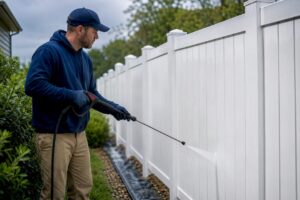
- Vinyl and painted siding: low pressure, wide fan tip, chemicals only for stubborn mold
- Wood decks and fences: always soft wash; high pressure gouges and splinters the grain
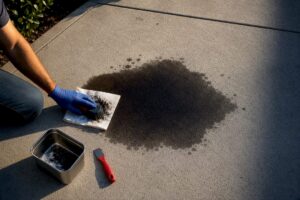
- Concrete and pavers: can handle higher PSI, but oil stains often need a degreaser
- Roofing: soft wash only, ever, to avoid stripping granules or breaking seals
How Do You Choose a Plant-Safe, Biodegradable Cleaner?
Skip anything with strong acids, caustic bases, or undiluted bleach. A stronger mix does not clean faster. It just adds more contaminant load to whatever water eventually runs off your property.
Read labels with a skeptical eye. “Biodegradable” describes how a product breaks down in a municipal sewage treatment plant, not what it does when it hits a storm drain. UNC’s environmental health office notes that even green-labeled cleaners can still harm fish and aquatic insects if they reach a creek or pond untreated. “Green” on a bottle is a marketing claim, not a discharge permit.
For most homeowner jobs, a simple DIY mix works fine:
- Diluted white vinegar for light mildew on hard surfaces
- A phosphate-free, biodegradable exterior soap for siding and decks
- Oxygen bleach (not chlorine bleach) for organic stains on wood
Pro Tip: If a cleaner needs gloves, goggles, and a respirator just to mix it, it needs professional-grade containment and neutralization too. That is your signal to call a pro instead of experimenting in the driveway.
Soft Wash Or High Pressure: Which One Do You Actually Need?
Soft washing pairs low PSI with a cleaning solution that dwells on the surface, breaking down algae and mold at the root instead of blasting it off. It often uses less total water than repeated high-pressure passes and does far less damage to siding, shingles, and wood grain. Soft-wash chemistry can also stretch the interval between cleanings, cutting lifecycle water and product use compared with blasting the same surface every few months.
High pressure earns its keep on concrete, brick, and other surfaces caked with grease or ground-in dirt that chemistry alone won’t shift. Keep these limits in mind:
- Stay under 1,500 PSI for wood and vinyl; concrete can typically handle 3,000 PSI or more
- Use a 25 or 40 degree nozzle for general work, saving the 0 degree tip for isolated stains only
- Hold the wand at a consistent angle and distance to avoid streaking or gouging
What Containment Steps Prevent Wash Water From Becoming a Pollution Problem?
Wash water is waste, not rain, the moment it picks up soap, oil, or paint chips. Treat it that way from the first minute of the job, not after you notice it pooling near a curb.
Run through this sequence before you ever pull the trigger:
- Dry sweep first. Clearing loose dirt and debris keeps solids out of the wash water and cuts the pollutant load significantly, according to city-level best management practice guidance.
- Find every drain. Walk the property and note where storm drains, gutters, and slopes will carry runoff.
- Pre-wet vegetation. Soaking plants and grass beforehand dilutes any stray splash and reduces chemical burn.
- Block or divert flow. Use drain covers, sand socks, or a simple berm to keep water from reaching a storm drain.
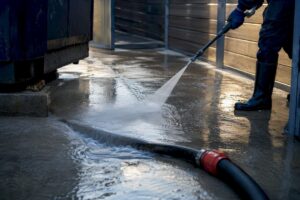
- Capture what you can. A wet vac or a portable recovery system pulls dirty water off flatwork before it travels anywhere.
Detailed BMP guidance from EosLog lays out three real disposal paths once water is contaminated: discharge to the sanitary sewer with permission, hire a licensed hauler, or, for small residential jobs, capture and let it evaporate. Each option carries its own cost and equipment demands, and none of them is “just let it run into the street.”
Discharging detergent-laden water into a storm drain is prohibited in most municipalities, full stop. City BMP documents require pre-planning and drain protection specifically because storm drains empty straight into local waterways with zero treatment in between.
Which Equipment Choices Cut Water Use And Overspray?
Gallons per minute (GPM), not just pounds per square inch (PSI), determines how much water you actually pour onto a surface. A lower-GPM machine can clean just as effectively for most home jobs while cutting the volume of runoff you have to manage.
A few equipment habits make a real difference:
- Use a surface cleaner attachment on driveways and patios; it covers flatwork evenly with less water than manual sweeping motions
- Choose a wider fan nozzle over a pinpoint tip whenever the surface allows it
- Angle your rinse pass downhill and away from garden beds
- Fix leaking hoses and swap worn nozzles immediately; a degraded tip wastes water and forces you to make repeat passes
Flow control and nozzle selection often reduce total gallons used more than simply dialing down the pressure, since a poor spray pattern forces multiple passes over the same spot.
What Safety And Permit Rules Should You Know Before Starting?
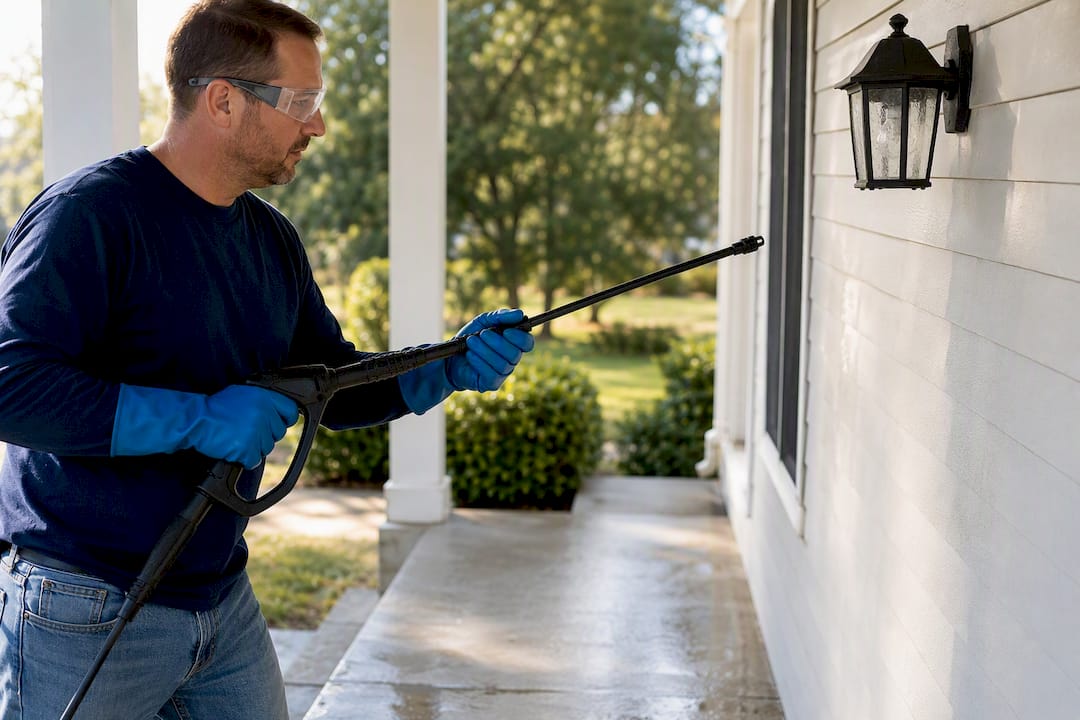
Wear eye protection, closed-toe shoes, and gloves rated for whatever chemical you’re using, and keep the wand at least a foot or two from skin, windows, and light fixtures to avoid injury or damage.
If your home was built before 1978 and you’re washing painted exterior surfaces, the EPA’s Renovation, Repair, and Painting (RRP) rule applies. EPA guidance confirms pressure washing is allowed on lead-painted surfaces, but only with proper isolation and wastewater containment so paint chips and contaminated water don’t leave the work area.
A few habits protect you legally and environmentally:
- Photograph your drain covers, berms, or vacuum setup before and after the job
- Keep the safety data sheet (SDS) for any product you use on hand
- Check your local stormwater ordinance before you assume any wash water can be discharged on-site
Why A Trained Pro Can Be The Greener Choice
DIY pressure washing without a recovery plan almost always sends more contaminated water into the storm system than a properly equipped professional job does. A trained crew arrives with vacuum capture and on-board recycling systems built for exactly this problem, which is not gear most homeowners own or want to buy for one weekend project.
Roof soft-washing, heavy grease removal, and any job touching lead paint call for professional-grade chemistry, neutralization, and disposal protocols that go beyond a garden hose and a rented machine. A pro is not always the greener option by default. But when containment and disposal are genuinely complicated, hiring one usually is.
— Jim
A Cleaner, Lower-Impact Way To Handle Bin And Property Cleaning
If you’d rather skip the drain covers and wastewater math altogether, Abcbins handles the containment side for you. Every job runs through an on-board recycling system, so wastewater from curbside bin cleaning, residential pressure washing, and dumpster pad cleaning stays captured instead of running off into your yard or the street.
The company offers curbside bin cleaning on flexible plans, plus residential and commercial pressure washing for driveways, decks, storefronts, and dumpster pads. Before booking any pressure washing company, ask what containment method they use, where the wastewater goes, and whether they can show you an SDS for their cleaning products. If they can’t answer clearly, keep looking.
You don’t need to be home for service, either. Check out the residential pressure washing services page to see what’s available in your area, or visit American Bin Cleaning to find a service plan that fits your property.
Sources
- Pollution Prevention During Pressure Washing – Environment, Health and Safety (UNC EHS)
- Best Management Practices for Pressure Washing and Mobile Cleaning (City of Lawrence BMPs)
- How do RRP requirements apply to pressure washing? (EPA)