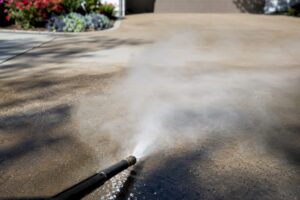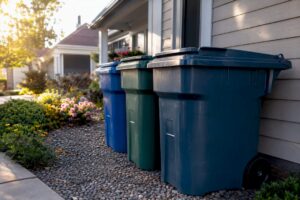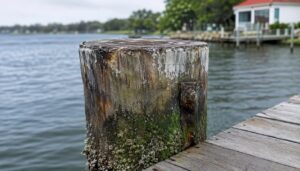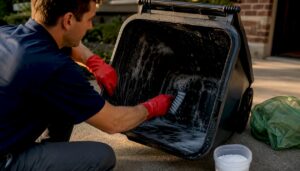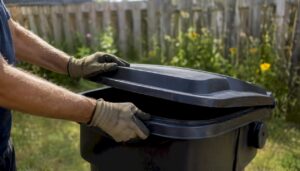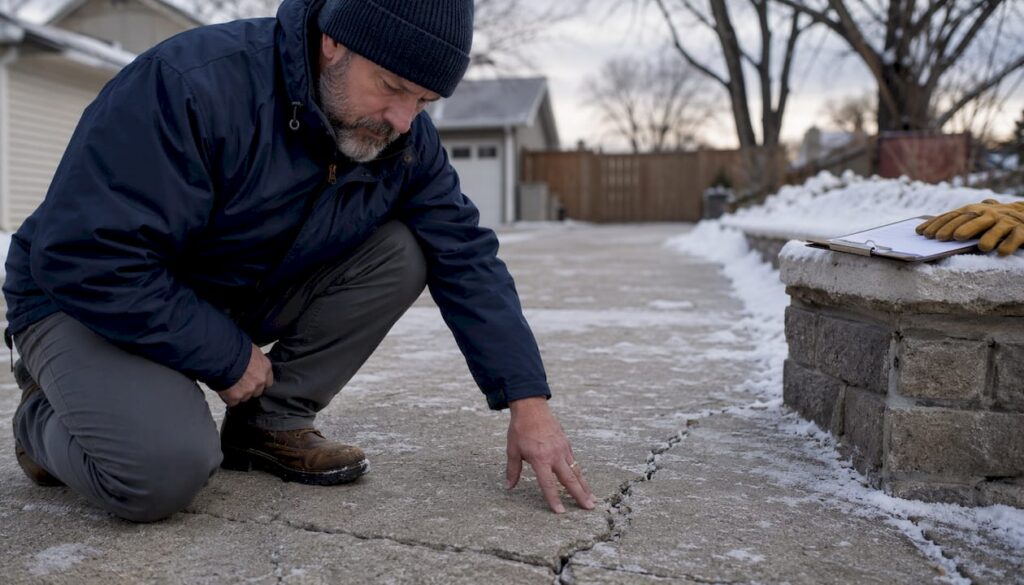
Winter in northern Illinois and southern Wisconsin is not just cold. It’s a mechanical assault on every porous surface you own. Freeze–thaw cycles, the real driver of winter surface damage, force water into micro-cracks, expand it as it freezes, and repeat that process multiple times throughout a winter season. Outdoor surface cleaning during winter isn’t simply a dirt problem. It’s a timing and runoff-management problem, and getting it wrong can accelerate damage rather than prevent it.
Your immediate decisions:
- Delay deep cold-pressure washing until daytime temps hold at 40–45°F or above.
- Schedule bin cleaning with a service that uses on-board water recovery, like American Bin Cleaning.
- Use hot-water, low-pressure methods for salt and grease; reserve cold pressure for routine dirt only.
Table of Contents
- How freeze–thaw cycles physically damage your outdoor surfaces
- What winter actually does to your trash bins and pickup schedule
- Why winter cleaning can make damage worse — and how pros prevent that
- A practical winter cleaning checklist for homeowners and property managers
- Which situations need a pro and which are safe to handle yourself
- How American Bin Cleaning handles winter-safe bin and surface cleaning
- Key Takeaways
- The part most guides skip
- A field perspective on winter cleaning timing
- Book Abcbins for winter-safe bin and surface cleaning
- Useful sources and further reading
How freeze–thaw cycles physically damage your outdoor surfaces
Freeze–thaw cycles drive most winter surface deterioration because trapped moisture has nowhere to go but outward. Water seeps into pores and micro-cracks during a mild afternoon, then freezes and expands overnight. That pressure is enough to widen a hairline crack into a visible fracture. Repeat it across a full Midwest winter and you get scaling, spalling, and eventually structural failure.
Northern Illinois and southern Wisconsin sit in a particularly punishing zone. Outdoor surfaces here can experience many freeze–thaw cycles in a single winter, and road salt compounds the damage by keeping surfaces wet longer, allowing more moisture to penetrate before the next freeze. Porous concrete, older asphalt, and brick or paver joints are the most vulnerable. Asphalt driveways suffer a one-two punch: de-icers soften the binder while standing water in cracks accelerates oxidation.
Freeze–thaw cycle in four steps: pore fills with water → temperature drops below 32°F → water expands ~9% → micro-crack widens. Surfaces in northern Illinois and southern Wisconsin can experience 30–80 freeze–thaw cycles per winter.
Preventive sealing is the single most effective countermeasure. High-quality penetrating sealers can reduce moisture absorption considerably, depending on the material, and most remain effective for several years. Apply before winter, not after the damage has already started.
What winter actually does to your trash bins and pickup schedule
Bins freeze shut more often than most homeowners expect. Snow, rain, and food residue bond to bin walls when temperatures stay below 20°F for consecutive nights, locking lids and bags in place and making it physically impossible for collection crews to empty the container.
Common failure modes:
- Lids frozen to the bin rim, requiring force that can crack plastic in cold weather.
- Bags frozen to interior walls, leaving residue that compounds with the next load.
- Grease and food liquid freezing into a solid block at the bin’s base.
- Ice sheets forming inside the bin from accumulated moisture, blocking the entire interior.
The operational consequences go beyond inconvenience. Missed pickups mean overflow, extra handling fees, and a bin interior that becomes progressively harder to clean. Cold weather does not eliminate pest attraction. Rodents and insects are drawn to residue regardless of temperature, and a frozen layer of organic matter is still organic matter.
Pro Tip: The morning of your scheduled pickup, move the bin to a sunny spot on the south or east side of your property. Even an hour of direct sun can loosen a frozen lid without any tools or chemicals.
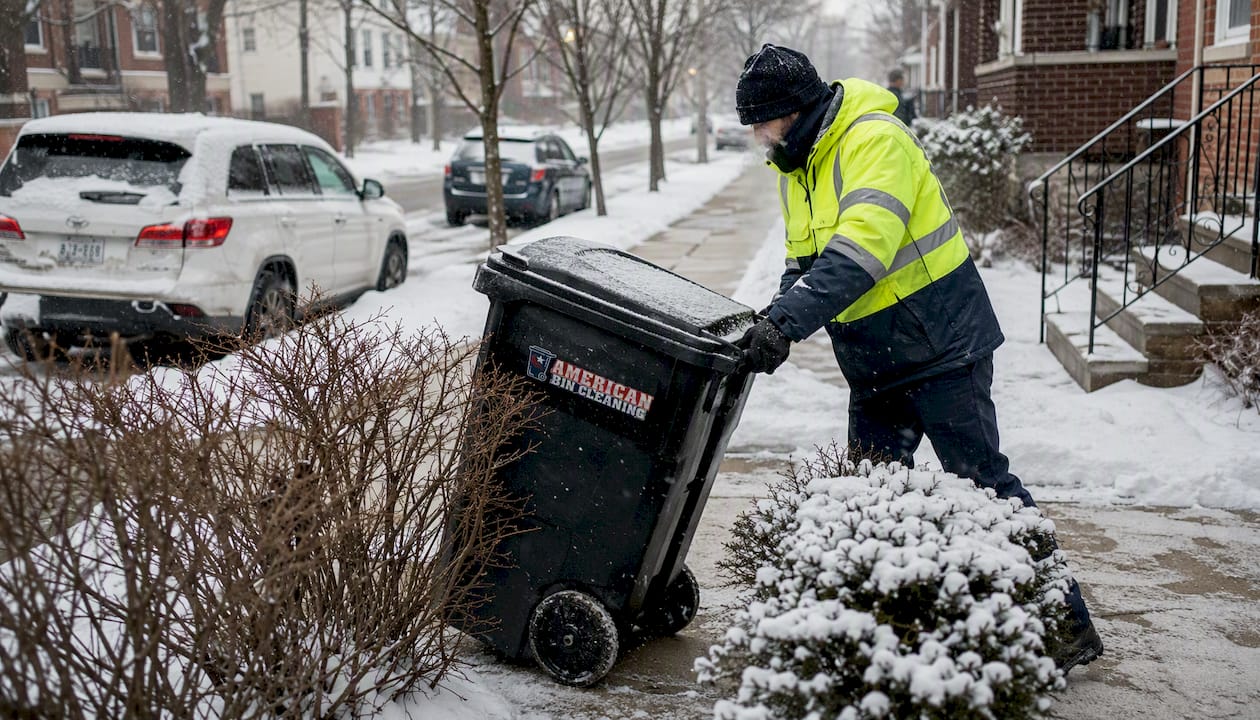
Understanding why trash cans need deep cleaning matters more in winter, not less. Residue that seems minor in October becomes a structural ice problem by January.
Why winter cleaning can make damage worse — and how pros prevent that
Cleaning in winter is riskier because water can freeze on surfaces or inside equipment, creating both structural damage and serious slip hazards unless actively managed. That’s not a reason to skip maintenance. It’s a reason to do it right.
Three risk categories to understand:
- Surface damage: High-pressure cold water forced into micro-cracked concrete or asphalt can accelerate spalling. The water you push in today freezes tonight.
- Safety: Runoff from any outdoor cleaning can sheet across driveways, walkways, and commercial entrances and freeze within minutes. That icing risk is one of the primary concerns professionals manage on every winter job.
- Equipment failure: Hoses, pumps, and fittings can crack when water freezes inside them. Professionals winterize equipment and switch to cold-weather compatible detergents to avoid downtime and damage.
Professional crews schedule winter cleaning during the warmest part of the day, use hot-water or low-pressure methods, and capture all wastewater on-board to prevent runoff from reaching storm drains or pedestrian paths.
Many municipalities in the Chicago metro area restrict discharge to storm drains. On-board wastewater capture isn’t just an environmental preference. It’s often a compliance requirement.
Pro Tip: Never schedule outdoor pressure washing the afternoon before a predicted overnight freeze. Water forced into pores at 3 PM can freeze by 10 PM and cause more damage than the original grime.
A practical winter cleaning checklist for homeowners and property managers
Pick a warm window. Professionals target daytime highs above freezing so surfaces have time to dry before overnight temperatures drop. Avoid cleaning within 24 hours of a predicted freeze.
- Clear the site. Move vehicles, furniture, and anything that could trap runoff. Mark all nearby drains.
- Note shaded areas. North-facing surfaces dry much slower. Either skip them or plan for extended drying time.
- Choose the right method for each surface. See the comparison table below.
- Direct runoff deliberately. Route water toward turf or gravel, never toward pedestrian paths or storm drains.
- Post-clean check. Walk the area 20–30 minutes after finishing. Any standing water in a shaded spot needs to be swept or absorbed before dark.
| Method | Best use | Winter caution |
|---|---|---|
| Hot-water cleaning | Salt film, grease, oil, bin residue | Lower risk of freeze-back; preferred for porous surfaces |
| Cold pressure washing | Routine dirt, mildew, general grime | Avoid on cracked or compromised surfaces; high freeze-back risk |
| Soft-wash / low-pressure | Siding, painted surfaces, wood decks | Slower drying; only use on days with extended warm window |
For frequency, residential properties benefit from monthly cleaning, while commercial properties handling food waste typically need biweekly or weekly service. High-traffic commercial entrances need more attention in winter because tracked-in salt and grit raise both maintenance costs and slip liability.
The home pressure washing service checklist from Abcbins walks through exactly what to confirm before and after a winter job.
Which situations need a pro and which are safe to handle yourself
Call a professional when structural damage, heavy grease, or runoff liability is in play. That’s the short answer.
Call a pro when you see:
- Visible cracks wider than 1/16 inch that collect water.
- Grease-saturated driveway or dumpster pad areas.
- Repeated missed pickups caused by frozen bins.
- High-traffic commercial entrances where icing creates slip liability.
- Any situation where runoff could reach a storm drain or public walkway.
Questions to ask when booking:
- Do you use on-board wastewater capture?
- What water temperature options do you offer for winter jobs?
- How do you schedule around freeze forecasts?
- Are you insured for slip-and-fall liability during winter cleaning?
- What recurring plan options do you offer?
DIY is reasonable for:
- Using granular deicer to loosen a frozen lid before pickup day.
- Moving the bin to a sunnier spot the morning of service.
- Lining the bin interior to reduce residue contact with walls.
- Light rinsing on a genuinely warm day (above 45°F) with no freeze forecast for 24 hours.
Avoid the common garbage bin cleaning mistakes that turn a quick fix into a bigger problem, especially in winter when water management is unforgiving.
How American Bin Cleaning handles winter-safe bin and surface cleaning
Abcbins runs winter-safe workflows built around water capture, timing, and low-impact methods to avoid freeze damage and runoff. That’s not a marketing claim. It’s the operational difference between a crew that shows up with a garden hose and one that’s been doing this since 1989.
Winter service offerings:
- Curbside bin cleaning with on-board wastewater recycling, so nothing runs off into drains or freezes on your driveway.
- Hot-water cleaning option for salt film, grease, and frozen residue inside bins and on dumpster pads.
- Dumpster pad cleaning for commercial properties.
- Recurring service plans: monthly, bi-monthly, quarterly, and on-demand.
| Plan | What’s included | Winter benefit |
|---|---|---|
| Monthly | Full bin sanitization, odor treatment | Prevents residue from freezing into ice layers |
| Bi-monthly | Bin cleaning + inspection | Catches freeze damage before it compounds |
| Quarterly | Deep clean, deodorize | Good baseline for lower-traffic residential bins |
| On-demand | Single-visit cleaning | Flexible for post-storm or pre-holiday needs |
Abcbins’s curbside cleaning service operates without requiring you to be home. The crew handles everything, captures all wastewater on-board, and leaves no runoff behind. The 99.99% bacteria reduction claim reflects the high-pressure, high-temperature process used on every bin.
Key Takeaways
Freeze–thaw cycles and unmanaged runoff are the two primary threats to outdoor surfaces in northern Illinois and southern Wisconsin winters, and both require timed, professional-grade responses.
| Point | Details |
|---|---|
| Freeze–thaw cycles cause most damage | Water expands ~9% when it freezes; northern Midwest surfaces face 30–80 cycles per winter. |
| Temperature window matters | Clean only when daytime highs reach 40–45°F and no freeze is forecast within 24 hours. |
| Hot-water methods reduce freeze risk | Hot-water cleaning at elevated temperatures removes salt and grease without driving cold water into pores. |
| Runoff control is a compliance issue | Many municipalities restrict storm-drain discharge; on-board capture is the professional standard. |
| Abcbins for winter-safe service | American Bin Cleaning offers on-board wastewater recycling, hot-water options, and recurring plans. |
The part most guides skip
A field perspective on winter cleaning timing
The conventional advice is to wait for spring. That’s not wrong, but it’s incomplete. The real risk window in northern Illinois isn’t January, when temps stay consistently below freezing and surfaces are essentially locked. It’s the shoulder periods, late November and late February through March, when temperatures swing above and below 32°F repeatedly within a single day. That’s when freeze–thaw cycles are most frequent and most damaging.
Cleaning during those shoulder windows, done correctly with hot water and on-board capture, actually reduces cumulative damage by removing the salt and grit that hold moisture against the surface. Waiting until April means your surfaces have spent three months in contact with road salt and organic residue, both of which accelerate the freeze–thaw deterioration cycle.
The crews at Abcbins schedule winter work midday on sunny exposures specifically because south-facing surfaces dry fastest. That’s not a coincidence. It’s the kind of operational detail that separates a service with 35-plus years of Midwest winters behind it from one that learned pressure washing from a YouTube tutorial.
*— Jim
Book Abcbins for winter-safe bin and surface cleaning
Booking is simple: choose your frequency, pick a warm window, and confirm the on-board wastewater capture option is included.
Abcbins serves homeowners and commercial property managers across Chicagoland, including Barrington, McHenry, and Lake Zurich. Family-owned since 1989, the team brings winter-specific scheduling, hot-water equipment, and a zero-runoff process to every job. No need to be home. No wastewater left behind.
To book: visit abcbins.com or call directly. Have your address, bin count, and preferred service frequency ready. For commercial properties, note whether dumpster pad cleaning or storefront pressure washing is needed alongside bin service.
Useful sources and further reading
- Why does water expand when it freezes? — H2O Global News: The physics behind the ~9% expansion figure used throughout this article.
- Freeze–Thaw Damage on Driveways, Walkways, and Outdoor Surfaces — SurfaceProblems: Detailed breakdown of how different surface materials respond to repeated freeze–thaw cycles, including the 40–80 cycle range for northern U.S. regions.
- Winter Pressure Washing Challenges — Sunset Pressure Washing: Covers icing hazards, equipment risks, and timing strategies for cold-weather exterior cleaning.
- Best Practices for Pressure Washing in Cold Weather — WET: Equipment winterization, cold-weather detergents, and pump protection guidance.
- Pressure Washing in Winter: What’s Safe and What’s Not — Washh: Explains the 40–45°F threshold professionals use for scheduling winter cleaning jobs.
- Hot vs Cold Power Washing — Anchor Facility Services: Explains when hot-water methods outperform cold pressure for grease, salt, and oil removal.
- Water Reclamation in Commercial Cleaning — E&R Cleaning Solutions: Why on-board capture matters for compliance and pedestrian safety in winter.
- Keeping Your Trash Bins Clean in Winter — Bintastic: Frequency recommendations and the case for year-round bin cleaning schedules.
- How to Handle Your Outdoor Trash Can During Winter — Tri-State Disposal: Practical homeowner tips for preventing frozen bins and missed pickups.
- American Bin Cleaning — abcbins.com: Primary source for service plans, on-board recycling system details, and booking.