Choose hot water pressure washing whenever grease, oil, animal fat, or sanitation rules are part of the job. Heat breaks down soils that cold water just pushes around, and it does it faster.
Here’s the quick version:
- Grease, oil, or protein soils present → go hot. Heat emulsifies fats that cold water can’t touch.
- Mud, dirt, loose paint, or general grime → cold water often gets the job done for less money.
- You need sanitization, faster drying, or quicker turnaround → hot water wins, especially in food service, agriculture, and fleet maintenance.
The rest of this guide covers exact temperature ranges, what a hot water unit actually costs to buy or rent, and how to decide between doing it yourself or hiring it out.
Key Takeaways
Hot water pressure washing removes grease, oil, and protein soils faster than cold water and delivers a measurable sanitizing effect above roughly 140°F.
| Point | Details |
|---|---|
| Match heat to the soil type | Choose hot water for grease, oil, and sanitation jobs; cold often works fine for mud and dirt. |
| Know your temperature range | Standard hot wash runs —, with steam stages available for stubborn residue. |
| Budget for the price gap | Commercial hot units start around $3,000, but can cut cleaning time by 35 to 40 percent. |
| Maintenance is non-negotiable | Burners, coils, and fuel systems need scheduled service that cold units don’t require. |
| Consider a professional service | Abcbins offers recurring bin and pressure washing plans with on-board wastewater recycling. |
Table of Contents
- What Makes Hot Water Pressure Washing Different
- Where Hot Water Actually Outperforms Cold
- How Hot Does the Water Need to Be?
- Matching the Machine to the Job
- Buy, Rent, or Hire a Professional?
- What Hot Water Pressure Washing Actually Costs
- Staying Safe Around Heat and Pressure
- Keeping a Hot Water Unit Running for Years
- When It Makes More Sense to Call a Professional
- Let Abcbins Handle the Hot Water Side of Things
- Sources
What Makes Hot Water Pressure Washing Different
Heat plus pressure breaks down oils and kills more bacteria than pressure alone, which is the whole reason hot water units exist despite costing several times more than cold ones. Cold water pressure washers rely entirely on mechanical force and detergent chemistry. Hot units add a third weapon: thermal energy that loosens molecular bonds in grease and speeds up every chemical reaction happening on the surface.
The flow through a hot water machine looks like this: water enters from a supply line, a pump builds it to working PSI and GPM, then it passes through a burner or electric heat exchanger before exiting through the wand and nozzle. That heating stage is what separates the two categories of machine.
Heat sources vary by unit. Diesel and gas-fired burners dominate the commercial and industrial market because they heat water quickly and work off-grid. Liquid propane and natural gas burners show up on stationary units. Electric heat exchangers exist for indoor work where exhaust fumes aren’t an option, though they need serious electrical capacity. Adding a burner also changes the math on flow: pushing water through a heating coil faster than the burner can raise its temperature means you get warm water instead of hot, so manufacturers size the burner and pump together rather than bolting a heater onto any random pump.
Where Hot Water Actually Outperforms Cold
Hot water pressure washing cuts cleaning time, uses less detergent, dries surfaces faster, and knocks down microbial load in ways cold water simply can’t match. Manufacturer testing shows cleaning-time reductions of roughly 35 to 40 percent on typical heavy-duty commercial jobs, largely because heat accelerates the chemistry doing the actual work.
The use cases where that advantage shows up most:
- Engine bays and heavy equipment caked in grease
- Restaurant hoods, exhaust systems, and food prep floors
- Fleet washing for delivery trucks and construction vehicles
- Grease-stained pavement outside restaurants and loading docks
- Agricultural facilities and livestock equipment
- Paint or bitumen removal using a steam stage
- Winter de-icing and road salt buildup on equipment
- Sites with strict sanitation requirements, like healthcare or food processing
Pro Tip: Not every surface wants heat. Certain sealed woods, painted automotive finishes, and older or crumbling masonry can warp, blister, or erode under high temperature combined with pressure. When in doubt, test an inconspicuous spot first and dial back both PSI and temperature.
How Hot Does the Water Need to Be?
Water temperature drives sanitizing power and how fast oils break apart. The hotter the water, the faster the chemical action, but that speed comes with real safety trade-offs you can’t ignore.
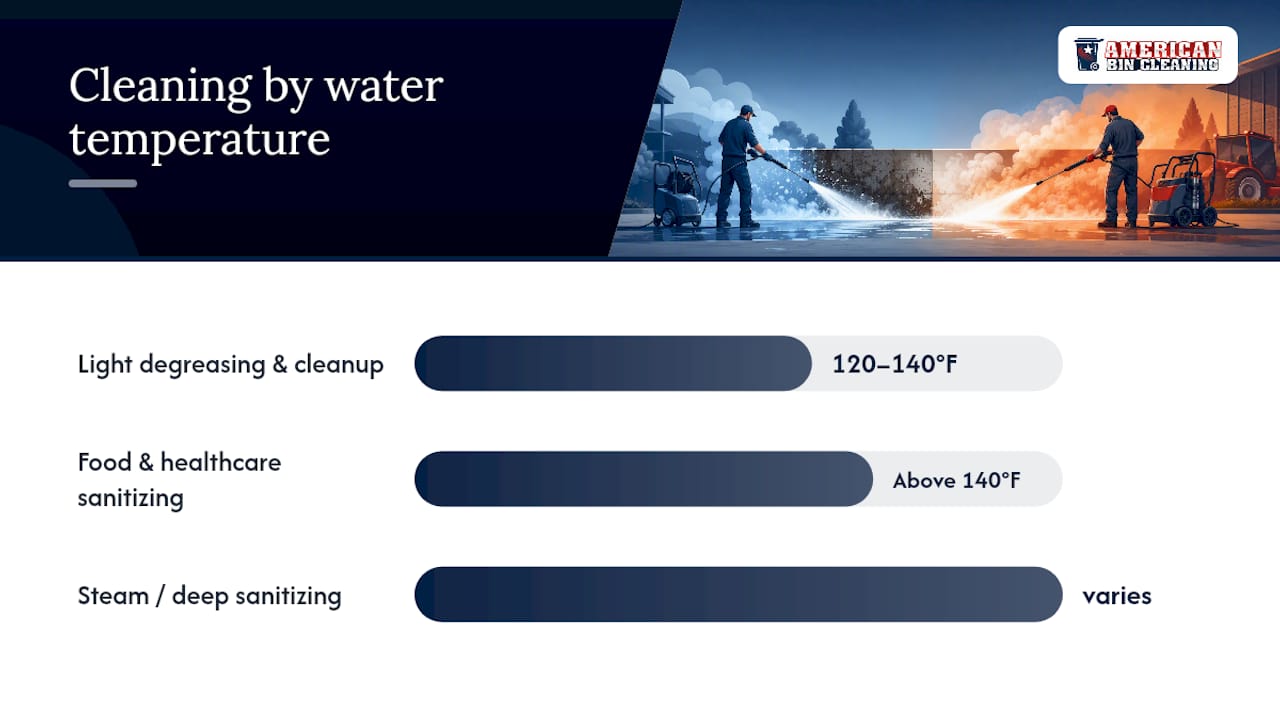
Most commercial hot water units run in a working range that covers everyday cleaning through heavy-duty sanitation work.
| Temperature Range | What It’s Used For |
|---|---|
| 120°F to 140°F | Light degreasing, general commercial cleanup |
| — | — Standard hot wash mode for grease, oil, food-safety cleaning |
| Steam stage (varies by model) | Bitumen removal, deep sanitizing, specialty industrial jobs |
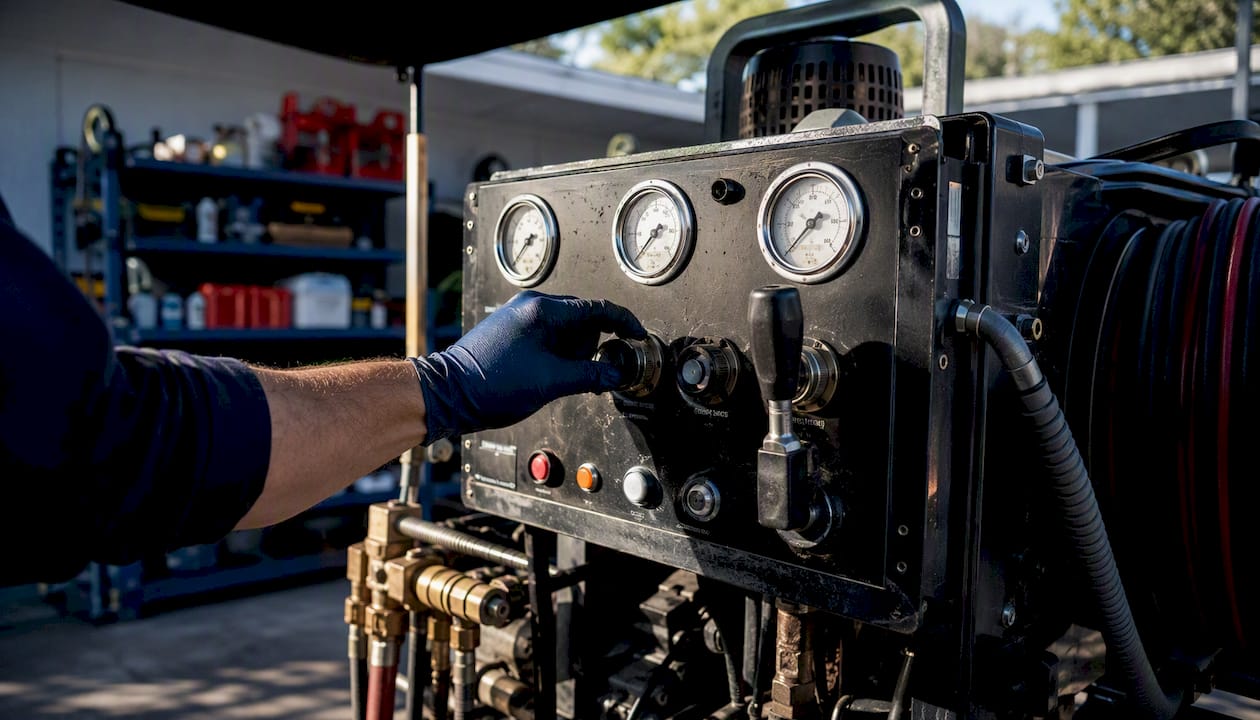
Sustained temperatures above roughly 140°F create a measurable germ-reducing effect, which is why food processing plants and healthcare facilities specify hot water equipment rather than relying on detergent alone. Some machines add a steam stage that runs considerably hotter for jobs like stripping old bitumen or handling stubborn industrial residue.
That heat cuts both ways. Steam and near-boiling spray can cause serious burns in a fraction of a second, and the same heat that sanitizes a countertop can crack tile or discolor certain finishes. Stay inside the manufacturer’s rated temperature limits and wear the PPE the equipment calls for. This isn’t a spec to eyeball.
Matching the Machine to the Job
Hot water pressure washers come in three basic formats: portable skid or cart units, trailer-mounted rigs, and stationary machines fed by an electric boiler. Portables suit small crews moving between job sites. Trailer units carry their own fuel and water capacity for full-day industrial runs. Stationary electric units make sense for a fixed indoor location like a wash bay.
A few terms worth knowing before you shop:
- PSI measures cleaning force, or how hard the water hits the surface.
- GPM measures flow rate, or how much water moves through the system per minute.
- BTU or burner size determines how much the unit can heat that flow without the temperature dropping under load.
Here’s the trade-off nobody mentions on the spec sheet: pushing more GPM through a fixed burner size means the water spends less time in the heating coil, so temperature drops unless the burner is sized up to match. A light commercial rig built for occasional restaurant hood cleaning doesn’t need the burner capacity of a trailer unit running eight hours a day on a hog farm.
Buy, Rent, or Hire a Professional?
Buy a hot water unit if you need dedicated capability multiple times a month. Rent one for an occasional heavy job. Hire a professional when you need certified sanitation, turnkey wastewater capture, or simply don’t want the storage and maintenance headache.
Work through this before deciding:
- How often will you actually use hot water capability, realistically, per month?
- What’s the mix of jobs, mostly grease and sanitation, or occasional heavy cleanup?
- Do you have fuel storage, water access, and space to store a trailer-mounted unit?
- Can you handle burner maintenance and winterizing, or does that fall to someone else?
- Does the rental or purchase cost pencil out against hiring a service for the same job?
If you go the rental or contractor route, ask pointed questions before signing anything:
- What PSI, GPM, and maximum temperature does the unit actually deliver?
- How is wastewater captured and disposed of, and is that included?
- Is the company insured, and have they handled permits for this type of job before?
Vague answers on wastewater handling or insurance are the biggest red flag. A contractor who can’t tell you where the runoff goes probably isn’t following local discharge rules either.
What Hot Water Pressure Washing Actually Costs
Hot water units cost meaningfully more upfront than cold water machines, but they can cut labor hours and detergent spend enough to close that gap over time. Renting fills the space between those two extremes for anyone with a one-off or seasonal need.
Rough numbers to budget against:
- Entry-level commercial hot water units typically start around $3,000 and climb well past that for trailer-mounted, high-output rigs.
- Trailer-mounted rental units delivering 3,000 to 4,000 PSI run at daily or weekly rental rates that vary by region and provider.
- Ongoing costs include burner fuel (diesel, propane, or natural gas), engine fuel if the pump isn’t electric, water, detergent, and periodic burner and pump maintenance.
- Heat can reduce or eliminate detergent use on many grease jobs, which is a real line-item savings over a full year.
Run a simple break-even calculation: estimate annual hours of actual use, then compare purchase cost plus upkeep against what renting or hiring the same hours would cost. Don’t forget local permitting or wastewater disposal fees, which can add unexpected cost to either path.
Staying Safe Around Heat and Pressure
Hot water and steam raise both burn risk and the chance of surface damage, so PPE and matching temperature to the substrate aren’t optional steps to skip when you’re in a hurry.
Basic protective gear for anyone running a hot unit:
- Eye and face protection rated for splashback
- Heat-resistant gloves and long sleeves
- Non-slip, closed-toe boots
Keep bystanders well clear of the spray pattern, let surfaces cool before touching them, and always test an inconspicuous area first on anything you’re unsure about. Avoid full heat and pressure on untreated wood, delicate or aging masonry, and painted automotive surfaces unless you know exactly how they’ll react.
Pro Tip: Wastewater from hot water pressure washing often carries grease, detergent, and contaminants that can’t legally go down a storm drain. Capture and proper disposal aren’t a nice-to-have. They’re the difference between a compliant job and a fine.
Keeping a Hot Water Unit Running for Years
Hot water units demand more upkeep than cold water machines because burners, heating coils, and fuel systems all need scheduled attention that a cold unit simply doesn’t have.
Break maintenance into intervals: after every use, flush the system and check for leaks; monthly, inspect the burner and clean the coil; annually, service the fuel filter, change pump oil, and winterize if the unit sits idle in cold weather. Filtered water and a consistent fuel choice both extend coil life significantly, and commercial-grade units with belt-driven pumps typically outlast direct-drive models under heavy daily use.
When It Makes More Sense to Call a Professional
Hire a professional when you need reliable wastewater capture, a recurring service schedule, sanitizing certification, or when equipment downtime would cost you more than the service itself. That calculation changes fast once you factor in liability and compliance.
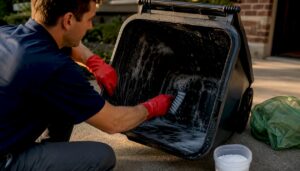
Real-world examples where this plays out: curbside bin cleaning that captures every gallon of wastewater on board rather than letting it run into the street, fleet washing squeezed between shifts so trucks are ready at dawn, and restaurant hood or floor sanitation timed right before a health inspection.
The practical differences between doing it yourself and hiring out:
- Time saved: no loading, hauling, or maintaining equipment you’ll use twice a year.
- Compliant waste handling: professional wastewater recovery keeps you out of regulatory trouble.
- Consistent sanitizing temperatures: a technician who runs the same equipment daily hits the right thermal thresholds every time.
- Insurance and permits handled: one less thing on your plate if something goes wrong.
Practical advice from an operator
The decision I see people wrestle with most isn’t hot versus cold. It’s whether to sink money into equipment they’ll use four times a year.
My advice: rent for the first big job. See how it actually goes, then decide whether buying or a recurring professional service fits your situation better.
Let Abcbins Handle the Hot Water Side of Things
Abcbins gives you hot water sanitizing power without the burner maintenance, fuel logistics, or wastewater disposal headaches that come with owning the equipment yourself. We’ve been family-owned since 1989, and our on-board recycling system captures every gallon of wastewater on site instead of letting it run into the street or storm drain, which matters if you’re trying to stay compliant without thinking about it constantly.
Whether you need recurring curbside bin cleaning on a monthly or quarterly plan, a one-time dumpster pad job, or residential pressure washing for a driveway or storefront, we bring the hot water sanitizing capability and handle the cleanup end to end. You don’t need to be home. Request a quote through American Bin Cleaning and get a service plan built around how often your property actually needs it.
Sources
- When to Choose a Hot or Cold Water Pressure Washer – Hotsy
- Advantages of Hot Water Pressure Washers – Kärcher
- Industrial Hot Water Pressure Washers | Mi-T-M Corporation