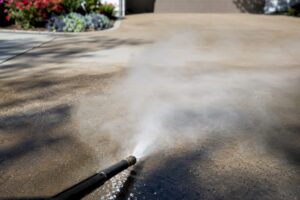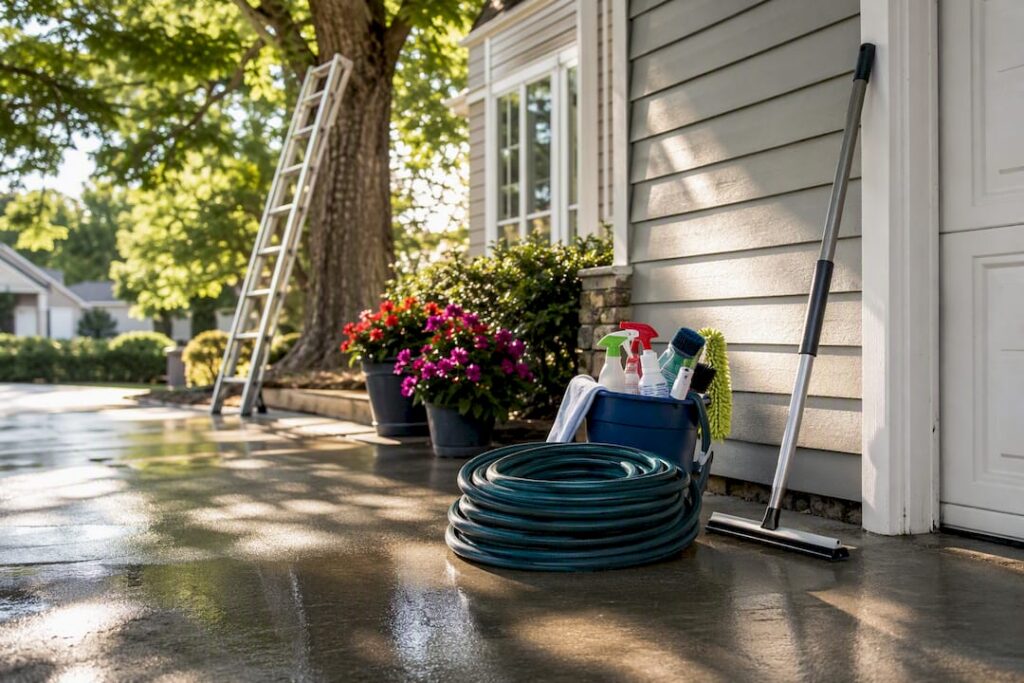
A simple 12-month cycle keeps your gutters, siding, deck, and driveway from turning into emergencies, and it takes far less time than most homeowners assume. Break the year into four seasonal pushes, then layer in a handful of recurring weekly and monthly checks, and you’ll catch small problems while they’re still cheap to fix.
This week, do these three things:
- Walk the perimeter of your house and check for standing water near the foundation (10 minutes).
- Clear debris from gutters and downspout openings if it has been a long time since the last cleaning (30 to 45 minutes).
- Wipe down and inspect your trash and recycling bins for cracks, odor, or pest activity (10 minutes).
Time-estimate snapshot: most weekly outdoor tasks run under 15 minutes; monthly tasks take 30 to 60 minutes; the big seasonal jobs, like a full power wash or gutter overhaul, run 2 to 5 hours or are worth handing to a pro.
Key Takeaways
A seasonal, area-based outdoor cleaning schedule prevents small maintenance issues from turning into expensive repairs while keeping weekly time commitments under fifteen minutes.
| Point | Details |
|---|---|
| Follow the seasonal cycle | Inspect and clear drainage in spring, seal and repair in summer, winterize in fall, and monitor for storm damage in winter. |
| Clean gutters regularly | Spring and fall cleanings keep downspouts directing water at least six feet from the foundation. |
| Stack recurring tasks by frequency | Weekly walks, monthly drain and faucet checks, and quarterly roof scans catch problems before they escalate. |
| Reseal decks every two to three years | Test for rot and clean tannin stains before applying a new water-repellent sealer. |
| Outsource the heavy annual jobs | Abcbins offers recurring curbside bin cleaning and residential pressure washing plans so gutters, siding, and bins get handled without you being home. |
Table of Contents
- Seasonal Outdoor Cleaning Calendar: What to Do and When
- How Often Should You Do Outdoor Chores?
- What Outdoor Areas Need Attention Every Season?
- What Tools and Safety Steps Do You Need?
- Sources
Seasonal Outdoor Cleaning Calendar: What to Do and When
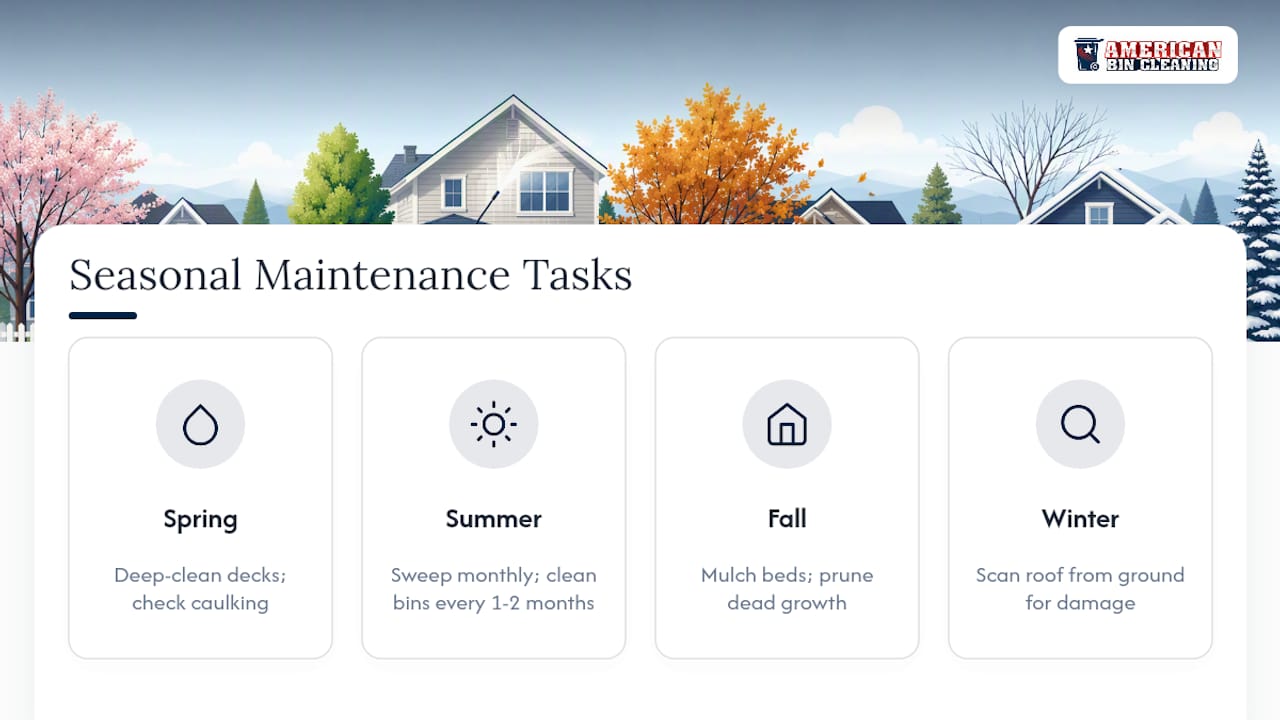
Suburban and semi-rural properties both benefit from the same underlying logic: assign specific jobs to each season so nothing gets forgotten until it’s already a problem. A structured seasonal maintenance cycle prevents emergency repairs by tackling damage assessment and drainage in spring, painting and sealing in summer, winterizing in fall, and storm monitoring in winter. That’s the whole framework. Everything else is detail.
Spring (March through May)
Spring is inspection season. Walk your property after the last frost and look for what winter left behind: cracked caulking, loose shingles, gutter sag, or soil erosion near downspouts.
- Clear gutters and downspouts of leaves and grit left over from fall and winter.
- Pressure-wash siding, walkways, and the driveway to remove salt residue and winter grime.
- Check drainage grading around the foundation and redirect any downspout dumping water too close to the house.
- Refresh garden beds: pull dead growth, edge beds, and lay fresh mulch before summer heat arrives.
Don’t skip: the gutter check. Gutters need regular cleaning each year, and spring is when clogged downspouts from fall leaf drop finally cause water to back up against your fascia boards.
Summer (June through August)
This is your window for anything involving paint, sealant, or heavy repair work, since dry weather and warm temperatures cure these products properly.
- Stain or seal decks, fences, and any exposed wood trim.
- Repair cracked patio pavers or driveway sections before they widen.
- Treat visible mildew on siding or shaded patio corners with an appropriate exterior cleaner.
- Tackle bigger projects: repainting trim, resealing a driveway, replacing damaged screens.
Fall (September through November)
Fall is about locking things down before freezing temperatures make every job harder and colder.
- Do your second major gutter cleaning of the year, this time focused on leaf volume, not winter grit.
- Winterize irrigation systems by draining lines before the first hard freeze.
- Trim tree branches hanging near the roof or siding so ice and wind don’t snap them onto your house.
- Seal driveway cracks before water gets in and expands them during freeze-thaw cycles.
Winter (December through February)
Winter is a watching season more than a working one. Monitor for storm damage after heavy snow or ice, clear ice dams if they form on the roofline, and keep a running list of spring repairs.
Pro Tip: Book pressure washing and gutter service for early spring now, in January or February. Demand spikes the moment the weather turns, and providers with wastewater recovery systems, the kind required to avoid runoff into storm drains, tend to book out fastest.
How Often Should You Do Outdoor Chores?
Beyond the seasonal pushes, a handful of smaller recurring tasks keep problems from building up between the big cleanouts. Dividing exterior maintenance into seasonal buckets with monthly and quarterly mini-checks catches small issues while they’re still small.
- Weekly: a quick visual walk around the perimeter, picking up debris and checking that trash and recycling bins are closed and pest-free. Five to ten minutes.
- Monthly: check exterior drains for pooling, clean entryways and door mats, test outdoor faucets for leaks, and inspect outdoor lighting fixtures. Thirty to sixty minutes.
- Quarterly: inspect the roofline from the ground for missing shingles or debris buildup, flush downspouts with a hose, and service sprinkler heads. One to two hours.
- Annually: full power washing of siding and hard surfaces, deck staining, and a deep gutter cleaning. Two to five hours DIY, or a scheduled service if you’d rather not spend a Saturday on a ladder.
Wood decks need re-staining or sealing roughly every two to three years, not annually, so that’s one job you can safely skip most years once it’s freshly done.
What Outdoor Areas Need Attention Every Season?
A season-by-season calendar only works if you also know which physical parts of your property to actually check. Break it down by area instead of by month, and the whole property gets covered without guesswork.
Deck and patio: sweep monthly, deep clean each spring, and reseal every two to three years. Keep pressure washer nozzles 12 to 18 inches from wood surfaces to avoid gouging the grain.
Driveway and walkways: sweep weekly, pressure-wash each spring, and seal asphalt every two to three years. Treat oil stains promptly, since they set permanently within days.
Siding and exterior walls: low-pressure wash annually (vinyl tolerates more pressure than stucco or wood lap siding), and check caulking around windows and trim each spring for gaps.
Gutters and downspouts: clean at minimum regularly, and confirm downspouts discharge water a safe distance from the foundation. Standing water near a downspout after rain means it’s misdirected.
Roof: scan from the ground each season for missing or curling shingles, moss patches, and debris buildup near valleys. Call a pro for anything requiring you to actually climb up.
Windows and screens: clean glass twice a year and check screens each spring for tears or loose frames.
Lawn and garden beds: mulch in spring and fall, prune dead growth each fall, and check for pest activity, particularly near bin storage areas, every month during warm months.
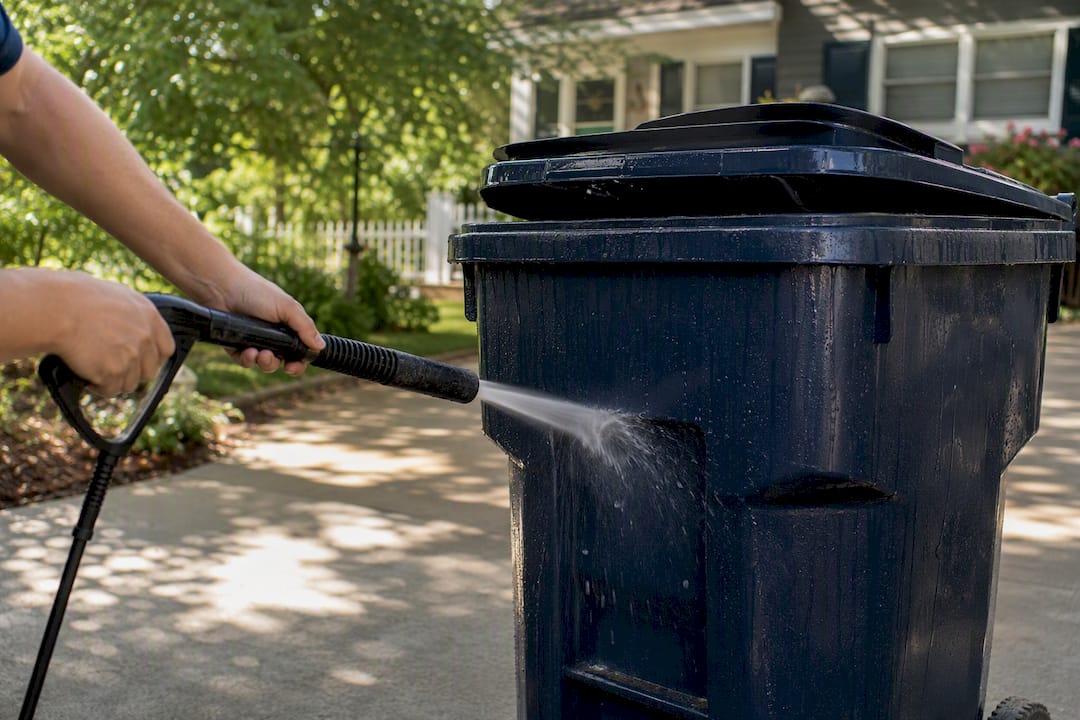
Trash bins: clean beyond a simple hose-down every one to two months in warm weather to control odor and discourage flies and rodents. Bins left uncleaned through a full summer are one of the more common triggers for backyard pest complaints in suburban neighborhoods.
What Tools and Safety Steps Do You Need?
Keep a basic kit on hand: a leaf blower, a stable extension ladder rated for your height needs, a garden hose with an adjustable nozzle, and a pressure washer with interchangeable tips.
- Use a wide-fan nozzle on siding and a narrow tip only on concrete; narrow tips on wood or vinyl can strip material or force water behind panels.
- Wear eye protection and closed-toe shoes when pressure washing, and never point the wand at yourself, others, or pets.
- Read every cleaner label before mixing chemicals. Use exterior-grade products designed for your surface, and rinse runoff away from storm drains and garden beds.
- Set ladders on level ground with a helper nearby for anything above the first story.
Hire a professional for roof repairs, complex gutter reconfigurations, full-home pressure washing, or any drainage issue tied to the foundation. Typical pro pricing runs $200 to $500 for a full exterior wash, $150 to $300 for gutter cleaning, and $100 to $250 for a roof inspection.
Pro Tip: If a job requires you to stand on anything higher than a two-step ladder while holding a pressure washer wand, that’s the point where hiring out stops being a luxury and starts being common sense.
What Regular Exterior Cleaning Tells Buyers and Neighbors
A clean exterior reads as proof of overall upkeep long before anyone opens a closet door. Buyers and appraisers use exterior condition as a proxy for how well a house has been cared for overall, and a well-maintained yard and clean bins signal the same thing to neighbors and future buyers alike.
- Lower repair costs down the line, since small issues get caught early.
- Stronger curb appeal without a major renovation.
- Fewer pest problems around bins and garden beds.
- Responsible providers capture wastewater on board rather than letting it run into storm drains.
Where Professional Bin and Pressure Washing Plans Fit In
The tasks that eat the most time (deep gutter cleans, full exterior power washing, and bin sanitizing) are also the ones easiest to hand off. Abcbins runs recurring bin cleaning on monthly, bi-monthly, and quarterly plans, plus residential pressure washing for driveways, siding, and decks, and you never have to be home for either.

When comparing providers for either service, look for three things: on-board wastewater recovery so nothing runs off into your yard or the street, transparent per-visit pricing with no surprise add-ons, and scheduling flexible enough to match your own seasonal calendar rather than a fixed route day. If your bins are already showing odor or pest activity, start with a one-time or recurring bin cleaning plan, and pair it with a spring pressure washing service to knock out both jobs before summer.
A Realistic Note on Fitting This Into Your Week
Nobody actually follows a perfect schedule, and that’s fine. Batch small tasks onto trash day, since you’re already outside anyway, and set one quarterly weekend aside for the deeper checks. Hand off the annual heavy lifting, gutters and full power washing, to someone else. Snap photos of anything that looks off; they make getting an accurate contractor estimate much faster later.
Sources
- Yearly home maintenance checklist | Redfin
- Home exterior maintenance: your complete guide to protecting your investment in 2026 | Rpwsouthampton
- Exterior
- Exterior home improvements to help you sell | Zillow