A regular deep clean combined with a brief weekly maintenance routine keeps trash bins odor-free, pest-resistant, and visually appropriate for upscale neighborhoods. That single habit prevents the two biggest curb-appeal killers on a luxury street: a bin that reeks when the lid opens and a bin that sits out in plain sight looking like an afterthought.
Start today with these five moves:
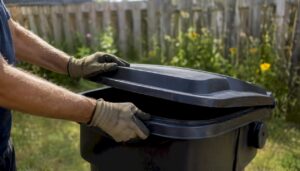
- Close the lid fully after every use. Rodents and raccoons need less than an inch of gap to get in, according to University of Florida IFAS Extension.
- Double-bag anything wet: meat scraps, dairy containers, coffee grounds.
- Rinse the bin with a hose within an hour of pickup, while residue is still loose.
- Store bins on a hard, clean surface away from exterior walls and AC units.
- If the smell or the sight of your bins bothers you more than the time it would take to fix it, a scheduled service like American Bin Cleaning handles the sanitizing so you never think about it again.
Pro Tip: Set a recurring phone reminder for the first Saturday of every month. Bin cleaning is one of those chores that only happens if it’s scheduled, not “whenever it gets bad.”
Key Takeaways
A monthly deep clean combined with a short weekly maintenance routine is the single most reliable way to keep outdoor bins odor-free, pest-resistant, and visually appropriate for an upscale property.
| Point | Details |
|---|---|
| Follow the core cadence | Deep clean monthly, biweekly in summer or high food-waste households, with a five-minute weekly check in between. |
| Use plant-safe products | Dish soap, vinegar, and baking soda handle most jobs without harming landscaping or staining pavers. |
| Prevent pests at the source | Double-bag wet waste, rinse recyclables, and confirm lids seal fully to stop flies, maggots, and rodents. |
| Place bins to protect curb appeal | Store on a hard surface away from exterior walls, screened with lattice or plantings that match your home. |
| Hire American Bin Cleaning for hands-off results | Recurring plans use hot-water sanitization and on-board wastewater capture, with service completed even when you’re away. |
Table of Contents
- Upscale Neighborhood Bin Cleaning Tips: Supplies That Do the Job Right
- What Is the Best Way to Deep Clean a Trash Bin?
- How Do You Stop Bins From Attracting Flies, Maggots, and Rodents?
- Where Should Trash Bins Be Placed to Protect Curb Appeal?
- How Often Should You Clean Outdoor Trash Cans?
- How Do You Clean Bins Without Harming Plants or Drainage?
- When Is It Worth Hiring a Professional Bin Cleaning Service?
- Why Small Habits Matter More Than Big Fixes
- Book Recurring Bin Cleaning and Keep Your Curb Appeal Consistent
- Frequently Asked Questions
- Sources
Upscale Neighborhood Bin Cleaning Tips: Supplies That Do the Job Right
Skip anything harsh, corrosive, or likely to bleach your pavers. The right supply list for a high-end property looks different from a big-box cleaning aisle because the goal isn’t just clean, it’s clean without collateral damage to landscaping, stone, or stucco.
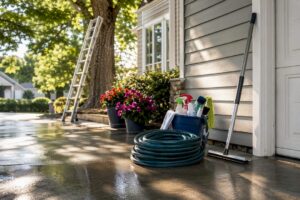
Five tools cover almost every situation:
- An extendable, stiff-bristle brush that reaches the bottom without you climbing inside the bin.
- A long-handled scrubber for the lid hinge and rim, where grime hides.
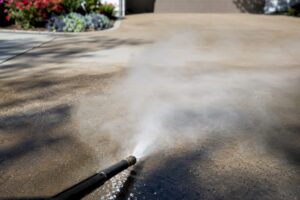
- A garden hose with a jet nozzle, or a light-duty pressure washer for stubborn buildup.
- A dedicated bucket for soap solution, kept separate from anything used near food.
- Nitrile gloves and, ideally, eye protection when using any disinfectant stronger than soap.
For products, dish soap and white vinegar handle most jobs. Southern Living’s cleaning protocol recommends warm soapy water first, then a vinegar rinse for odor, with baking soda reserved for set-in stains. Diluted bleach has a place, but only for genuinely soiled bins, and never near flower beds or lawn edges where runoff pools.
| Product | Best Use | Curb-Appeal Consideration |
|---|---|---|
| Dish soap | Routine grime and grease removal | Gentle, plant-safe, no residue on pavers |
| White vinegar | Odor neutralizing, mild disinfecting | Safe near landscaping in small amounts |
| Baking soda | Stain lifting, ongoing odor absorption | Leaves no visible residue, safe on plastic and metal |
| Diluted bleach | Heavy soil, mold, or after illness in household | Effective but can discolor concrete and harm nearby plants |
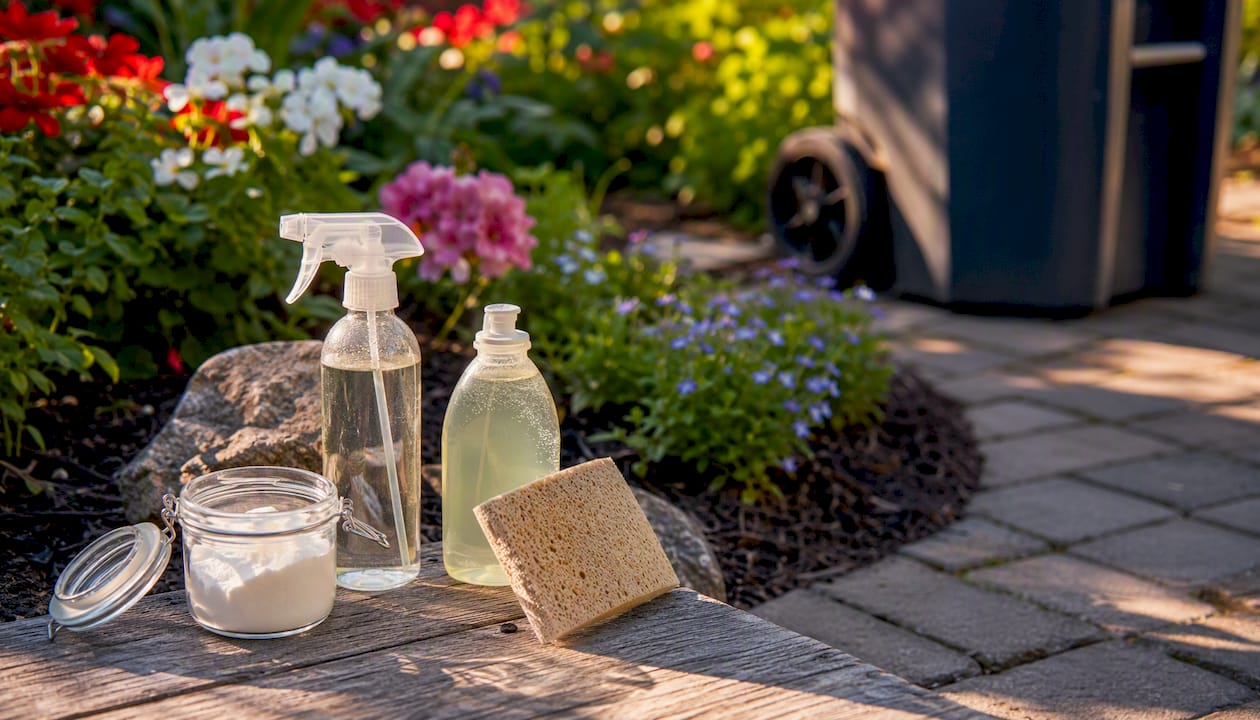
Vinegar and baking soda neutralize odor at the source. Air fresheners and scented bags just mask it, which matters if you’re trying to keep a driveway smelling like nothing at all rather than like nothing plus fake lavender.
What Is the Best Way to Deep Clean a Trash Bin?
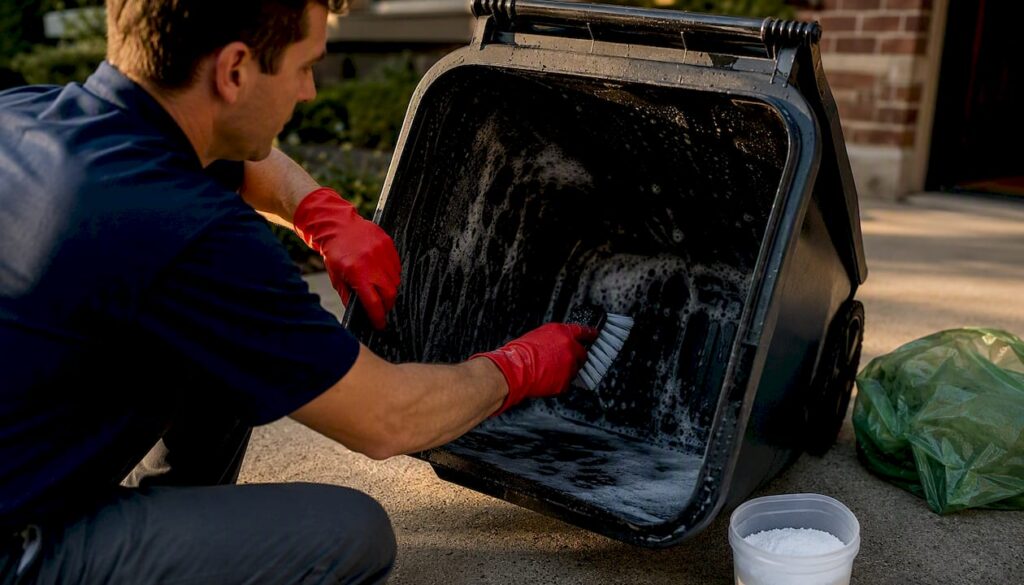
The best sequence is simple: empty, rinse, scrub, disinfect, rinse again, then air-dry upside down. Not drying bins properly often causes unpleasant odors to return shortly after cleaning.
- Empty and stage the bin on a driveway section or paved area you don’t mind getting wet, away from garden beds.
- Rinse with a hose at full pressure to knock loose debris before any soap touches the surface.
- Apply warm soapy water and scrub with the extendable brush, paying attention to the bottom seam and lid hinge where waste collects.
- Disinfect with a vinegar solution soak (15 to 20 minutes) for routine cleaning, or a diluted bleach solution only for heavily soiled bins.
- Rinse thoroughly until no suds or vinegar smell remains.
- Flip upside down and air-dry in a spot with airflow, ideally in partial shade so plastic doesn’t warp in direct sun.
Most households can finish this whole process in under 20 minutes once it’s a routine rather than a rescue mission.
Pro Tip: Fill the bin with warm water and a splash of dish soap, then let it sit for 10 minutes before scrubbing. The soak loosens dried residue so you spend less time scraping and more time rinsing.
One safety note worth taking seriously: never mix bleach with vinegar or ammonia-based products. The combination releases chlorine gas. Pour any bleach-based rinse water down an interior drain rather than onto the driveway or lawn, where it can damage grass and stain concrete over time.
How Do You Stop Bins From Attracting Flies, Maggots, and Rodents?
Sealing waste properly, bagging it tightly, and cleaning on a routine schedule solve the vast majority of pest problems before they start. Maggots specifically need moisture and exposed food residue to survive, so cutting off both is more effective than any spray applied after the fact.
- Double-bag wet waste, especially meat, dairy, and produce scraps.
- Freeze particularly odorous scraps until the night before pickup, a tactic Capital Waste Services recommends for hot months.
- Rinse recyclables before tossing them in; sticky soda cans and yogurt containers are magnets for flies.
- Sprinkle a layer of baking soda in the bottom of the bin after each cleaning to absorb moisture and odor between washes.
- Use enzyme-based deodorizers rather than perfumed sprays. Enzymes break down organic matter instead of covering the smell.
- Confirm the lid seals tightly. UF/IFAS Extension notes that even a small gap defeats the purpose of an otherwise sturdy container.
- For raccoon-prone areas, add a locking strap or clip to keep the lid shut against determined wildlife.
Timing matters too. Put bins out the morning of pickup rather than the night before whenever your collection schedule allows it, and tie kitchen bags off tightly before they ever reach the outdoor bin. Both habits are covered in more depth in our guide on bin sanitation and wildlife prevention.
Pro Tip: Drop a small mesh sachet of activated charcoal inside the bin, tucked near the bottom. It absorbs odor continuously without the chemical smell of a spray, and it’s invisible once the lid is closed.
Where Should Trash Bins Be Placed to Protect Curb Appeal?
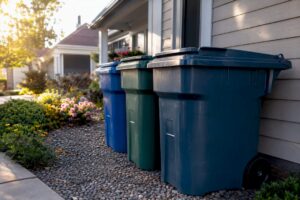
Bins belong on a hard, clean surface, away from exterior walls, AC units, and anywhere guests walk. Placement against siding traps moisture and odor against your home, and it’s often the first thing a landscaper or appraiser notices when walking a property.
A few firm rules make the decision easy:
- Do place bins on a paver pad or concrete slab in partial shade.
- Do screen bins with lattice panels, a low wooden enclosure, or dense evergreen plantings that match your home’s architecture.
- Don’t store bins directly against stucco or brick, where trapped moisture can stain the exterior.
- Don’t place bins near compost piles, downspouts, or leaky gutters, which multiply moisture and odor problems.
- Don’t leave bins visible from the street longer than necessary; bring them in within a few hours of pickup, not at the end of the day.
A screening enclosure should echo the materials already on your property. Cedar lattice suits a shingle-style home; a painted metal screen fits more modern architecture better than raw wood ever will. Add a locking lid clip if raccoons or determined dogs are a known issue in your area, since a knocked-over bin undoes weeks of careful maintenance in about ten minutes.
Pro Tip: If you’re building a permanent enclosure, leave a gap at the base for airflow. A fully sealed box traps heat and moisture, which speeds up odor buildup rather than hiding it.
| Placement Factor | Recommended Approach |
|---|---|
| Surface | Hard, clean pad (concrete or pavers), not bare soil or mulch |
| Distance from house | Away from exterior walls, windows, and AC units |
| Visibility | Screened with lattice, fencing, or dense plantings |
| Timing | Curbside only on pickup day, returned promptly after |
How Often Should You Clean Outdoor Trash Cans?
A monthly deep clean is the right baseline for most households, moving to every two weeks during hot summer months or in homes that generate a lot of wet food waste. This cadence is echoed across UF/IFAS Extension’s rodent-prevention guidance and Southern Living’s cleaning protocol, both of which point to warmer weather as the key variable that shortens the interval.
| Household Profile | Recommended Frequency |
|---|---|
| Single or couple, low food waste | Monthly year-round |
| Family of four, average food waste | Monthly, biweekly in summer |
| Large household or frequent entertaining | Biweekly year-round, weekly in peak summer |
Between deep cleans, a short weekly routine keeps things from sliding backward:
- Rinse the bin briefly after pickup if anything leaked during collection.
- Spot-clean any visible spills or stains with a wipe of soapy water.
- Refresh the layer of baking soda at the bottom.
- Check that the lid still seals fully and hasn’t warped in the sun.
This checklist takes less time than bringing in the mail and prevents the kind of buildup that turns a five-minute wash into a thirty-minute scrub-down.
How Do You Clean Bins Without Harming Plants or Drainage?
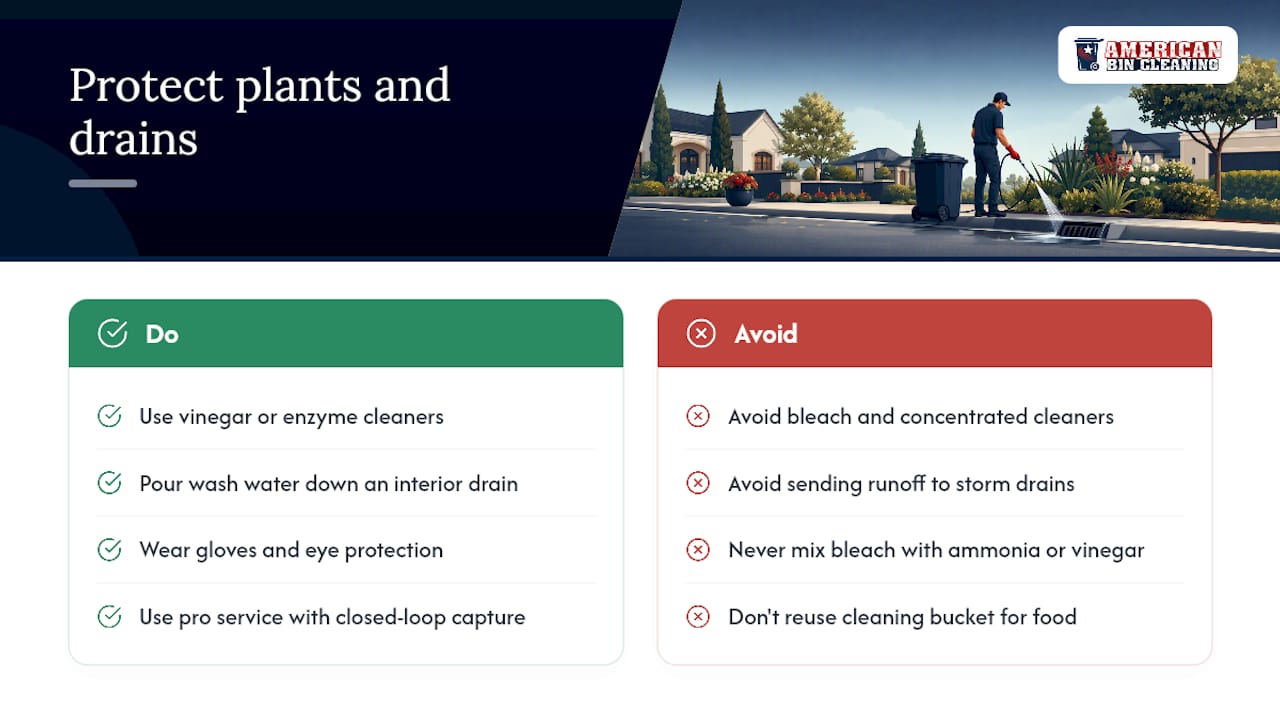
Choose plant-safe cleaners and direct wash water away from garden beds and storm drains, not toward them. Bleach and concentrated cleaners are the two most common ways well-meaning homeowners damage their own landscaping while trying to keep bins fresh.
Diluted bleach can scorch grass, discolor pavers, and stress root systems if it pools repeatedly in the same spot near a flower bed. Vinegar and enzyme-based cleaners accomplish similar disinfecting results with far less risk. Southern Living specifically cautions against letting bleach or vinegar runoff drain toward plants, since even mild acids and salts can build up in soil over repeated washes.
For disposal, the simplest option is pouring dirty wash water down an interior drain or toilet rather than letting it run across the driveway toward a storm drain. Storm drains typically route directly to local waterways without treatment, so anything poured down them, including “just soapy water,” bypasses any filtration. If you’d rather not handle that logistics question at all, a professional service with closed-loop wastewater capture removes the decision entirely, since American Bin Cleaning’s process captures rinse water on board rather than letting it reach your lawn or the street.
A few safety basics round this out: wear gloves and eye protection any time you’re using bleach or a strong degreaser, never mix bleach with ammonia or vinegar, and treat any dedicated cleaning bucket as off-limits for food-related use afterward. Our common bin cleaning mistakes guide covers several avoidable errors in more detail, including drainage habits that seem harmless but add up.
When Is It Worth Hiring a Professional Bin Cleaning Service?
Hire a professional when you want consistent curb appeal without spending a weekend morning on it, when sanitation matters more than a quick hose-down can deliver, or when you’d rather not think about where the wastewater goes. DIY cleaning tends to miss bacteria embedded in textured plastic and corner seams, while professional equipment uses hot, high-pressure water that reaches those same spots in a fraction of the time.
Professional services typically bring:
- High-pressure, hot-water sanitization that outperforms a garden hose on grease and bacteria.
- On-board wastewater capture, so nothing drains into your lawn or the storm system.
- Deodorizing treatments that last longer than a home baking-soda refresh.
- Recurring scheduling, monthly, bi-monthly, or quarterly, so the task disappears from your to-do list entirely.
Pricing varies by market, bin count, and how often you schedule service, but recurring plans generally cost less per visit than one-off appointments. Before hiring anyone, ask these questions:
- How is the wastewater handled, and does it stay off my property?
- What cleaning agents do you use, and are they safe for landscaping?
- Is the process hot water, cold water, or both?
- How often do you recommend service for a household like mine?
- Do you offer a satisfaction guarantee if a bin still smells afterward?
- Can I schedule service without being home?
- Do you offer bundled pricing for multiple bins or properties?
- What’s included versus what costs extra?
Pro Tip: Ask any prospective vendor exactly where their wastewater ends up. A vague answer is a red flag; a specific one, like an on-board recycling system, tells you they’ve thought about the environmental side as much as the sanitizing side.
Family-owned since 1989, American Bin Cleaning runs on exactly this model: high-pressure hot-water sanitization, on-board wastewater recovery, and flexible recurring plans, with service completed whether or not you’re home.
Why Small Habits Matter More Than Big Fixes
Upscale homeowners rarely lose sleep over dramatic curb-appeal disasters. It’s the small, recurring stuff, a bin visible from the street a day too long, a faint smell drifting across the patio during a summer dinner, that erodes the polished look a property worked hard to earn. Appearance and health concerns sit closer together than most people assume: a bin that looks fine from the sidewalk can still be breeding bacteria that eventually becomes the smell you notice from the porch.
The homeowners who keep this handled without thinking about it constantly tend to do one of two things. Either they build the weekly and monthly routine into an existing household schedule, the same way trash night already exists, or they hand it off entirely to a house manager or a recurring service and stop treating it as a decision they have to remake every month. Delegating bin care doesn’t lower the standard. If anything, it raises it, because a scheduled professional shows up on a fixed cadence regardless of how busy the week got, which is more consistency than most DIY routines manage after the first few months of good intentions.
Book Recurring Bin Cleaning and Keep Your Curb Appeal Consistent
For homeowners who’d rather not manage soap, vinegar, and a hose schedule every month, Abcbins offers scheduled curbside bin cleaning built specifically around consistency: eco-friendly, high-pressure hot-water sanitization paired with an on-board wastewater capture system, so nothing runs off into your lawn, driveway, or the storm drain.
Choosing recurring service over DIY means:
- No weekend hours spent scrubbing, rinsing, and hauling water
- Consistent curb appeal on a monthly, bi-monthly, or quarterly schedule
- Sanitizing that reaches corners and seams a garden hose can’t
- Service completed whether you’re home or not
Family-owned since 1989, Abcbins also handles dumpster pad cleaning and residential pressure washing for driveways, decks, and exteriors, so the rest of your property gets the same treatment. If your bins are overdue for a real clean, check bin cleaning plans and pricing and get one scheduled before the next pickup day rolls around.
Frequently Asked Questions
How often should trash bins be cleaned in an upscale neighborhood?
Monthly is the standard baseline, moving to every two weeks in summer or for households with heavy food waste, according to guidance from both UF/IFAS Extension and Southern Living.
What’s the best way to keep bins from smelling in summer heat?
Freeze odorous scraps until pickup day, rinse the bin regularly, and keep it stored in shade, all tactics recommended by Capital Waste Services for hot-weather odor control.
Can bleach damage landscaping near trash bins?
Yes, concentrated or undiluted bleach runoff can stain concrete and stress nearby plants and grass, which is why vinegar or enzyme-based cleaners are the safer everyday choice.
Is it worth hiring a professional bin cleaning service?
It’s worth it if you want consistent sanitization without weekend labor or want wastewater handled responsibly. Professional providers like American Bin Cleaning use high-pressure hot water and on-board wastewater capture on a recurring schedule.
Where should trash bins be stored to protect curb appeal?
On a hard, clean surface away from exterior walls and AC units, ideally screened with lattice, fencing, or plantings that match the home’s architecture.
Sources
- Talking trash: rodent prevention
- How To Clean Outdoor Trash Cans And Keep Odors From Coming Back
- How to Stop Summer Garbage Can Odors & Bugs | Capital Waste Services