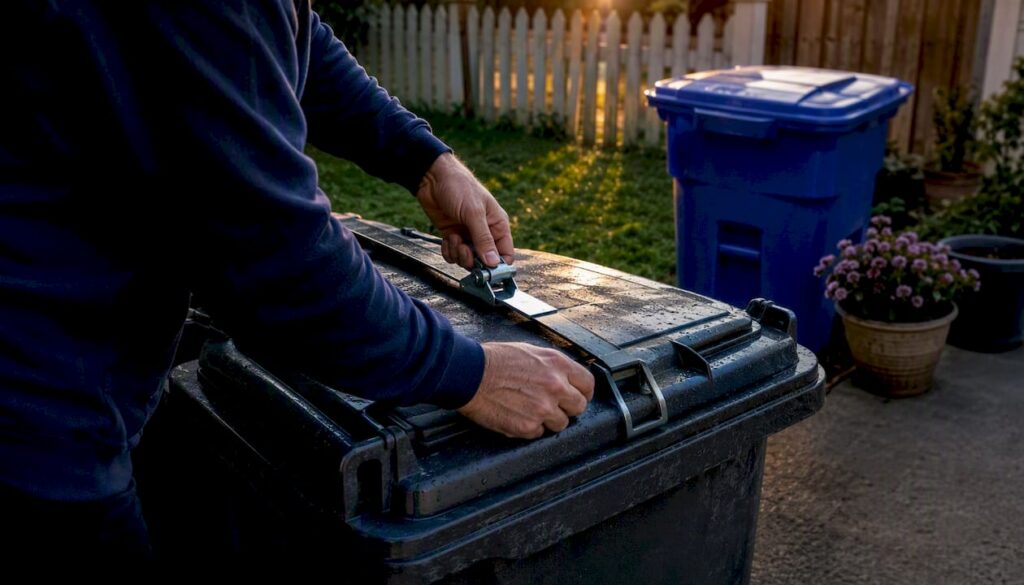
Stop wildlife from raiding your trash by doing six things: clean bins at least once a week using hot water with chlorine bleach or ammonia, but never both at the same time, store them inside until the morning of pickup, secure every lid with a latch or nylon strap, double-bag smelly waste, remove nearby food sources, and call a professional when raids keep repeating. That’s the whole playbook. Everything below explains how to do each step correctly and safely.
Your immediate action checklist:
- Clean bins at least once a week with a disinfectant solution such as hot water with chlorine bleach or ammonia, never both together
- Store bins in a garage or shed until the morning of collection
- Replace stretchy bungee cords with durable nylon straps or a metal hasp
- Double-bag meat, fish, and greasy scraps; tie bags tightly before binning
- Rinse and dry recyclables before placing them in the bin
- Call your local wildlife agency or a professional cleaner if raids continue after two weeks of consistent effort
Pro Tip: Freeze greasy or meat scraps in a sealed bag until collection morning. Frozen waste produces almost no scent, which is the single biggest reason animals show up in the first place.
Table of Contents
- 1. Secure your lids and reinforce containers against wildlife
- 2. Reduce food odors with smarter bagging and rinsing habits
- 3. Timing matters: put bins out the morning of collection
- 4. Wildlife-specific precautions for bears, raccoons, squirrels, and coyotes
- 5. How to clean bins properly: frequency, cleaners, and safety
- 6. When to hire a professional bin-cleaning service
- 7. Signs you need to escalate beyond DIY
- Key Takeaways
- What actually works, and what homeowners keep getting wrong
- Abcbins keeps your bins clean so wildlife stays away
- Sources and further reading
1. Secure your lids and reinforce containers against wildlife
A lid you cannot open is the single biggest deterrent. Wildlife, especially raccoons and bears, learn quickly which bins give way and which don’t. If your lid pops off with one paw swipe, no amount of cleaning will stop repeat visits.
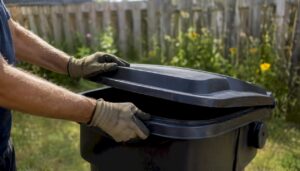
According to BearWise, the most effective DIY modification is four nylon straps with buckles or metal hasps, not stretchy bungees. Bungees lose tension fast, slip off rounded lids, and give raccoons just enough flex to work the lid open. A metal hasp bolted through the lid and body of the can is harder to defeat and costs under $10 at any hardware store.
Beyond the lid itself:
- Use bins with built-in locking lids when replacing old containers
- Secure the base of the can to a fixed anchor (fence post, wall bracket) to prevent tipping
- Store bins in a lockable enclosure if a garage or shed isn’t available
- Check with your waste hauler before modifying lids — some require unlatched lids at pickup
Pro Tip: Before adding straps or a hasp, confirm your hauler’s rules. Some automated trucks require lids to be unlatched at the curb. A quick call saves a missed pickup.
2. Reduce food odors with smarter bagging and rinsing habits
The smell is what draws animals in, not the bin itself. Cut the scent trail and you cut the visits. BearWise recommends rinsing recyclables and removing residual food because even empty containers carry enough organic odor to attract wildlife. A pizza box or a rinsed-but-not-dried can is still a signal.
Practical steps that actually reduce odor:
- Double-bag meat scraps, fish, and greasy leftovers; use heavy-duty bags and tie them tightly
- Freeze smelly waste until collection morning (see the pro tip above)
- Rinse food containers and let them dry completely before placing in the bin
- Keep pet food indoors; never leave it on a porch or in the garage overnight
- Use baking soda or an enzyme-based cleaner inside the bin between washes
One thing to avoid: fruity or sweet-scented cleaners can attract wildlife rather than deter it. Stick to enzyme-based or pine-scented odor eliminators. And never mix bleach and ammonia when cleaning — the combination produces toxic chloramine gas. That’s a safety rule, not a suggestion.
3. Timing matters: put bins out the morning of collection
The window between when you roll the bin to the curb and when the truck arrives is when wildlife strikes. Nocturnal scavengers, raccoons, opossums, and bears, do most of their foraging between dusk and dawn. A bin sitting at the curb overnight is an open invitation.
BearWise and multiple state wildlife agencies recommend placing garbage at the curb the morning of collection, ideally within one to two hours of your scheduled pickup. BearSmart echoes this guidance, noting that indoor or locked storage until morning-of is the most consistently effective timing strategy across all wildlife types.
If morning placement isn’t possible:
- Use a lockable bin enclosure outside
- Coordinate with a neighbor to put bins out together on collection morning
- Ask your municipality whether they offer bear-resistant cart programs
4. Wildlife-specific precautions for bears, raccoons, squirrels, and coyotes
Different animals need different responses. A raccoon-proof lid won’t necessarily stop a bear, and squirrel-proofing is a different problem entirely.
Bears are the highest-stakes scenario. In bear country, certified bear-resistant containers (BRCs) are the recommended standard. Ordinary fencing usually fails. If a BRC isn’t available, store bins inside a locked, hard-sided building until collection. The NJDEP warns that bears which repeatedly access garbage can become habituated, which increases public-safety risk and can result in the animal being euthanized. Also remove bird feeders, outdoor grills with grease traps, and pet food from the yard.
Raccoons are strong, dexterous, and persistent. Non-stretch straps, metal hasps, and bins with built-in locking lids are the most effective barriers. Remove easy handholds near the bin (stacked firewood, low fences) that give them leverage.
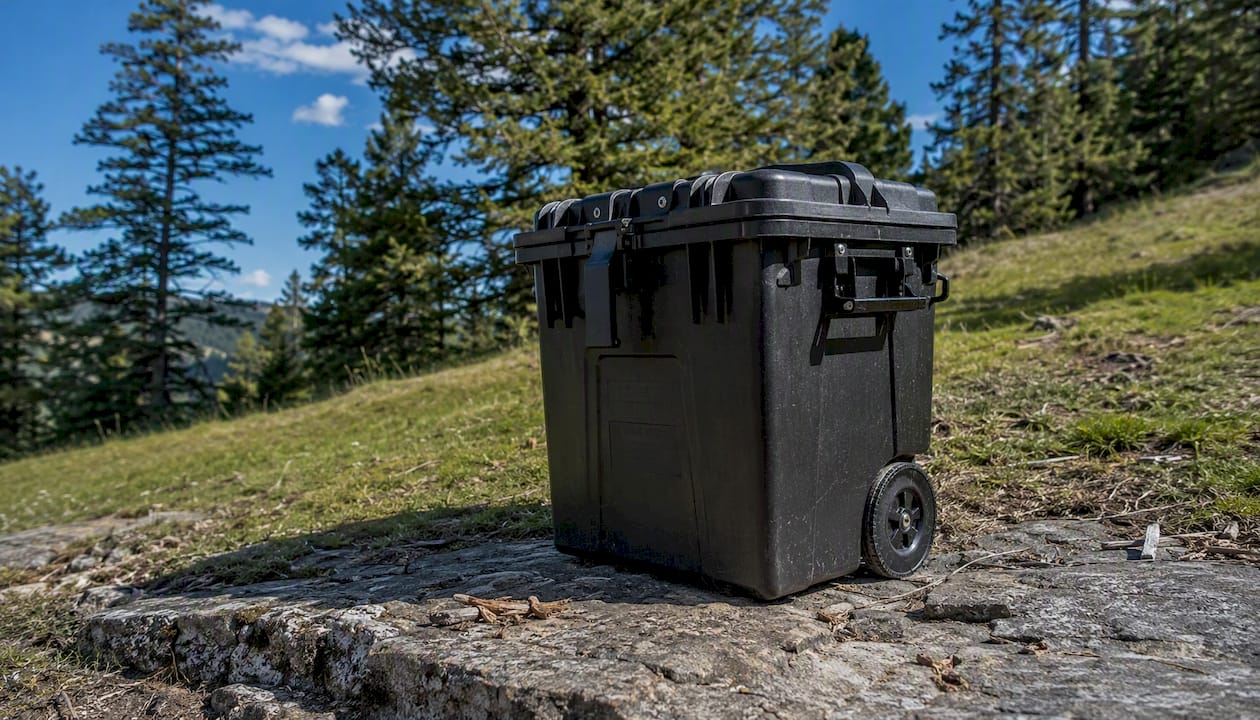
Squirrels and rodents will chew through thin plastic. Use metal bins or reinforced high-density polyethylene containers. Seal any gaps around bin lids and avoid leaving small food scraps exposed near the bin area.
Coyotes are opportunistic. Keep pet food indoors, remove fallen fruit from the yard, and secure compost in a sealed container. Coyote prevention overlaps almost entirely with general sanitation habits.
Safety note: Never approach a bear, coyote, or any wildlife that shows no fear of humans. Contact your local wildlife agency immediately. Habituated animals are a public-safety issue, not just a nuisance.
5. How to clean bins properly: frequency, cleaners, and safety
Colorado Parks & Wildlife recommends cleaning trash containers at least once a week using hot water with chlorine bleach or ammonia, never both at the same time. Weekly cleaning removes the thin organic film that builds up inside plastic bins and traps odor even after the trash is gone.
A simple step-by-step method:
- Empty the bin completely and remove any loose debris
- Rinse with a garden hose to loosen residue
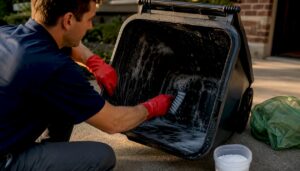
- Scrub interior surfaces with hot water and a diluted bleach solution (roughly 1 cup bleach per gallon of water)
- Rinse thoroughly until no cleaner remains
- Let the bin dry completely, ideally in direct sunlight
- Sprinkle baking soda or apply an enzyme deodorizer before the next use
For persistent odors, an enzyme-based cleaner soaked for 10–15 minutes before scrubbing breaks down organic compounds that bleach alone misses. Hosing down a bin without scrubbing doesn’t remove the organic film; it just moves it around.
Safety reminders: Wear gloves and work in a ventilated area. Never mix bleach and ammonia. Avoid cleaners with citrus or fruity fragrances. Dispose of wash water away from storm drains, or use a professional service that captures wastewater on-board.
On wastewater: DIY cleaning typically sends contaminated rinse water into the yard or storm drain. Professional services like Abcbins capture all wastewater in an on-board recycling system, so nothing runs off into the environment — a meaningful difference if you’re near a waterway or in a municipality with runoff rules.
6. When to hire a professional bin-cleaning service
DIY cleaning works well when it’s done consistently. The problem is consistency. Most homeowners clean bins when they smell bad, not on a weekly schedule, and by then the organic film has had weeks to build up and attract animals.
Hire a professional if:
- Weekly DIY cleaning isn’t practical given your schedule
- Odors persist after multiple cleanings
- Wildlife continues to breach containers despite securing lids and adjusting timing
- You want wastewater captured rather than running off your property
Professional bin-cleaning services typically use high-pressure hot water, eco-friendly disinfectants, and on-board wastewater capture systems. Recurring plans, monthly, bi-monthly, or quarterly, cost less per visit than one-time cleans and keep odor levels low enough that wildlife stops treating your bin as a reliable food source.
For a realistic look at DIY versus professional cleaning costs, factor in your time, cleaning supplies, and water use alongside the service fee.
Pro Tip: Ask any provider whether they will service bear-resistant or modified containers, and whether your hauler requires the lid to be unlatched before pickup. Not every service handles modified cans.
7. Signs you need to escalate beyond DIY
Securing and cleaning your bins handles most wildlife problems within a week or two. When it doesn’t, that’s a signal the situation has moved past routine prevention.
Escalate if you see any of these:
- Raids continue nightly despite secured lids and consistent cleaning
- Bins are physically damaged: torn lids, cracked bodies, bent hasps
- Wildlife shows no fear when you approach or make noise
- You find evidence of denning (nesting material, repeated presence in one spot) on your property
- Multiple neighbors report the same animal
Next steps when DIY isn’t enough:
- Contact your state wildlife agency or local animal control — they can assess habituation risk and advise on trapping or relocation
- Ask your waste hauler about certified bear-resistant cart programs; some municipalities provide them at no cost
- Hire a professional cleaning service to eliminate residual odor that may be drawing animals back
- Coordinate with neighbors and your HOA — a single household doing everything right can still experience problems if nearby bins remain unsecured
- Consider electric fencing or unwelcome mats for persistent bear activity in high-risk areas (check local regulations first)
Bears that repeatedly access garbage may be trapped or destroyed by wildlife authorities. That outcome is preventable, but only if attractants are removed before habituation sets in.
Key Takeaways
Securing lids, cleaning weekly, and putting bins out the morning of collection eliminates the vast majority of wildlife garbage raids before they become a recurring problem.
| Point | Details |
|---|---|
| Clean at least once a week with hot water and diluted bleach or an enzyme cleaner; never mix bleach and ammonia. | |
| Time your placement | Put bins out the morning of collection, within 1–2 hours of pickup, not the night before. |
| Secure every lid | Use nylon straps with buckles or a metal hasp; stretchy bungees fail quickly and reliably. |
| Match defenses to the animal | Bears need certified BRCs or locked indoor storage; raccoons need latched lids and no handholds. |
| Abcbins for recurring service | Abcbins offers monthly, bi-monthly, quarterly, and on-demand curbside bin cleaning with on-board wastewater capture throughout Chicagoland. |
What actually works, and what homeowners keep getting wrong
The pattern that shows up on repeat service calls is almost always the same: the homeowner did two or three things right and skipped the one that matters most. They bought a new bin but kept putting it out the night before. They started double-bagging but kept using a fruity-scented cleaner that pulled animals right back in. They added a bungee cord and felt done.
The honest reality is that bin sanitation and wildlife prevention work as a system, not a checklist you can half-complete. Timing, lid security, odor control, and cleaning frequency all have to run together. Miss one and the others lose most of their effect. A neighbor’s unsecured bin can undermine everything you’ve done on your own property, which is why community coordination matters more than most guides acknowledge.
The fix that works every time: weekly cleaning with the right products, morning-of placement, and a lid that genuinely locks. Everything else is a supporting layer.
Abcbins keeps your bins clean so wildlife stays away
If weekly scrubbing isn’t happening at your house, you’re not alone. Abcbins handles curbside bin cleaning throughout Chicagoland on plans that fit your schedule: monthly, bi-monthly, quarterly, or one-time on-demand. Every visit uses high-pressure hot water, eco-friendly disinfectants, and an on-board wastewater capture system, so nothing runs off into your yard or the storm drain.
Family-owned since 1989, Abcbins also offers dumpster pad cleaning and residential pressure washing for driveways, decks, and storefronts. You don’t need to be home. The crew handles everything at the curb and moves on.
Ready to stop the cycle? Book a bin cleaning service or check availability for your neighborhood in Barrington, McHenry, or Lake Zurich.
Sources and further reading
The guidance in this article draws from state wildlife agencies, national bear-safety programs, and Abcbins’s own service experience. Key sources by topic:
- Morning-of placement and certified BRCs: BearWise — Food and garbage guidance
- DIY lid reinforcement (nylon straps, hasps): BearWise — Keep bears out
- Habituation risk and community responsibility: NJDEP — Garbage management and bears
- Locked storage and morning-of placement (state consensus): BearSmart — Securing attractants
- Weekly cleaning frequency and disinfectant guidance: Colorado Parks & Wildlife — Protect Your Home From Wildlife
- Electric fencing and persistent bear deterrents: WDFW — BearWise bulletin #5
- General wildlife feeding and conflict prevention: USDA APHIS — Don’t Feed the Wildlife
- Black bear conflict prevention: Mass.gov — Prevent conflicts with black bears
- Professional bin cleaning services and wastewater capture: Abcbins — Bin cleaning services
- Outdoor surface care and pressure washing around bin storage areas: Turf Tails — Pressure washing artificial grass