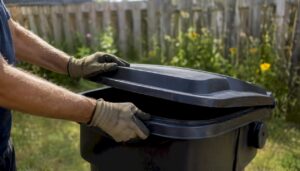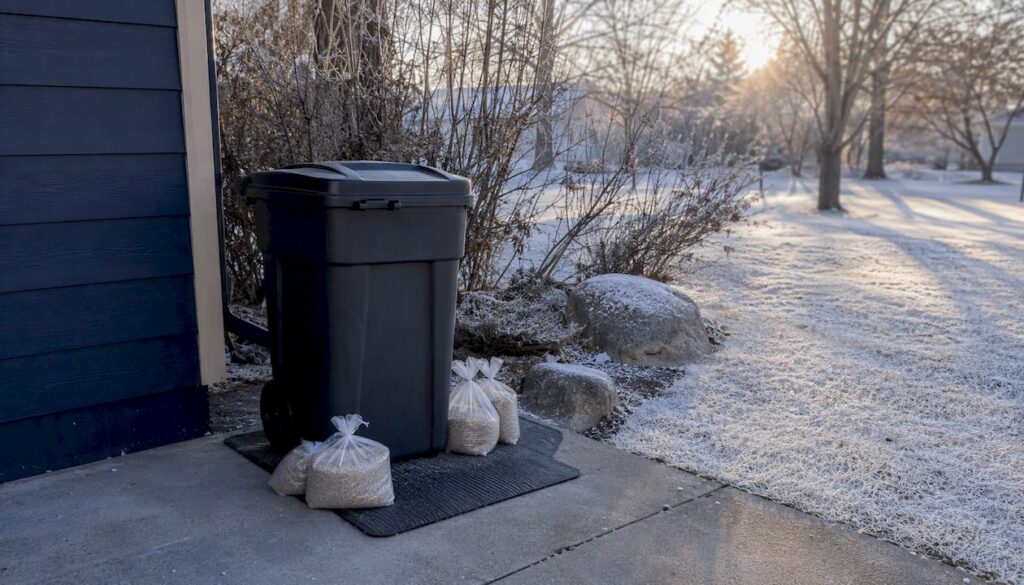
Keep bins dry, elevated, drained, and on a cleared path. Clean at least quarterly, or call a professional if your bin is frozen solid, permanently stained, or you want wastewater captured rather than running into the storm drain. The USDA’s food-safety “danger zone” runs from 40°F to 140°F — freezing pauses bacterial growth but doesn’t kill pathogens, so a thawed bin in late February can smell and harbor bacteria just as badly as one in July. That’s the core reason garbage can hygiene tips for cold climates deserve their own playbook, not just a summer routine applied in a parka.
Key Takeaways
Cold-weather bin hygiene comes down to five habits: drain liquids, elevate bins off ice, use dry absorbers, clean on a quarterly schedule, and call a pro when the bin is frozen solid or the odors keep coming back.
| Point | Details |
|---|---|
| Drain liquids before bagging | Liquid in bags freezes solid overnight and bonds bags to the bin floor. |
| Elevate bins off pavement | A rubber mat, cardboard, or paver under the wheels prevents overnight freeze-bonding. |
| Use dry absorbers in winter | Baking soda, non-clumping cat litter, and dryer sheets outperform liquid sprays in freezing temps. |
| Clean at least quarterly | Most cold-climate households need a minimum of four cleanings per year; high-food-waste homes need monthly. |
| Abcbins for professional cleaning | Abcbins serves Chicagoland with heated high-pressure cleaning, on-board wastewater capture, and flexible recurring plans. |
Table of Contents
- Why does cold weather change how your bins behave?
- How do you keep bins from freezing to the ground or getting buried?
- What should you avoid throwing out, and how do you handle liquids?
- How do you clean a trash bin safely in cold weather?
- Which odor and moisture absorbers work in freezing temperatures?
- How do you keep pests away from bins in winter?
- How often should you clean your bins, and how long does it take?
- When does it make sense to hire a professional bin-cleaning service?
- Quick winter hacks you can do in the next five minutes
- What winter bin care actually comes down to
- Abcbins handles the hard part of winter bin cleaning
- Sources
Why does cold weather change how your bins behave?
Winter doesn’t just slow things down. It creates a completely different set of problems: lids that ice shut overnight, bags that bond to the bin floor, plastic that cracks when you kick it loose, and collection crews who can’t reach a bin buried under a foot of snow.
The bacterial picture is counterintuitive. Cold temperatures make bacteria dormant, not dead. According to the USDA Food Safety and Inspection Service, bacteria can double in number in as little as 20 minutes once temperatures climb back into the 40–140°F range. A bin that sat frozen all week can become a fast-growth environment the moment a warm front moves through. That cycle repeats all winter in climates like northern Illinois or Wisconsin.
The 40–140°F danger zone: Bacteria double as fast as every 20 minutes inside this range. Freezing makes them dormant — not destroyed. Every thaw resets the clock.
Beyond biology, the physical hazards are real. Plastic bins become brittle below 20°F and can shatter under impact. Lids freeze to the rim and require force to open, which creates slip risk on icy driveways. Collection crews face the same hazards, and a bin that’s iced to the pavement or buried in a snowbank is a bin that gets skipped.
| Winter hazard | What it causes | What to do |
|---|---|---|
| Lids icing shut | Bags trapped; odors build inside | Store bin in sheltered spot; face lid away from wind |
| Bin frozen to ground | Missed pickup; cracked wheels | Elevate on wood, rubber mat, or paver |
| Bags bonded to bin floor | Torn bags; residue left behind | Double-bag; drain liquids before bagging |
| Brittle plastic | Cracks, broken wheels | Avoid kicking or forcing; use rubber mallet gently |
| Buried bin | Skipped collection | Shovel path; mark with bright stake |
How do you keep bins from freezing to the ground or getting buried?
The answer is mostly about placement and a few minutes of prep the night before pickup.
- Elevate the bin. Set wheels on a piece of corrugated cardboard, a wood pallet, a rubber mat, or a concrete paver. Any barrier between plastic wheels and wet pavement reduces the chance of overnight bonding. This is one of the simplest frozen trash can prevention tips that consistently gets skipped.
- Choose a sheltered spot. A garage wall, a fence corner, or the lee side of the house blocks wind-driven snow from packing around the lid. Prevailing wind in the Midwest typically comes from the northwest in winter; face the lid hinge toward it so the opening side stays cleaner.
- Shovel a path to the curb. Not just the driveway. A clear 3-foot-wide lane from the bin’s storage spot to the curb means you can move it quickly on pickup morning without dragging it through packed snow.
- Mark the curbside spot. A bright orange or yellow stake planted at the curb tells collection crews exactly where your bin goes, especially after a heavy overnight snowfall. Local waste-management programs across the country recommend this during winter months.
- Move the bin out the morning of pickup, not the night before. Overnight temperatures are when freeze-bonding happens. Staging the bin at 6 AM instead of the previous evening cuts the exposure window dramatically.
Pro Tip: If your pickup is early and you can’t be up at 6 AM, try this: set the bin on a rubber-backed doormat the night before, lid facing the house wall. The mat insulates the wheels, and the wall blocks wind. It’s not foolproof, but it buys you time against a hard freeze.
For homeowners thinking about cold-climate home improvements that include better garage or entry storage for bins, choosing the right entry setup for cold climates can make a real difference in how easily you stage and access bins in winter.
What should you avoid throwing out, and how do you handle liquids?
Frozen liquid is the number-one cause of bags bonding to bin floors and lids icing shut from the inside. The fix is simple but requires a habit change.
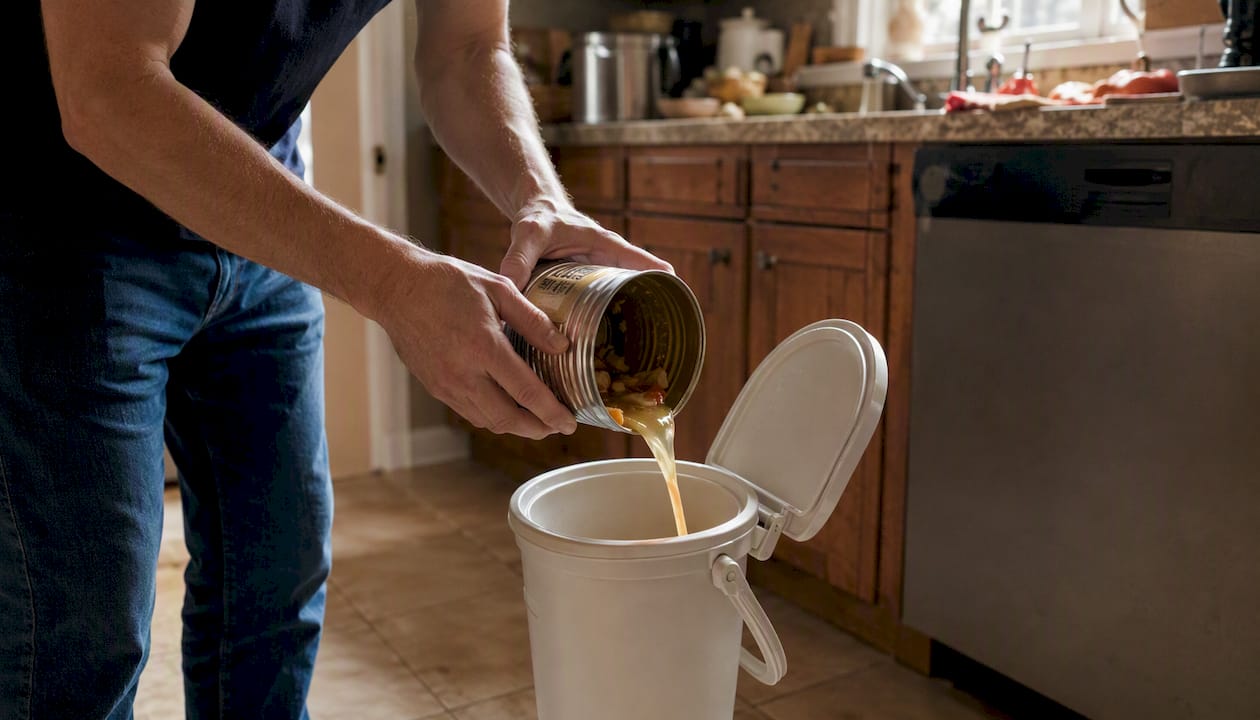
Pour out liquids before bagging. Beverage containers, soup cans, oily food packaging — drain them into the sink before they go in the trash. A half-inch of liquid at the bottom of a bag freezes solid overnight and welds the bag to the bin. Double-bag anything that might still leak: raw meat packaging, pet waste bags, containers with residue you couldn’t fully drain.
Common offenders and what to do with them:
- Beverage containers: Drain completely; recycle where accepted.
- Paint cans: Never put liquid paint in regular trash. Let it dry solid first, or drop it at a municipal hazardous-waste facility.
- Oily food containers: Wipe out with a paper towel before bagging; the towel absorbs the oil and goes in the trash dry.
- Pet waste bags: Double-bag and seal tightly. In very cold weather, the bag itself can become brittle and split.
Timing matters too. Put out smelly or wet items the morning of pickup rather than the night before. For weeks when pickup might be delayed by a storm, stage a small sealed container indoors and transfer it to the outdoor bin the morning collection is confirmed. Rinsing recyclables before they go in the bin also prevents frozen residue from sticking to the container walls.
Pro Tip: Keep a small lidded bucket under the kitchen sink for food scraps during storm weeks. Empty it into the outdoor bin the morning of pickup. You avoid the freeze-and-thaw odor cycle entirely.
One hard rule: never pour hazardous liquids — solvents, antifreeze, pesticides — into a regular trash bin. Follow your municipality’s hazardous-waste disposal schedule. Most counties in northern Illinois and southern Wisconsin run drop-off events in spring and fall.
How do you clean a trash bin safely in cold weather?
Cleaning a bin in January is not the same as hosing it down in August. Hot water is harder to access, surfaces are slippery, and rinse water can freeze before it drains. Here’s a step-by-step routine that works in cold conditions.
- Empty the bin completely. Remove the bag and any loose debris. Use a rubber mallet to knock loose any frozen material stuck to the bottom — never kick the bin.
- Pre-rinse if possible. A pump sprayer filled with warm tap water works well when a garden hose is winterized. Spray the interior walls and let it sit for two minutes to loosen residue.
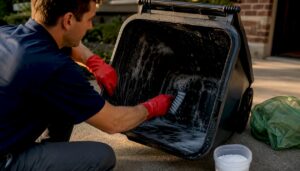
- Scrub with detergent and baking soda. Mix a few tablespoons of dish soap with warm water and a half-cup of baking soda. Scrub with a stiff-bristle brush. For heavier contamination, a diluted bleach solution (1 tablespoon bleach per gallon of water) works, but ventilate well and never mix bleach with other cleaners. Baking soda also pairs with vinegar for a non-bleach cleaning option: spray the interior with white vinegar, let it sit, then scrub with the baking soda paste.
- Capture the rinse water. Don’t let soapy or bleach-containing water run into the storm drain. Collect it in a bucket and dispose of it down a household drain, or use a wet-dry vacuum to pull it out of the bin.
- Dry and air out. Tip the bin on its side in a sheltered spot for 20–30 minutes. In freezing temps, residual moisture left inside will refreeze, so drying matters more in winter than in summer.
- Add a dry absorber and a fresh liner. Sprinkle baking soda across the bottom, or place a breathable pouch of non-clumping cat litter in a shallow tray inside the bin. Then line it.
On hot water: The USDA’s danger zone tops out at 140°F, which is also the temperature at which hot water becomes genuinely effective at killing surface bacteria. In winter, reaching that temperature with a portable setup is often unrealistic. A thorough scrub with detergent and a diluted bleach solution is a practical substitute when you can’t run a hot-water pressure rinse.
For a deeper look at why trash cans need deep cleaning beyond the surface scrub, Abcbins has a full guide covering what accumulates inside bins over time and what professional cleaning actually removes.
Which odor and moisture absorbers work in freezing temperatures?
Liquid sprays and enzyme-based deodorizers lose effectiveness below freezing. Dry absorbers don’t. That’s the short answer.
Baking soda, non-clumping cat litter, and dryer sheets are the three most reliable options for cold-weather odor and moisture control. Each works differently:
- Baking soda: Absorbs moisture and neutralizes acidic odors. Sprinkle a thin layer across the bin bottom after cleaning. Replace after each pickup cycle or after a major thaw.
- Non-clumping cat litter: Absorbs liquid pooling at the bin floor. Place it in a shallow breathable tray or a mesh bag so it doesn’t mix directly with trash. Clumping varieties can freeze into a solid mass, so stick with non-clumping.
- Dryer sheets: A low-tech odor buffer. Tuck one or two under the bin liner. They won’t absorb moisture, but they mask odors between cleanings and are easy to swap out.
- Silica gel pouches: Work well in sealed or semi-sealed bins; replace monthly or when saturated.
Avoid enzyme sprays and liquid deodorizers in winter. They can freeze solid inside the bin, dilute with meltwater, or leave a residue that refreezes and bonds to the bin floor. The same goes for scented sprays: they mask odor briefly but do nothing for moisture, which is the actual driver of winter odor problems.
Pro Tip: After a major thaw, pull out all absorbers and replace them. Thaw cycles saturate baking soda and cat litter fast. A pouch that worked fine in January may be useless by the first warm week in March.
For more on why trash bins smell bad and what’s actually causing the odor, that resource covers the chemistry behind bin smells in plain terms.
How do you keep pests away from bins in winter?
Raccoons and rodents don’t hibernate in northern Illinois. They get hungrier and bolder as natural food sources disappear, which makes winter bin security more important than most homeowners expect.
- Secure the lid every time. A bungee cord across the lid is the cheapest deterrent that actually works. Locking lids are better, but don’t modify the bin’s hinge or lock mechanism in ways that weaken the plastic — cold makes those modifications more likely to crack.
- Don’t leave food waste in a curbside bin overnight. If pickup is tomorrow morning, stage smelly or food-heavy bags indoors in a sealed container and bring them out in the morning.
- Store bins in a garage or shed when not in use. If you have the space, this is the single most effective pest deterrent. A bin that’s not outside isn’t a target. If storing indoors, use sealed liners and make sure there’s ventilation — a closed garage with a leaking bin gets unpleasant fast.
- Avoid drilling holes in the bin for drainage. It seems like a good idea for meltwater, but holes weaken the structure, and in freezing temps the plastic around a drilled hole is the first place a crack starts.
- Time your curbside placement. Bins sitting at the curb from Sunday night to Tuesday morning are out there for 36+ hours. The shorter that window, the less time pests have to investigate.
How often should you clean your bins, and how long does it take?
For most households in cold climates, quarterly cleaning is the practical minimum. High-food-waste homes, households with young children or pets, or anyone sharing a dumpster should aim for monthly.
Recommended cadence:
| Frequency | Best for | DIY time estimate | Professional service |
|---|---|---|---|
| Monthly | High food waste, shared bins, pet households | 20–30 min per bin | Faster; wastewater captured on-site |
| Quarterly | Average household, cold-climate standard | 30 minutes per bin | Recommended minimum for most homes |
| Semiannual | Low-use bins, recycling-only containers | 15–20 min per bin | Suitable for light-use bins |
DIY time estimates assume warm water is available and the bin isn’t frozen solid. In mid-January in Chicago, add 10–15 minutes for setup, thawing, and water capture. A professional service with a heated pressure washer and on-board wastewater capture typically completes a standard residential bin in a fraction of that time, regardless of outdoor temperature.
Pricing for professional bin cleaning varies by region, service plan, and bin size. The most accurate way to get a number is to request a local quote directly. Frozen conditions can extend both DIY and professional service time, so scheduling a cleaning for a day when temps are above freezing makes the job faster and safer for everyone.
- Check your municipality’s collection schedule for winter delays before planning a cleaning day.
- If your bin hasn’t been cleaned in over six months, a professional deep clean before winter sets in is worth the cost.
When does it make sense to hire a professional bin-cleaning service?
Hire a pro when the bin is repeatedly frozen, permanently stained, or producing odors that survive a DIY scrub. Also when you want wastewater captured rather than running into the street.
What to confirm before booking any service:
- On-board wastewater capture. Rinse water from bin cleaning contains bacteria, detergent, and food residue. A reputable provider captures it in an on-board tank rather than letting it run into the storm drain or onto your driveway.
- Eco-friendly detergents. Ask specifically. Some services use harsh chemicals that are effective but leave residue that’s hard on plastic and the environment.
- Recurring plan options. Monthly, quarterly, and on-demand plans let you match the service frequency to your household’s actual needs without paying for more than you use.
- Curbside service. The best providers work while you’re away. You don’t need to be home.
- Pricing transparency. A reputable service quotes clearly before the appointment, not after.
American Bin Cleaning’s process is a good benchmark for what this looks like in practice: high-pressure cleaning, on-board wastewater recycling, eco-friendly detergents, and recurring plan options for Chicagoland homeowners. Family-owned since 1989, they handle residential and commercial bins without requiring you to be present.
Pro Tip: Schedule a professional cleaning in late fall, before the first hard freeze. You go into winter with a sanitized bin, and you’re not trying to book a service during a January cold snap when demand spikes and scheduling gets tight.
Benefits of professional cleaning over DIY in winter:
- Heated high-pressure water reaches temperatures DIY setups can’t match.
- Wastewater is captured, not discharged into your yard or the storm drain.
- No slip risk for you on an icy driveway with a bucket and brush.
- Recurring plans mean you never have to remember to schedule it.
Quick winter hacks you can do in the next five minutes
- Place a sheet of corrugated cardboard under the bin wheels tonight. It’s free, it insulates, and it prevents overnight freeze-bonding to pavement.
- Tuck a dryer sheet under the bin liner. It won’t solve a serious odor problem, but it keeps things tolerable between cleanings.
- Sprinkle a thin layer of non-clumping cat litter across the bin bottom before adding a new liner. It absorbs any liquid that leaks through the bag.
- Use a long-handled brush (a deck brush works well) to knock loose frozen bags from the bin interior without putting your hands inside or tipping the bin over on ice.
- Stage your bin the morning of pickup, not the night before. One habit change that eliminates overnight freeze risk entirely.
- Keep a bright orange stake near the bin. Plant it at the curb on pickup morning so collection crews can find your bin after a heavy snowfall.
One safety note: avoid rock salt or corrosive ice-melt products directly around plastic bin wheels or on nearby concrete surfaces you care about. Rock salt accelerates concrete spalling and can degrade plastic over time. Sand or non-clumping cat litter around the wheel path gives traction without the corrosion.
What winter bin care actually comes down to
Most homeowners treat garbage can hygiene as a warm-weather problem. That’s the mistake. Winter creates a specific set of conditions — freeze-thaw cycles, brittle plastic, frozen liquids, and hungry pests — that a summer cleaning routine doesn’t address. The bins that smell worst in spring are almost always the ones that were neglected between November and March.
The cold-weather advice that gets skipped most often isn’t the dramatic stuff. Instead, it’s the small habits: draining a soup can before it goes in the bag, moving the bin out the morning of pickup instead of the night before, replacing saturated baking soda after the first thaw. None of those take more than two minutes. Together, they make a real difference in how your bin performs all winter.
Common garbage bin cleaning mistakes are worth reviewing before you set up your winter routine — a few of them are counterintuitive and easy to repeat without realizing it.
Abcbins handles the hard part of winter bin cleaning
Frozen bins, lingering odors, and the hassle of DIY cleaning in January are exactly what Abcbins was built to solve. American Bin Cleaning has served Chicagoland homeowners since 1989 with eco-friendly, high-pressure bin cleaning that captures all wastewater on-board, so nothing runs off into your yard or the storm drain.
Service plans run monthly, bi-monthly, quarterly, and on-demand. You don’t need to be home. Abcbins handles everything curbside, including the bins that are frozen, stained, or overdue for a real cleaning. The process uses eco-friendly detergents and a heated high-pressure wash that reaches temperatures a garden hose never will.
Ready to go into spring with a clean bin? Book a bin cleaning in Barrington or check service availability in McHenry to get started.
Sources
- How temperatures affect food | Food Safety and Inspection Service
- How to eliminate pesky odors | Glad
- How to Prevent a Frozen Trash Can | Tips for Outdoor Trash Cans
- How to Manage Trash During the Coldest Month of the Year – Take Our Trash
- How to Keep Trash Bins Clean and Odor-Free – Mountain Disposal