You can cut bin-attracted pests by eliminating food, water, and shelter at the source. That single principle drives every effective approach to bin pest control in suburban neighborhoods, and it works before you spend a dollar on traps or sprays. Here is what to do right now:
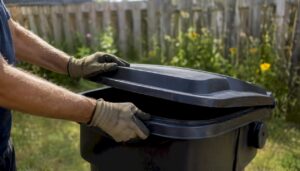
- Secure lids after every use, including recycling bins.
- Double-bag wet food waste before it goes in the bin.
- Rinse bins weekly and let them dry completely.
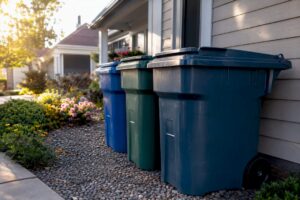
- Position bins on pavement, away from your foundation and dense shrubs.
- Bring bins in within 12 hours of pickup day.
TL;DR: If your bin smells, you see droppings or gnaw marks, or pests keep returning after DIY cleaning, skip the scrub bucket and book a recurring professional cleaning. If you’re just starting to notice activity, the checklist above and a good deep-clean will handle most situations. Check your trash can hygiene basics before reaching for any chemical.
Table of Contents
- Why residential trash bins become pest magnets
- Common pests drawn to suburban trash bins and the signs to watch for
- Immediate steps you can take today to reduce bin pests
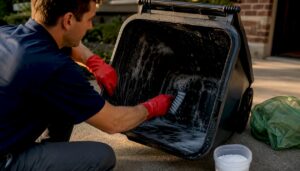
- How to deep-clean a trash bin yourself
- When to hire a professional bin-cleaning service
- How bin cleaning fits into Integrated Pest Management
- Recommended cleaning frequency and what it typically costs
- If you spot pests around your bin: what to do right now
- Key Takeaways
- Why sanitation-first is the only approach worth recommending
- Abcbins keeps your bins clean so pests don’t move in
- Useful sources and further reading
Why residential trash bins become pest magnets
Every pest needs three things to settle in: food, water, and shelter. Your trash bin delivers all three in one spot, which is exactly why IPM principles start with sanitation rather than pesticides.
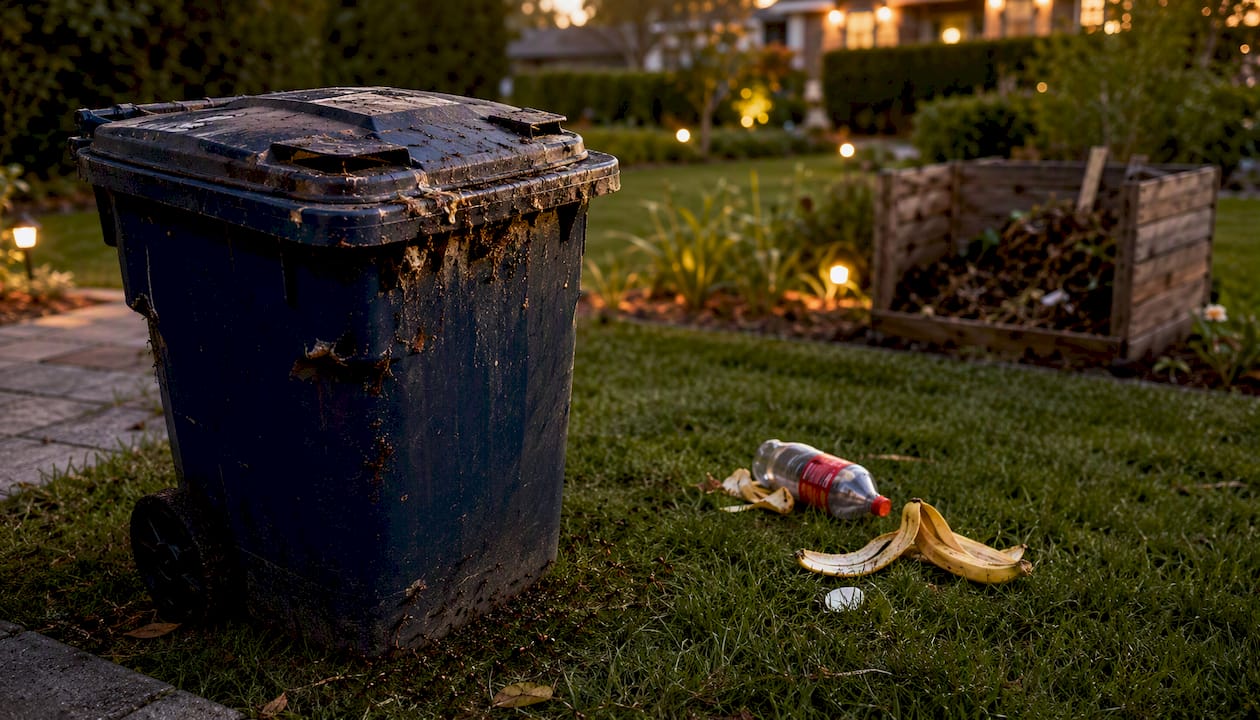
The real driver is decomposition. As organic waste breaks down, it releases gases and leachate (the liquid that pools at the bin’s bottom) that carry food signals detectable by rodents and insects from surprising distances. A bin that smells to you smells like a buffet to a rat. Fermentation from sugary waste, like juice cartons and fruit scraps, is especially potent.
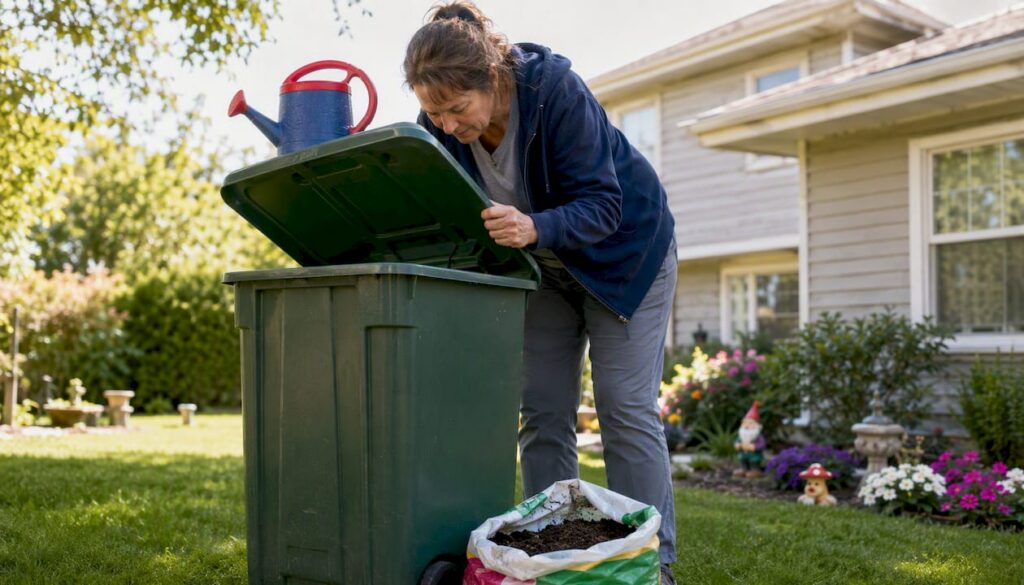
Bin placement makes it worse. Bins pushed against your foundation give rodents a direct path from foraging to nesting. Dense shrubs or overgrown landscaping within a few feet of the bin provide cover, so raccoons and skunks can approach without feeling exposed. A bin on a paved surface in an open spot is genuinely less attractive than one tucked against a fence in the shade.
- Food residue in seams and cracks feeds cockroaches and ants even after the bag is removed.
- Standing moisture from rain or rinsing without drying attracts flies and encourages maggot development.
- Shelter under or behind bins gives rodents and skunks a staging area.
- Recycling bins are often overlooked. Unwashed bottles and cans carry enough sugar residue to draw wasps and ants consistently.
For HOA communities and shared bin areas, pest-control guidance recommends sealed enclosures, regular cleaning rotations, and secured lids as the baseline for keeping shared trash areas from becoming neighborhood pest hotspots.
Common pests drawn to suburban trash bins and the signs to watch for
Different pests show up for different reasons, and knowing which one you’re dealing with changes your response.
Rodents (rats and house mice) are the most consequential. They seek high-protein and sugar-rich waste, and once they find a reliable food source, they establish burrows nearby. Rats can gnaw through plastic bin walls; mice squeeze through gaps smaller than a dime.
Raccoons and skunks are strong enough to flip unsecured lids and will scatter trash across a driveway in minutes. They’re most active at dusk and dawn.
Flies lay eggs directly in organic waste. A single warm day with an unsecured bin can produce a maggot problem within 24 hours. Blow flies and house flies are the most common culprits in suburban areas.
Wasps are drawn to sugary residue, especially in late summer. They’ll build nests in or under bins left undisturbed for weeks.
Ants follow pheromone trails to food residue in bin seams. Once a trail is established, hundreds follow within hours.
Cockroaches prefer damp organic residue and warm, dark spaces. German cockroaches in particular reproduce rapidly, and many populations have developed pesticide resistance, which is why early sanitation matters so much. Reaching for a fogger when you spot roaches around a bin often makes things worse: broad aerosol sprays scatter mobile pests into wall voids and hidden crevices, creating a harder-to-treat infestation.
Signs to watch for:
- Droppings near or inside the bin (small dark pellets = rodents; dark smears = cockroaches)
- Gnaw marks on bin walls or lids
- Lid damage or displacement overnight
- Persistent fly clouds or visible maggots
- Wasp activity around the bin’s base or underside
- Grease trails or unusual odors near the bin’s exterior
Immediate steps you can take today to reduce bin pests
A consistent routine beats any one-time treatment. These steps are ordered by impact, not effort.
Daily:
- Close lids completely after every use. If the lid doesn’t seal, the bin is open for business.
- Double-bag any wet food waste, especially meat scraps, before it goes in.
- Wipe the outside of bags before tossing them in. Leaking bags coat the bin interior and create residue that persists long after the bag is gone.
Weekly:
- Rinse the bin interior with water and let it dry fully before the next use. A dry bin is far less hospitable than a damp one.
- Move bins to a sunny, paved spot if possible. UV exposure and heat reduce bacterial growth and odor.
- Trim any vegetation within two feet of your bin storage area. Overgrown shrubs give pests cover and reduce your visibility of early activity.
Seasonally:
- Increase rinse frequency from May through September, when fly and wasp activity peaks and decomposition accelerates.
- Around high-waste events (parties, holidays), double-bag all food waste and consider an extra pickup or interim cleaning.
- In winter, check that lids seal properly. Cold-weather rodents are actively seeking warm food sources and will exploit any gap.
Pro Tip: Avoid rinsing food-soiled containers (yogurt tubs, takeout containers) and tossing them in the recycling bin without washing them first. Recycling bins are rarely cleaned as often as trash bins, and residue in them draws wasps and ants just as reliably. A quick rinse before recycling cuts that attractant significantly.
How to deep-clean a trash bin yourself
A proper DIY deep-clean removes the residue, pheromone trails, and leachate that keep pests returning even after you’ve improved your daily habits. Do this at minimum once a month in warm weather, quarterly in winter.
Equipment you need:
- Heavy-duty rubber gloves and a disposable mask
- A stiff-bristle scrub brush (dedicated to bin use only)
- Dish soap or an enzyme-based cleaner (both are pet- and child-safe when rinsed)
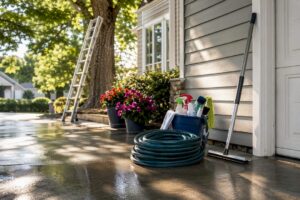
- A garden hose with a spray nozzle
- Baking soda or white vinegar for deodorizing
- A sunny, paved spot for drying
Step-by-step:
- Empty the bin completely. Remove the bag and any loose debris.
- Scrape out residue. Use a plastic scraper or old spatula to remove stuck-on waste from the bottom and seams. This step is what most people skip, and it’s where pheromone residue concentrates.
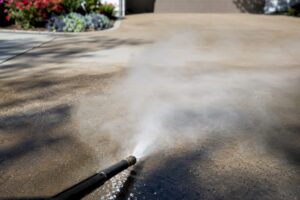
- Rinse with hot water. A high-pressure nozzle setting helps dislodge grime from corners.
- Scrub with soap. Work the brush into seams, the lid interior, and the bottom. Enzyme-based cleaners break down organic residue more effectively than dish soap alone.
- Sanitize. A diluted white vinegar solution (1 part vinegar to 3 parts water) or a diluted bleach solution (follow label ratios) kills surface bacteria and neutralizes odors. Rinse thoroughly after.
- Dry completely. Tip the bin upside down in a sunny spot for at least an hour. A damp bin invites flies back almost immediately.
- Deodorize. Sprinkle baking soda in the dry bin before replacing the bag. Cedar chips near the bin’s base can deter insects without chemical exposure.
Safety note: Do not let wash water run into the street or storm drain. Municipal stormwater rules restrict pollutant discharges to storm drains because runoff flows untreated to local watersheds. Contain wash water on your lawn or a gravel area where it can absorb, or use a bucket to collect and dispose of it in a utility sink. For more on common cleaning mistakes that create runoff problems, that’s worth a read before you start.
Pro Tip: Simple hosing rarely reaches the residue trapped in seams and microscopic cracks. That’s the material pests are actually tracking. If you’ve cleaned the bin and pests return within a week, the issue is almost certainly residue you can’t see. That’s when professional equipment makes a real difference.
When DIY won’t cut it: persistent odors after multiple cleanings, visible rodent activity, or recurring maggot problems are signs the bin needs professional-grade treatment. Why basic hosing isn’t enough explains the gap between a garden hose and commercial high-pressure equipment.
When to hire a professional bin-cleaning service
Some situations make DIY cleaning the wrong tool for the job. Knowing when to escalate saves time and prevents a manageable problem from becoming a structural infestation.
Concrete triggers for calling a pro:
- Persistent pest activity after two or more DIY cleanings
- Visible rodent droppings inside or around the bin
- Recurring odor within days of cleaning
- HOA notices or neighbor complaints about bin-related pest activity
- Maggot infestations that return within one week of cleaning
What professional bin cleaning includes:
- High-pressure hot water cleaning that reaches seams and cracks a garden hose can’t
- Sanitizing agents that neutralize pheromone trails and kill bacteria
- Odor neutralization at the source, not just surface masking
- On-board wastewater capture so contaminated water never enters storm drains
Professional bin cleaning functions as a cultural control under Integrated Pest Management: it alters the environment so it no longer supports pest populations, reducing the need for pesticide applications. A clean bin stops being a food signal. A dirty one keeps broadcasting.
Trust signals to look for when choosing a service:
- Closed-loop wastewater handling (no runoff to storm drains)
- Recurring service plans so cleaning happens on a schedule, not just when the smell gets bad
- Sanitation-first claims aligned with IPM principles
- Curbside service with no-contact options (you don’t need to be home)
A professional bin cleaning service typically arrives at the curb on your scheduled day, cleans and sanitizes the bin in place, captures all wastewater, and leaves. The whole process takes minutes per bin. Recurring plans mean you set it once and the schedule handles itself.
How bin cleaning fits into Integrated Pest Management
The EPA’s IPM framework is built on a clear priority order: remove food, water, and shelter first; monitor before and after; use the least-toxic intervention that works; and treat only when necessary. Pesticides are the last resort, not the starting point.
Bin cleaning is a textbook cultural control under that framework. Cultural controls alter the environment to make it less hospitable to pests, rather than killing pests directly. A sanitized bin with no leachate, no residue, and no odor stops functioning as a food signal. Pests don’t find it, so they don’t establish foraging routes to it.
The EPA’s IPM guidance is explicit: sanitation is the most sustainable preventive method. Cleaning and maintaining bins removes the attractants that make pesticide applications necessary in the first place. A recurring cleaning schedule is more effective than reactive treatment because it prevents attractant accumulation rather than responding to it.
University extension programs, including Virginia Tech’s Pest Management Guide and UF/IFAS Extension’s rodent prevention guidance, reinforce the same point: garbage management is one of the primary reasons rodents settle around homes, and small changes in how you store and maintain trash make a measurable difference in preventing infestations. The role of sanitizing in bin care goes deeper on how sanitizing differs from basic cleaning and why that distinction matters for pest prevention.
Recommended cleaning frequency and what it typically costs
How often you need to clean depends on your household’s waste volume, local climate, and pest pressure.
High-risk households (families with young children, pet owners, households with frequent food waste, warm-climate suburbs): monthly professional cleaning, with DIY rinses in between.
Moderate-risk households (average suburban family, temperate climate, standard waste volume): bi-monthly professional cleaning, with seasonal DIY deep-cleans.
Lower-risk households (one or two residents, minimal food waste, cooler climates): quarterly professional cleaning is usually sufficient, supplemented by regular DIY rinsing.
The case for recurring service over reactive cleaning comes down to accumulation. Leachate and residue build up between cleanings. A bin cleaned on a schedule never reaches the odor threshold that attracts pests in the first place. A bin cleaned only when it smells bad has already been broadcasting food signals for weeks.
Typical cost factors for curbside bin cleaning:
- Number of bins (trash, recycling, yard waste)
- Cleaning frequency (monthly plans cost less per visit than one-time service)
- Add-on sanitizing or deodorizing treatments
- Local market rates (Chicagoland pricing differs from rural markets)
For a detailed look at DIY versus professional service costs, the time, equipment, and water costs of DIY add up faster than most homeowners expect.
If you spot pests around your bin: what to do right now
Fast action limits how far a pest problem spreads. Work through these steps in order.
- Secure the area. Close the bin lid, remove any spilled waste, and keep children and pets away until you’ve assessed the situation.
- Collect evidence. Photograph droppings, gnaw marks, or damaged areas. Note the time of day and which bin was affected. This documentation matters if you need to report to an HOA or call a licensed pest-control technician.
- Remove fresh attractants. Pull any open bags, wipe down the bin exterior, and check nearby recycling bins for unsecured lids or residue.
- Deep-clean or schedule a professional cleaning. If you can contain wash water safely, do a full DIY deep-clean. If not, book a professional service.
- Set monitoring traps. Snap traps near (not inside) the bin give you information about rodent species and activity level without scattering a population the way foggers do.
Red flags that mean call a licensed pest-control professional, not just a bin cleaner:
- Visible burrows in soil near the bin or along your foundation
- Gnaw trails leading from the bin toward your home’s structure
- Repeated nighttime rodent activity over multiple days
- Evidence of disease vectors (rat droppings near water sources, dead birds nearby)
- Any sign of structural entry (gaps chewed into siding, soffit, or crawl space)
EPA guidance is clear that correct identification is the first critical step. Misidentifying the pest leads to wasted money on ineffective treatments. Your documentation from step two is exactly what a pest-control technician needs to make that call quickly.
For HOA communities: share your documentation with the property manager and ask whether neighbors have reported similar activity. A pest problem that crosses multiple properties requires a coordinated response, not individual treatments that push pests from one yard to the next.
Key Takeaways
Sanitation-first pest control works because removing food, water, and shelter from bins stops pests from establishing foraging routes in the first place.
| Point | Details |
|---|---|
| Remove attractants first | Secure lids, double-bag wet food, and rinse bins weekly to eliminate the food and moisture signals pests track. |
| Recurring cleaning beats reactive cleaning | A scheduled cleaning cadence prevents leachate buildup that broadcasts food signals between visits. |
| Watch for red flags | Burrows, gnaw trails toward your home, or repeated rodent activity mean call a licensed pest-control pro, not just a bin cleaner. |
| Manage wash water carefully | DIY rinse water can violate municipal stormwater rules if it enters storm drains; professional services use closed-loop capture systems. |
| Abcbins offers recurring curbside service | American Bin Cleaning provides eco-friendly, high-pressure bin cleaning with on-board wastewater capture and monthly, bi-monthly, or quarterly plans throughout Chicagoland. |
Why sanitation-first is the only approach worth recommending
Most homeowners reach for a spray can the moment they see a pest near their bin. That instinct is understandable and almost always counterproductive. Broad chemical treatments applied to a dirty bin don’t fix the problem. They scatter it. The bin keeps smelling, the pests keep coming back, and the homeowner keeps buying product.
What actually works is the less satisfying answer: remove what’s attracting them. A clean, dry, sealed bin in an open spot is genuinely uninteresting to a rat or a raccoon. The pest doesn’t disappear because you killed it. It disappears because there’s nothing there for it.
The recurring service model matters for the same reason. A bin cleaned once a year when it gets bad is a bin that spends most of the year accumulating the residue that draws pests. A bin cleaned monthly never reaches that threshold. That’s not a sales pitch for professional cleaning. It’s just how attractant accumulation works.
The one thing I’d add for suburban homeowners specifically: coordinate with your neighbors. A pest problem that originates in one yard’s bin doesn’t stay there. If you clean your bins religiously and your neighbor’s are never touched, you’re managing symptoms, not the source. HOA communities have a real opportunity here to set shared standards and schedule block-level cleaning rotations that individual households won’t do on their own.
Abcbins keeps your bins clean so pests don’t move in
Cleaning your own bins is doable. Doing it consistently, safely, and often enough to actually prevent pests is where most households fall short. Abcbins handles that gap.
American Bin Cleaning has been serving suburban homeowners throughout Chicagoland since 1989. The service is curbside and no-contact: bins go out on your scheduled day, get cleaned with eco-friendly high-pressure equipment, sanitized, and deodorized, and all wastewater is captured on-board so nothing runs into storm drains or your lawn. You don’t need to be home. See how curbside service works and pick the plan cadence that fits your household. Monthly, bi-monthly, and quarterly plans are available, along with one-time service if you want to start there.
For Barrington-area homeowners, local service details and booking are available on the Abcbins site. Ready to stop managing this yourself? Get started at abcbins.com.
Useful sources and further reading
These are the primary and authoritative sources referenced throughout this article.
| Source | Why it’s useful |
|---|---|
| EPA — Integrated Pest Management | IPM principles, sanitation-first guidance, and cultural controls for pest prevention |
| EPA — Citizens’ Guide to Pest Control and Pesticide Safety | Practical guidance on pest identification, inspection, and when to use pesticides |
| EPA — NPDES Stormwater Discharges | Rules on stormwater runoff and why DIY wash water disposal matters |
| Virginia Tech Pest Management Guide | University extension recommendations for home grounds pest management |
| UF/IFAS Extension — Rodent Prevention | Practical trash-management steps specifically for rodent prevention around homes |
| National Pesticide Information Center (NPIC) | Pest biology, pesticide resistance, and safety information for homeowners |
| American Bin Cleaning (Abcbins) | Service details, recurring plan options, and curbside bin cleaning for Chicagoland homeowners |