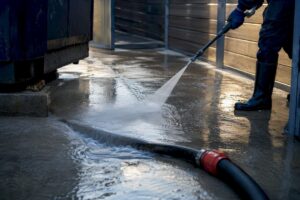
A bin cleaning service is a professional process that washes, disinfects, and deodorizes your garbage bins using high-pressure hot water and biodegradable cleaning agents. Standard professional cleaning eliminates up to 99.9% of bacteria including dangerous pathogens like E. coli, Salmonella, and Listeria. For homeowners who care about household hygiene and environmental responsibility, this service solves a problem that a garden hose and dish soap simply cannot. Your bin sits outside every week collecting food waste, grease, and organic matter. Left uncleaned, it becomes a breeding ground for bacteria, flies, and rodents. A professional bin cleaning service removes all of that at the source.
What is a bin cleaning service and how does it work?
Professional bin cleaning, also called trash can sanitizing or wheelie bin cleaning, goes far beyond rinsing a container with water. Specialized trucks pull up to your curb, lift your bin using a hydraulic system, and blast the interior with water heated to 190–200°F along with biodegradable disinfectants and odor neutralizers. The heat alone kills most bacteria on contact. The mechanical action finishes the job.
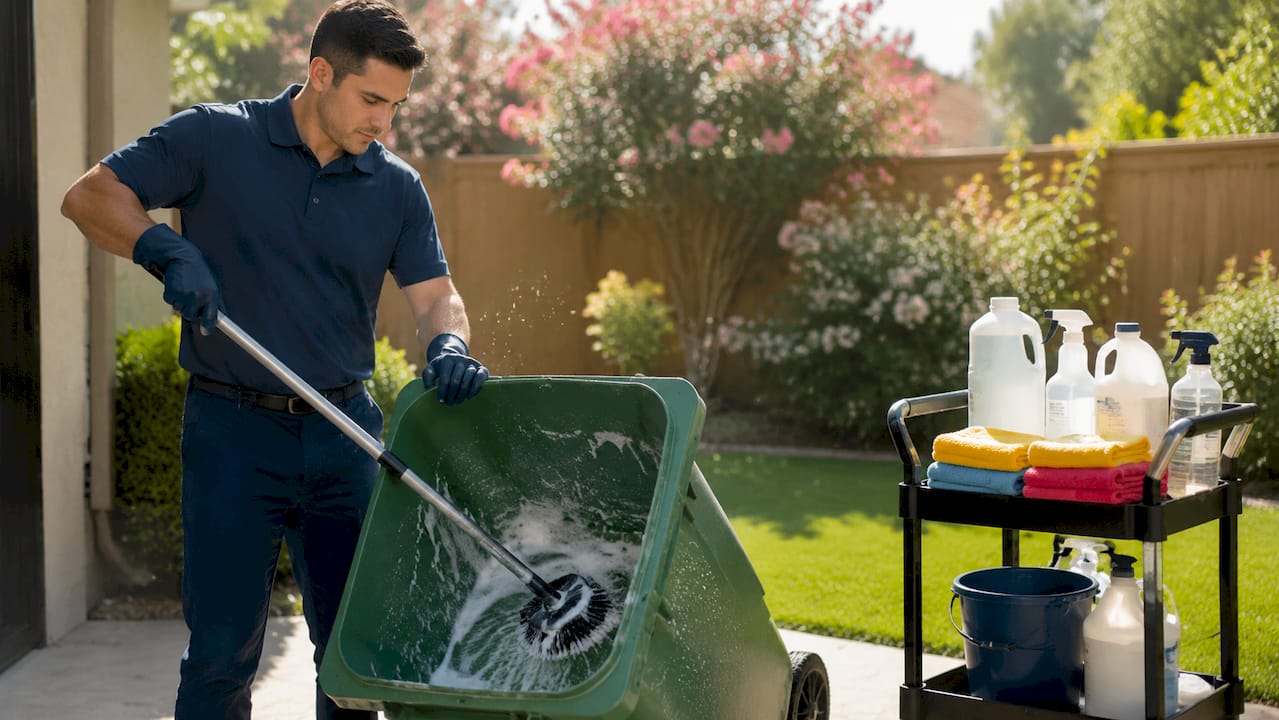
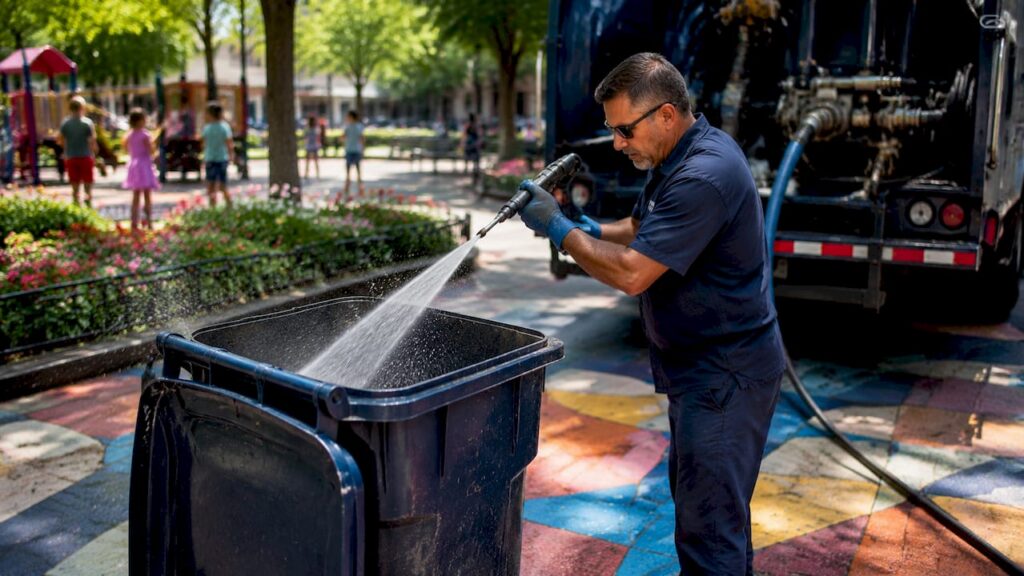
The equipment inside these trucks is purpose-built for this task. High-pressure spinner heads blast bins at over 3,000 PSI, reaching corners and crevices that a scrub brush cannot touch. That level of pressure removes caked-on grease, dried food residue, and biofilm that builds up over months of regular use.
One critical difference between professional service and DIY cleaning is wastewater handling. When you hose down your bin in the driveway, that contaminated water flows directly into storm drains. Professional services capture all wash water in onboard containment systems and dispose of it safely, keeping harmful bacteria and chemicals out of local waterways. This matters both for your neighborhood and for compliance with local environmental regulations.
- High-pressure hot water: Water reaches 190–200°F to kill bacteria on contact
- Biodegradable disinfectants: Eco-friendly agents neutralize odors without harsh chemicals
- Hydraulic bin lifts: Bins are inverted and secured for a thorough interior clean
- Spinner heads at 3,000+ PSI: Mechanical force removes grime unreachable by hand
- Onboard wastewater capture: All contaminated water is contained and safely disposed of
Pro Tip: Schedule your bin cleaning service for the day after your municipal waste pickup. Cleaning an empty bin produces far better results, and you avoid the risk of a technician arriving while your bin is still full.
How does bin cleaning frequency affect hygiene?
Bin cleaning service frequency refers to how often a professional cleans your bins on a recurring schedule. Monthly, quarterly, and one-time options each serve different household needs. Choosing the right frequency is the single biggest factor in whether your bins stay genuinely clean or just temporarily odor-free.
Scheduling cleaning just after waste pickup prevents up to 87% of common bin hygiene issues including persistent odors and pest infestations. That number reflects a simple truth: a bin cleaned on a consistent cycle never gets the chance to develop the deep bacterial colonies that cause serious problems.
| Frequency | Best for | Typical cost range | Key benefit |
|---|---|---|---|
| Monthly | Larger households, warm climates, meat/food waste | $25–$45/month | Prevents bacterial buildup before it starts |
| Bi-monthly | Average households, mixed waste types | $30–$40/visit | Balances cost and hygiene effectively |
| Quarterly | Smaller households, cooler climates, low food waste | $35–$45/visit | Covers seasonal deep cleaning needs |
| One-time | New homeowners, post-event, or trial cleaning | $50–$60 per clean | No commitment, immediate results |
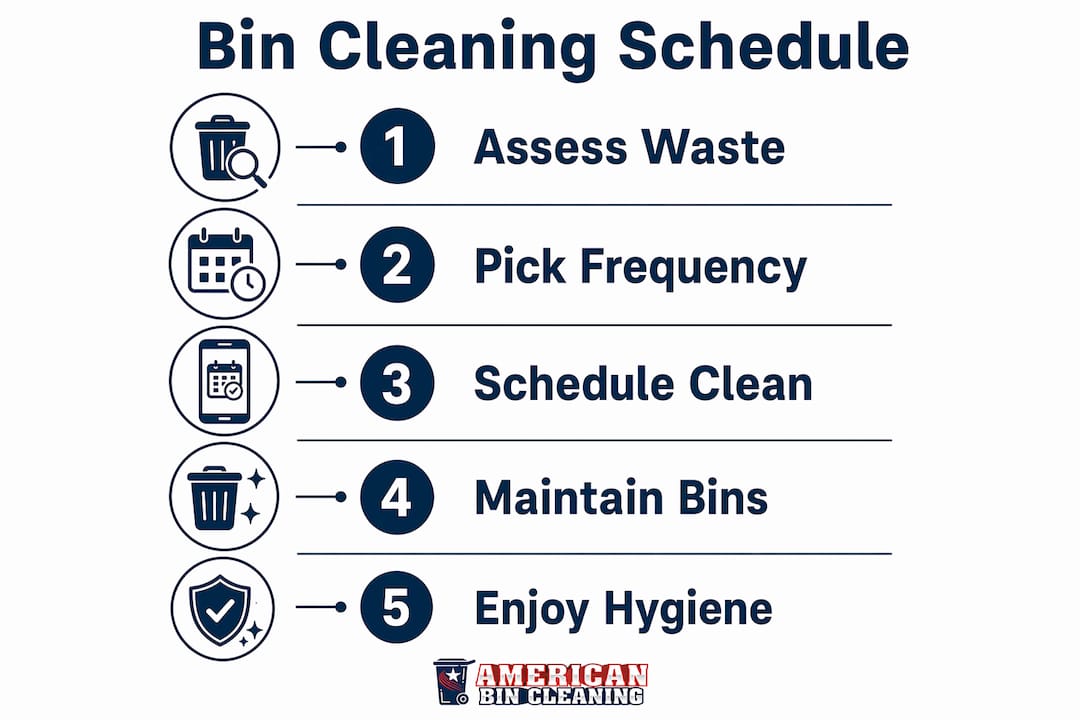
Pricing data sourced from standard service plan ranges across the industry.
Warm weather changes the math significantly. Food waste like chicken or meat can trigger bacterial growth cycles in as little as two weeks during summer months. A quarterly schedule that works fine in January becomes inadequate by July. Households in the Chicago area, for example, should plan for monthly service from May through September and can often scale back to quarterly during winter.
Monthly service is the standard recommendation for warmer months, while quarterly may be enough for smaller households in cooler seasons. The key is matching your schedule to your actual waste habits, not just picking the cheapest option.
Pro Tip: If your household regularly disposes of raw meat, fish, or dairy, treat monthly cleaning as the minimum. These waste types accelerate bacterial growth faster than any other common household trash.
What are the health and environmental benefits?
The health case for professional bin cleaning is direct. Garbage bins harbor bacteria that cause real illness. Harmful pathogens including E. coli and Salmonella thrive in the warm, moist environment inside a dirty bin. Children and pets who touch bin lids or handles are at the highest risk of exposure. Professional cleaning eliminates these bacteria at temperatures and pressures that no DIY method can match.
Beyond bacteria, dirty bins attract disease vectors. Flies lay eggs in food residue. Rodents are drawn to the smell of decomposing organic matter. Both carry pathogens that spread far beyond the bin itself. A clean bin is simply less attractive to pests, which reduces the risk of infestations spreading to your home.
“Spraying a bin with a household cleaner masks the odor but leaves the bacterial colony intact. Professional cleaning removes the colony entirely, which is why the odor does not return within days.” — Sanitation hygiene principle confirmed by bin odor and hygiene experts
The environmental benefits are equally concrete. DIY cleaning sends contaminated water containing bacteria, grease, and chemical residue into storm drains. That water reaches local streams and groundwater. Professional services prevent this entirely through onboard wastewater capture systems. Choosing a service that uses biodegradable cleaning agents adds another layer of environmental protection.
Professional cleaning also extends the lifespan of your bins by preventing the material degradation caused by acids, grease, and organic rot. Plastic bins exposed to repeated bacterial breakdown and chemical residue crack and degrade faster. Regular cleaning protects the material, which means fewer replacements and less plastic waste over time. This connects bin hygiene to overall cleanliness of your property in ways most homeowners do not consider until a bin fails.
What does a service contract for bin cleaning include?
A service contract for bin cleaning is an agreement between you and a provider that defines how often your bins are cleaned, what the service covers, and how billing works. Most contracts are simple subscription arrangements with no long-term lock-in, though terms vary by provider.
Here is what a standard service contract typically covers:
- Cleaning frequency: Monthly, bi-monthly, or quarterly visits are the most common options. The contract specifies which schedule you have chosen and when service days fall relative to your local waste collection.
- Notification policy: Reputable providers send a text or email before each visit so you know to leave your bin at the curb. You do not need to be home for the service to be completed.
- Cancellation terms: Most residential plans allow cancellation with 30 days notice. Read this section carefully before signing, as some providers charge a cancellation fee for early termination.
- Scope of service: Contracts specify which bins are included. A standard plan typically covers one or two bins. Additional bins usually cost extra per visit.
- Wastewater handling: Any reputable provider should explicitly state that contaminated wash water is captured and disposed of properly. If a contract does not mention this, ask directly.
When choosing a plan, match the frequency to your household size and waste habits first, then compare pricing. A one-time cleaning at $50–$60 is a good way to evaluate a provider before committing to a subscription. The real cost comparison between DIY and professional service often surprises homeowners once they factor in their own time, water use, and cleaning supplies.
How to maintain bin hygiene between professional cleanings
Professional cleaning handles the deep work, but your bins need attention between visits. A few simple habits keep odors and bacteria from getting out of control before the next scheduled service.
- Disinfect lids and handles weekly. Lids and handles harbor lingering bacteria and are the most frequently touched surfaces on any bin. A quick spray with an antibacterial cleaner takes 30 seconds and makes a measurable difference.
- Keep bins dry and covered. Moisture accelerates bacterial growth. Always replace the lid after use and tip the bin slightly if water collects inside after rain.
- Avoid dumping oily or liquid waste directly into the bin. Pour cooking oil into a sealed container before disposal. Liquid waste coats the bin interior and feeds bacterial colonies between cleanings.
- Rinse food containers before binning them. Empty yogurt tubs, meat trays, and sauce jars before they go in the bin. This single habit reduces odor and bacterial growth significantly.
- Position bins away from direct sun when possible. Heat speeds up bacterial breakdown of organic matter. A shaded spot on collection day keeps your bin cooler and cleaner longer.
Pro Tip: Place a layer of baking soda at the bottom of your bin liner before adding trash. It absorbs moisture and neutralizes odors without introducing chemicals that could interfere with your next professional cleaning.
Key Takeaways
Professional bin cleaning is the only method that fully eliminates bacterial colonies, captures contaminated wastewater, and protects both your household health and the environment simultaneously.
| Point | Details |
|---|---|
| Professional process | Hot water at 190–200°F and 3,000+ PSI removes bacteria and grime no DIY method can reach. |
| Frequency matters | Monthly cleaning in warm months prevents up to 87% of odor and pest problems. |
| Environmental protection | Professional services capture all wastewater, preventing storm drain contamination. |
| Service contracts | Look for clear terms on frequency, notification, cancellation, and wastewater handling. |
| Between-visit habits | Disinfecting lids and handles weekly keeps bacteria from rebuilding between professional visits. |
Why I think most homeowners underestimate this service
I have seen a lot of homeowners dismiss bin cleaning as an unnecessary expense, and I understand the instinct. You already pay for trash pickup. The bin gets emptied every week. How dirty can it really get?
The answer is: far dirtier than you expect. The bins I have seen before a first professional cleaning often have bacterial colonies so established that the interior smells like a dumpster even when empty. That odor does not come from the trash. It comes from the biofilm coating the plastic. A garden hose does not touch it.
What surprises people most is the wastewater issue. When you clean your bin in the driveway, everything that comes off it, including E. coli, Salmonella, grease, and whatever cleaning chemical you used, flows straight to the storm drain. In many municipalities, that is actually a violation. Professional services handle this correctly every time, which is something worth paying for on principle alone.
The long-term cost argument is also stronger than it looks. A bin that gets cleaned regularly lasts years longer than one that degrades from acid and rot. Replacing a large residential bin costs $50–$100 or more. A subscription plan often pays for itself in avoided replacements within a few years. The health and hygiene benefits of a professionally maintained bin are real, but the financial case is just as solid.
My honest recommendation: start with a one-time cleaning to see the difference. Most homeowners who do never go back to DIY.
— Jim
Keep your bins clean with Abcbins
Abcbins has served Chicagoland homeowners since 1989 with professional, eco-friendly bin cleaning built around your schedule. Every cleaning uses high-pressure hot water, biodegradable disinfectants, and a fully contained wastewater system so nothing harmful enters your yard or local waterways. You do not need to be home. Abcbins handles everything at the curb.
Flexible plans include monthly, bi-monthly, quarterly, and on-demand options to match any household size or budget. Abcbins also offers dumpster pad cleaning and residential pressure washing for driveways, decks, and storefronts. Check availability and explore service plans for your area, or find local pricing for Barrington, McHenry, and Round Lake homeowners.
FAQ
What is a bin cleaning service exactly?
A bin cleaning service is a professional process that uses high-pressure hot water and biodegradable disinfectants to sanitize, deodorize, and deep-clean residential or commercial garbage bins. It removes bacteria, grease, and organic residue that standard rinsing cannot eliminate.
How often should I have my bins professionally cleaned?
Monthly cleaning is recommended during warmer months, while quarterly service may be enough for smaller households in cooler climates. Households that regularly dispose of raw meat or fish should treat monthly as the minimum frequency.
Is professional bin cleaning safe for the environment?
Yes. Reputable services use biodegradable cleaning agents and capture all contaminated wash water in onboard containment systems, preventing it from entering storm drains or local waterways. DIY cleaning does not offer this protection.
What does a bin cleaning service contract typically cost?
Subscription plans typically range from $25–$45 per month, while one-time cleanings run $50–$60. Pricing varies by provider, number of bins, and cleaning frequency selected.
Do I need to be home when the bin cleaning service arrives?
No. Professional bin cleaning services are designed to work curbside without the homeowner present. Most providers send a notification before the visit so you can leave your bin accessible at the curb.