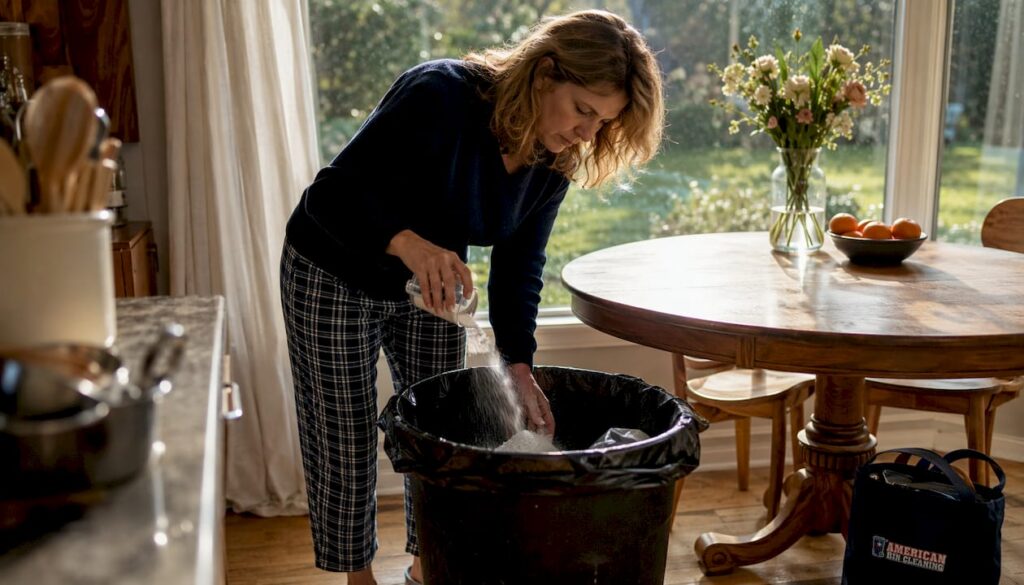
The fastest way to stop trash-can smells is to remove the bag, scrub out any residue, and place a dry odor absorber like baking soda or activated charcoal inside before adding a fresh liner. That sequence works because the smell isn’t coming from the air around the can — it’s coming from bacterial breakdown of organic residue coating the interior walls, seams, and lid. Masking it with sprays just layers scent on top of the problem.
Three things you can do right now:
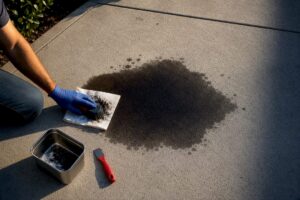
- Remove the bag and check the bottom and seams for leaked residue — wipe or rinse it out before it dries.
- Sprinkle a small amount of baking soda under the new liner on a dry surface.
- Air the empty can outside in direct sunlight for 30 minutes before relining.
Safety note: Avoid spraying liquid deodorizers into a can you’re about to reline — added moisture restarts the odor cycle. Handle bleach in a ventilated area and never mix it with vinegar or ammonia.
Table of Contents
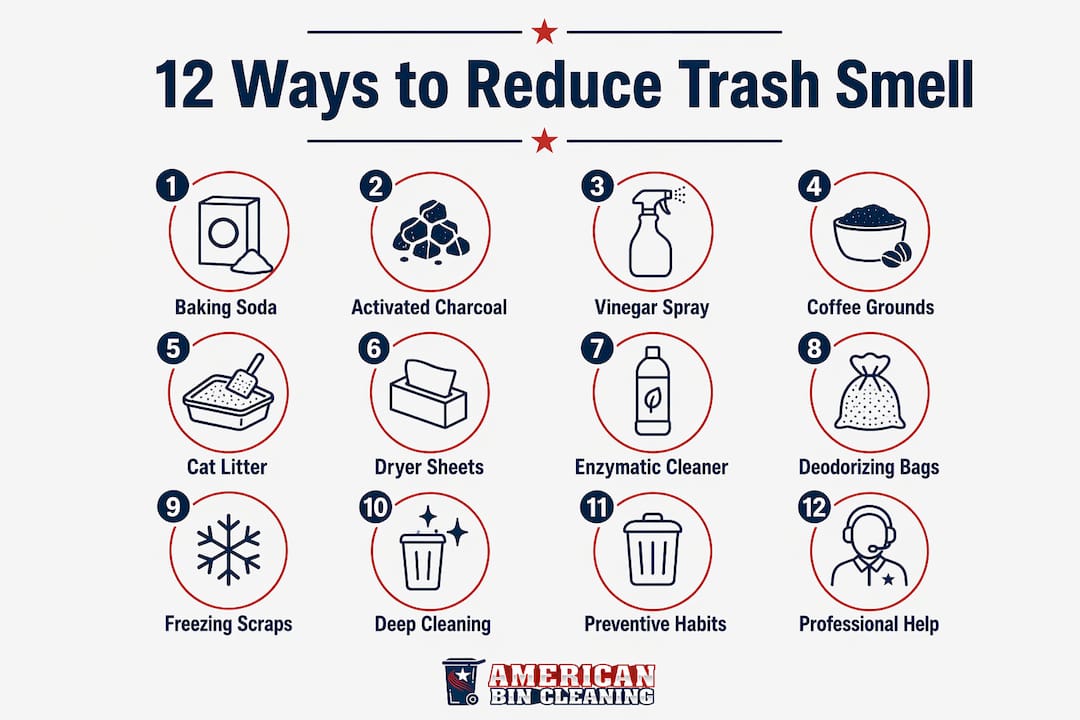
- 1. Baking soda under the liner
- 2. Activated charcoal bags
- 3. White vinegar spot spray
- 4. Coffee grounds and citrus peels
- 5. Cat litter
- 6. Dryer sheets
- 7. Enzymatic cleaner for stubborn residue
- 8. Deodorizing bags and carbon filters
- 9. Freeze smelly food scraps
- 10. How to deep-clean a smelly trash can
- 11. Prevention habits that stop odors from forming
- 12. When to call a professional cleaner
- Key Takeaways
- What professional cleaners see that homeowners miss
- Persistent odor? Abcbins handles what home cleaning can’t
- Useful sources
1. Baking soda under the liner
Baking soda neutralizes acidic odor molecules rather than covering them. Sodium bicarbonate buffers pH, which means it captures and cancels compounds from fish, onions, dairy, and coffee at the molecular level. Sprinkle a modest amount across the dry bottom before inserting the liner; increase quantity for larger kitchen bins. Refresh regularly, or sooner during periods of high humidity when the powder saturates faster.
2. Activated charcoal bags
Activated carbon has an enormous surface area per gram, which lets it adsorb a wide range of volatile odor molecules — not just mask them. Hang a charcoal bag from the lid or tuck one under the liner. Replace regularly depending on how heavily the bin is used. Unlike fragranced sprays, charcoal adds no irritants to indoor air, which matters for households with asthma or allergies.
3. White vinegar spot spray
A 50/50 mix of white vinegar and water works well as a spot neutralizer for greasy or meaty residue after you’ve emptied the bag. Spray the interior, let it sit two minutes, then wipe dry. The key word is “dry” — leaving the can damp after any spray treatment is one of the most common mistakes homeowners make, because trapped moisture is exactly what bacteria need to restart. Use vinegar as a between-cleans wipe-down, not a substitute for a full scrub.
4. Coffee grounds and citrus peels
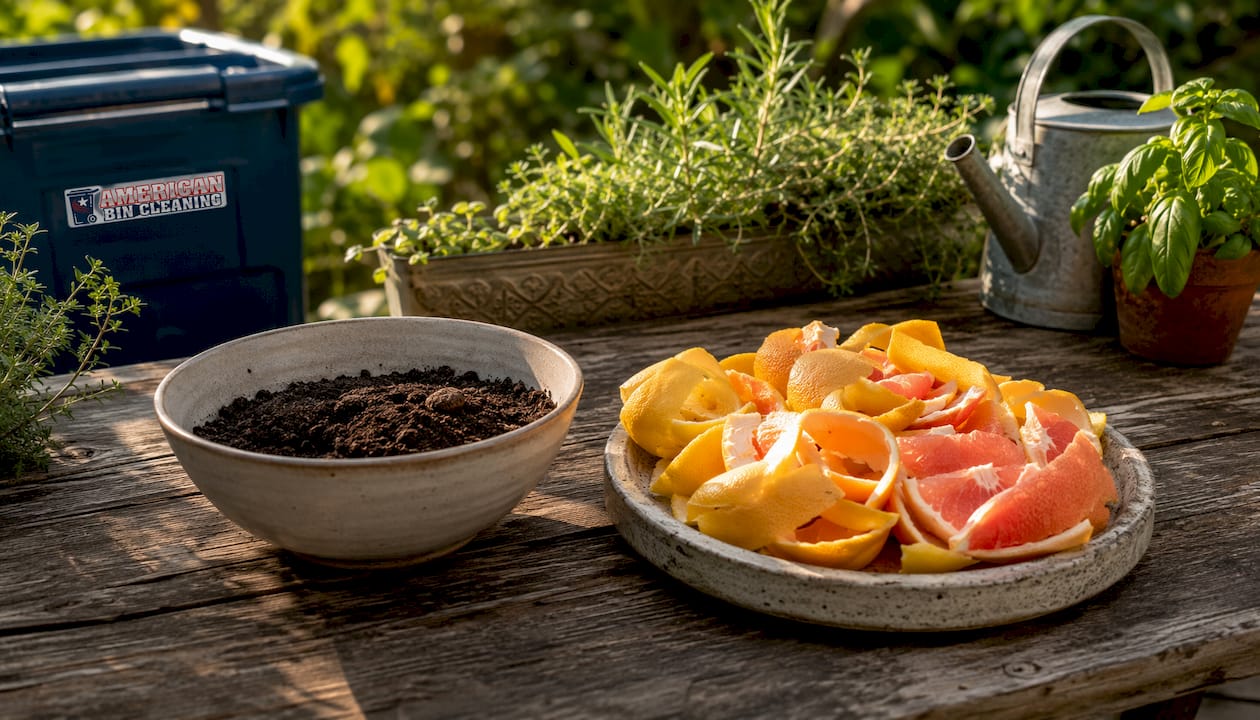
Both absorb some volatile organic compounds and leave a fresher scent, but their effect is short-lived — a day or two at most. Coffee grounds must be fully dried before you place them in the bin; wet grounds introduce moisture and can mold quickly. Citrus peels work similarly: a few strips of lemon or orange peel under the liner give a light, clean note. Think of these as a quick refresh between proper cleanings, not a long-term fix. Coffee grounds and citrus mask some odors but don’t reach residue on walls and lids.
5. Cat litter
Clumping, unscented cat litter is one of the more underrated pantry remedies. A thin layer at the bottom of the can absorbs moisture and slows the bacterial activity that generates smell. Non-scented varieties are preferable — heavily fragranced litter in a food-waste bin can create an unpleasant chemical-meets-organic combination. Replace it every week or whenever you change the liner.
6. Dryer sheets
A dryer sheet tucked under the liner adds a mild, temporary fragrance and can absorb some surface odors. The effect lasts for a limited period. One caution: avoid lining food-waste bins with multiple dryer sheets as a primary strategy. The EPA recommends limiting fragranced products indoors, particularly for people with sensitivities, and prioritizing source removal and ventilation over scent masking.
7. Enzymatic cleaner for stubborn residue
Enzymatic cleaners break down the organic compounds — proteins, fats, starches — that standard dish soap leaves behind. They’re the right tool when you can still smell the bin after a normal scrub. Apply the cleaner to the interior walls and lid, let it sit for the contact time listed on the label, then rinse. Enzymatic cleaners are especially effective on persistent biofilm in porous plastic, where grease and bacteria embed in microscopic grooves that a brush can’t fully reach.
8. Deodorizing bags and carbon filters
Deodorizing bags combine activated carbon with other absorbents and are designed to sit inside or under the lid. Some trash cans include a built-in carbon filter on the lid; if yours does, replace it on the manufacturer’s schedule — an exhausted filter contributes to odor rather than controlling it. If your can doesn’t have one built in, adhesive filter holders are widely available and attach to the underside of most lids.
9. Freeze smelly food scraps
This one sounds unusual but works. Freezing meat scraps and fish trimmings until trash day stops bacterial decomposition completely. A small zip-top bag in the freezer holds the worst offenders — fish skins, chicken bones, shrimp shells — until collection morning. The bin stays cleaner, the kitchen smells better, and you’re not fighting a losing battle against decomposition in a warm kitchen.
10. How to deep-clean a smelly trash can
Surface remedies can’t reach the biofilm coating the seams and lid gasket. Here’s the full process:
- Take the can outside and remove the liner, any loose debris, and the lid.
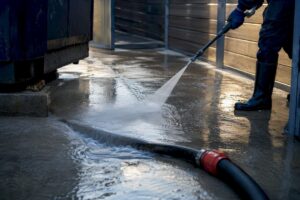
- Rinse the interior with a garden hose to loosen stuck residue.
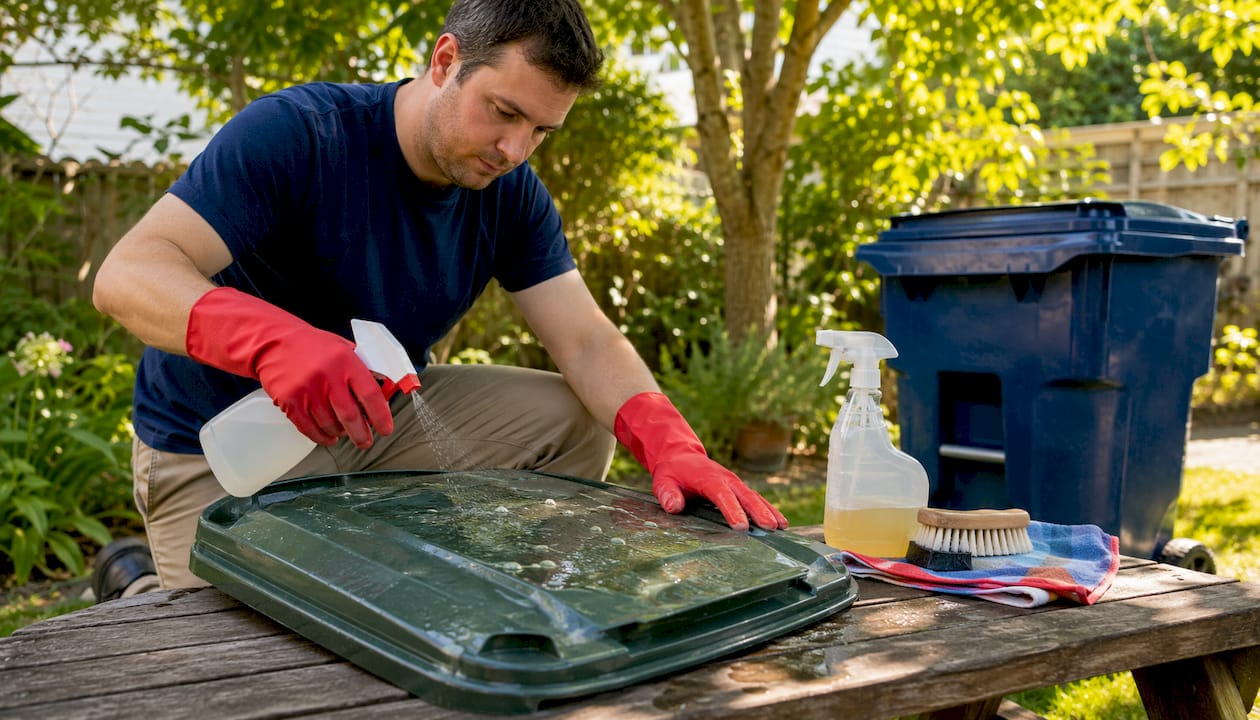
- Scrub interior walls, bottom, lid underside, hinges, and seams with hot soapy water and a long-handled brush. Press into textured plastic — that’s where residue hides.
- Rinse thoroughly. Leftover soap traps grime the next time the liner leaks.
- Apply a diluted bleach solution (about half a cup of bleach per gallon of water) using a spray bottle or sponge. Let it sit 5–10 minutes, then rinse completely.
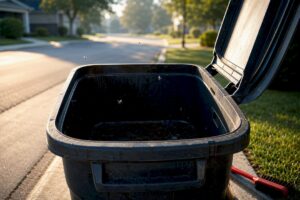
- Air-dry in direct sunlight. UV light reduces bacteria, and a fully dry surface is the only surface where a dry absorber actually works.
Supplies: long-handled scrub brush, rubber gloves, garden hose or pressure washer for outdoor bins, enzymatic cleaner for persistent biofilm, diluted bleach or hydrogen peroxide as sanitizer.
Pro Tip: Check the lid gasket — the rubber seal around the rim. A cracked or worn gasket traps odor and can’t be cleaned away. Replacing it costs a few dollars and often solves a smell that survived multiple deep cleans.
| Task | Frequency |
|---|---|
| Wipe interior after bag change | Every bag change |
| Spot-spray and wipe lid/rim | Weekly |
| Full scrub and sanitize | Monthly (or more in summer) |
| Replace charcoal bag or filter | Every 4–8 weeks |
| Check and replace lid gasket | Every 6–12 months |
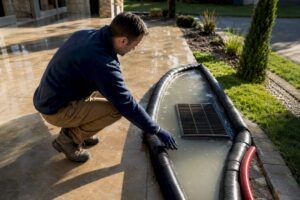
Safety: Capture rinse water and avoid letting bleach runoff reach storm drains. Never mix bleach with vinegar or ammonia. Ventilate the area while sanitizing. Avoid bleach on stainless steel — it can pit the surface.
11. Prevention habits that stop odors from forming
The best tips for odorless trash cans are the ones that prevent smell from building in the first place.
- Change the bag before it becomes too full and heavy enough to leak.
- Double-bag wet or greasy waste, or seal it in a smaller bag before it goes in the bin.
- Keep a thin layer of baking soda or a charcoal bag between the liner and the bin wall at all times.
- Use high-quality liners that match your bin’s capacity — an undersized bag that bunches at the bottom is a leak waiting to happen.
- Store indoor bins away from direct heat sources. Warm air speeds decomposition and intensifies odor.
- Ventilate enclosed spaces. The EPA’s indoor air guidance is clear: source removal and fresh airflow outperform any amount of scented product. Open a window or run the kitchen exhaust fan.
- Rinse food containers before tossing them. A yogurt cup with residue left inside contributes more odor than the food scraps themselves.
For a well-organized kitchen, pairing good liner habits with a home organization routine makes it easier to stay on schedule with bag changes and weekly wipe-downs.
12. When to call a professional cleaner
Some smells survive every home remedy. If you’ve done a proper deep clean — scrubbed, sanitized, dried, replaced the gasket and filter — and the odor returns within a day or two, the bin likely has embedded biofilm that household tools can’t fully remove. That’s not a cleaning failure; it’s a material problem. Porous plastic absorbs odor molecules over time, and a brush and garden hose can only do so much.
Pro Tip: If you can smell the bin immediately after cleaning and drying, the odor source is in the plastic itself, not on the surface. A pressure wash at high heat, combined with UV drying, is the only reliable reset for a saturated bin.
Professional bin cleaning services use high-pressure hot water to reach biofilm in seams and grooves that a scrub brush misses entirely. It’s the faster route when the bin is old, heavily used, or has been through repeated food-waste leaks.
Key Takeaways
The most reliable way to eliminate trash odors is to clean the source first, dry the can completely, and then use a dry absorber — in that order, every time.
| Point | Details |
|---|---|
| Clean before deodorizing | Baking soda and charcoal only work on a clean, dry surface — not on top of grease or biofilm. |
| Dry completely | Leftover moisture restarts bacterial activity and cancels out any absorber you add. |
| Prevent with habits | Double-bag wet waste, freeze smelly scraps, and change liners before they leak. |
| Deep-clean monthly | Scrub, sanitize with diluted bleach, and air-dry in sunlight at least once a month for kitchen bins. |
| Abcbins for persistent odor | When home methods fail, Abcbins’s professional pressure-wash service removes embedded biofilm and captures all wastewater. |
What professional cleaners see that homeowners miss
Most homeowners clean what they can see. The problem is that the worst odor sources are invisible — biofilm in the textured grooves of porous plastic, residue under the lid gasket, and bacterial colonies in the hinge channels that a sponge never touches. Spraying a deodorizer over that is like spraying air freshener into a dirty refrigerator. The smell returns in hours because the source was never removed.
There’s also a pattern worth knowing: people clean the bin, add baking soda, reline it while it’s still slightly damp, and then wonder why it smells again by Thursday. Moisture is the reset button for odor. A bin that isn’t fully dry before relining will smell again quickly, regardless of what absorber is inside.
Professional cleaning addresses both problems. High-pressure hot water reaches the seams and grooves that a long-handled brush can’t. Abcbins’s process sanitizes bins and captures all wastewater in an on-board recycling system, so nothing runs off into the environment — a detail that matters if you’re cleaning near a driveway or storm drain. For homeowners who want a predictable schedule without the effort, curbside bin cleaning on a monthly, bi-monthly, or quarterly plan is a straightforward next step. You don’t even need to be home.
The honest takeaway: household methods work well for maintenance. They don’t work well for recovery. If the bin has been leaking for months, one home deep clean is a start, not a finish.
Persistent odor? Abcbins handles what home cleaning can’t
When a trash can still smells after a proper scrub, sanitize, and dry cycle, the issue is usually embedded biofilm that household tools can’t fully reach. Abcbins — family-owned since 1989 and serving Chicagoland — uses eco-friendly, high-pressure cleaning to sanitize bins and eliminate odors at the source, not just on the surface. Every drop of wastewater is captured and recycled on-board, so there’s no runoff into your driveway or storm drain.
Service plans run monthly, bi-monthly, or quarterly depending on how heavily your bins are used. You don’t need to be home. Abcbins handles everything curbside and leaves the bin clean, dry, and ready to reline. If you’re in the area, schedule bin cleaning in Barrington or check service availability for your neighborhood at abcbins.com.
Useful sources
- EPA — Care for Your Air: Indoor Air Quality — guidance on ventilation, source removal, and limiting fragranced products indoors.
- EPA — A View Indoors: Odors and Indoor Air — three-step framework for controlling indoor odors.
- The Spruce — Why your trash can still smells — cleaning professional insights on biofilm, gaskets, and persistent odor causes.
- Janibell — The complete guide to odor-free trash cans — activated carbon filter guidance and replacement cadence.
- PubMed — Sodium bicarbonate odor neutralization — research on baking soda as an odor neutralizer.
- Lumi Outdoors — DIY deodorizer comparison — realistic expectations for pantry remedies vs dry absorbers.
- Abcbins — Professional bin cleaning services — service overview, wastewater capture process, and plan options for Chicagoland homeowners.