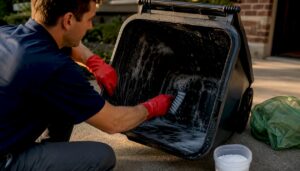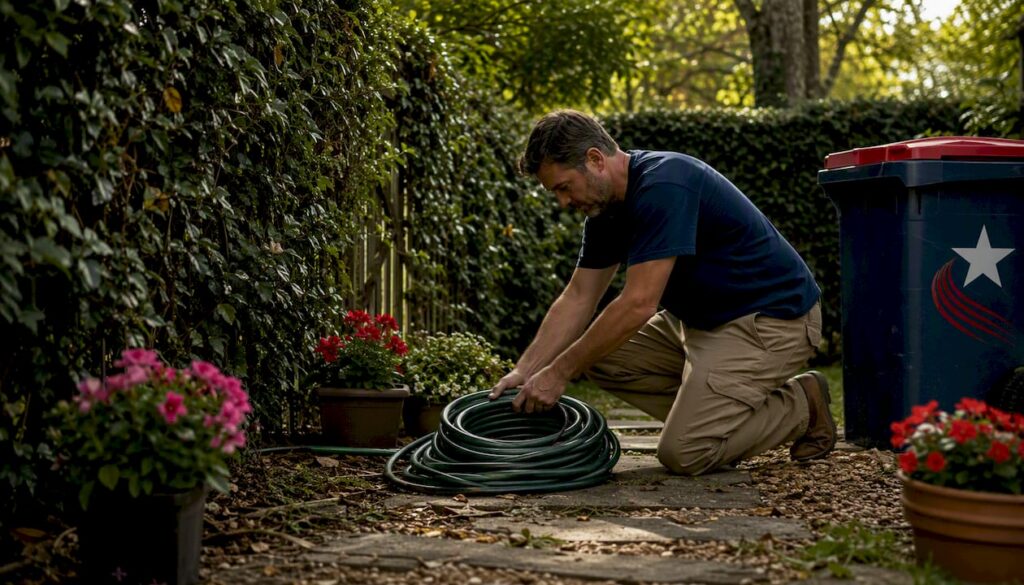
Remove standing water, clean bins and high-touch surfaces with soap first, manage moisture, and pick up pet waste daily. Those six actions cover the majority of bacterial risk in a typical residential yard. The CDC and the New York State Department of Health both confirm that moisture control and surface cleaning are the foundation of any home bacteria prevention strategy. Research published by NIH shows that certain pathogens persist on inanimate surfaces for days to weeks, which means outdoor surfaces you touch every day carry more risk than most homeowners realize.
Start here — immediate actions:
- Drain any standing water from containers, gutters, and low spots after rain
- Empty and drain garden hoses; store them out of direct sun
- Clean trash bins with soap and water; scrub hinges, wheels, and the underside of lids
- Wash hands before eating or preparing food outdoors
- Wipe door handles, railings, and gate latches with soap and water weekly
- Pick up pet waste daily and designate a specific zone for pets
Table of Contents
- 1. Why outdoor bacteria are worth taking seriously
- 2. How to clean vs. disinfect outdoor surfaces safely
- 3. Area-by-area steps to reduce bacteria outdoors
- 4. Why your trash bins need more than a rinse
- 5. Preventing Legionella in hoses, hot tubs, and outdoor plumbing
- 6. Your seasonal maintenance schedule
- Key Takeaways
- The part most homeowners skip
- Abcbins keeps your bins clean so you do not have to think about it
- Useful sources
1. Why outdoor bacteria are worth taking seriously
Bacteria thrive where moisture, organic matter, and shade overlap. A shaded corner of your yard that stays damp after rain is a better bacterial habitat than a sunny, well-drained patio. Organic material — pet waste, food scraps near the grill, leaf litter in gutters — feeds microbial growth and extends how long bacteria survive on nearby surfaces.
Three risks stand out for homeowners:
- Legionella grows in warm, stagnant water. Garden hoses left coiled in the sun, decorative fountains with poor circulation, and neglected hot tubs are all common sources.
- Fecal bacteria from pet waste — including drug-resistant strains like Enterococcus and MRSA — survive longer in damp, shaded areas of a typical backyard.
- Surface persistence varies by organism, but NIH research confirms some pathogens remain viable on hard surfaces for days to weeks under real-world conditions.
Improving drainage and airflow is the most underrated fix. Moisture duration drives bacterial survival more than simple presence; a surface that dries quickly after rain gives bacteria far less time to multiply.
2. How to clean vs. disinfect outdoor surfaces safely
Most outdoor surfaces only need soap and water. The CDC draws a clear three-way distinction: cleaning removes dirt and most germs; sanitizing reduces germs to safe levels; disinfecting kills most germs on a surface. You need disinfecting only after a known illness exposure or on high-risk surfaces like a bin that held raw meat packaging.
Step-by-step for outdoor surfaces:
- Remove loose debris with a brush or rinse.
- Scrub with soap or detergent and water; work into crevices.
- Rinse thoroughly and let the surface dry.
- If disinfecting is warranted, apply an EPA-registered product, follow the label contact time exactly, and keep children and pets away until dry.
- Never mix household chemicals. Bleach and vinegar together produce chlorine gas. Bleach and ammonia-based cleaners are equally dangerous.
For routine outdoor bacterial control, soap and water handles most situations. Reserve stronger products for after food spills, illness events, or heavy contamination.
Pro Tip: DIY options like 3% hydrogen peroxide or 70% isopropyl alcohol can work on hard nonporous surfaces, but always clean first. Applying a disinfectant to a dirty surface is largely ineffective — the organic matter neutralizes it before it can work.
3. Area-by-area steps to reduce bacteria outdoors
Hoses and water fixtures
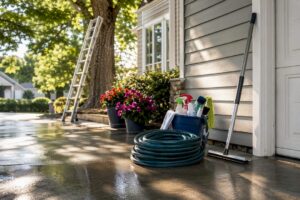
Drain hoses completely after every use and store them in shade or indoors. Water sitting in a coiled hose in direct sun can reach temperatures that encourage Legionella growth. Flush infrequently used outdoor spigots for 30 seconds before use.
Trash bins
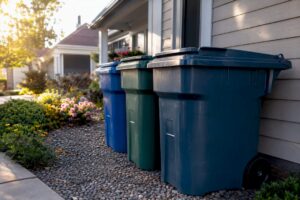
The underside of the lid, the hinge points, and the wheel wells are where bacteria and odors concentrate. A quick rinse does not reach them. Scrub with dish soap and a long-handled brush monthly at minimum, and after any food waste spill. Bin hygiene goes well beyond the obvious surfaces — the crevices are where the problem lives.
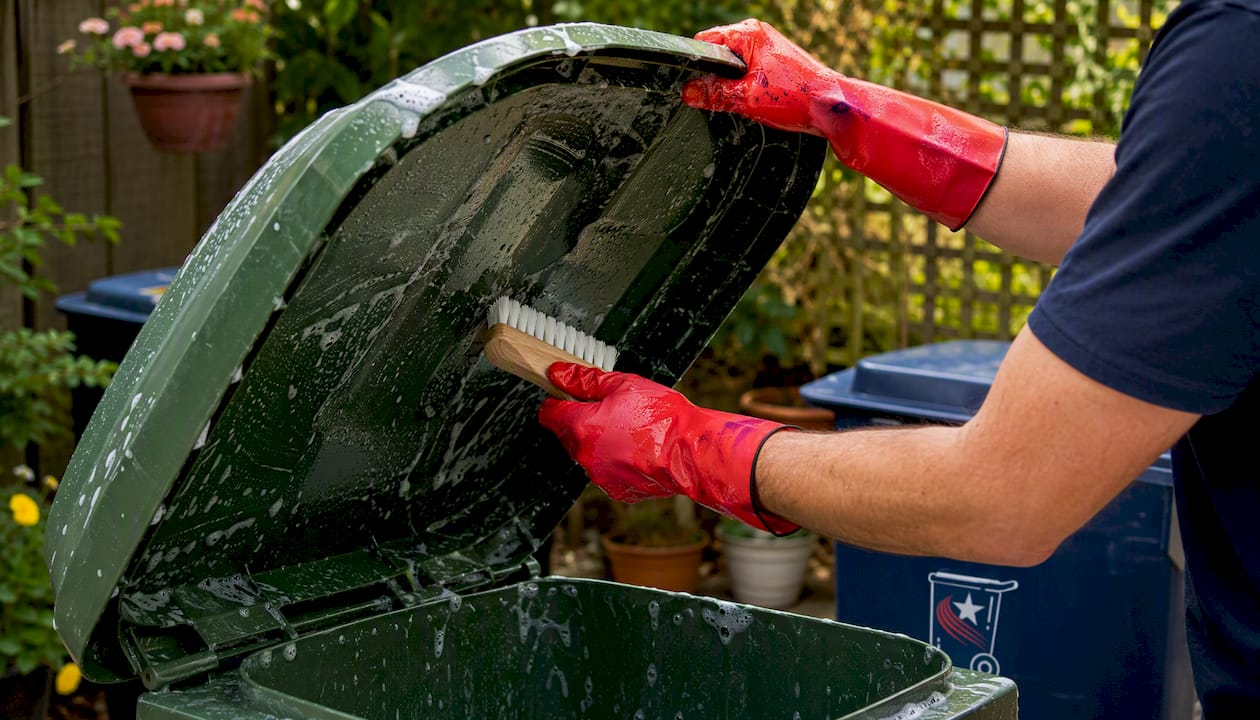
Pro Tip: After scrubbing, tip the bin on its side and let it air-dry completely before replacing the liner. A damp bin with a fresh bag is just a slower version of the same problem.
Grills and outdoor food prep
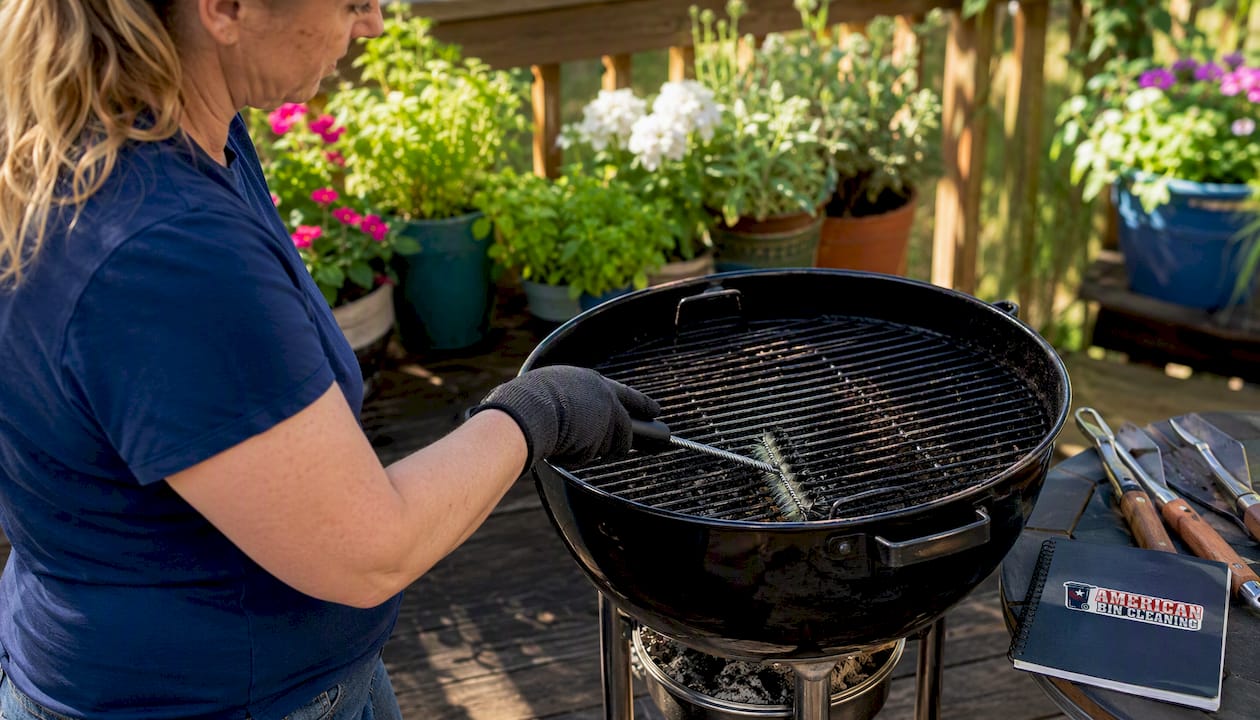
Brush grates before and after each use. Store utensils in a covered container, not loose on the grill shelf. Wash hands with soap and water before handling food outdoors — hand sanitizer is a backup, not a substitute, when soap is available.
Outdoor furniture and cushions
Nonporous surfaces (aluminum, resin, glass) clean well with soap and water. Porous cushion fabric needs to dry fully before reuse; damp cushions left in shade are a reliable mold and mildew source. Check manufacturer labels before applying any disinfectant — some fabrics bleach or degrade.
Play areas and pet zones
- Remove pet waste daily; bacteria from dog feces survive longer in shaded, moist grass.
- Designate a specific pet zone away from play areas and the garden.
- For synthetic turf, enzyme-based cleaners break down organic residue that hosing alone leaves behind. Bacteria and organic material embed below the turf surface in the infill layer, where a garden hose has no effect.
Pools, hot tubs, and landscaping
Maintain proper chemical levels in pools and hot tubs weekly. Run hot-tub circulation pumps on schedule and replace covers that no longer seal. For landscaping, clear leaf litter from gutters and low-drainage spots after storms — standing water in those areas is a mosquito and Legionella risk within 24–48 hours.
4. Why your trash bins need more than a rinse
A surface rinse removes visible residue. It does not reach the wheel wells, the hinge gap, or the narrow channel behind the lid seal — the spots where bacteria and odors actually accumulate. Deep cleaning eliminates those hidden hotspots and reduces pest attraction more effectively than any amount of hosing.
Recommended cleaning frequency:
- Monthly: households with regular food waste, pets, or warm-weather use
- Bi-monthly: lower-volume households in cooler climates
- Quarterly minimum: any household, regardless of use
- Immediately: after raw meat packaging, diaper disposal, or any pest sighting
DIY vs. professional cleaning:
DIY scrubbing with soap and a brush handles surface-level buildup well. What it cannot do: reach narrow crevices with sufficient pressure, capture and contain wastewater, or sanitize at the temperature and pressure that professional equipment delivers. Professional bin cleaning uses high-pressure systems that access those voids and on-board wastewater capture so nothing runs into the storm drain or your lawn.
Triggers for calling a pro: recurring odors after DIY cleaning, visible pest activity around the bin, or a bin that held heavily contaminated waste (raw meat, animal remains, sewage-adjacent material).
5. Preventing Legionella in hoses, hot tubs, and outdoor plumbing
Legionella does not need a cooling tower to become a problem. It grows in any warm, stagnant water — including the garden hose you left coiled on the driveway.
| Location | Risk condition | Recommended action |
|---|---|---|
| Garden hose | Warm stagnant water in coils | Drain and store after every use |
| Outdoor spigot | Infrequent use, standing water in line | Flush 30 seconds before use |
| Hot tub | Poor circulation, low sanitizer | Run pump on schedule; test chemistry weekly |
| Decorative fountain | Stagnant water, organic debris | Clean and refill every 1–2 weeks |
| Hot water heater | Temperature below 120°F | Set to 130–140°F per NY State DOH guidance |
The New York State Department of Health recommends maintaining residential hot water heaters between 130°F and 140°F to inhibit Legionella growth. At those temperatures, scalding risk increases, especially for young children and older adults. A thermostatic mixing valve at the tap brings delivery temperature down to a safe 120°F while keeping the tank hot enough to suppress bacterial growth.
Pro Tip: Before reopening a vacation home or seasonal property, flush all cold and hot water lines for at least two minutes at every outlet. Stagnant water in unused plumbing is one of the most common residential Legionella scenarios.
6. Your seasonal maintenance schedule
Daily (5 minutes)
- Pick up pet waste
- Wipe outdoor food prep surfaces after use
- Drain and store hoses if used
Weekly (15–20 minutes)
- Wipe door handles, railings, and gate latches with soap and water
- Inspect bins for odor or visible buildup
- Check for standing water after rain; clear gutters and low spots
Monthly (30–45 minutes)
- Deep-scrub trash bins, including hinges and wheel wells
- Clean grill grates and surrounding surfaces
- Wash outdoor furniture and let cushions dry fully in sun
- Test hot-tub or pool chemistry; run circulation check
- Inspect downspouts and drainage paths for blockages
Seasonal (1–2 hours)
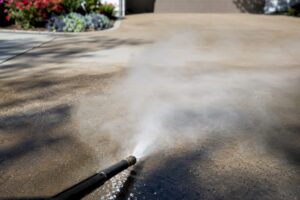
- Pressure wash driveways, decks, and hard surfaces to remove biofilm
- Flush all outdoor plumbing lines at the start of the season
- Replace hot-tub cover if it no longer seals
- Treat synthetic turf with an enzyme cleaner
- Clear leaf litter from shaded corners and drainage areas
Batch the monthly tasks on the same day as trash pickup. The bin is already empty, which makes deep cleaning faster and more thorough.
Key Takeaways
Consistent moisture control, cleaning before disinfecting, and regular bin maintenance are the highest-impact residential outdoor bacteria prevention steps any homeowner can take.
| Point | Details |
|---|---|
| Clean before you disinfect | Soap and water removes most germs; disinfectants only work on a clean surface. |
| Drain standing water fast | Stagnant warm water supports Legionella growth within hours; drain hoses and low spots after every rain or use. |
| Bins need deep cleaning | Hinges, wheels, and lid seals harbor bacteria that surface rinsing never reaches; clean monthly at minimum. |
| Pet waste is a daily task | Drug-resistant bacteria in dog feces survive longer in damp, shaded grass; remove waste daily and designate a pet zone. |
| Abcbins for professional bin cleaning | Abcbins uses high-pressure equipment and on-board wastewater capture to sanitize bins throughout Chicagoland on monthly, bi-monthly, or quarterly plans. |
The part most homeowners skip
Most outdoor cleaning advice focuses on what to clean. The harder question is what you are actually removing — and whether your method reaches it.
Bins are the clearest example. Homeowners rinse them, maybe scrub the inside once a summer, and assume the job is done. But the wheel wells and hinge gaps are not cosmetic details. They are where bacteria concentrate, where odors originate, and where pests find their foothold. A garden hose at low pressure does not touch those voids. Neither does a quick spray of disinfectant on a surface that has not been cleaned first.
The same logic applies to synthetic turf, hot tubs, and outdoor plumbing. Bacteria embed below the surface, grow in stagnant water, and persist in crevices that routine cleaning skips. The fix is not more product — it is better access and the right sequence: clean first, dry fast, disinfect only when the situation calls for it.
Public-health guidance from the CDC and state health departments is consistent on this. The homeowners who stay ahead of outdoor bacterial buildup are not the ones using the strongest chemicals. They are the ones who manage moisture, clean on a schedule, and know which spots their routine misses.
Abcbins keeps your bins clean so you do not have to think about it
Scrubbing a trash bin is nobody’s idea of a good Saturday. Abcbins handles it curbside, while you are at work or running errands, with no need to be home.
The process uses high-pressure, eco-friendly equipment that reaches the wheel wells, hinges, and lid seals that DIY cleaning misses. All wastewater is captured on-board — nothing runs into your lawn or the storm drain. Odors go away. Pests lose their reason to linger. Abcbins has served Chicagoland homeowners since 1989, with monthly, bi-monthly, and quarterly plans that fit any household’s schedule, plus on-demand service when you need it.
Book a bin cleaning or check availability for your address at abcbins.com.
Useful sources
- CDC: When and How to Clean and Disinfect Your Home — authoritative guidance on cleaning vs. sanitizing vs. disinfecting, chemical safety, and contact time.
- NY State Department of Health: Legionella at Home — specific recommendations on hot-water heater temperatures, hose management, and residential Legionella prevention.
- Harvard Health: How to Prevent Infections — practical infection-prevention overview from Harvard Medical School.
This article provides general home maintenance information, not medical or public-health advice. Confirm current guidance with the CDC, your state health department, or a qualified professional.