The most effective bin cleaning process completely removes bacteria, odors, and organic residue through a combination of heated water, degreasing, disinfectant soaking, and thorough drying. Most homeowners treat bin cleaning as a cosmetic task, rinsing the surface and calling it done. That approach leaves behind bacterial films, “bin juice” residues, and moisture that cause persistent odors and real health risks. True sanitation, the kind that eliminates bacteria and odors at the source, requires a specific sequence of steps with the right products and enough contact time to work.
What does the bin cleaning process remove completely?
A thorough bin cleaning process removes four things: bacteria, organic residue, odor-causing compounds, and moisture. Each one feeds the next. Moisture keeps bacteria alive. Bacteria break down organic waste. That breakdown produces the gases that create persistent odors. Remove all four, and the cycle stops.
The two most common bacteria found in home trash bins are Salmonella and E. coli, both of which transfer easily to hands, pets, and nearby surfaces. “Bin juice,” the dark liquid that pools at the bottom of bins from leaking food waste, is the primary cause of persistent odors. Perfumes and deodorizers mask the smell temporarily but do not break down the organic film that produces it.
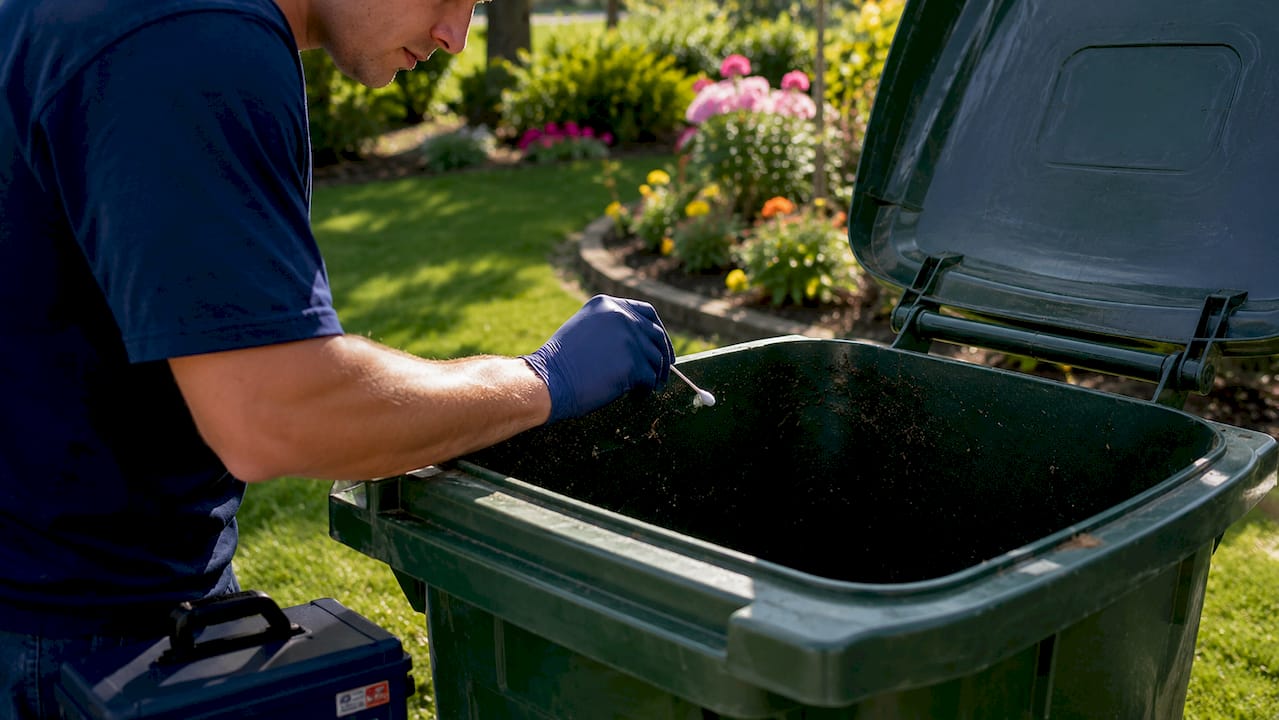
Effective cleaning also targets hidden areas that most homeowners miss: lid rims, bottom seams, and the interior corners where residue collects and dries into a film. Leaving these areas untreated means bacteria survive and odors return within days. Cleaning beyond hosing down the bin interior is not optional for lasting results.
| Contaminant | Source | Removed by |
|---|---|---|
| Salmonella, E. coli | Raw food waste, cross-contamination | Hot water (165°F+) or EPA-registered disinfectant |
| Bin juice residue | Leaking organic liquids | Degreasing wash + scrubbing |
| Persistent odors | Bacterial decomposition of organic films | Full residue removal + drying |
| Moisture | Pooling liquid, incomplete drying | Air drying in sunlight after final rinse |
Pro Tip: Spray the inside of a clean, dry bin with a diluted white vinegar solution before putting a new liner in. It creates an inhospitable environment for bacteria without leaving a chemical residue.
How to clean and sanitize a home trash bin completely
A complete DIY cleaning process takes 30–60 minutes and follows a specific sequence. Skipping steps, especially the disinfectant soak and drying, leaves the job unfinished even when the bin looks clean.
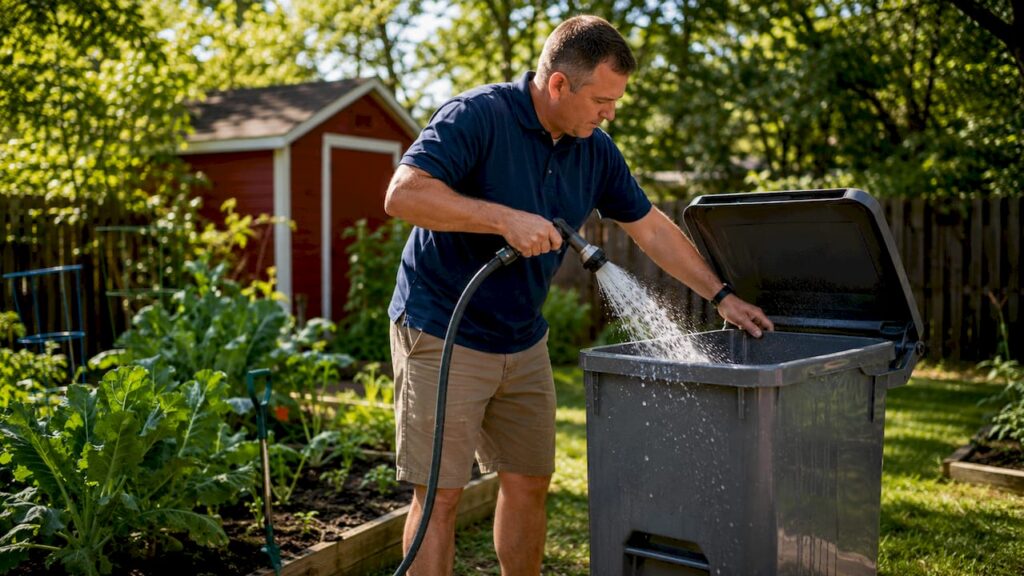
- Pre-rinse. Use a garden hose to flush out loose debris, food scraps, and standing liquid. Tip the bin on its side to drain completely before moving to the next step.
- Degrease. Apply dish soap or a household degreaser to all interior surfaces. Scrub the bottom, walls, lid interior, and all seams with a long-handled brush. This step breaks down the oily film that traps bacteria.
- Disinfectant soak. Apply an EPA-registered disinfectant or a diluted bleach solution to all surfaces. Allow a contact time of 10–30 minutes for the disinfectant to kill bacteria. Do not rush this step.
- Scrub all surfaces again. After the soak, scrub the lid rim, bottom seams, and interior corners a second time. These areas hold the most residue and need direct mechanical action to release it.
- Final rinse. Rinse all surfaces thoroughly with clean water. Make sure no soap or disinfectant residue remains.
- Dry completely. Turn the bin upside down or prop it open in direct sunlight. Skipping the drying step leads to rapid bacterial regrowth and recurring odors within days.
Safety matters throughout this process. Bin interiors contain concentrated bacterial aerosols that become airborne during scrubbing. Wear an N95 mask and clothes you can wash separately or discard. Gloves are non-negotiable. For wastewater, avoid letting it run into storm drains. Collect it in a bucket and dispose of it down a household drain connected to the sewer system.
Pro Tip: Clean your bin the day after trash pickup, not the day before. The bin is empty, the residue is fresh, and you have maximum time before the next collection.
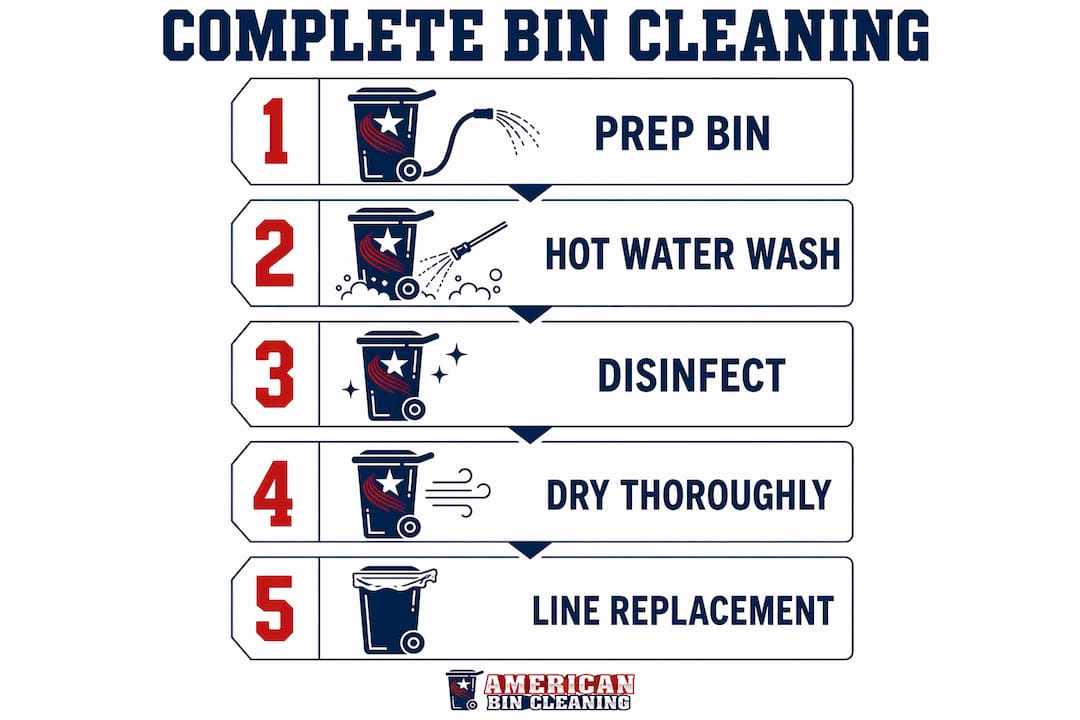
Why does hot water outperform cold water for complete bin sanitation?
Cold water does not kill bacteria. It moves debris around and may actually worsen bacterial growth by creating a humid environment inside the bin. Hot water at 165°F to 200°F kills pathogens like Salmonella and E. coli in under one second on contact. That is the difference between cleaning and sanitizing.
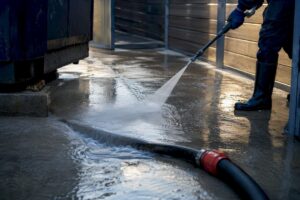
Professional bin cleaning equipment operates at around 200°F and 3,500 PSI. That combination does two things simultaneously: the heat kills bacteria on contact, and the pressure physically removes protein residues and dried organic films that scrubbing alone cannot dislodge. A standard garden hose delivers neither the temperature nor the pressure to achieve this result.
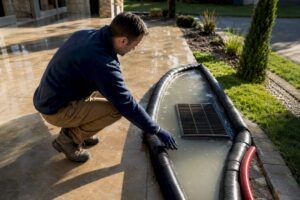
DIY pressure washing with a cold-water unit carries an additional risk. The spray can aerosolize bacteria from the bin surface, putting them directly into the air you are breathing. Using proper PPE, including an N95 mask, reduces this risk but does not eliminate it entirely. Professional closed-loop systems capture all contaminated wastewater on board, so none of it runs off into the environment or your yard.
| Method | Water temp | Bacteria killed | Residue removal | Wastewater control |
|---|---|---|---|---|
| Garden hose | Ambient | No | Partial | None |
| Cold pressure washer | Ambient | No | Moderate | None |
| Hot water pressure washer | 165°F–200°F | Yes, on contact | Complete | Requires management |
| Professional service (Abcbins) | ~200°F | Yes, on contact | Complete | Closed-loop capture |
Pro Tip: If you use a cold-water pressure washer at home, always follow up with a 10–30 minute disinfectant soak. The pressure removes debris, but the disinfectant does the actual bacterial kill.
How does cleaning frequency affect summer bin hygiene?
Warm weather is the single biggest factor that accelerates bin contamination. Bacteria double in population rapidly at temperatures above 40°F, and a bin sitting in direct summer sun can reach internal temperatures well above that within an hour of a collection. The role of bin cleaning in summer hygiene is not just about appearance. It is about controlling a biological process that speeds up dramatically in heat.
Industry standards recommend a weekly sanitation baseline for most households. If you regularly dispose of raw meat, fish, or dairy, twice-weekly cleaning is the standard. In summer, that frequency becomes the minimum, not the exception.
Common odor sources around home bins in warm months include:
- Pooled bin juice from leaking food packaging that ferments faster in heat
- Moisture from condensation inside the bin lid that creates a breeding environment
- Residue in bottom seams that dries into a film and reactivates when wet from rain or humidity
- Organic waste left in the bin between collections that decomposes faster above 70°F
- Inadequate drying after cleaning, which restarts the bacterial cycle within 24–48 hours
Why bin odors worsen after rain is a question many homeowners ask. Rain introduces water into bins that are not fully sealed, rehydrating dried organic residue and reactivating dormant bacteria. A bin that smelled fine before a rainstorm can smell terrible the next morning for exactly this reason. Keeping the bin dry and residue-free is the only reliable prevention.
The practical maintenance approach for year-round sanitation is straightforward. Clean after every pickup during summer. Use a liner in the bin at all times to reduce direct contact between waste and the bin surface. Keep the lid closed to reduce moisture entry. And schedule professional cleaning at least once a month during june, july, and august.
Key Takeaways
A complete bin cleaning process removes bacteria, organic residue, odors, and moisture through a specific sequence of degreasing, disinfecting with sufficient contact time, scrubbing hidden areas, and thorough drying.
| Point | Details |
|---|---|
| Bacteria require heat or disinfectant | Cold water alone does not kill Salmonella or E. coli; use 165°F+ water or an EPA-registered disinfectant. |
| Disinfectant contact time is non-negotiable | Allow 10–30 minutes of soak time for disinfectants to fully kill bacterial colonies. |
| Hidden areas drive recurring odors | Lid rims, bottom seams, and interior corners hold the most residue and must be scrubbed directly. |
| Drying prevents regrowth | Skipping the drying step restarts bacterial growth within 24–48 hours, causing odors to return. |
| Summer requires higher frequency | Clean bins weekly at minimum in warm months; twice weekly if disposing of raw food waste. |
What most homeowners get wrong about bin cleanliness
The biggest mistake I see is treating a clean-looking bin as a clean bin. Visible residue is gone, the bin smells okay for a day or two, and the job feels done. But bacteria do not announce themselves. A bin can look spotless and still carry a thriving colony of E. coli in the bottom seam or under the lid rim.
The second mistake is using perfumed sprays or scented bin liners as a substitute for actual cleaning. Masking odors with fragrance does not solve the problem. The underlying residues cause persistent smells because the bacteria producing them are still alive and active. You are essentially spraying air freshener into a petri dish.
What I have found actually works is treating bin cleaning the same way you treat kitchen sanitation. You would not wipe a cutting board that touched raw chicken with a damp cloth and call it clean. The same logic applies to a bin that has held weeks of food waste. Chemical or thermal breakdown of fats and bacterial films is the only approach that produces lasting results. True sanitation requires removing the source, not covering it.
The drying step is the one most people skip because it feels like a minor detail. It is not. A wet bin is a warm, dark, nutrient-rich environment. Bacteria thrive in exactly those conditions. Air drying in sunlight for 30–60 minutes after the final rinse is the step that separates a bin that stays clean for a week from one that smells bad by the next morning.
— Jim
Abcbins keeps your bins genuinely clean, not just rinsed
Abcbins has been cleaning residential and commercial bins throughout Chicagoland since 1989. The process uses water heated to approximately 200°F combined with high-pressure washing to kill bacteria on contact and remove the organic films that cause persistent odors. Every drop of contaminated wastewater is captured in an on-board recycling system, so nothing runs off into your yard, driveway, or storm drains.
You do not need to be home. Abcbins handles everything at the curb on a schedule that works for you, whether that is monthly, bi-monthly, quarterly, or on demand. For homeowners in the northwest suburbs, professional bin cleaning in Barrington is available with flexible service plans designed to keep bins sanitary through every season. Odor control, bacterial kill, and environmental compliance are all included.
FAQ
What does a complete bin cleaning process remove?
A complete bin cleaning process removes bacteria such as Salmonella and E. coli, organic residue, bin juice, persistent odors, and moisture. All four must be eliminated to prevent recurring contamination.
How long should disinfectant sit in a bin to kill bacteria?
Disinfectant requires a contact time of 10–30 minutes to effectively kill bacteria in a trash bin. Rinsing it off too soon leaves bacterial colonies alive.
Why do bin odors come back after cleaning?
Odors return when cleaning leaves moisture or organic residue behind, allowing bacteria to regrow. Skipping the drying step is the most common cause of recurring smells within 24–48 hours of cleaning.
How often should I clean my trash bin in summer?
Warm weather requires at least weekly cleaning for most households and twice-weekly cleaning if you regularly dispose of raw meat, fish, or dairy. Summer heat accelerates bacterial growth significantly.
Is cold water pressure washing enough to sanitize a bin?
Cold water pressure washing removes debris but does not kill bacteria. Hot water at 165°F or higher is required to kill pathogens on contact, making professional hot-water systems far more effective than standard garden hoses or cold-water units.