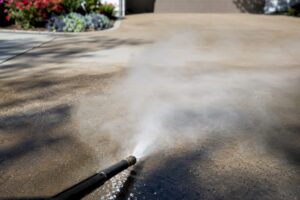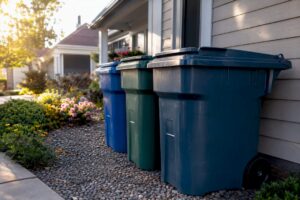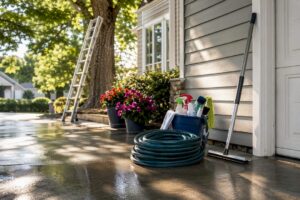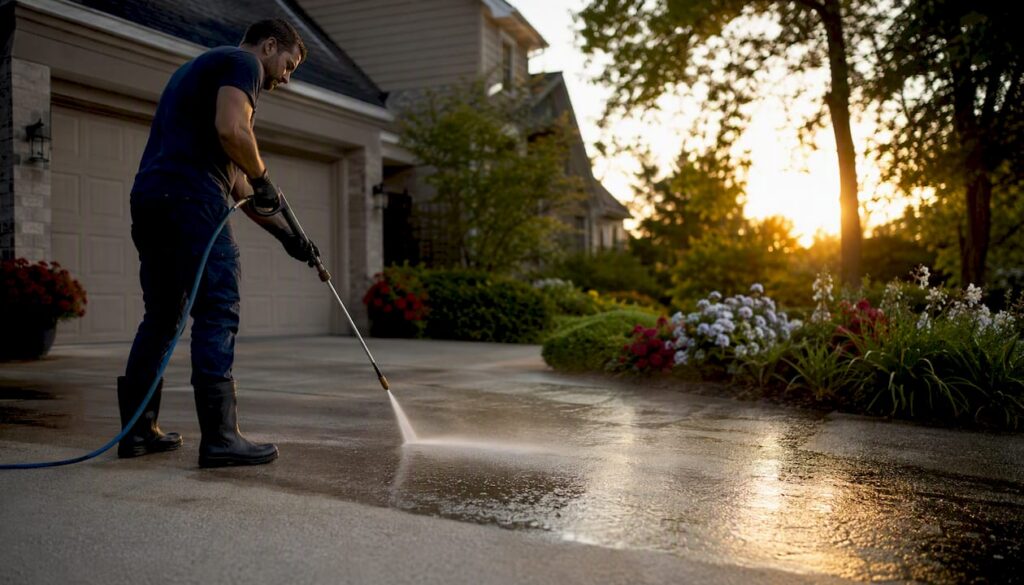
Professional driveway pressure washing in Northern Illinois restores concrete, removes stubborn stains, and protects your surface from the kind of long-term damage that freeze-thaw cycles and road salt accelerate every winter. A trained local crew using the right PSI, surface cleaner, and eco-friendly wastewater capture system gets the job done safely, without etching your slab or dumping chemical runoff into your yard. Most residential driveways run between $100 and $350, take 1–2 hours, and can be bundled with house washing or bin cleaning for a single-visit cleanup.
Ready to book? Abcbins serves homeowners and property managers across Northern Illinois and Chicagoland. Get a free on-site estimate, ask about bundling your driveway wash with house washing or trash bin cleaning, and schedule at a time that works for you. No need to be home.
- Get a quote or schedule service
- Ask about bundling with bin cleaning to save on a single visit
- Request before-and-after photos and a satisfaction guarantee confirmation before booking
Key Takeaways
Professional driveway pressure washing in Northern Illinois typically costs $100–$350, takes 1–2 hours, and should be scheduled in late spring after the last freeze for best results.
| Point | Details |
|---|---|
| Typical cost range | Most residential jobs run $100–$350; heavy staining or large slabs can push toward $500. |
| Safe PSI for concrete | Use 2,000–3,000 PSI for standard concrete; stay below 2,000 PSI for decorative or new slabs. |
| Prep before service | Move vehicles, cover outlets, secure pets, and flag cracks or problem stains for the crew. |
| Best time of year | Late spring (after the last freeze) is ideal for Northern Illinois driveways; book 1–2 weeks early. |
| Abcbins service | American Bin Cleaning serves Northern Illinois with eco-friendly wastewater capture, bundled services, and a satisfaction guarantee. |
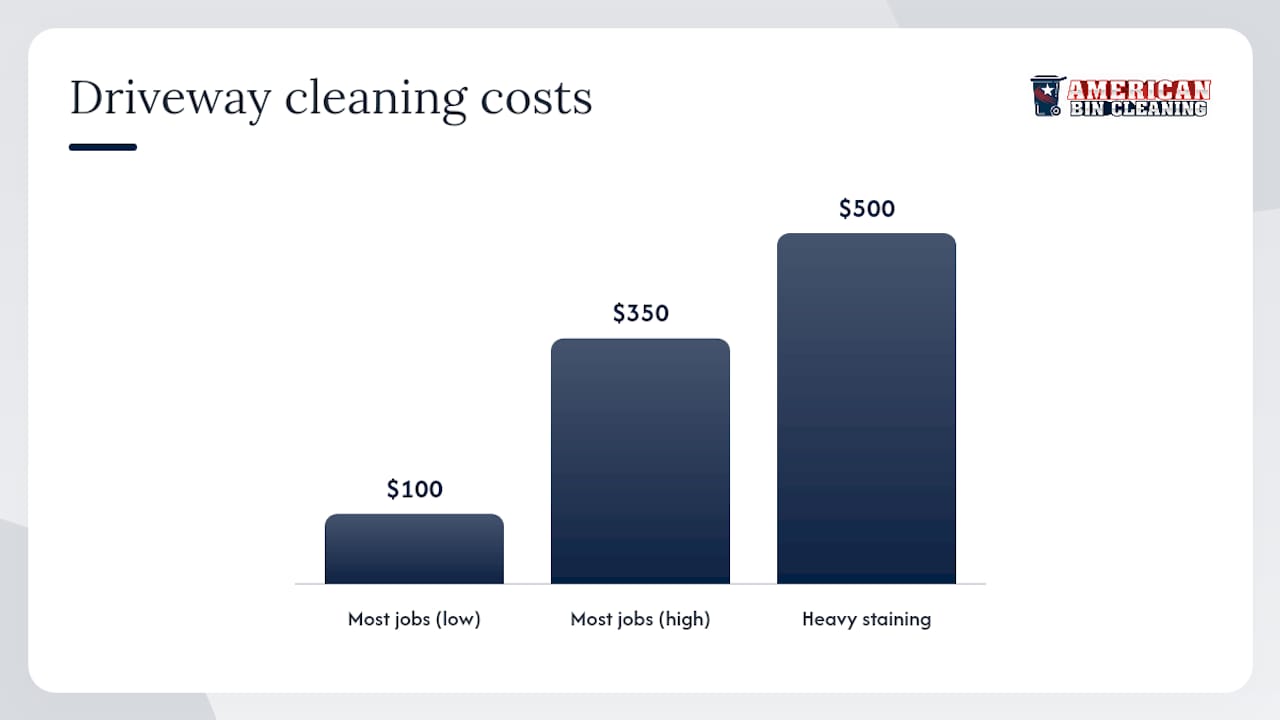
Table of Contents
- What does a professional driveway pressure washing service include?
- How does a typical job run from start to finish?
- What does driveway pressure washing cost in Northern Illinois?
- Which stains does pressure washing remove, and which need extra help?
- What equipment do pros use, and why does it matter?
- How should you prepare before the crew arrives?
- Why Northern Illinois driveways need more attention than most
- Abcbins brings professional driveway cleaning to your Northern Illinois home
- Sources
What does a professional driveway pressure washing service include?
A professional job covers more than pointing a wand at concrete. Here is what a full-service visit typically includes:
- Walkover estimate and site assessment — crew notes stain types, surface condition, and any cracked or vulnerable areas before touching the equipment
- Stain pretreatment — degreasers for oil and grease, biocide solutions for algae and mildew, rust removers for fertilizer or metal staining
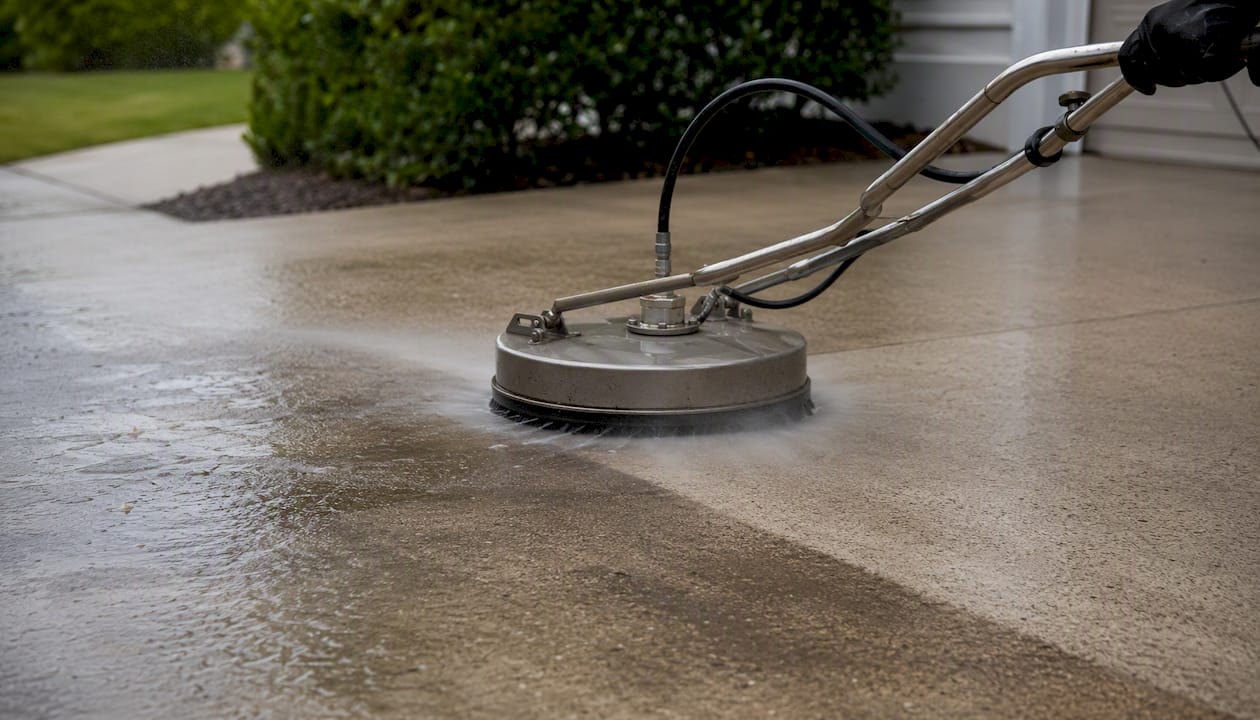
- Main surface pass — a rotary surface cleaner for even coverage on open slab areas, eliminating the tiger-striping a single wand leaves behind
- Edge and joint detail pass — a wand or detail nozzle for tight spots along curbs, expansion joints, and borders
- Final rinse — removes loosened debris and chemical residue
- Optional post-wash sealing — a penetrating silane/siloxane sealer applied after a 24–48 hour drying window
Driveway materials covered: Poured concrete handles the widest pressure range and is the most common job type in Northern Illinois. Stamped or decorative concrete needs lower PSI and a wider nozzle to avoid pattern damage. Asphalt is more porous and sensitive — pros typically stay under 2,000 PSI and skip aggressive degreasers. Pavers and brick require careful joint work to avoid dislodging sand. Gravel driveways are generally not pressure-washed; raking and spot-treating edges is the better approach.
Bundling exterior services — driveway, house wash, deck, and trash bin cleaning — reduces travel and setup cost compared to booking each separately. One crew, one visit, one invoice.
How does a typical job run from start to finish?
Knowing the sequence helps you vet contractors and prep your property correctly.
- Quote and scheduling — you receive a written estimate based on square footage, material, and visible stain load; spring and summer slots fill fast in Northern Illinois, so book 1–2 weeks out during peak season
- Site prep (your part) — move vehicles, pull planters off the slab, cover exterior outlets, and flag any cracks or loose pavers you want the crew to note
- Stain pretreatment — the crew applies degreaser to oil spots and a biocide to any algae or mildew patches; dwell time is typically 5–15 minutes depending on product
- Main surface pass — a rotary surface cleaner covers the open slab in overlapping passes; surface cleaners are strongly recommended for driveways over roughly 200 sq ft because they produce consistent pressure across the full cleaning bar and eliminate streaking
- Detail and edge pass — a wand handles expansion joints, curb edges, and any area the surface cleaner cannot reach
- Final rinse and inspection — the crew rinses the full surface and walks it with you before packing up
- Post-job sealing (optional) — if you want sealer applied, the surface needs to dry fully first; plan on 24–48 hours before the sealer goes down
Most residential driveways need a crew of one or two. Larger commercial lots or heavily stained surfaces may bring a second technician.
Pro Tip: Surface cleaners are not just faster — they are safer. A single wand held at inconsistent distance creates pressure spikes that etch concrete. For any driveway wider than a single car lane, insist on a surface cleaner for the main pass.
What does driveway pressure washing cost in Northern Illinois?
Professional driveway pressure washing costs between $0.30 and $0.55 per square foot, with most residential jobs landing between $100 and $500. The national average sits around $210, though Northern Illinois pricing can vary based on local demand and seasonal timing.
What moves the price:
- Size — the single biggest driver; larger slabs take more time and water
- Material — stamped concrete and pavers typically cost more than plain poured concrete due to slower, more careful technique
- Stain severity — heavy oil or embedded stains can add 10–50% to the base cost due to pretreatment labor and chemistry
- Access and slope — steep or narrow driveways slow the crew and can add to the estimate
- Sealing — optional but adds cost; worth it on concrete that has not been sealed in 3–5 years
- Bundling — combining the driveway with a house wash or bin cleaning typically reduces the per-service cost
Timeline: Most residential driveways take 1–2 hours on-site. A small single-car slab can be done in under an hour; a large, heavily stained two-car driveway with pretreatment may run 3–4 hours. Spring and early summer are the busiest scheduling windows in Northern Illinois — book early if you want a May or June slot.
Which stains does pressure washing remove, and which need extra help?
Standard pressure washing handles most of what accumulates on a Northern Illinois driveway over a season.
Removed by pressure washing alone:
- Dirt, mud, and general grime
- Mildew and algae (green or black surface growth)
- Fertilizer staining from lawn overspray
- Light tire marks and surface discoloration
Stains that need pretreatment first:
- Oil and grease — require a commercial degreaser applied before the wash; old, set-in oil may need a poultice treatment and a second pass
- Heavy rust — oxalic acid or a dedicated rust remover is applied first; pressure washing alone will not lift deep rust oxidation
- Paint — chemical strippers or a hot-water unit may be needed; results depend on paint type and how long it has been on the surface
- Chewing gum — a hot-water or steam unit removes it cleanly; cold water just moves it around
When pressure washing is not the right call:
- Concrete poured within the last 30 days (still curing; high pressure can damage the surface finish)
- Severely cracked slabs where water intrusion under the slab could worsen heaving
- Loose or unstable pavers where the water jet could dislodge stones
Pro Tip: Before any oil pretreatment, blot up as much standing oil as possible with cat litter or an absorbent pad. Degreaser works on what is bonded to the concrete — not on pooled liquid sitting on top of it.
What equipment do pros use, and why does it matter?
The gap between a professional result and a DIY disaster usually comes down to three things: PSI, nozzle selection, and a surface cleaner attachment.
- PSI range: 2,000–3,000 PSI is the effective and safe range for most residential concrete driveways; decorative or newly poured concrete should stay below 2,000 PSI; asphalt is more sensitive and benefits from the lower end of that range
- Nozzle selection: a 25-degree (green) nozzle works for general concrete cleaning; a 40-degree (white) nozzle is safer for new or decorative surfaces; a 0-degree (red) nozzle has almost no place on a residential driveway
- Surface cleaner attachment: a rotary bar with two or more nozzles produces even, consistent coverage and eliminates the streaking a single wand creates; pros consider it mandatory for medium-to-large driveways
- GPM (gallons per minute): flow rate matters as much as pressure; a machine with high PSI but low GPM cleans slowly and unevenly; professional gas units typically run 3–4 GPM
- Wastewater capture: Abcbins uses an onboard recycling system that captures all wastewater during the job — nothing runs off into storm drains or neighboring yards, which matters in Northern Illinois communities with strict stormwater ordinances
Pro Tip: Ask any contractor whether they carry general liability insurance and whether their equipment is rated for the surface you have. A $200 driveway wash is not worth a $2,000 etching repair.
How should you prepare before the crew arrives?
Getting your property ready takes about 15 minutes and prevents delays on service day.
- Move all vehicles off the driveway and keep them off until the surface is fully dry (typically 24 hours)
- Pull planters, garden hoses, doormats, and decorative items off the slab
- Cover exterior electrical outlets near the driveway with waterproof tape or plastic
- Trim any low-hanging branches that would obstruct the crew’s movement
- Secure pets indoors — pressure washing equipment is loud and can startle animals
- Walk the driveway and note any cracks, loose pavers, or stains you want the crew to address specifically
On service day, the crew handles everything. You do not need to be home. After the job, stay off the surface for at least 24 hours. If sealing is planned, wait the full 24–48 hours before the sealer is applied. Most contractors will follow up within a day or two — if you spot a missed area or have a concern, contact them promptly while the job is still fresh. For a full homeowner checklist, see the pressure washing service prep guide.
Why Northern Illinois driveways need more attention than most
Northern Illinois puts concrete through a punishment cycle most of the country never sees. Freeze-thaw cycles crack and heave slabs. Road salt and ice melt products leave white mineral deposits and accelerate surface spalling. Spring brings a full season of accumulated grime, algae, and fertilizer overspray all at once.
The homeowners I see most often in this region wait too long. They notice the staining but assume it is cosmetic. By the time they call, the algae has been holding moisture against the concrete through two or three winters, and the surface is starting to pit. A wash done every one to two years, timed for late spring after the last freeze, prevents that progression and keeps the slab looking the way it did when it was poured.
Abcbins has been serving Northern Illinois since 1989, family-owned and fully licensed and insured. The role of regular pressure washing in property upkeep is something we talk about with every customer — not because it sells more jobs, but because a clean surface is genuinely easier to maintain than a neglected one.
Abcbins brings professional driveway cleaning to your Northern Illinois home
Abcbins gives Northern Illinois homeowners a single local crew for driveway pressure washing, house washing, deck cleaning, and trash bin sanitizing — all in one visit, with no runoff left behind. Every job uses an onboard wastewater recycling system, so chemical-laden water never reaches your lawn or the storm drain at the curb.
Family-owned since 1989, licensed and insured, and backed by a satisfaction guarantee. Before-and-after photos are available on request, and on-site estimates are free. Bundling your driveway wash with bin cleaning in Barrington or another local service reduces your total cost and gets everything done in a single appointment. Request your free estimate and get on the schedule before the spring rush fills up.
Sources
- Cost to pressure wash driveway
- How Much Does It Cost to Pressure Wash a Driveway?
- How to Pressure Wash a Driveway Without Damaging Concrete — Linea