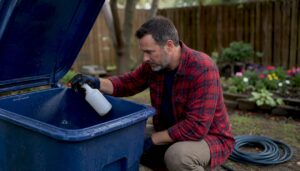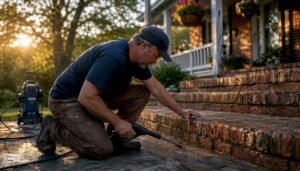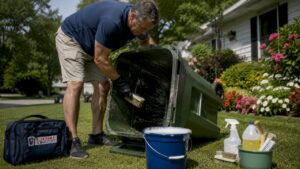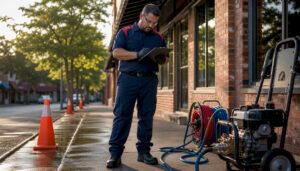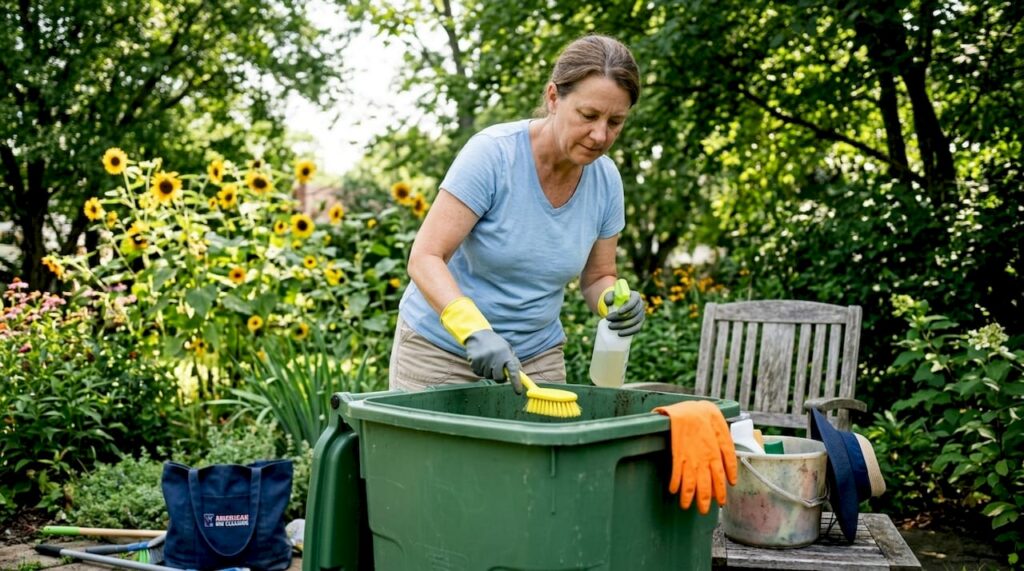
Trash cans need deep cleaning because bacteria, biofilms, and organic residue build up inside them in ways that basic rinsing and bag changes cannot fix. A quick wipe or soap rinse leaves behind a protective bacterial matrix that keeps growing between cleanings. That buildup causes persistent odors, attracts pests, and creates real health risks for your household. Understanding why this happens is the first step toward doing something about it.
Why trash cans need deep cleaning beyond a quick rinse
Trash cans create near-perfect conditions for bacterial growth. Closed lids trap warmth and moisture. Organic waste provides constant nutrients. The result is a cycle of contamination that a garden hose cannot break.
The core problem is biofilm. Biofilm is a slimy matrix of polysaccharides secreted by bacteria that shields colonies from soaps and ordinary rinsing, leaving up to 80% of bacteria intact without heat and surfactant treatment. That means even a bin that looks clean after a rinse can still be teeming with active bacterial colonies.
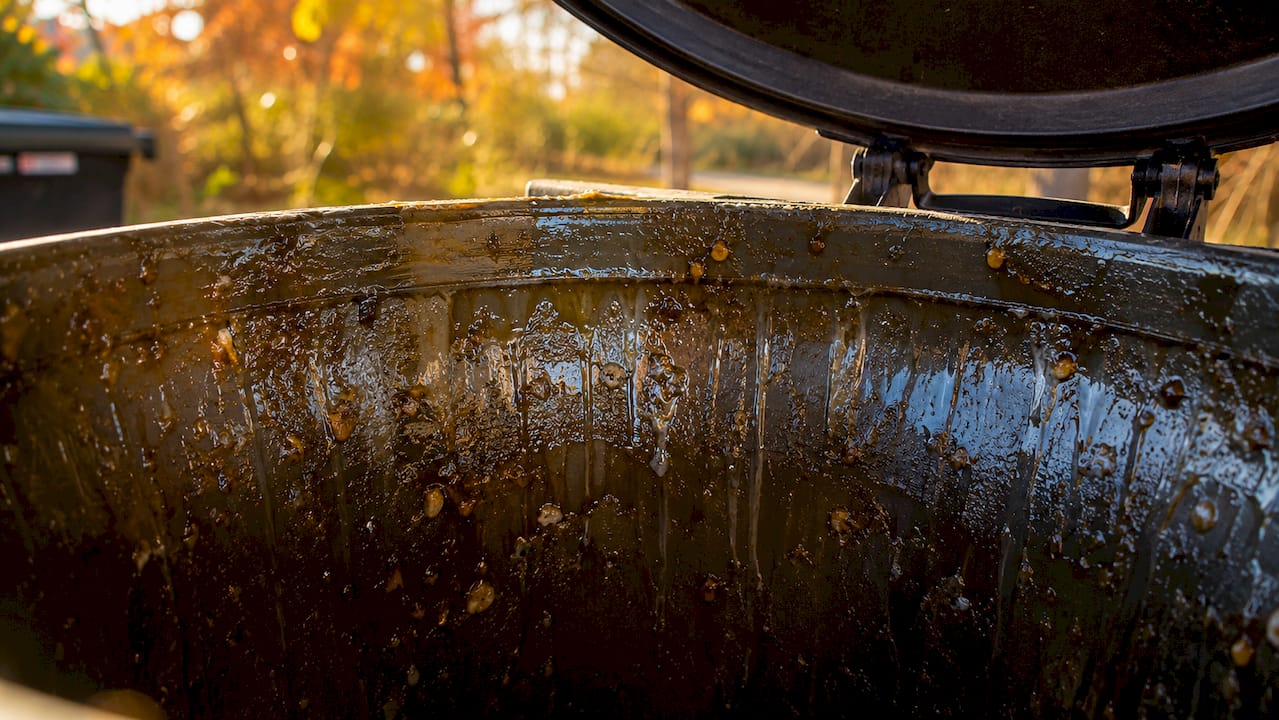
Bin temperatures between 50°F and 95°F create what sanitation professionals call “petri dish” conditions ideal for pathogens. Those conditions lead to pest attraction, which then spreads bacteria further into your home. The problem is not just cosmetic. It is a genuine hygiene risk sitting at the end of your driveway.
What “bin juice” does to your trash can
Small tears or leaks in trash bags allow liquid waste, commonly called “bin juice,” to pool at the bottom of your bin. Bag liners alone cannot prevent this bacterial contamination. That pooled liquid feeds microbial growth continuously, even after you swap in a fresh bag.
Odors are not the starting point of this problem. They are the end stage. No smell does not mean clean in a trash bin. By the time you notice a smell, biofilm has already been building for weeks.
Pro Tip: Smell your bin lid from the outside after a bag change. If you detect any odor, biofilm is already present inside. That is your signal to schedule a deep clean, not just a rinse.
How often should you deep clean your trash cans?
Cleaning frequency depends on your household. A single adult with low food waste output has different needs than a family with pets, young children, or someone with a compromised immune system.
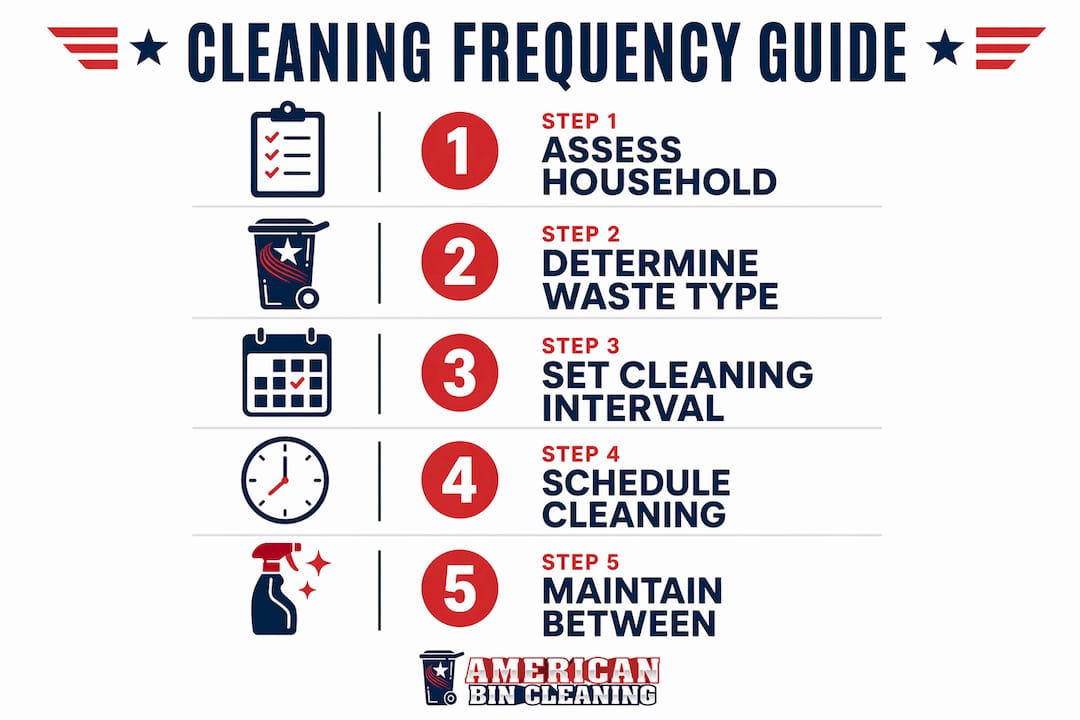
Most homes should deep clean trash cans monthly. Pet owners and households dealing with diapers should clean every 4–8 weeks. Low-use, single-person households can extend that interval to 3–4 months. These are not arbitrary suggestions. They reflect how quickly bacteria recolonize a bin under real household conditions.
Heat accelerates everything. Under summer conditions, bacteria recolonize a clean bin in as little as 8–10 weeks. That means a quarterly schedule that works in winter may be completely inadequate from june through september in a place like Chicagoland.
| Household type | Recommended cleaning interval |
|---|---|
| Single adult, low food waste | Every 3–4 months |
| Average family household | Monthly |
| Household with pets or diapers | Every 4–8 weeks |
| Summer months (all households) | Every 4–6 weeks |
| Immunocompromised household member | At least monthly |
Pro Tip: Tie your bin cleaning schedule to your trash pickup day. Clean the bin right after it is emptied and returned to the curb. The bin is at its least contaminated at that moment, making cleaning faster and more effective.
Why DIY cleaning methods fall short
Most homeowners assume hot water and dish soap are enough. They are not. The gap between what a garden hose delivers and what biofilm actually requires is significant.
Home water heaters max out around 120°F. Bacterial biofilms require 160°F or higher, combined with surfactants, to break apart effectively. Professional cleaning systems use water at 200°F and 3,500 PSI to blast biofilm apart both chemically and physically. That is a level of force and heat that no residential setup can replicate.
Common DIY mistakes make the problem worse:
- Incomplete drying. Residual moisture combined with warmth and organic residue allows rapid bacterial recolonization, sometimes within 24 hours of cleaning.
- No surfactant. Dish soap diluted in cold or warm water does not penetrate biofilm. You need a proper surfactant at the right temperature to dissolve the polysaccharide matrix.
- Rinsing runoff. DIY rinsing sends contaminated water across your driveway and into storm drains. Professional cleaning systems capture all wastewater on board, preventing environmental contamination.
- Skipping the lid and wheels. Most homeowners clean the bin interior but ignore the lid underside, the rim, and the wheel wells. Bacteria colonize all of these surfaces.
Home water heaters do not reach the temperatures needed to break down bacterial biofilms. That single fact explains why professional sanitation consistently outperforms DIY methods in clinical cleanliness. Abcbins, for example, kills 99.99% of bacteria using its high-pressure, high-temperature process, a result that a garden hose simply cannot achieve.
What you can do between deep cleanings
Deep cleaning handles the heavy work. Between sessions, a few consistent habits slow bacterial regrowth and keep odors manageable.
- Use the right bags. Choose bags rated for your bin size. Overfilled bags tear at the seams and leak. Double-bag wet or moldy waste before it goes in the bin.
- Rinse with hot soapy water after emptying. A quick rinse with the hottest water your tap produces, plus a squirt of dish soap, removes fresh residue before it has time to feed biofilm. This is not a substitute for deep cleaning. It is a delay tactic that works.
- Dry completely before replacing the bag. Leave the bin open in sunlight for 20–30 minutes. UV light kills surface microbes and sunlight accelerates drying. Both outcomes slow bacterial regrowth.
- Use baking soda at the bottom. Sprinkle a thin layer of baking soda under the bag liner. It absorbs moisture and neutralizes odors without introducing chemicals.
- Keep bins shaded in summer. A bin sitting in direct afternoon sun heats up fast, accelerating bacterial growth inside. A shaded spot keeps the internal temperature lower between pickups.
Maintaining trash bin cleanliness is a recurring home hygiene task, comparable to cleaning appliances or changing furnace filters. Treating it that way, with a scheduled routine rather than a reactive response to odors, produces consistently better results.
Pro Tip: Keep a small spray bottle of diluted white vinegar near your bins. After each bag change, spray the interior walls and let it air dry. Vinegar disrupts early-stage bacterial colonization without leaving chemical residue.
Key Takeaways
Trash cans require monthly deep cleaning because biofilm, heat, and organic residue create bacterial conditions that soap, rinsing, and bag changes cannot eliminate on their own.
| Point | Details |
|---|---|
| Biofilm is the real problem | Bacterial biofilm resists rinsing and requires 160°F heat plus surfactants to break down effectively. |
| Cleaning frequency varies by household | Families with pets or diapers should clean every 4–8 weeks; single adults can extend to 3–4 months. |
| Summer shortens safe intervals | Warm temperatures allow bacteria to recolonize a clean bin in as little as 8–10 weeks. |
| DIY methods have hard limits | Home water heaters cap at 120°F, well below the threshold needed to destroy biofilm colonies. |
| Drying is not optional | Residual moisture after cleaning allows bacteria to return within 24 hours. |
Why I think most homeowners underestimate their trash cans
I have seen a lot of bins over the years. The ones that surprise homeowners most are the ones that look fine. No visible grime, no obvious smell, but when you open them up and apply real heat and pressure, the runoff is dark and foul. That gap between appearance and reality is exactly why so many people skip this task.
The most common misconception I run into is that a fresh bag solves the problem. It does not. The bag sits inside a contaminated container. Bin juice from the previous bag has already coated the walls. You are essentially putting clean groceries into a dirty refrigerator and calling it food safe.
The second misconception is that odor is the only reason to clean. Odor is just the signal you can detect. The bacterial load inside a neglected bin is present long before the smell arrives. By the time your nose tells you something is wrong, the bin has been a health risk for weeks.
My honest recommendation is to treat bin cleaning the way you treat gutter cleaning or dryer vent maintenance. Schedule it. Put it on the calendar. Do not wait for a problem to appear. A monthly or quarterly routine, depending on your household, keeps the bacterial load low enough that your between-cleaning habits actually make a difference. If you cannot do it yourself at the temperature and pressure required, a professional service is worth every dollar.
— Jim
Professional bin cleaning for Chicagoland homeowners
Abcbins has provided professional trash bin cleaning services throughout Chicagoland since 1989. The process uses 200°F water at high pressure combined with eco-friendly detergents to kill 99.99% of bacteria and eliminate odors at the source.
All wastewater is captured on board, so nothing runs off into your driveway or storm drains. You do not need to be home. Abcbins handles everything curbside on your schedule. Service plans are available monthly, bi-monthly, quarterly, and on demand for homeowners in Barrington, McHenry, Lake Zurich, Round Lake, and surrounding communities. Schedule your first cleaning and stop guessing whether your bins are actually clean.
FAQ
What is biofilm and why does it matter in trash cans?
Biofilm is a protective matrix of polysaccharides that bacteria secrete to shield themselves from cleaning agents. It resists ordinary soap and rinsing, leaving up to 80% of bacteria intact without high heat and surfactant treatment.
How often should I deep clean my garbage cans?
Most households should clean monthly. Single adults with low food waste can stretch to every 3–4 months, while households with pets, diapers, or immunocompromised members should clean every 4–8 weeks.
Does a fresh trash bag mean my bin is clean?
No. Bag liners cannot prevent bin juice from leaking onto interior surfaces. The bin itself accumulates bacteria and biofilm regardless of how often you change the bag.
Can I deep clean my trash can myself?
You can reduce surface contamination with hot soapy water and thorough drying, but home water heaters cap at around 120°F. Effective biofilm removal requires 160°F or higher combined with surfactants, which professional equipment delivers.
Why do my trash cans still smell after cleaning?
Odors return when bins are not dried completely after cleaning. Residual moisture allows bacteria to recolonize within 24 hours. Leave the bin open in sunlight after washing to dry fully before replacing the liner.