High-pressure cleaning removes bacteria, grease, caked-on organic matter, foul odors, and pest-attracting residues from trash bins using water heated between 165°F and 200°F at pressures exceeding 3,000 PSI. This is what high-pressure cleaning removes from bins that a garden hose simply cannot touch. Professional systems like those used by Abcbins achieve a 99.9% bacterial kill rate, targeting pathogens including E. coli, Salmonella, and Listeria. Standard rinsing at 40–60 PSI leaves the real problem untouched.
What types of grime does high-pressure cleaning remove from bins?
The short answer: everything your garden hose leaves behind. High-pressure hot water cleaning removes caked-on organic matter, grease, fats, and “bin juice,” which is the foul liquid that pools at the bottom of trash bins and is the primary source of odors and pest attraction. These substances bond to plastic and metal surfaces over time, forming a sticky film that cold water cannot break apart.
Water heated to at least 165°F is physically necessary to melt solidified fats and oils. Household water heaters typically reach 120°F at best, so home cleaning cannot achieve the same result. The molecular bonds holding grease to bin surfaces require both heat and mechanical force to break.
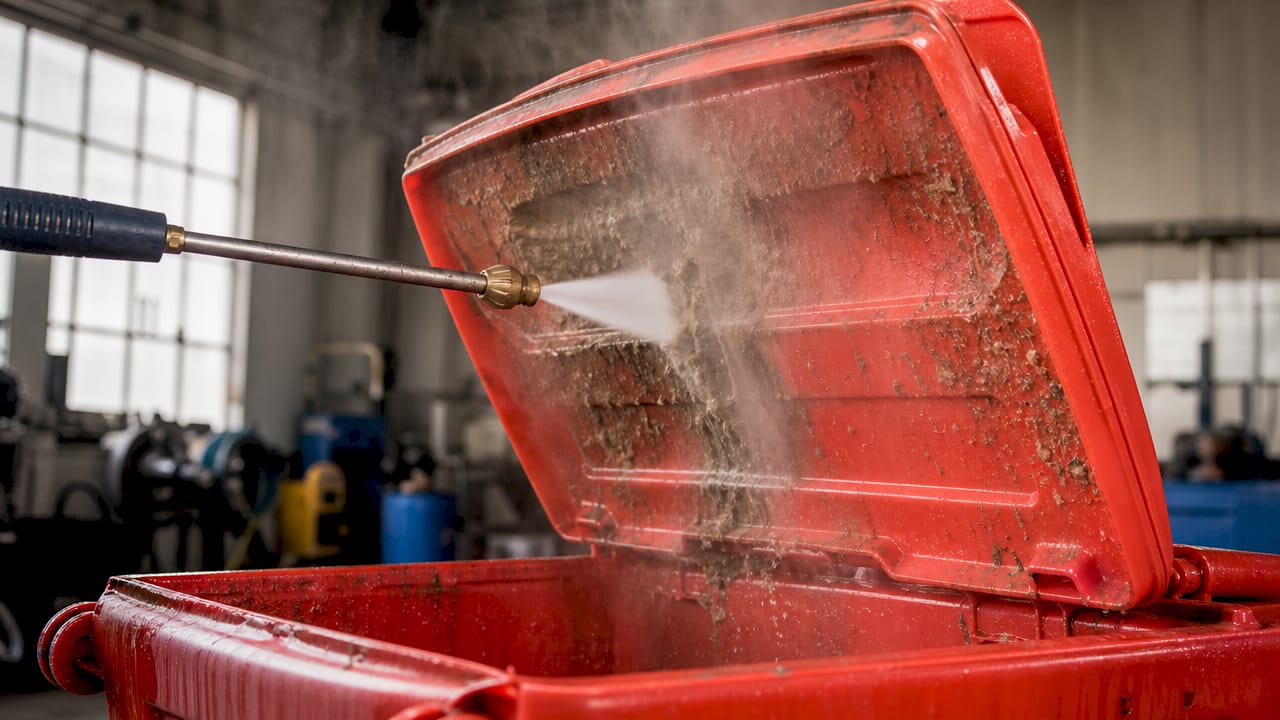
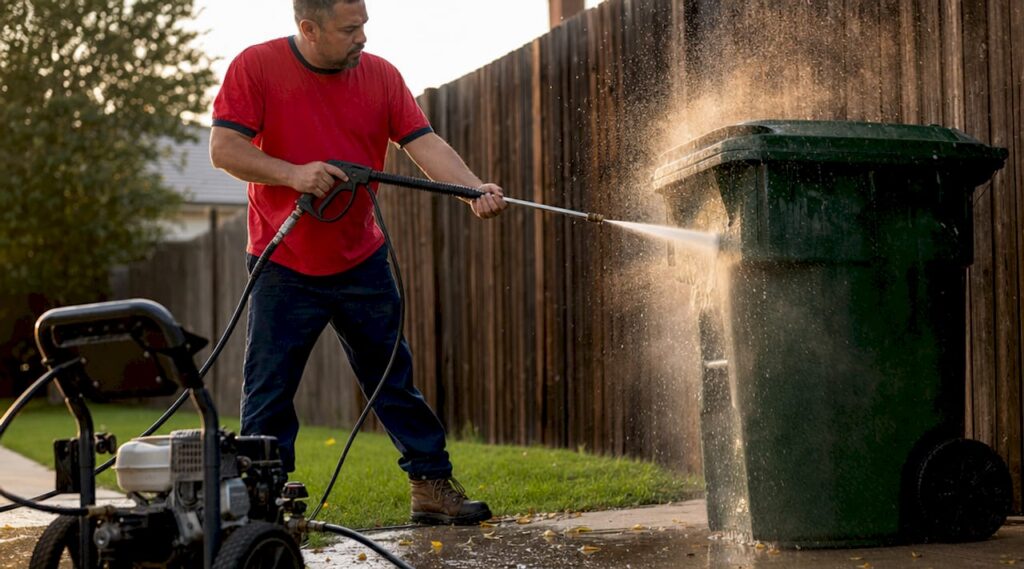
That mechanical force comes from rotating spinner heads operating at 3,000+ PSI. These heads blast water into every corner, groove, hinge, and crevice inside the bin. Manual scrubbing with a brush misses these areas entirely, which is why odors return within days of a DIY clean.
Here is what professional pressure washing removes that standard cleaning leaves behind:
- Caked-on food residue bonded to bin walls and lids after weeks of heat exposure
- Fats, oils, and grease that solidify and trap bacteria inside the bin
- “Bin juice” pooled at the bottom, a concentrated mix of decomposed organic matter
- Sticky film buildup on interior surfaces that holds odor-causing bacteria
- Mold and mildew growing in damp corners and under lids
- Maggot eggs and insect debris left behind after pest activity
Pro Tip: Schedule bin cleaning right after your regular trash pickup day. The bin is empty, and the cleaning crew can access every surface without obstruction.
How does high-pressure cleaning eliminate bacteria from bins?
Professional bin cleaning is a sanitation process, not just a cosmetic one. Water at 165°F–200°F destroys 99.9% of bacteria on contact, including dangerous pathogens like E. coli, Salmonella, and Listeria. These are the same organisms responsible for foodborne illness, and they thrive in the warm, moist environment inside a trash bin.
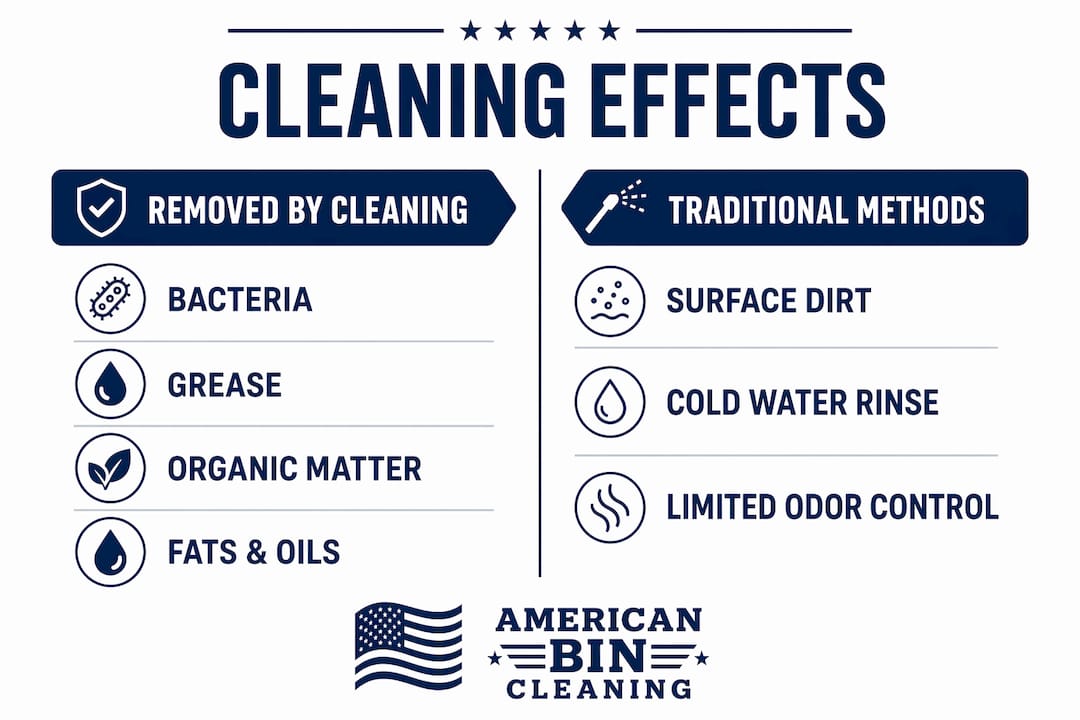
Cold water rinsing does not solve this problem. In fact, a garden hose rinse can make bacterial growth worse by adding moisture without the heat needed to kill anything. You are essentially creating a more hospitable environment for pathogens.
The bacteria most commonly found in residential trash bins include:
- E. coli from raw meat packaging and food scraps
- Salmonella from poultry waste and spoiled produce
- Listeria from deli packaging and dairy residue
- Staphylococcus from skin contact and general household waste
“High-temperature bin sanitization eliminates pathogens at the microbial level using heat instead of harsh, non-biodegradable chemicals, making it safer for families and pets.” — HomeInsiderHQ
Professional services also use hospital-grade disinfectants where needed, but the heat itself does most of the work. This matters for families with children and pets who interact with bins or the areas around them. The health risks of dirty bins are real and well-documented, yet most homeowners treat bin cleaning as optional.
High-pressure cleaning vs. traditional bin cleaning methods
The gap between professional pressure washing and DIY cleaning is not a matter of degree. It is a difference in category. A garden hose operates at 40–60 PSI with cold tap water. A professional system operates at over 3,000 PSI with water heated above 165°F. That is a 50-fold difference in pressure and a temperature gap that no home setup can close.
| Factor | Garden Hose / Manual Scrubbing | Professional High-Pressure Cleaning |
|---|---|---|
| Water pressure | 40–60 PSI | 3,000+ PSI |
| Water temperature | Cold tap (50–70°F) | 165°F–200°F |
| Bacterial kill rate | Minimal, may worsen growth | 99.9% elimination |
| Grease and fat removal | Surface rinse only | Full molecular breakdown |
| Odor control | Temporary masking | Removes odor at the source |
| Wastewater handling | Runs off into lawn or storm drain | Captured in closed-loop system |
| Result duration | Days before odors return | Weeks to months of cleanliness |
Basic cleaning is a short-term cosmetic fix. Professional high-pressure hot water cleaning is a long-term sanitation strategy. The distinction matters because persistent fats, oils, and bacteria are what attract flies, maggots, and rodents to your bins in the first place.
Professional systems also handle wastewater responsibly. A closed-loop recovery system captures 100% of contaminated water, preventing it from running into storm drains or your lawn. DIY rinsing sends bacteria-laden water directly into the environment.
Pro Tip: If your bin smells within 48 hours of trash pickup, that is a sign of active bacterial growth, not just leftover odor. Heat-based sanitation is the only method that stops the cycle.
How is professional bin cleaning performed?
Understanding what happens during a bin pressure wash helps you see why the results last. The process is fast, thorough, and requires no effort from you. Here is how a professional cleaning cycle works:
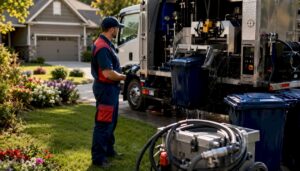
- The bin is hoisted onto the cleaning rig using a hydraulic lift, positioning it for full interior access.
- Rotating spray heads activate at 3,000+ PSI, blasting heated water across every interior surface in a 360-degree pattern that reaches corners and grooves no brush can touch.
- The active wash cycle runs for under 60 seconds per bin. That short time is enough because the combination of heat and pressure does the work instantly.
- Disinfectant is applied where needed, adding a final layer of sanitation against any remaining microbial activity.
- The bin drains and dries before being returned to your curb, ready for use.
- All wastewater is captured in the truck’s onboard recovery tank. Nothing runs off into your driveway, lawn, or the street.
The practical benefits for homeowners are direct. Odors stop returning within days because the source, which is the bacterial film and organic residue, has been fully removed. Pests lose their food source, so flies and rodents have no reason to target your bin. The bin stays cleaner between pickups because there is no sticky residue for new waste to bond to.
You do not need to be home for any of this. Abcbins handles the entire process curbside while you are at work or running errands. For homeowners who want to understand the full professional cleaning process, the details are straightforward and worth knowing.
Why i think most homeowners underestimate their bins
After years of working in this industry, the most common thing I hear from new customers is some version of: “I just rinse mine out every few weeks, that should be fine.” It is not fine, and the reason goes beyond hygiene.
A garden hose rinse adds moisture to a bin that already contains bacterial film. Without heat, you are not killing anything. You are giving bacteria better conditions to multiply. Most homeowners do not realize this because the bin looks cleaner after a rinse. It is not.
The families I worry about most are the ones with young kids and dogs who spend time near the trash area. Pathogens like Salmonella and E. coli do not stay inside the bin. They transfer to hands, paws, and surfaces. A bin that gets professionally sanitized every month or two is not a luxury. It is basic household hygiene, the same category as cleaning your kitchen or washing your hands.
The cost argument also falls apart quickly. A professional service costs less per visit than most people spend on cleaning products for a single DIY attempt, and it actually works. The real cost of DIY bin cleaning adds up fast when you factor in your time, supplies, and the fact that you are not achieving true sanitation anyway.
My honest recommendation: treat bin cleaning the same way you treat gutter cleaning or HVAC filter replacement. It is not glamorous, but skipping it has real consequences.
— Jim
Keep your bins clean with Abcbins
Abcbins has provided professional trash bin cleaning throughout Chicagoland since 1989, using the same high-pressure, heated water technology described in this article.
Every service uses water heated above 165°F at 3,000+ PSI, with full wastewater capture so nothing contaminates your property or the environment. You do not need to be home. Abcbins handles everything curbside on your schedule, with monthly, bi-monthly, quarterly, and on-demand plans available. Homeowners in the area can explore bin cleaning in Barrington or check the full residential cleaning services to find a plan that fits. Cleaner bins, no effort required.
FAQ
What does high-pressure cleaning remove from trash bins?
High-pressure cleaning removes bacteria, grease, fats, caked-on organic matter, mold, and “bin juice” using water heated to 165°F–200°F at over 3,000 PSI. It eliminates pathogens including E. coli, Salmonella, and Listeria that cold water rinsing cannot kill.
Is pressure washing bins safe for the environment?
Professional bin cleaning uses a closed-loop wastewater recovery system that captures 100% of contaminated water, preventing runoff into storm drains or lawns. DIY rinsing sends bacteria-laden water directly into the environment.
How long does a professional bin cleaning take?
The active wash cycle lasts under 60 seconds per bin. The full process including hoisting, spraying, disinfection, and draining is completed quickly at the curb without requiring the homeowner to be present.
Can a garden hose clean a bin as effectively as pressure washing?
A garden hose operates at 40–60 PSI with cold water, which is insufficient to break down grease or kill bacteria. Cold rinsing can actually worsen bacterial growth by adding moisture without the heat needed to sanitize.
How often should homeowners get their bins professionally cleaned?
Most homeowners benefit from cleaning every one to three months depending on usage and climate. Warmer months accelerate bacterial growth and odor, making monthly service the most effective option during summer.
Key takeaways
High-pressure bin cleaning is the only method that removes bacteria, grease, and odor-causing residues at the source, not just the surface.
| Point | Details |
|---|---|
| Bacteria elimination | Water at 165°F–200°F kills 99.9% of pathogens including E. coli, Salmonella, and Listeria. |
| Grease and residue removal | Heated water at 3,000+ PSI melts solidified fats and flushes out bin juice that cold water leaves behind. |
| Garden hose limitations | A hose at 40–60 PSI with cold water can worsen bacterial growth rather than reduce it. |
| Environmental safety | Professional systems capture all wastewater in a closed-loop tank, preventing contamination of lawns and storm drains. |
| Long-term results | Removing the bacterial film and organic residue stops odors and pests from returning quickly after cleaning. |