HOA boards should adopt a written bin-hygiene policy plus a recurring cleaning schedule — managed in-house or contracted out — to keep community bins clean, pest-free, and compliant. Here is what to do right now:
- Add minimum cleanliness standards to your CC&Rs or rules. Specify that bins must be sealed, odor-free, and free of visible biological residue between pickups.
- Pick a cleaning cadence based on your climate and use. Monthly for warm-weather or high-density communities; bi-monthly for average single-family neighborhoods; quarterly for low-use or cold-climate properties.
- Issue a short resident notice covering set-out windows, storage requirements, and the upcoming cleaning schedule.
TL;DR for your next board meeting: Adopt a bin-hygiene policy, schedule recurring cleaning, and assign responsibility — either to a vendor or a community manager.
Table of Contents
- Why clean HOA bins protect health, curb appeal, and property values
- What to check in your CC&Rs, municipal rules, and container standards
- How to write an enforceable HOA bin-hygiene policy
- DIY, HOA-managed, or contracted cleaning: which model fits your community?
- How to choose a bin-cleaning vendor for your HOA
- How Abcbins operates for HOAs: process and trust signals
- Budgeting and rollout timeline for HOA bin-hygiene programs
- Key Takeaways
- Why scheduled bin cleaning is the right long-term call for HOAs
- Abcbins HOA service plans: get a pilot quote
- Useful sources and further reading
Why clean HOA bins protect health, curb appeal, and property values
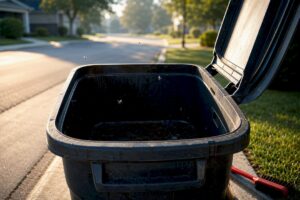
Neglected trash bins are a public-health problem, not just an eyesore. Bacteria, mold, and decaying organic matter accumulate fast in unsealed or infrequently cleaned containers, attracting rodents, flies, and other pests that spread disease across shared living spaces. The connection between bin hygiene and community health is direct.
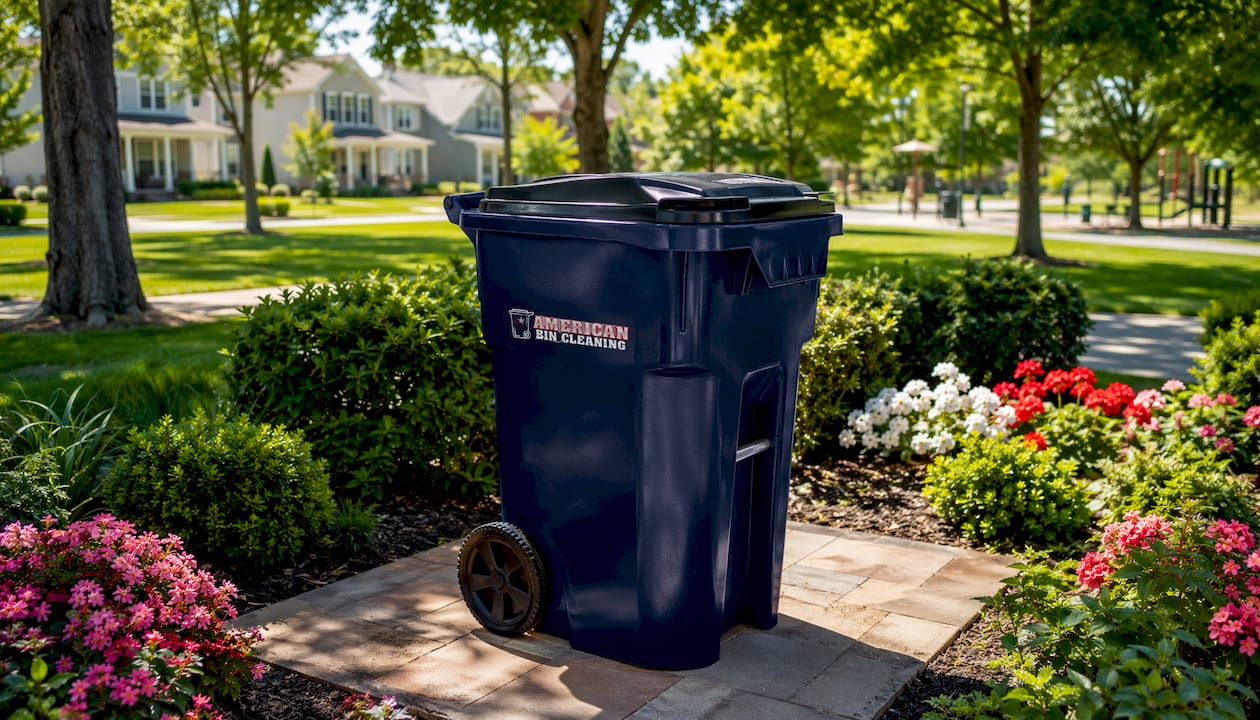
There is also a property-value argument. Planned maintenance reduces reactive service calls, limits odor and pest buildup, and aligns with inspection expectations for property performance. Communities that let standards slip on something as visible as trash bins tend to see a ripple effect: residents notice, prospective buyers notice, and appraisers notice.
The “broken window” dynamic is real here. One overflowing, stained bin signals that the community does not enforce its own standards, which invites further neglect. Proactive hygiene short-circuits that cycle before it starts.
Boards that schedule regular cleaning also spend less time fielding complaints. Recurring odor and pest calls are among the most common resident grievances in managed communities. A scheduled program addresses the root cause rather than the symptom, freeing up management time for higher-priority issues.
What to check in your CC&Rs, municipal rules, and container standards
CC&Rs and local ordinances typically govern where bins are stored, when they can be set out, and what sanitation standards apply. Before drafting or updating policy language, verify these items:
- Storage location rules: Does your governing document require bins to be stored in garages, behind fences, or in screened enclosures? Confirm the exact language.
- Set-out and return windows: Many communities require bins at the curb no earlier than the evening before collection and returned within 12–24 hours after pickup.
- Allowed container types: Check size limits (many jurisdictions cap bins at 55 gallons), lid requirements, and whether containers must be a specific color or brand.
- Inspection and enforcement authority: Confirm that your CC&Rs grant the board authority to inspect, issue notices, and levy fines for violations.
- Penalty mechanics: Verify that your fine schedule is documented and that due-process steps (notice, cure period, hearing) are followed.
Federal standard to know: 40 CFR 243.200-1 requires that food-containing waste be stored in leakproof, nonabsorbent, durable, covered containers maintained in a sanitary condition. Containers must be large enough to hold all waste generated between collection intervals. This federal baseline supports the sanitation clauses you write into community rules and gives enforcement language a regulatory anchor.
One operational pitfall boards often miss: storage rules that place totes behind fences can block automated truck access. Always coordinate storage locations with your hauler’s reach requirements before enforcing a rule. A policy that forces bins into a location the truck cannot service creates missed pickups and resident frustration.
For HOA compliance specifics, cross-reference your governing documents with your municipality’s solid waste ordinance and confirm container specs with your hauler before finalizing any policy language.
How to write an enforceable HOA bin-hygiene policy
The most defensible policy has two parts: resident responsibilities (storage, set-out, and basic cleaning) and HOA responsibilities (shared-area and contracted service-area cleaning). Mixing the two into a single vague paragraph is the most common drafting mistake.
Sample policy language (editable)
Inspection checklist for walkthroughs
- Lids fully sealed — no gaps or propped-open lids
- No standing liquid inside or pooling beneath the bin
- No overflowing waste or loose debris around the container
- No visible biological residue, heavy staining, or mold on interior walls
- No evidence of pest activity (gnaw marks, nesting, insect infestation)
- Bin stored in the designated location between pickups
- Container in good structural repair (no cracks, broken hinges, or missing lids)
Enforcement steps
Communities that apply standards uniformly and document violations consistently see fewer disputes and better compliance over time. Follow a two-step escalation:
Step 1 — Courtesy notice: Written notice with a photo, a description of the violation, and a 14-day cure period. No fine at this stage.
Step 2 — Formal notice: If uncorrected, issue a formal violation notice with a photo, a specific deadline (typically 7–10 days), and the applicable fine amount per your schedule.
Step 3 — Hearing/penalty: If the violation persists, schedule a hearing per your CC&Rs and assess the fine. Document every step with dated photos and standardized templates.
| Violation Type | Corrective Action | Suggested Timeline |
|---|---|---|
| Bin stored in wrong location | Courtesy notice, then fine | 14-day cure, 7-day escalation |
| Overflowing or unsealed bin | Courtesy notice, then fine | 7-day cure, 7-day escalation |
| Persistent odor or pest evidence | Formal notice + professional cleaning required | 14-day cure, hearing if unresolved |
| Broken or cracked container | Written notice to repair or replace | 30-day cure period |
| Bin not returned after pickup | Courtesy notice | 24-hour cure, repeat = fine |
DIY, HOA-managed, or contracted cleaning: which model fits your community?
Treat bin cleaning as a scheduled community utility, not a reactive fix. The question is not whether to clean, but who does it and how often.

| Criteria | Resident DIY | HOA-Managed Program | Contracted Professional |
|---|---|---|---|
| Cost profile | Lowest upfront; inconsistent results | Moderate; requires staff time | Predictable per-unit or flat fee |
| Reliability | Highly variable | Depends on staff capacity | Consistent scheduled service |
| Cleaning quality | Often insufficient (simple hosing) | Moderate with training | High-pressure sanitizing process |
| Wastewater handling | Typically uncontrolled runoff | Difficult to manage at scale | Onboard capture and recycling |
| Staff time required | None for HOA | Significant | Minimal (scheduling only) |
| Resident convenience | Burden on resident | Moderate | High — no resident action needed |
DIY cleaning basics: If residents handle their own bins, they need more than a garden hose. The process should be: rinse loose debris, apply a degreaser or dish detergent, scrub interior walls, apply a diluted bleach alternative or enzymatic cleaner, rinse thoroughly, and allow to air dry upside down. Simple hosing moves bacteria around rather than eliminating it. For a closer look at where DIY bin cleaning tends to fall short, the pitfalls are consistent and preventable.
Frequency by climate and use:
- High-use or warm climates: Monthly cleaning — heat accelerates bacterial growth and odor
- Average single-family communities: Bi-monthly
- Low-use or cold-climate properties: Quarterly
- After bulk events or spills: On-demand service regardless of scheduled cadence
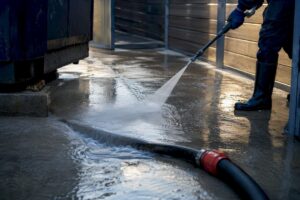
Wastewater handling is often the deciding factor for outsourcing. Bin cleaning generates contaminated water containing bacteria, grease, and cleaning agents. A community-wide contracted service with onboard wastewater capture prevents that runoff from entering storm drains, which matters both for environmental compliance and for avoiding municipal fines.
How to choose a bin-cleaning vendor for your HOA
Prioritize vendors with onboard wastewater capture, proper insurance and bonding, demonstrated HOA experience, transparent pricing, and verifiable references. Those five criteria separate professional operators from pressure-washer-for-hire operations.
Vendor procurement checklist
- Licensing and insurance: Request a certificate of general liability insurance and confirm bonding status. Ask for the policy limits.
- Wastewater handling: Ask specifically how wastewater is captured and disposed of. Vendors who cannot answer this clearly are likely discharging into storm drains.
- Environmental safeguards: Confirm that cleaning agents are biodegradable and that the process meets local environmental standards.
- Service frequency plans: Verify that the vendor offers monthly, bi-monthly, quarterly, and on-demand options — not just a single fixed schedule.
- Sample service-level agreement: Request a draft contract that specifies service frequency, what happens on missed visits, and how complaints are handled.
- HOA references: Ask for at least two references from HOA clients of similar size. Call them.
- Equipment type: High-pressure hot-water systems sanitize more effectively than cold-water pressure washing alone. Ask about water temperature and PSI.
- Backup and holiday scheduling: Confirm how the vendor handles service during holidays or weather events.
Questions to ask during vendor interviews
- What is your pricing structure — per unit, per bin, or flat community rate?
- How do you handle a spill or service issue on-site?
- Can you provide proof of insurance and a sample contract before we sign?
- Will you demonstrate your equipment and wastewater capture system before the pilot?
- What does your reporting look like — do you provide photo documentation after each service?
Local responsiveness often matters more than brand recognition. A vendor whose drivers know your community’s layout, hauler schedule, and gate codes will cause fewer service disruptions than a national operator managing your account remotely.
How Abcbins operates for HOAs: process and trust signals
Abcbins (American Bin Cleaning) offers scheduled curbside and shared-area cleaning plans — monthly, bi-monthly, quarterly, and on-demand — with onboard wastewater capture and recycling built into every service visit. No wastewater is discharged into storm drains or onto surrounding surfaces.
The service process runs as follows: the crew arrives on the scheduled day (residents do not need to be home), captures all wastewater in the onboard recycling system, pressure-washes and sanitizes each bin with an eco-friendly high-pressure process that kills 99.99% of bacteria, inspects lids and hinges, and completes the visit with photo documentation available for HOA records.
Pro Tip: When evaluating any bin-cleaning vendor, ask for a live equipment demonstration and a before/after photo set from a comparable HOA property. Also request the specific contract clause that governs recurring service frequency and what happens if a visit is missed. These three items reveal more about operational quality than any sales conversation.
For a detailed look at how the cleaning process works, including the wastewater capture system, Abcbins publishes its full process online. After a deep clean, shared enclosure pads that show concrete staining or wear may benefit from a sealing treatment; surface restoration and sealing can extend the life of those pads significantly between cleaning cycles.
Budgeting and rollout timeline for HOA bin-hygiene programs
The two most common payment models are a community-wide contracted service (billed as a line item in HOA dues or a separate assessment) and an opt-in resident-paid add-on. Community-wide contracts work best for larger HOAs where uniform service and enforcement simplicity matter; opt-in models suit smaller communities or those with significant variation in resident preferences.
Budget factors to account for:
- Community size (number of units and bins)
- Chosen cadence (monthly costs roughly twice as much annually as bi-monthly)
- Shared-area vs. curbside scope
- Hauler distance and access complexity
- One-time setup costs: resident education materials, signage, and any enclosure repairs needed before service begins
| Phase | Activity | Approximate Timeline |
|---|---|---|
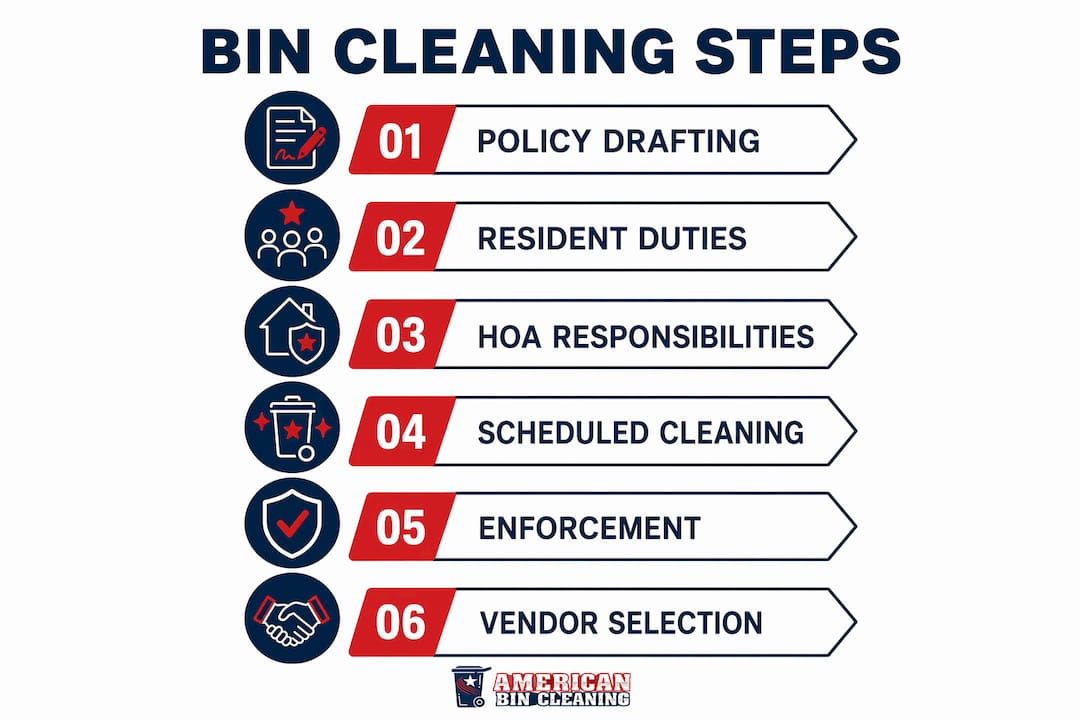
| 1. Policy drafting | Draft bin-hygiene policy; legal review if needed | Weeks 1–2 |
| 2. Resident notice | Distribute policy summary and FAQ to all residents | Weeks 3–4 |
| 3. Vendor RFP | Issue RFP, collect bids, check references, select vendor | Weeks 4–6 |
| 4. Pilot month | Run first service cycle; collect photo documentation | Weeks 7–8 |
| 5. Full launch | Begin recurring schedule; issue resident confirmation | — |
For budgeting format, an annual line item in the operating budget is the cleanest approach for contracted recurring service. Avoid funding ongoing maintenance from reserves unless your reserve study explicitly categorizes bin cleaning as a reserve expense — most do not, and using reserve funds for operating expenses can create compliance issues during audits.
Key Takeaways
A written bin-hygiene policy combined with a scheduled cleaning cadence is the single most effective way to maintain clean bins in HOA communities and reduce pest, odor, and compliance problems long-term.
| Point | Details |
|---|---|
| Policy first | Draft a two-part policy covering resident and HOA responsibilities before scheduling any service. |
| Cadence by climate | Monthly for warm or high-use communities; bi-monthly for average single-family; quarterly for low-use or cold climates. |
| Wastewater compliance | Require onboard wastewater capture from any vendor — uncontrolled runoff creates environmental liability. |
| Enforce consistently | Use dated photos and standardized notice templates; uniform enforcement reduces disputes and improves compliance. |
| Abcbins for HOAs | Abcbins offers monthly, bi-monthly, quarterly, and on-demand plans with onboard wastewater recycling and photo documentation for HOA records. |
Why scheduled bin cleaning is the right long-term call for HOAs
The conventional wisdom in HOA management is that bin cleanliness is a resident responsibility — handle it in the rules, enforce it when complaints arise, and move on. That approach consistently underperforms. Residents clean bins inconsistently, enforcement consumes board time, and the underlying odor and pest problem keeps coming back.
The smarter model treats bin cleaning the way well-run communities treat landscaping or pool maintenance: as a scheduled community service with a vendor, a contract, and a reporting trail. The board stops reacting to complaints and starts pointing to a documented maintenance record. Residents stop getting violation notices for something they were never going to do reliably on their own.
Abcbins has worked with HOAs and property managers across Chicagoland long enough to see both models play out. The communities that schedule service, communicate it clearly to residents, and document every cycle have fewer pest calls, fewer board-meeting grievances, and cleaner common areas year-round. The ones that rely on resident self-cleaning spend more time on enforcement and less on anything else.
If your board is weighing whether the budget justifies it, consider what a single pest remediation event costs compared to a year of scheduled cleaning. The math usually settles the question.
Abcbins HOA service plans: get a pilot quote
Abcbins gives HOA boards a concrete alternative to the complaint-and-enforce cycle: a fully managed bin-cleaning program with scheduled visits, onboard wastewater recycling, and photo documentation after every service. No resident needs to be home. No wastewater runs off into storm drains. And the board gets a paper trail it can actually use.
Relevant services for HOAs include:
- Curbside bin cleaning on monthly, bi-monthly, quarterly, or on-demand plans
- Shared enclosure and dumpster pad cleaning for common waste areas
- Photo documentation reports after each service cycle, ready for board records
- Pilot program options so your board can evaluate results before committing to a full schedule
HOAs in the Chicagoland area can request a pilot quote or review service options at abcbins.com. Contact Abcbins directly to ask for a sample service agreement and a before/after photo set from a comparable HOA property.
Useful sources and further reading
Boards and property managers can verify rules, procurement standards, and operational guidance through these sources:
- 40 CFR 243.200-1 — Cornell Law School: Federal container sanitation standards; use during policy drafting to anchor sanitation language in regulatory authority.
- HOA Waste Management Guide — WasteDoor: Industry best practices for written policies and scheduled cleaning programs; useful for board education and policy templates.
- Trash Enclosure Maintenance — WasteOptimize: Explains the operational case for planned vs. reactive maintenance; good for budget justification conversations.
- HOA Trash Can Rules — NRP Management: Practical examples of set-out windows and return requirements; use when drafting enforceable time-based rules.
- Trash Disposal and Recycling in HOAs — HOAmanagement.com: Enforcement best practices and documentation guidance; reference during policy review or dispute resolution.
- How HOAs Can Simplify Community Waste Management — Eagle Transfer Services: Practical steps for building a community waste plan, including signage, seasonal planning, and resident communication.
- Trash Service for HOAs — Trash Control: Covers community-wide vs. individual account models and procurement considerations.