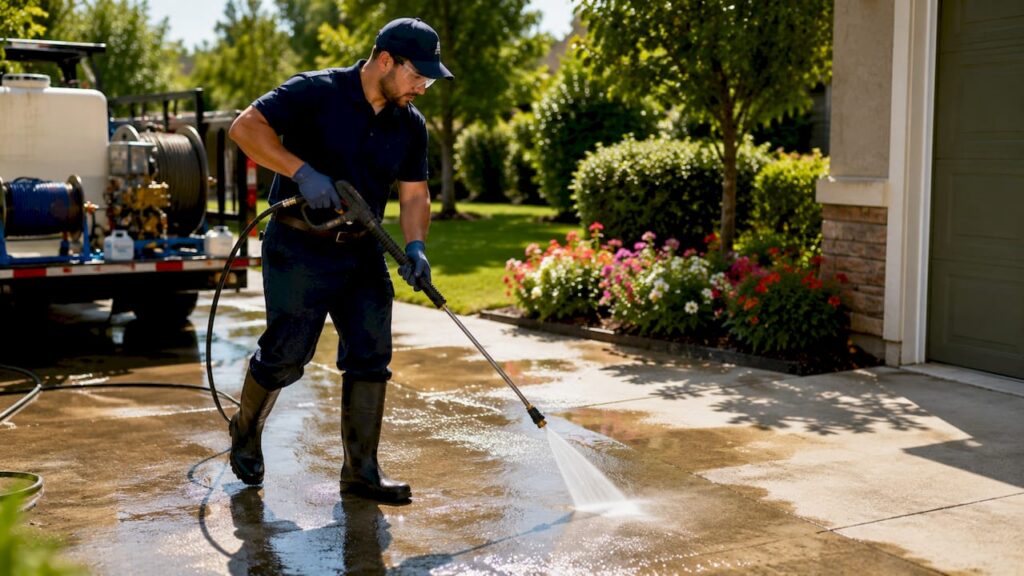
Driveway pressure washing is the process of using controlled, high-pressure water streams to deeply clean hard driveway surfaces such as concrete, asphalt, and pavers. What driveway pressure washing involves goes well beyond a garden hose rinse. It removes embedded dirt, oil stains, mold, mildew, and organic growth that regular washing cannot reach. Done correctly, it restores your driveway’s appearance and protects its structural integrity for years. Done wrong, it can cause permanent surface damage within a single session.
What does driveway pressure washing involve?
Driveway pressure washing uses a gas or electric pressure washer to deliver water at high velocity directly onto the surface. The mechanical force breaks apart contaminants bonded to the concrete, asphalt, or paver material. Unlike scrubbing with a brush, pressurized water reaches into the pores of the surface and dislodges grime that has settled deep over time.
The process typically combines water pressure with cleaning detergents or degreasers. Precise control of water pressure and chemical dwell time yields better results than brute pressure alone. That means the technique matters as much as the equipment. A homeowner who understands both will get a cleaner driveway with less risk of damage.
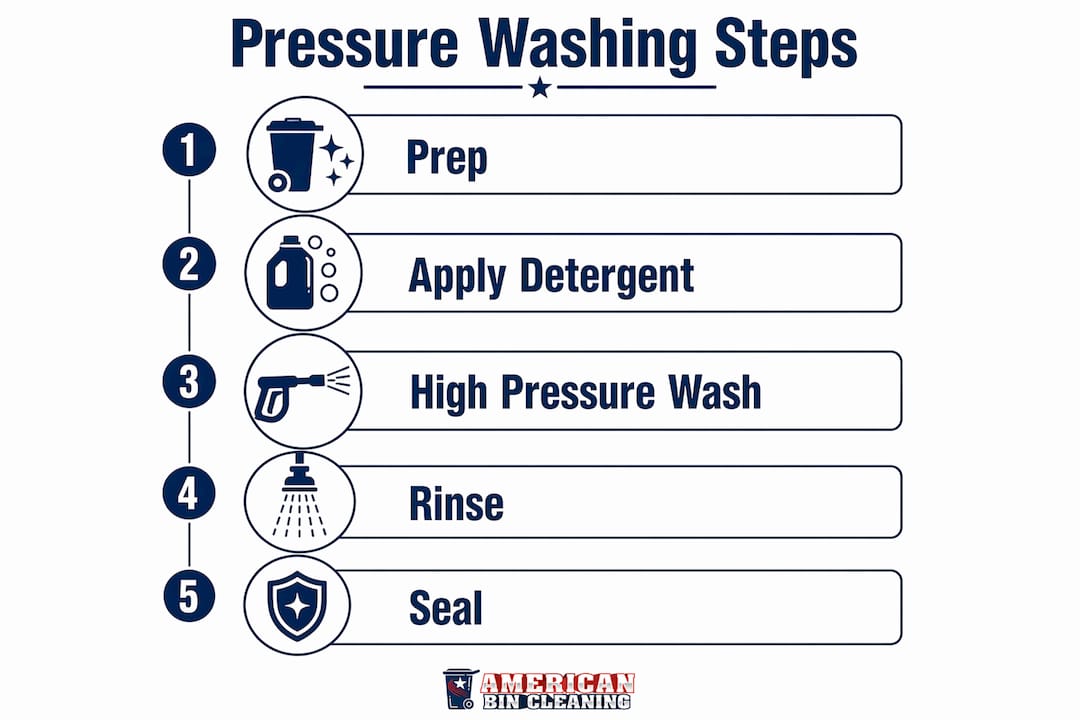
Professional driveway cleaning, which the industry also calls power washing or hydro cleaning, follows a structured sequence: pre-treat, apply chemicals, wash, rinse, and inspect. Each step serves a specific purpose. Skipping any one of them is the most common reason driveways come out streaky, stained, or damaged.
What equipment and settings are ideal for driveway pressure washing?
Getting the equipment right is the single most important factor in a safe, effective clean. The wrong PSI setting or nozzle choice can etch concrete or destroy asphalt in minutes.
PSI ranges and nozzle selection
The optimal pressure range for concrete is 2,500 to 3,000 PSI. Exceeding 3,500 PSI risks surface etching that permanently roughens the finish. For most residential driveways, a mid-range gas pressure washer in the 2,500 PSI range is the right tool.
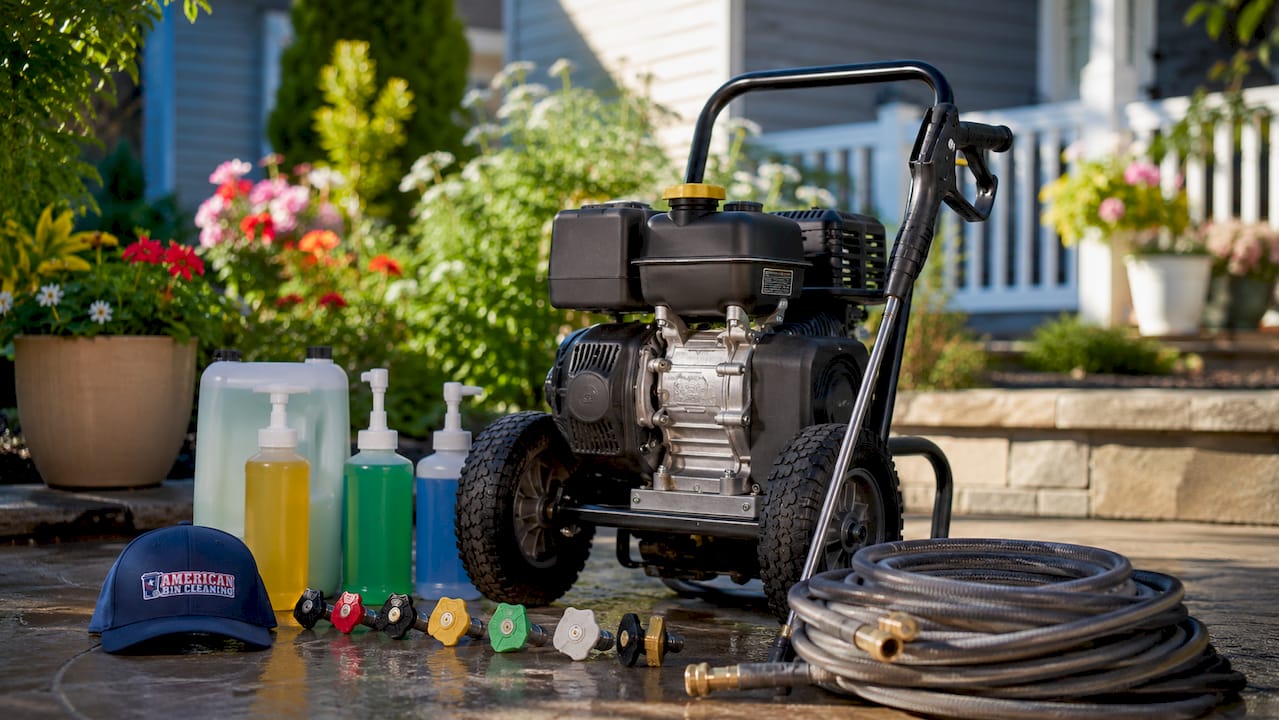
Nozzle choice controls how that pressure lands on the surface:
- 25-degree nozzle (green): The standard choice for concrete driveways. It fans the water wide enough to clean efficiently without concentrating force.
- 15-degree nozzle (yellow): Useful for stubborn stains but requires careful handling. Keep it moving at all times.
- 0-degree nozzle (red): Never use this on any driveway surface. It concentrates all pressure into a pinpoint stream that etches concrete and shreds asphalt instantly.
- 40-degree nozzle (white): Best for rinsing and light pre-wetting of surrounding plants.
Surface cleaner attachments
Surface cleaner attachments use spinning nozzles under a protective shroud to distribute pressure evenly across a wide path. They eliminate the striping that standard wands leave behind and reduce operator fatigue on large driveways. A 30% overlap in passes delivers uniform results without missed strips.
Pro Tip: Start each pass at the highest point of the driveway and work downhill. Water and loosened debris flow away from already-cleaned areas, so you never wash dirty water back over clean concrete.
How does driveway pressure washing vary by surface type?
Using the wrong cleaning method is the leading cause of driveway damage. Each surface material has a different tolerance for pressure, chemicals, and technique.
| Surface | Safe PSI Range | Method | Key Risk |
|---|---|---|---|
| Concrete | 2,500–3,000 PSI | High-pressure wash with detergent | Etching from excess PSI or 0-degree nozzle |
| Asphalt | Below 500 PSI | Low-pressure chemical soft wash | Petroleum binder destruction causing cracking |
| Pavers | 1,200–1,500 PSI | Moderate pressure with joint sand check | Joint sand washout causing structural shifting |
Concrete driveways
Concrete handles high-pressure washing well, but it still has limits. Oil stains require a chemical degreaser applied before washing. Effective oil stain removal combines a degreaser with scrubbing before the pressure washer runs over the area. Skipping the pre-treatment step means the pressure washer just spreads the oil rather than removing it.
Asphalt driveways
Asphalt is far more fragile than it looks. High PSI on asphalt destroys the petroleum binder that holds the material together, causing cracking and accelerated aging. The correct method is soft washing: low pressure below 500 PSI combined with chemical cleaners that break down surface contaminants without mechanical force.
Paver driveways
Pavers need moderate pressure and careful attention to the joints. Asphalt requires soft-washing while pavers need post-cleaning joint sand replacement to maintain structural integrity. If you wash out the polymeric sand between pavers and do not replace it, the pavers shift and settle unevenly within months.
Pro Tip: After cleaning pavers, sweep fresh polymeric sand into the joints before the surface fully dries. The slight moisture helps the sand bind and set properly.
What steps are involved in a typical driveway pressure washing process?
A professional driveway cleaning follows a clear sequence. Each step builds on the last, and cutting corners at any stage reduces the final result.
-
Clear the surface. Remove vehicles, potted plants, furniture, and loose debris. Sweep or blow off leaves, gravel, and dirt. Loose material clogs equipment and scratches the surface when pressurized water drives it across the driveway.
-
Protect surrounding vegetation. Pre-wetting nearby plants before chemical application prevents damage from detergent runoff. Soak the grass, garden beds, and shrubs bordering the driveway with plain water first.
-
Pre-treat stains. Professional pre-treatment inspections identify stain types such as oil, organic growth, or rust so the correct remover chemical gets applied. Using the wrong treatment can permanently set a stain into concrete rather than lifting it.
-
Apply detergent and allow dwell time. Spread the appropriate detergent across the surface and let it sit for 10–15 minutes. This dwell time allows the chemicals to break the molecular bonds of contaminants, which means you can use lower pressure settings and still get a thorough clean.
-
Pressure wash in overlapping passes. Work from the top of the driveway downward. Use a surface cleaner attachment for large flat areas and a 25-degree nozzle for edges and corners. Maintain a consistent distance of 6–12 inches from the surface and keep the wand moving at all times.
-
Rinse thoroughly. Switch to a 40-degree nozzle and rinse the entire surface. Detergents should never be allowed to dry on the driveway surface because dried detergent leaves a white residue that is difficult to remove.
-
Inspect and touch up. Walk the driveway and check for missed stains, streaks, or areas that need a second pass. Address any remaining spots before the surface dries completely.
Pro Tip: Apply a concrete sealer within 24–48 hours of washing a clean, dry concrete driveway. The sealer locks out moisture, oil, and organic matter, making the next cleaning significantly easier.
What are the maintenance benefits of routine driveway pressure washing?
Regular cleaning is not just about appearances. It directly protects the structural life of your driveway and prevents expensive repairs down the road.
Standard driveway maintenance requires cleaning once annually, or every six months for high-traffic or high-debris areas. That schedule keeps mold, mildew, and oil from bonding permanently to the surface. A driveway that goes three or four years without cleaning often requires more aggressive treatment or resurfacing.
Organic growth on driveways traps moisture and accelerates freeze-thaw damage. In climates like Chicagoland, where temperatures swing dramatically between seasons, this is a serious structural risk. Removing algae, moss, and mildew before winter reduces the chance of cracks forming when trapped water expands.
The curb appeal benefits of routine cleaning are equally real. A clean driveway signals a well-maintained property, which matters whether you are selling or simply taking pride in your home. Pressure washing costs a fraction of driveway resurfacing or replacement.
Key residential driveway grime prevention tips to build into your routine:
- Treat oil spills immediately with an absorbent material like cat litter, then apply a degreaser before the stain bonds.
- Trim overhanging trees and shrubs to reduce leaf debris and organic matter accumulation.
- Seal concrete driveways every two to three years to close surface pores against moisture and staining.
- Rinse the driveway with a garden hose after heavy rain events that carry road debris or mud onto the surface.
- Schedule a professional cleaning before winter to remove organic growth that traps ice-forming moisture.
Key Takeaways
Driveway pressure washing requires matching the correct PSI, nozzle, and chemical treatment to your specific surface material to clean effectively without causing damage.
| Point | Details |
|---|---|
| Match method to surface | Concrete handles 2,500–3,000 PSI; asphalt needs soft washing below 500 PSI to avoid cracking. |
| Dwell time matters | Allow detergent 10–15 minutes on the surface before washing to break down contaminants at lower pressure. |
| Clean on a schedule | Annual cleaning prevents mold and organic growth from causing freeze-thaw damage and costly repairs. |
| Use the right attachment | Surface cleaner attachments prevent striping and deliver even results on large driveway areas. |
| Protect pavers post-wash | Replace joint sand after cleaning pavers to prevent structural shifting within months. |
What I’ve learned after years of watching driveways get cleaned wrong
The most common mistake homeowners make is treating every driveway the same. They rent a pressure washer, crank it to maximum, and go. On concrete, that sometimes works. On asphalt, it can destroy the surface in a single afternoon. I have seen driveways that needed full replacement after one aggressive DIY cleaning session.
The second mistake is skipping the chemistry. Pressure alone does not remove oil, rust, or biological growth at the root level. Soft washing, which uses low pressure and targeted chemicals, kills the spores and root systems of algae and mold. Pressure washing without the right detergent just blasts the visible surface layer and leaves the roots behind. The growth comes back faster the next time.
What I find most homeowners do not realize is that the pressure washing process for driveways is as much about preparation and chemistry as it is about the machine. A professional brings the right chemical for each stain type, the right attachment for each surface, and the knowledge to read a driveway before touching it. That pre-assessment step alone prevents the majority of damage I see from DIY attempts.
Environmental responsibility also matters more than most people consider. Runoff from driveway cleaning carries oil, chemicals, and debris directly into storm drains. Capturing that wastewater rather than letting it flow freely is the right practice, and it is what separates a professional service from a quick DIY job.
— Jim
Professional driveway cleaning from Abcbins
Abcbins provides residential pressure washing services for driveways, homes, decks, and storefronts throughout Chicagoland. The team assesses your surface type before selecting the right pressure settings, nozzle, and cleaning chemicals for the job. You do not need to be home. Abcbins handles the full process while you are away, and all wastewater is captured in an on-board recycling system so nothing runs off into the environment.
Whether your driveway needs an annual refresh or a deep clean after years of neglect, Abcbins brings the right equipment and surface knowledge to get it done correctly the first time. Contact Abcbins to schedule your driveway cleaning and keep your property looking its best year-round.
FAQ
What PSI is safe for pressure washing a concrete driveway?
The safe range for residential concrete is 2,500 to 3,000 PSI. Exceeding 3,500 PSI or using a 0-degree nozzle risks permanent surface etching.
Can you pressure wash an asphalt driveway?
Standard high-pressure washing damages asphalt by destroying its petroleum binder. Asphalt requires low-pressure soft washing below 500 PSI combined with chemical cleaners.
How often should you pressure wash your driveway?
Annual cleaning is the standard recommendation for most driveways. High-traffic driveways or those with frequent oil spills benefit from cleaning every six months.
Do you need to use detergent when pressure washing a driveway?
Yes. Detergent breaks the molecular bonds of oil, mold, and organic stains that water pressure alone cannot remove. Allow 10–15 minutes of dwell time before rinsing.
What happens if you skip replacing joint sand after cleaning pavers?
Pavers lose their structural stability without joint sand. The pavers shift and settle unevenly, leading to trip hazards and surface deterioration within months of cleaning.