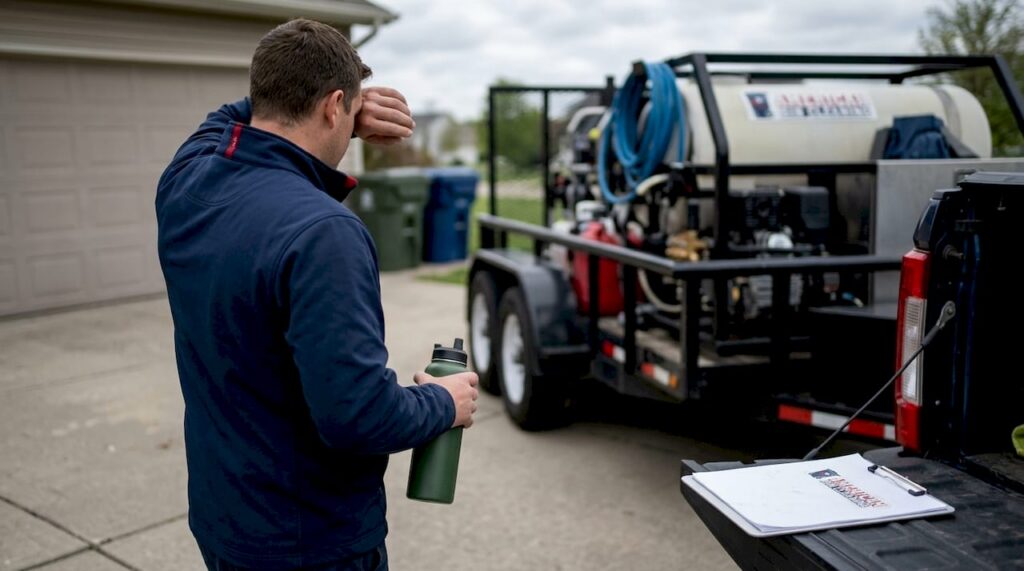
Bin sanitation is defined as the systematic removal of pathogens, biofilm, and organic waste from household trash bins to prevent disease transmission. What bin cleaning means for family safety goes beyond odor control. Dirty bins harbor E. coli, Salmonella, and Listeria at levels that threaten children, seniors, and anyone with a weakened immune system. Flies can hatch maggots in under 24 hours and carry over 100 disease-causing germs directly from your bin to your kitchen. Professional bin cleaning, the industry term for this service, uses high-temperature pressure washing and closed-loop wastewater systems to eliminate what a garden hose never can.
What pathogens and pests thrive in unclean trash bins?
Dirty household trash bins are breeding grounds for three of the most dangerous foodborne pathogens in the United States: E. coli, Salmonella, and Listeria. These bacteria thrive in the warm, moist, food-rich environment inside a standard residential bin. Left unchecked, they multiply rapidly between collection days.
The pest problem compounds the bacterial risk. Flies carry over 100 germs and can deposit maggot eggs in organic waste in less than 24 hours. Those same flies then land on your outdoor furniture, your children’s play equipment, and your kitchen counters. The bin becomes a distribution hub for contamination across your entire property.
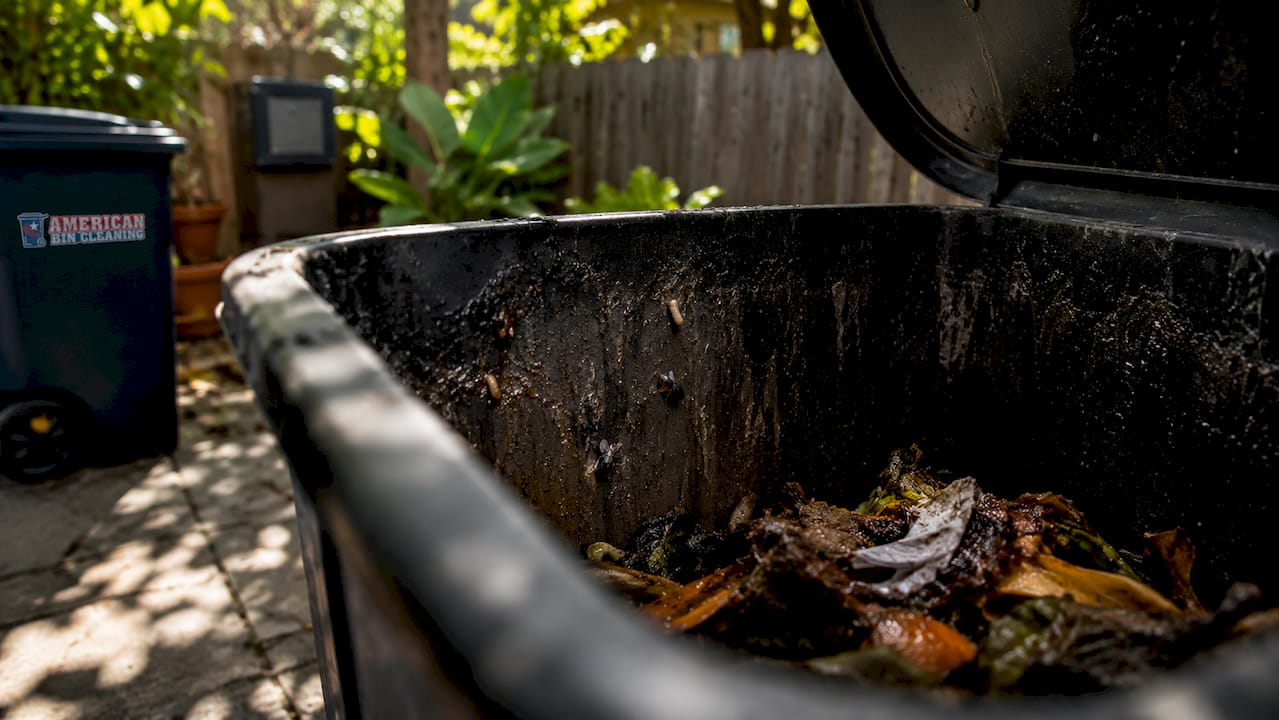
Environmental research confirms the spread goes beyond the bin itself. Soil samples near high-traffic waste bins contained between 4.6 and 10.5 unique pathogens per sample. That range shows how far contamination can travel into the areas where your family walks, plays, and gardens.
The key transmission routes families overlook include:
- Bin handles and lids: Touching the handle transfers pathogens directly to hands, then to food preparation surfaces.
- Wheels and base contact: Bin wheels roll across driveways and garage floors, depositing bacteria along the path.
- Airborne particles: Tipping a bin releases a brief cloud of bacteria-laden dust, especially in dry weather.
- Fly activity: A single fly landing on bin waste and then on food is enough to cause illness.
Children are at the highest risk because they touch surfaces without thinking and rarely wash hands immediately after contact. Seniors and immunocompromised family members face the same elevated exposure with fewer defenses.
Why professional bin cleaning outperforms DIY methods
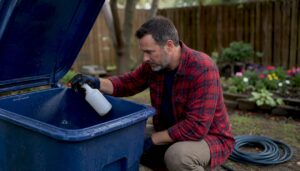
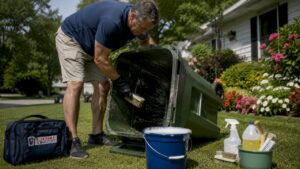
DIY bin cleaning with a garden hose and dish soap removes visible residue. It does not remove the bacterial biofilm that clings to the interior walls of a bin. Biofilm is a thin, sticky layer of bacteria that standard cold water and household cleaners cannot break down. That film rebuilds the pathogen population within days of a basic rinse.
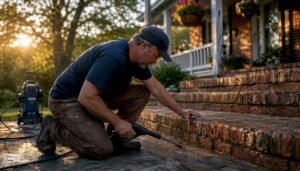
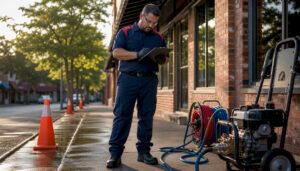
Professional bin cleaning systems operate at temperatures above 180°F using high-pressure water combined with multi-stage wastewater treatment. That heat kills pathogens that survive cold-water cleaning and physically strips biofilm from every interior surface. The difference in bacterial load after professional cleaning versus DIY cleaning is not marginal. It is the difference between reducing surface bacteria and eliminating it.
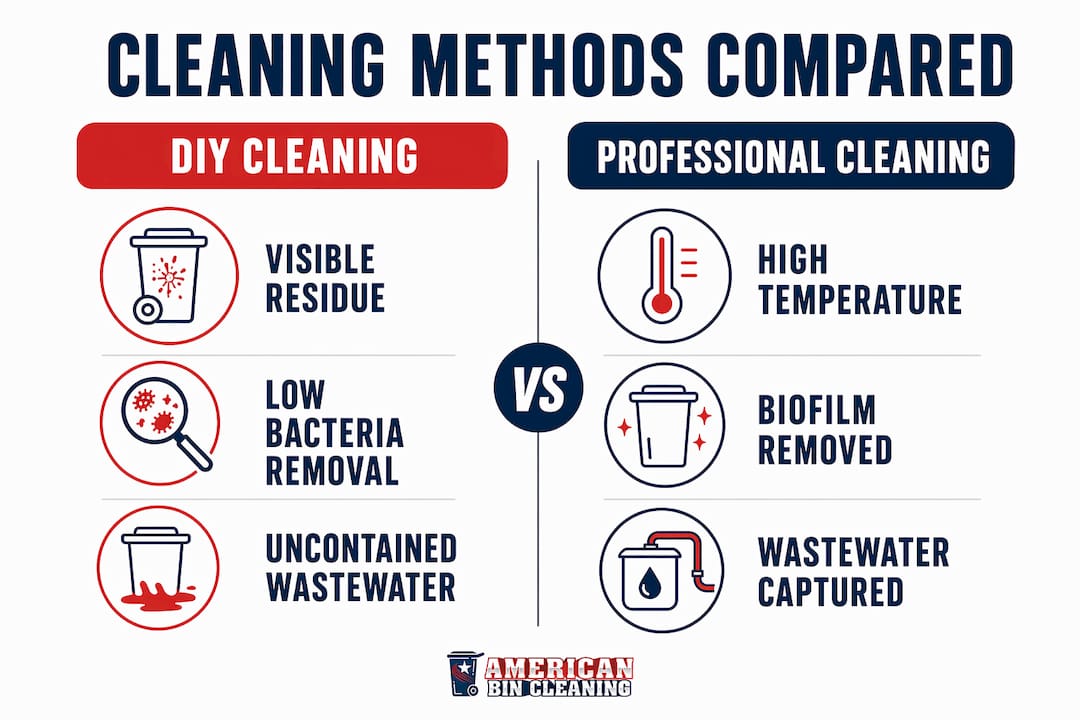
There is also an environmental problem with DIY cleaning. Wastewater from a bin rinse contains E. coli, Salmonella, and chemical residue from household cleaners. When that water runs across a driveway and into a storm drain, it flows directly into local waterways. Professional services use closed-loop water recycling systems that capture all wastewater on board, so nothing enters the environment.
| Cleaning method | Bacteria removal | Wastewater handling | Pest deterrence |
|---|---|---|---|
| Garden hose rinse | Surface only | Runs off into drains | Minimal |
| Household cleaner + scrub | Partial | Runs off into drains | Low |
| Professional hot-pressure service | Full biofilm elimination | Captured and recycled | High |
Industry experts recommend professional cleaning every 4–8 weeks, with more frequent service for households with young children or immunocompromised members. Monthly service is the standard for families with toddlers or anyone undergoing medical treatment.
Pro Tip: Schedule your bin cleaning to coincide with your regular trash pickup day. A freshly emptied bin is easier to clean and gives the service the maximum time before the next fill cycle.
How dirty bins affect indoor air quality and your home
Dirty bins contribute to indoor air quality problems by releasing odor molecules and airborne bacteria that travel from the bin into adjacent spaces. Households with asthma and allergies are particularly vulnerable to this effect. A bin stored in a garage or near an entry door creates a direct pathway for contaminated air to enter the home.
Cross-contamination via bin surfaces is a critical but often overlooked transmission route. Rims, lids, and handles accumulate the highest pathogen concentrations because they are touched most frequently. Every time a family member opens the bin without washing hands afterward, those pathogens travel inside the house.
Families can reduce exposure between professional cleanings with a few targeted habits:
- Bag all waste securely before placing it in the bin to reduce direct contact between food waste and bin surfaces.
- Avoid touching your face after handling the bin lid or handle.
- Rinse the bin interior with a diluted white vinegar solution after emptying, as a temporary odor and surface bacteria control measure.
- Keep the bin lid closed at all times to block fly access and reduce airborne particle release.
- Wash hands immediately after any bin contact, using soap and water for at least 20 seconds.
These steps lower exposure risk but do not replace professional sanitation. Treating your bin with hygiene standards similar to kitchen counters is the right mental model. You would not leave a kitchen surface with visible food residue for weeks. Your bin deserves the same standard.
Eco-friendly bin cleaning practices that protect your family and local environment
Eco-friendly bin cleaning is not a marketing phrase. It describes a specific set of practices that prevent hazardous wastewater from entering storm drains and local waterways. Biodegradable cleaning agents and water recycling systems protect both the family inside the home and the lake, soil, and groundwater outside it. For families near the lakes and forest preserves of Chicagoland, this connection is direct and measurable.
The four practices that define genuinely eco-friendly professional bin cleaning are:
- Biodegradable cleaning agents: Non-toxic formulas break down in the environment without releasing persistent chemicals into soil or water.
- Closed-loop water recycling: All wastewater is captured in an on-board tank and disposed of at a certified facility, not on your driveway or into a storm drain.
- EPA-compatible equipment: Certified pressure washing systems meet federal standards for wastewater containment and chemical use.
- No discharge into storm drains: Professional cleaning prevents harmful wastewater discharge, protecting local ecosystems while keeping pathogens out of the water supply.
The environmental benefit and the family health benefit are the same action. Containing contaminated wastewater protects the lake your children swim in and the soil your garden grows in. Choosing a service that captures its wastewater is not just a green preference. It is a direct investment in your family’s broader environment.
Pro Tip: When evaluating a bin cleaning service, ask specifically whether their truck captures all wastewater on board. If the answer is unclear, the water is likely running off into your driveway and into the storm drain.
Key Takeaways
Professional bin sanitation is the single most effective action families can take to eliminate pathogen exposure from household waste and protect both home hygiene and local water quality.
| Point | Details |
|---|---|
| Pathogens accumulate fast | E. coli, Salmonella, and Listeria build up in bins within days of collection. |
| Professional cleaning eliminates biofilm | Hot-pressure systems above 180°F remove what cold water and soap cannot. |
| Clean every 4–8 weeks | Households with children or vulnerable members benefit most from monthly service. |
| Bin surfaces spread germs indoors | Handles, lids, and wheels transfer pathogens to hands and household surfaces. |
| Eco-friendly service protects waterways | Closed-loop wastewater systems prevent contamination from reaching storm drains and lakes. |
What I’ve learned after years of watching families overlook their bins
Most families I talk to have never thought of their trash bin as a health hazard. They think about the kitchen, the bathroom, the cutting board. The bin sits outside and gets emptied every week, so it feels handled. That assumption is exactly where the risk hides.
The contamination routes that concern me most are not the obvious ones. It is not the smell or the visible grime. It is the bin handle that a child grabs on the way to the car, or the lid that someone touches before grabbing a sandwich. Those are the moments when E. coli moves from the bin to the kitchen without anyone noticing.
Scheduled recurring bin cleaning maintains consistently low pathogen levels far more effectively than sporadic deep cleans. A family that cleans their bin once in the spring and once in the fall is not meaningfully safer than one that never cleans it. The bacteria rebuild within weeks. The only approach that actually works is a regular schedule, the same way you would not clean your kitchen counters twice a year and call it done.
My honest recommendation is to treat bin cleaning as a utility, not a chore. Set a recurring service, forget about it, and let the professionals handle the sanitation. The families I see who do this stop having the seasonal mystery illnesses that they used to chalk up to “something going around.” The connection is not always obvious, but the pattern is consistent.
— Jim
Abcbins keeps your family protected with every service visit
Abcbins has served Chicagoland families since 1989 with professional trash bin cleaning that kills 99.99% of bacteria using eco-friendly, high-pressure hot water systems. Every visit captures all wastewater on board, so nothing runs off into your driveway or local waterways.
Families across the region trust Abcbins for bin cleaning in Barrington, service in McHenry, and cleaning in Lake Zurich. Service plans run monthly, bi-monthly, quarterly, or on-demand. You do not need to be home. Abcbins handles everything at the curb and leaves your bin sanitized, odor-free, and pest-resistant. Protecting your family starts with the bin at the end of your driveway.
FAQ
What is bin sanitation and why does it matter for families?
Bin sanitation is the professional removal of bacteria, biofilm, and organic waste from household trash bins using high-temperature pressure washing and disinfectants. Regular sanitation prevents E. coli, Salmonella, and Listeria from spreading to family members through contact with bin surfaces.
How often should a household trash bin be professionally cleaned?
Industry experts recommend professional bin cleaning every 4–8 weeks. Households with young children, seniors, or immunocompromised members benefit most from monthly service to keep pathogen levels consistently low.
Can a dirty bin affect indoor air quality?
Yes. Dirty bins release odor molecules and airborne bacteria that travel into adjacent spaces, including garages and entryways. Families with asthma or allergies are especially vulnerable to this effect.
Why does professional bin cleaning protect local lakes and waterways?
Professional services use closed-loop water recycling systems that capture all contaminated wastewater on board. DIY cleaning sends bacteria-laden water directly into storm drains, which flow into local lakes and soil.
Is DIY bin cleaning with a hose enough to remove bacteria?
No. Cold water and household cleaners remove visible residue but cannot break down bacterial biofilm on bin interior walls. Professional hot-pressure systems operating above 180°F are required to fully eliminate pathogens and prevent rapid regrowth.