House soft washing is a low-pressure exterior cleaning method that utilizes a cleaning solution to remove algae, mildew, and grime from delicate surfaces like vinyl, stucco, and painted wood. Unlike traditional pressure washing, which relies on high-force water (typically 1,300 to 2,800 PSI), soft washing operates at much lower pressures, around 150 to 300 PSI, allowing specialized chemistry to do the cleaning. This gentle approach prevents damage such as stripping paint or forcing water behind siding, and it kills algae and moss down to their roots for longer-lasting cleanliness. American Bin Cleaning offers residential pressure washing services, including soft washing, for homes across Chicagoland.
House soft washing is a low-pressure exterior cleaning method. A crew applies a cleaning solution to siding, trim and other surfaces, lets it work, then rinses gently, so the chemistry removes algae, mildew and grime instead of water force. It suits vinyl, stucco, painted wood and other surfaces that high pressure can scar or push water behind. This guide covers how the process works, what it can and can’t do, what to ask before you hire someone, and how it fits with the pressure washing we do for homeowners across Chicagoland.
What is Soft Washing and How Does it Differ from Pressure Washing?
- Soft washing is a process, not a machine: a cleaning solution does the work and the rinse stays at low pressure, commonly well under 300 PSI.
- It fits siding, stucco, brick, roofs and other delicate surfaces. Pressure washing fits hard surfaces such as concrete driveways and patios.
- The chemicals are corrosive and must never be mixed with ammonia or acids, so plants, pets and people need protecting during the job.
- Price depends on house size, stories, siding and how heavy the growth is, so get a written quote after someone has looked at your home.
- In the northern Illinois climate, shaded north-facing walls are where green growth shows up first.
Table of Contents
- What house soft washing actually is
- Soft washing vs. pressure washing
- Which parts of your home benefit most
- How a soft wash works, step by step
- What chemicals are used
- Safety: people, pets, plants and the house
- What soft washing costs, and how to judge a quote
- Our perspective
- Keep the rest of your property clean
- FAQ
- Sources
What house soft washing actually is
The trade often describes soft washing as a way of cleaning with chemicals while bypassing the pressure that could damage a surface. One industry write-up quotes the president of the Power Washers of North America making the point that soft washing is a process rather than a piece of equipment. Depending on the surface and the mix, an operator might use a pump-up sprayer, a dedicated chemical pump or a pressure washer set up to draw solution at low output.
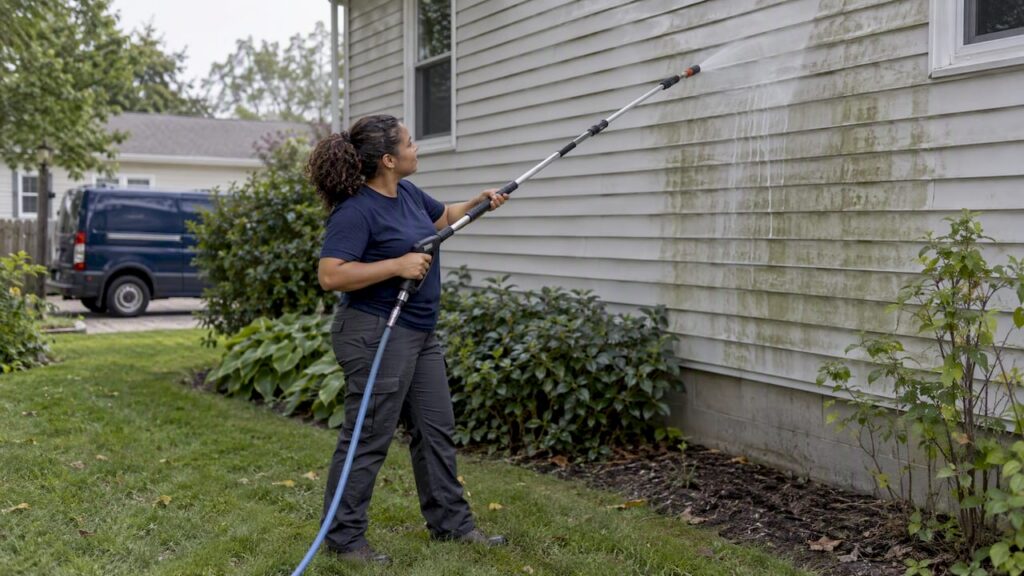
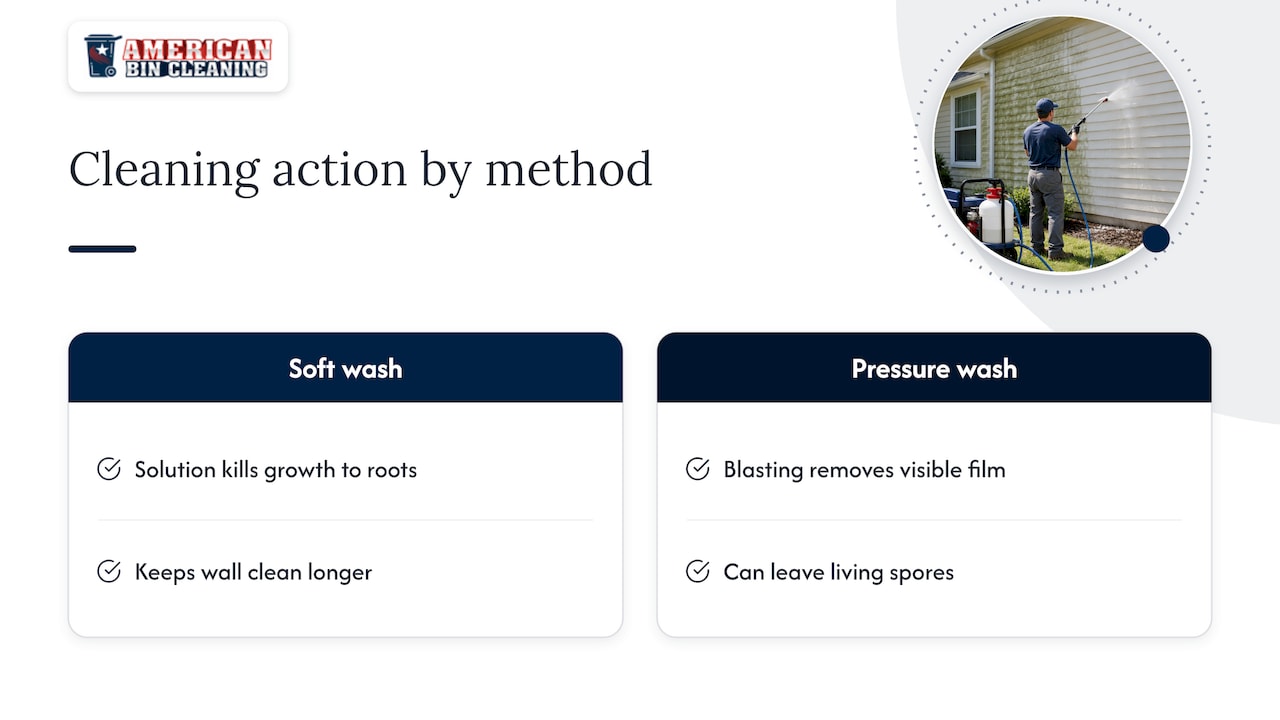
The cleaning solution is the working part. Low-pressure water mixed with the right chemicals kills algae, moss and lichens down to their roots, which is why a soft-washed wall stays clean longer than one that was only blasted with water. Blasting removes the visible film but can leave living spores in place.
If you searched “low pressure house wash” or “gentle house wash,” this is the same thing: a gentle house wash is a soft wash.
Soft washing vs. pressure washing
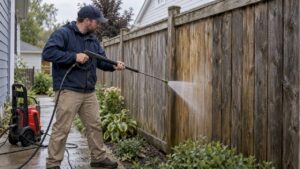
Pressure washing relies on force. One equipment maker puts typical pressure washing at 1,300 to 2,800 PSI, against roughly 150 to 300 PSI for soft washing, where chemistry does much of the cleaning. The same source notes that excessive pressure can strip paint, remove mortar or grout, damage asphalt roofing and force water behind siding.
That last point matters on a house. Water driven behind siding can soak sheathing and insulation, and the damage stays hidden until a stain or soft spot appears. Our own guide on pressure washing vinyl siding without voiding your warranty goes deeper on that risk, and soft washing vs. pressure washing for your home compares the two side by side.
| Surface | Usual method | Why |
|---|---|---|
| Vinyl siding | Soft wash | Force can drive water behind panels |
| Stucco | Soft wash | Surface is porous and easily scarred |
| Cedar and painted wood | Soft wash | Pressure raises grain and strips paint |
| Asphalt shingle roofs | Soft wash | Pressure loosens protective granules |
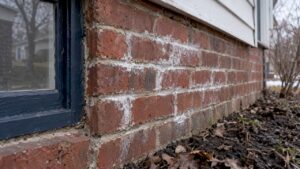
| Brick | Soft wash or low pressure | Mortar joints are the weak point |
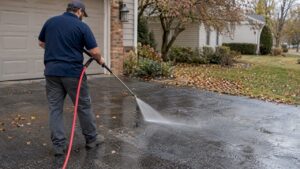
| Concrete driveways, sidewalks, patios | Pressure wash | Hard surfaces tolerate force |
| Treated wood decks | Pressure wash, carefully | Needs control of pressure and distance |
The split between the two methods follows the lists from one pump manufacturer, which places vinyl, cedar-shake and wood siding, roofs, brick, tile, stucco and windows under soft washing, and concrete, sidewalks, patios and asphalt driveways under pressure washing. For a more detailed breakdown of terms, see power washing vs. pressure washing.
Which parts of your home benefit most
Siding
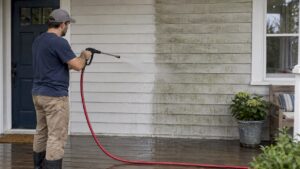
Siding is the main reason people search for soft wash for siding. Vinyl, fiber cement, painted wood and cedar all collect algae and mildew, particularly on shaded sides, under eaves and behind shrubs. Low pressure keeps water from getting under the laps and keeps paint intact.
Roofs
The Asphalt Roofing Manufacturers Association says its recommended method for algae on asphalt shingles is a mixture of laundry-strength liquid chlorine bleach and water in equal parts, sprayed on, left for 15 to 20 minutes, then rinsed thoroughly with low-pressure water. It also says to never use a pressure washer on asphalt shingles, because it causes granule loss and probably premature failure. The same body warns that treated shingles get slippery, recommends professional handling and says mixing directions can vary between shingle manufacturers. Roof work is not a ladder-and-bucket weekend job.
Gutters, soffits, trim and outdoor surfaces
Gutter fronts, soffits, fascia, window frames, screens and outdoor furniture all fall under the same gentle approach. If you are also thinking about other home exterior surfaces that can be cleaned with soft washing, this overview of exterior cleaning options shows how broad the category is.
How a soft wash works, step by step
Methods differ by crew, but a careful job usually runs in this order:
- Walk-around. The crew checks siding type, failed caulk, loose trim, open windows, light fixtures and outlets, and notes how heavy the growth is.
- Protect. Plants and shrubs are pre-wet and sometimes covered, and doors and windows are checked closed. Pets and children stay indoors.
- Apply. The solution goes on from the bottom up or top down depending on the product, using a low-pressure sprayer.
- Dwell. The mix sits on the surface. Example sequences from the trade give about 10 minutes for a wall, and the roof guidance above gives 15 to 20 minutes for shingles. The crew keeps the surface from drying out.
- Rinse. A low-pressure rinse takes everything off, working from the top down so you don’t streak clean siding.
- Flush and inspect. Equipment is flushed with fresh water and the crew checks the result and any spots that need a second pass.
On a typical single-family home this takes a few hours, with larger or heavily stained houses taking longer. Frequency depends on shade, nearby trees and moisture. Our guide to a pressure washing schedule by surface lays out the 12 to 18 month rhythm we use as a starting point.
What chemicals are used
Soft wash mixes commonly rely on sodium hypochlorite, sodium hydroxide, algaecides or surfactants in water. Sodium hypochlorite, the active ingredient in bleach, is the usual workhorse for algae and mildew. Surfactants help the solution cling to vertical surfaces so it doesn’t run off before it works.
There is no single best chemical for every house. The right one depends on the surface and what is growing on it. Roofs follow the manufacturer-association recipe above. Painted wood, stucco and vinyl each call for a different strength. A contractor who gives the same answer for every surface is a warning sign.
Safety: people, pets, plants and the house
The cautions below come from product labels and safety data, and they apply to anyone, professional or not.
- Corrosive. An EPA-registered sodium hypochlorite label describes the chemical as corrosive, requiring eye protection and rubber gloves. A consumer outdoor bleach safety data sheet says it can cause severe skin burns and eye damage.
- Never mix. The same EPA label says not to combine it with ammonia, acids or other chemicals, because chlorine gas can be released. The safety data sheet lists rust removers and household cleaners among the products that react to give off hazardous gas. Don’t improvise a stronger mix with what is under the sink.
- Water and wildlife. The label also says the chemical is toxic to fish and aquatic organisms, so runoff into storm drains, ponds and lake edges is a real concern. This matters in lake communities such as Lake Zurich, Round Lake and Lake Geneva.
- Pets and kids. Keep them indoors during application and away from treated areas until surfaces have dried and been rinsed.
- If you have a skin, eye or breathing reaction, call Poison Control at 1-800-222-1222 or your doctor.
If you use a contractor, ask how they handle runoff. Capturing wastewater instead of letting it flow to the street is the clearest answer.
What soft washing costs, and how to judge a quote
No single national price applies, and we won’t quote one we can’t stand behind. Local quotes move with these factors:
- House size and stories. Square footage of wall and the need for lifts or ladders.
- Siding material. Delicate or textured surfaces take more care.
- Growth level. Light film cleans in one pass, and heavy algae may need two.
- Extras. Roof, gutters, windows, deck or driveway added on the same visit.
- Access. Dense landscaping, steep grades and nearby water add time.
A good quote names the surfaces, the method for each, what is included and how plants and runoff are handled. Our home pressure washing service checklist walks through what to confirm, and what home pressure washing includes shows what a complete job covers. If you are repainting, read when pressure washing before painting helps.
Be careful with very low bids. A crew that skips protection, rushes dwell time or turns up the pressure to save a step can cost you more in repairs than you saved.
Our perspective
We have cleaned property in this area since 1989, and the lesson that keeps repeating is that the gentle approach and the careful approach are the same thing. Most damage we see from exterior cleaning comes from using the wrong force on the wrong surface, or from not thinking about where the water goes afterward.
That second part is why we built our business around capturing water. All wastewater is collected in our on-board recycling system, so nothing is dumped and nothing runs into a storm drain or onto a neighbor’s lawn. Our 17-stage filtration system recycles it. For homeowners near lakes and wetlands, that is not a nice extra. It is the main reason to pick one crew over another.
Our advice: match the method to the surface, keep chemicals away from plants and water, and don’t let anyone point a high-pressure wand at your siding. If your project is a driveway or patio, pressure is the right tool. If it is the house itself, ask questions about the method first. We are glad to talk through it, whether or not you hire us.
— Bill
Keep the rest of your property clean
If your house is getting attention, the bins at the curb probably need it too. We clean residential and commercial trash bins with a high-pressure, eco-friendly process that kills 99.99% of bacteria and removes odors, and you don’t need to be home. Plans are $35 per 4 weeks for monthly service, $45 per quarter for quarterly service, and $75 for a one-off on-demand cleaning.
See our bin cleaning plans or learn more about residential pressure washing for driveways, decks and more. If you want to know which surfaces on your home fit which method, our pressure washing guide for homeowners is a good place to start.
FAQ
Is soft washing safe for vinyl siding?
Yes, when done correctly. Low pressure and a properly diluted solution clean vinyl without forcing water behind the panels, which is the main risk of high-pressure washing. Check your siding manufacturer’s care guidance, since it can affect warranty coverage.
How often should I soft wash my house?
Most homes need it every one to two years, depending on shade, trees and moisture. North-facing walls and areas near lakes or woods often go green sooner. Spot-check those sides each spring to decide.
Will soft washing kill my plants?
It can if the solution isn’t managed. Good crews pre-wet vegetation, dilute runoff with fresh water and keep the mix off foliage. Tell the crew about any delicate or newly planted beds before the job.
Can I soft wash my house myself?
You can, but the chemicals are corrosive and must never be mixed with ammonia or acids. Ladder work and slippery surfaces add real fall risk. Hiring a professional for a two-story house or a roof is safer.
Sources
- Pressure Washing and Soft Washing: Valuable Tools and a Place for Each, Cleaner Times
- What is Soft Washing?, PowerWash.com
- Soft Wash vs. Pressure Wash, Pumptec
- Algae & Moss Prevention and Cleaning for Asphalt Roofing Systems, ARMA
- Algae Discoloration of Roofs, ARMA
- Sodium hypochlorite product label, U.S. EPA
- Outdoor Bleach Safety Data Sheet, Clorox