
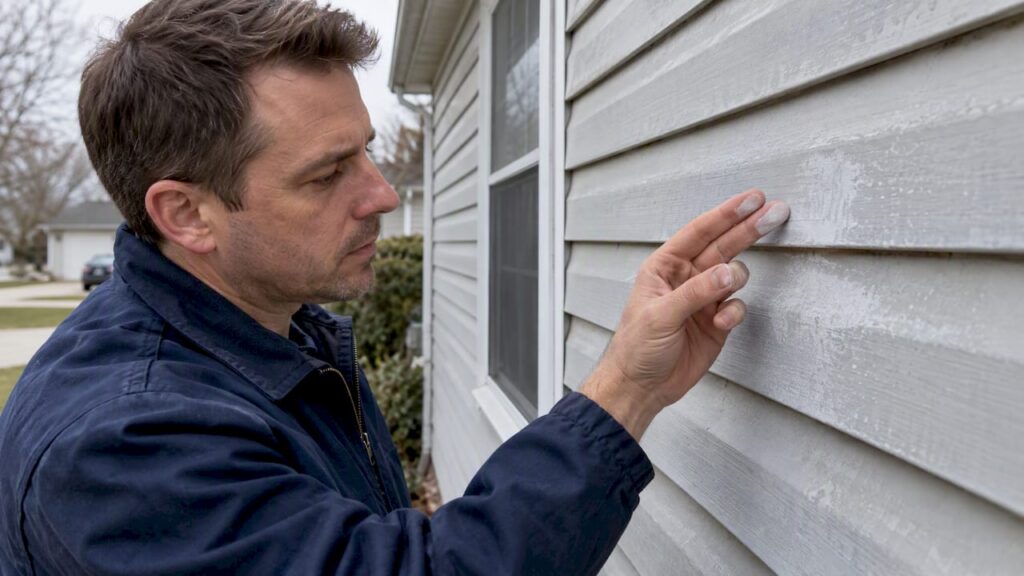
Vinyl siding oxidation is the chalky, faded film that forms on the surface as sun, heat and moisture wear down the finish. You can remove the chalk with the right cleaning method, and your siding will look cleaner and brighter. You cannot bring back the original factory gloss or color depth, because that layer of the surface is gone. Knowing the difference before you start saves you money, disappointment and, if you pick the wrong method, damage to the siding.
This guide explains how to tell oxidation from dirt, what causes it, what safe removal looks like, when to call a professional, and how to slow it down. We clean homes across the Chicagoland area and into southern Wisconsin, so the examples lean toward what Midwest weather does to a house.
TL;DR
- Oxidation is a chalky, powdery film caused mainly by UV exposure. If white powder rubs off on your hand, that’s it.
- Cleaning removes the chalk but cannot restore the original gloss or pigment. Expect an improvement, not a brand-new finish.
- High pressure and harsh chemicals can leave siding splotchy. Gentle, low-pressure washing with a soft brush is the safe approach.
- Painting or coating oxidized vinyl can void the manufacturer’s warranty, so check before you do anything permanent.
- Regular cleaning, about once a year, keeps dirt and organic growth from making the surface look worse.
Table of Contents
- What vinyl siding oxidation actually is
- Is it oxidation or just dirt? The hand test
- Can you reverse oxidation?
- Watch your warranty before you coat anything
- How to remove oxidation from vinyl siding safely
- Why oxidation sometimes appears right after a cleaning
- When to call a professional
- Our perspective: gentle, captured, and honest
- How to slow oxidation down
- Siding cleaning with American Bin Cleaning
- FAQ
- Sources
What vinyl siding oxidation actually is
Oxidation is a slow chemical breakdown of the siding’s outer surface. Ultraviolet light is the main driver, with heat and moisture adding to it. According to the Vinyl Siding Institute’s installation manual, this weathering is a natural consequence of being outdoors, not a manufacturing defect. The pigments in the surface layer break down, and what is left is a fine white powder, which is what people call chalking.
That is why the problem shows up first and worst on the walls that get the most sun. In the Chicago area that is usually the south and west sides of the house. The north side, shaded by trees or a neighbor’s home, can look years younger than the side facing your driveway.
Some general points worth knowing:
- Dark colors show it most. Chalk is white, so it stands out against navy, forest green or dark gray far more than on white or cream.
- Age matters, but not as much as exposure. Siding in full sun can chalk noticeably within a few years, while shaded siding can look fine for a decade.
- It is cosmetic at first. The chalk itself does not mean the siding is failing. It does mean the surface has aged.
Is it oxidation or just dirt? The hand test
Many homeowners hire a cleaner or buy a product for “dirty” siding that is actually oxidized. A simple test tells you which one you have. Rub your palm across a sunny section of siding.
- White, powdery residue on your hand: that is oxidation.
- Gray or dark brown, gritty or greasy smudges: that is dirt and grime.
- Green, black or dark speckled patches, mostly in shade: that is likely mildew or algae, a separate issue that often sits alongside oxidation.
The VSI manual describes this same hand test for telling chalking from soil. Many houses have a mix of all three, which is why one wash can leave you with uneven results: dirt comes off easily, mildew needs the right cleaner, and oxidation needs gentle, patient work.
Can you reverse oxidation?
Honest answer: not fully. Cleaning takes the chalky layer off. It does not put back the pigment and gloss that weathering took away. The siding underneath may look duller or slightly different in tone than it did the day it was installed.
There is a second catch. When the chalk lifts, areas that aged differently can show up as patches. A wall that was half shaded and half sunny might look uneven after cleaning, because the two halves aged at different rates. That is not a bad cleaning job. It is the siding showing its real condition.
Set expectations this way:
| Condition | Realistic result after proper cleaning |
|---|---|
| Light chalking, siding under about 10 years old | Noticeably brighter, often close to its earlier look |
| Moderate chalking on sun-facing walls | Clear improvement, some tone difference between walls |
| Heavy, long-term oxidation | Chalk removed, but a worn, faded base color remains |
If the siding has faded past the point you can live with, the options are replacement or repainting. Be careful with painting, which brings us to the warranty.
Watch your warranty before you coat anything
Manufacturer warranties generally exclude weathering. A typical vinyl siding warranty defines weathering as changes caused by sunlight, rain, air pollution and temperature swings, so fading and chalking are not treated as defects. Applying paint or other coatings to vinyl can also void the original warranty. Read the document for your specific product before you paint, and keep it with your home records.
The same applies to aggressive cleaning. If a method damages the siding, that damage is on you, not the manufacturer. Our article on how not to void your warranty when pressure washing vinyl siding covers this in more detail.
How to remove oxidation from vinyl siding safely
The goal is to lift chalk without scouring the remaining finish. That rules out most of the shortcuts people try first.
What to avoid
- High pressure. A narrow, powerful stream can strip what is left of the factory finish and leave streaks or splotches. It can also force water behind the siding. Per the VSI manual, gentle washing is the right method for vinyl.
- Stiff brushes and abrasive pads. They scratch the plastic, and scratches catch dirt.
- Ammonia-based cleaners. These can dull or discolor the surface.
- Mixing chemicals. Never mix bleach with ammonia or other household cleaners. The combination releases hazardous gas.
A safe DIY approach for light chalking
For a small area or a single wall, this is the method manufacturers’ guidance points to. The warranty guide referenced above suggests a solution of one-third cup of laundry detergent and two-thirds cup of trisodium phosphate (TSP) per gallon of water for stubborn grime, and a bleach solution only where mildew is present. Follow the label directions and wear eye and skin protection.
- Do the hand test and pick a hidden spot, such as behind a shrub or near the foundation, to try your method first.
- Wet nearby plants and cover delicate ones. Keep runoff off the lawn where you can.
- Rinse the wall with a garden hose from the top down so cleaner does not streak dry siding below.
- Apply the solution to a section about 10 feet wide, working from the bottom up so streaks don’t form on dirty siding.
- Scrub gently with a soft-bristle, long-handled brush, following the lines of the panels.
- Rinse thoroughly from the top down. Do not let the cleaner dry on the surface.
- Let it dry and look again. If chalk is still coming off on your hand, repeat on that section once, not five times.
That is a lot of ladder work, careful rinsing and chemical handling for a full two-story house. It is also easy to get wrong on a hot, sunny day, when cleaner dries quickly and leaves marks. Which brings up the question of when to hire someone.
Why oxidation sometimes appears right after a cleaning
A common complaint: the siding looked fine, someone washed it, and now it looks chalky or streaked. Two things can be happening.
First, the cleaning exposed oxidation that was hiding under a film of dirt. The chalk was always there, and the dirt was masking it. Second, a harsh cleaner or too much pressure may have stripped the surface and created uneven chalking. Strong bleach-based mixes, for instance, can leave a flat, chalky look if they are left to dry on the siding.
If this happens to you, don’t keep scrubbing. Rinse thoroughly, let the siding dry, and then reassess. A gentle follow-up wash with a soft brush often evens things out. Persistent flat patches may need a professional assessment.
When to call a professional
Hire a pro when:
- The house is two stories or more and you’d be working off a tall ladder.
- Oxidation is heavy on multiple walls and you want even results.
- You have a mix of oxidation, mildew and mineral or rust staining.
- Your siding is under warranty and you want a documented, careful process.
- You’ve already tried a cleaner and the result looks uneven.
What to ask any contractor before they touch your siding:
- What pressure and technique will you use on vinyl? A good answer is low pressure with appropriate cleaner, not “as strong as it goes.”
- What do you use to treat mildew, and how do you protect plants?
- What happens to the wash water? Detergent-laden water should not run down the driveway into the storm drain.
- Will you be honest about what cleaning can’t fix? A contractor promising “like new” on heavily oxidized siding is overselling.
The wastewater question matters more than most homeowners expect. Our guide to pressure washing wastewater recovery explains why capturing runoff matters, and our piece on eco-friendly pressure washing containment walks through what good containment looks like.
On cost, our siding cleaning cost guide breaks down what U.S. homeowners typically spend and what drives the price up or down: house size, height, how heavy the buildup is, and access.
Our perspective: gentle, captured, and honest
We have been cleaning around Chicagoland since 1989, first as a family business focused on trash bins and later across a wider range of exterior cleaning, including residential pressure washing. Over those years the biggest lesson about siding is that the cleaning isn’t the hard part. Managing expectations is.
Homeowners call us with siding that looks “dirty,” and half the time they’re looking at chalk. We tell them plainly: the white film will come off, the faded color underneath will not come back, and anyone who says otherwise is selling something. People are almost always happier with an honest answer up front than a miracle promised and missed.

The second lesson is about the water. Everything that comes off a house goes somewhere, and with detergent in it, that place should not be your storm drain, your neighbor’s yard or a local creek. Our trucks capture the wastewater in an on-board system with 17 stages of filtration and recycle it, so nothing is dumped or runs off. We built that into how we work because we live and raise our families in the same communities we serve, from Barrington to Lake Geneva.
My advice if you take only one thing from this page: wash the siding on a regular schedule, don’t chase the chalk with aggressive tools, and read your warranty before you paint. A house that is cleaned gently every year ages better than one that gets blasted every five.
— Bill
How to slow oxidation down
You can’t stop UV, but you can avoid speeding things along.
- Wash annually. Dirt, pollen and organic growth sit on the surface and, as industry guidance notes, can speed up the look of weathering. Our pressure washing schedule by surface suggests how often different parts of your home need attention.
- Trim back vegetation so air can move across the walls and shade doesn’t hold moisture against the siding. Keep in mind that a little shade also protects from sun.
- Fix gutters and downspouts. Overflowing water stains and streaks siding and can hide real problems. If you’re unsure whether a streaky or damaged area is weathering or storm damage, this explainer on hail damage to siding and what to check before filing a claim helps you tell the difference.
- Inspect after storms. Chalking is gradual. Cracks, dents and holes are sudden. Treat them differently.
- Keep records. Photos of your siding each year give you a baseline if you ever need to discuss condition with an installer or insurer.
For the bigger picture on why regular exterior cleaning pays off, see our overview of the benefits of professional pressure washing your home.
Siding cleaning with American Bin Cleaning
If you’d rather not spend a weekend on a ladder with a bucket of TSP, we can help. Our residential pressure washing services cover homes, driveways and decks across the northern Illinois and southern Wisconsin communities we serve, and we handle the work while you’re away. All wastewater goes into our on-board recycling system.
While we’re at the house, many customers also add curbside trash bin cleaning. Our plans are published on our home page: Monthly is $35 per 4 weeks, Quarterly is $45 per quarter, and On-Demand is $75 one-off. Siding and pressure washing jobs are quoted separately.
FAQ
What causes vinyl siding to oxidize?
Mostly sunlight. Ultraviolet radiation breaks down the surface of the vinyl over time, and heat and moisture add to the effect. That is why sun-facing walls chalk first and why dark colors show it most.
Can you clean off oxidation?
Yes, the chalky film can be washed off with gentle cleaning and a soft brush. What you can’t do is restore the original pigment and gloss. Expect a cleaner, brighter wall rather than a factory-new one.
What is the best vinyl siding cleaner for oxidation?
There isn’t one universal best product. Manufacturer-style guidance uses a mix of laundry detergent and TSP in water for stubborn grime, and bleach only for mildew. Avoid ammonia-based cleaners, never mix chemicals, and test a hidden spot first.
Can I pressure wash oxidized vinyl siding?
Only with low pressure and the right technique. High pressure can strip the remaining finish, leave splotches and push water behind the panels. If you’re unsure, a professional who works at gentle settings is the safer choice.
Should I paint oxidized siding instead?
Painting can hide the fade, but it can also void your manufacturer’s warranty. Check the warranty for your product first, and consider that painted vinyl needs ongoing upkeep that bare vinyl doesn’t.


