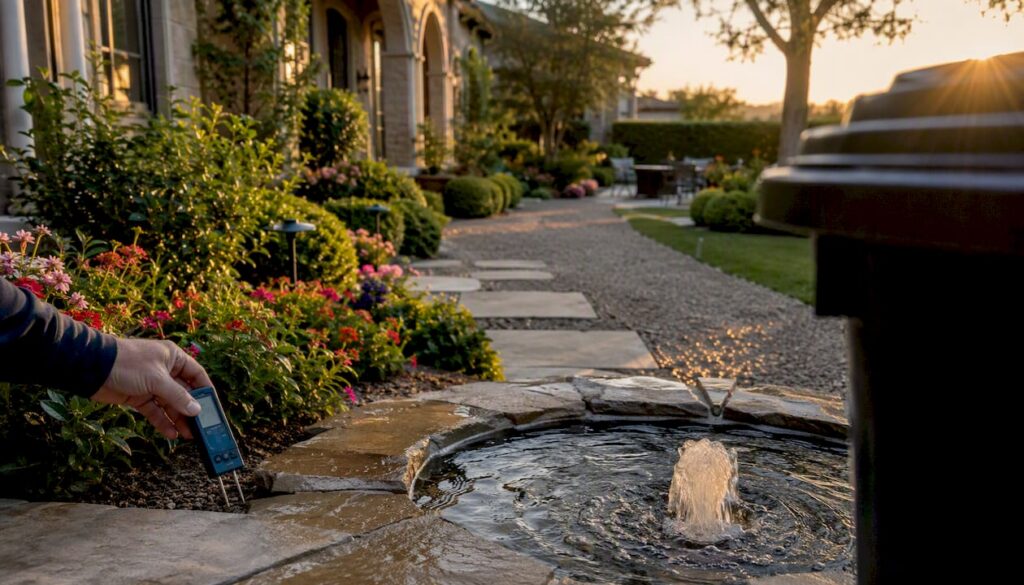
The most common pests in luxury home properties are rodents, termites, carpenter ants, cockroaches, bed bugs, mosquitoes, wasps and hornets, spiders, raccoons and squirrels, and storage pests like carpet beetles and clothes moths. Protecting a high-value property comes down to three moves: professional sanitation (especially trash bin cleaning), moisture control in specialty rooms, and scheduled seasonal inspections with documented findings.
Assign these three tasks this month:
- Schedule professional bin cleaning regularly during spring and summer, and at least quarterly in fall and winter.
- Inspect and seal gaps around rooflines, foundations, utility penetrations, and crawlspace vents.
- Book a licensed pest professional for a full property walkthrough, including outbuildings, wine cellars, and pool houses.
Table of Contents
- Why high-end properties need a prevention-first pest strategy
- What pests are most common in U.S. luxury homes?
- A practical prevention checklist for luxury properties
- When should you call a licensed pest professional?
- Annual maintenance calendar and cost guidance
- Key Takeaways
- The case for leading with sanitation
- Professional bin cleaning as part of your estate’s pest defense
- Useful sources and further reading
Why high-end properties need a prevention-first pest strategy
Luxury homes are more vulnerable to pest pressure in specific ways that a standard treatment plan does not address. More square footage means more entry points. Custom architectural features, rooftop terraces, and attached garages create microclimates that standard construction rarely produces. Wine cellars, indoor pools, and spa bathrooms generate the humidity that moisture-loving pests need to establish themselves. Premium finishes, antique textiles, and art collections give storage pests like carpet beetles a high-value target.
Prevention-first pest defense is now standard practice for well-maintained estates, coupling pest checks with seasonal landscaping and HVAC upkeep rather than waiting for an active infestation. That shift matters because reactive treatments often require intrusive chemical applications that can damage finishes, disrupt guests, or leave odors in sensitive rooms.
The financial logic is straightforward. Termite damage alone averages several thousand dollars per incident according to industry estimates, and that figure does not account for cosmetic restoration of hardwood floors, custom millwork, or landscaping. A documented, contract-based prevention program also strengthens your insurance position.
Pro Tip: Add a pest-check line item to every landscaping and HVAC service visit. Ask crews to flag standing water, soil contact with structural wood, and any new gaps near rooflines or utility entries. These are the earliest warning signs, and your existing service staff can catch them at no extra cost.
What pests are most common in U.S. luxury homes?
Pest threats vary by season, climate, and property type. Here is a short catalog of the pests that show up most often in high-end U.S. properties, with the details that matter most for each.
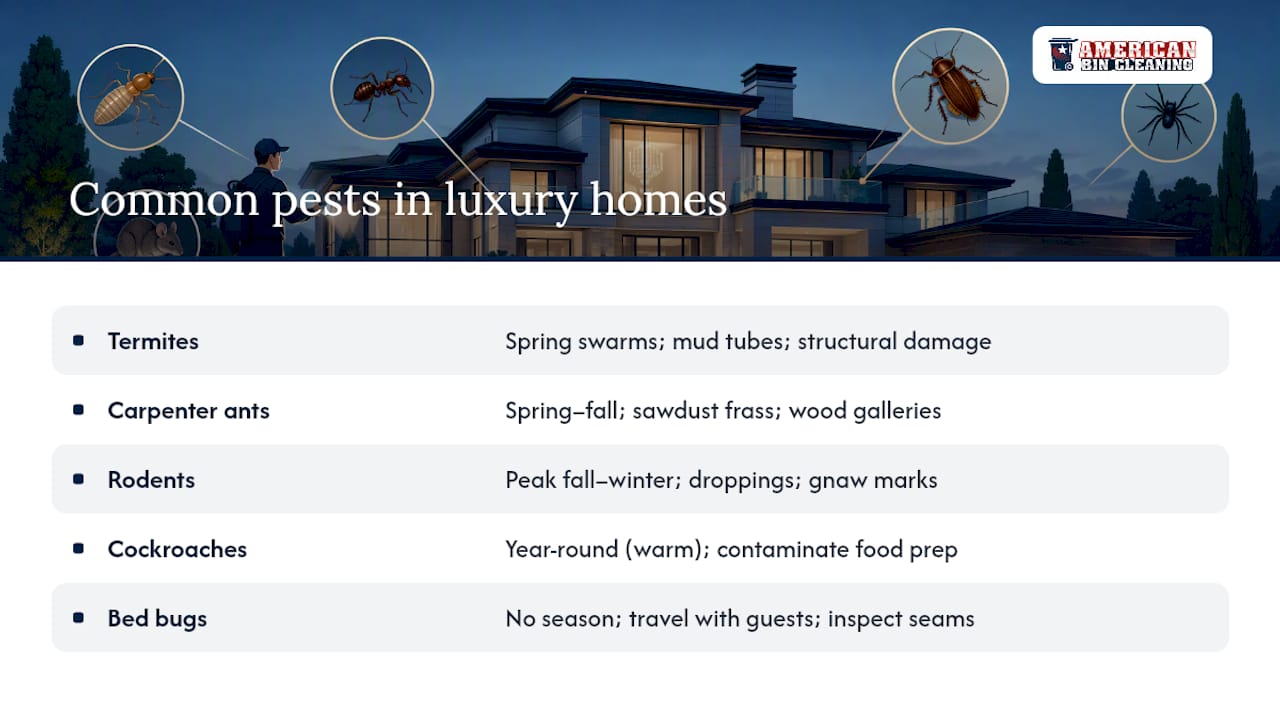
Termites. Swarmers appear in spring and early summer. Look for discarded wings near windowsills, mud tubes along foundation walls, and hollow-sounding wood. Dense mulch and plantings against your foundation create sheltered pathways directly to structural wood. The structural and cosmetic repair costs make termites the highest-priority pest for any luxury property owner.
Carpenter ants. Active spring through fall, they excavate galleries in moist or damaged wood. Sawdust-like frass near baseboards or window frames is the clearest sign. Unlike termites, they do not eat wood, but the structural damage accumulates quickly in custom millwork and rooflines.
Rodents (rats and mice). Fall and winter are peak entry seasons as temperatures drop. Gnaw marks, droppings near pantry areas or wine storage, and grease trails along baseboards are reliable indicators. Rodents are drawn to unsanitized trash bins and compost areas, making exterior sanitation a direct line of defense.
Cockroaches. Year-round in warmer climates, more seasonal in the Midwest and Northeast. They trigger allergens, contaminate food prep areas, and are notoriously difficult to eliminate once established in wall voids. Cockroaches are strongly attracted to organic residue in trash bins and recycling areas.
Bed bugs. No seasonal pattern. They travel with guests, luggage, and secondhand furnishings. In a property with frequent guests or short-term rentals, inspect mattress seams and upholstered headboards after every stay.
Mosquitoes. Peak from late spring through early fall. Standing water in decorative fountains, clogged gutters, and pool covers is the breeding source. In humid Southern climates, they are a near-constant concern for outdoor living spaces.
Wasps and hornets. Build nests in eaves, pergolas, and dense shrubs from late spring onward. A luxury outdoor kitchen or entertaining terrace is prime nesting territory.
Spiders. Most species are harmless, but brown recluse and black widow populations in certain U.S. regions pose a genuine health risk. Clutter in garages and storage areas is the main harborage.
Raccoons and squirrels. Active year-round but most intrusive in fall when they seek winter shelter. They enter through damaged rooflines, attic vents, and chimney caps. Squirrels can chew through electrical wiring; raccoons damage insulation and create sanitation hazards.
Carpet beetles and clothes moths. These storage pests are the quiet threat in luxury homes. They target wool rugs, cashmere, silk, fur, and natural-fiber upholstery. Signs include irregular holes in textiles and shed larval skins. They are active year-round in climate-controlled interiors.
Silverfish. Prefer humid areas like bathrooms, basements, and book storage. They damage paper, wallpaper, and natural-fiber textiles. Rarely a structural threat, but a real concern for art rooms and libraries.
A practical prevention checklist for luxury properties
The prescription is simple: seal, sanitize, control moisture, and monitor on a schedule. The challenge is executing it across a large property with multiple specialized rooms and outbuildings.
- Seal all gaps larger than a quarter-inch around rooflines, foundation sills, utility penetrations, and crawlspace vents using copper mesh or caulk rated for exterior use.
- Keep mulch at least 12 inches from the foundation and trim tree branches that touch or overhang the roofline.
- Install zoned dehumidification in wine cellars, spa bathrooms, and pool houses. Target humidity below 50% to eliminate moisture-loving pest harborage. Pairing this with seasonal HVAC maintenance keeps both systems working together.
- Schedule professional trash bin cleaning monthly during peak pest season (April through September).
- Store firewood at least 20 feet from the structure and elevated off the ground.
- Use airtight containers for pantry goods and natural-fiber textile storage.
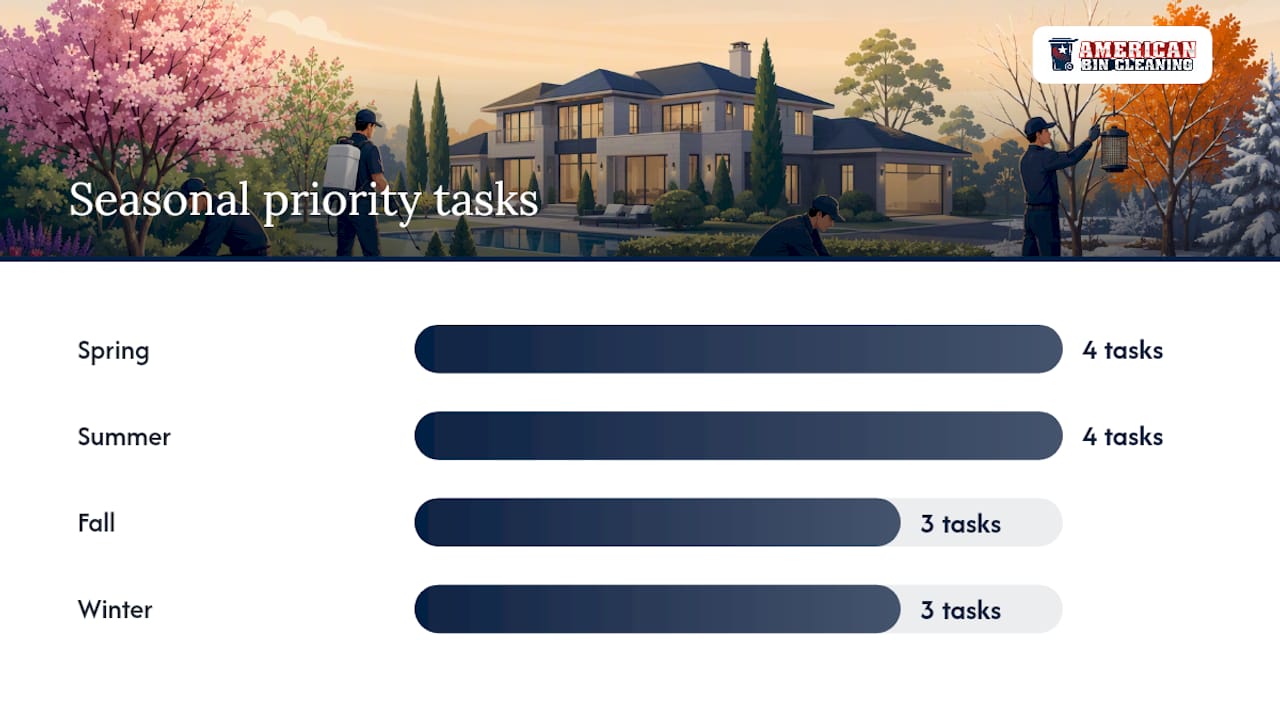
Seasonal schedule:
| Season | Priority Tasks |
|---|---|
| Spring | Full property inspection; termite swarm check; gutter cleaning; bin sanitation restart |
| Summer | Monthly bin cleaning; mosquito source elimination; wasp nest monitoring; moisture checks |
| Fall | Seal entry points before rodent season; inspect attic and crawlspace; quarterly bin cleaning |
| Winter | Rodent monitoring in outbuildings; inspect stored textiles; review inspection contract |
Pro Tip: Keep mulch depth under three inches and switch to rubber mulch or gravel within 12 inches of the foundation. Thick organic mulch retains moisture and gives termites and ants a concealed runway straight to your structural wood.
When should you call a licensed pest professional?
Call a licensed pest control operator when monitoring reveals active infestation signs, structural risk indicators (mud tubes, frass, hollow wood), or recurring entry despite prevention measures. Do not wait for visible pest activity indoors.
When evaluating providers, require the following:
- State licensure and general liability insurance. Verify both before signing anything.
- An IPM-based approach. The proposal should prioritize monitoring, exclusion, and targeted treatments over blanket chemical application.
- Written scope with photo documentation. Every inspection finding should be photographed and logged. This protects your insurance position and creates a baseline for future visits.
- Defined inspection cadence. For large estates, formalized inspection contracts with seasonal monitoring visits are the standard recommendation.
- Guarantees and follow-up terms. Understand exactly what triggers a callback and at what cost.
Ask bidders: “What is your protocol for wine cellars and art storage rooms?” and “How do you document findings between visits?” Providers who cannot answer specifically are not equipped for high-value properties.
Annual maintenance calendar and cost guidance
Prevention spending is almost always lower than repair costs for damage-prone pests. Termite structural repairs averaging $7,000–$8,000 do not include custom finish restoration, which can multiply that figure on a luxury property. A documented annual prevention program typically costs a fraction of a single structural repair.
| Month | Task |
|---|---|
| March | Pre-season inspection; seal any winter damage; restart bin cleaning |
| April–September | Monthly bin cleaning; mosquito source checks; wasp monitoring |
| June | Mid-season full inspection; moisture check in wine cellar and pool house |
| September | Pre-fall rodent exclusion; attic and crawlspace inspection |
| October | Quarterly bin cleaning; textile storage check; inspect outbuildings |
| December | Review inspection contract; update photo documentation baseline |
Prioritize inspections and sanitation over reactive emergency treatments. Emergency pest calls cost significantly more than scheduled visits and often require more aggressive treatment methods that are harder on finishes and indoor air quality.
Key Takeaways
Luxury homes face higher pest risk than standard properties, and a prevention-first program combining professional sanitation, moisture control, and formal inspection contracts is the most cost-effective protection strategy available.
| Point | Details |
|---|---|
| Top pest threats | Termites, rodents, carpenter ants, cockroaches, and storage pests pose the highest risk to luxury finishes and structure. |
| Termite repair cost | Termite damage averages $7,000–$8,000 per incident, making prevention the clear financial priority. |
| Sanitation cadence | Schedule professional bin cleaning monthly April through September, quarterly at minimum in fall and winter. |
| Inspection contracts | Formal seasonal inspection contracts with photo documentation protect both your property and your insurance position. |
| Abcbins | Abcbins provides recurring professional bin cleaning with on-board wastewater capture, reducing pest attraction at the property exterior. |
The case for leading with sanitation
Most pest prevention articles lead with chemical treatments and work backward to prevention. That framing gets the priority order exactly wrong for a luxury property. The single most consistent pest-attraction source on any estate is the exterior trash area, and it is also the easiest to address without any chemical exposure, contractor scheduling, or disruption to household routines.
Sanitation-first programs reduce the organic signals that draw rodents and cockroaches to a property’s perimeter. When those signals are eliminated on a regular schedule, the pressure on your exclusion barriers drops, and the need for interior chemical applications drops with it. That is not a theoretical benefit. It is the reason modern luxury home maintenance now integrates pest prevention into routine estate upkeep rather than treating it as a separate reactive service.
The practical next step is not a major contract or a structural overhaul. It is scheduling professional bin cleaning and booking one documented inspection. Both are low-cost, low-disruption moves that immediately reduce your property’s vulnerability. Everything else in this guide builds from there.
Professional bin cleaning as part of your estate’s pest defense
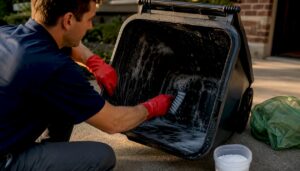
Clean bins mean fewer pests at your property’s perimeter, better curb appeal, and less reliance on indoor pesticides. That is the direct payoff of adding professional trash bin sanitation to your estate maintenance plan, and it is one of the easiest items to assign to a property manager or schedule automatically.
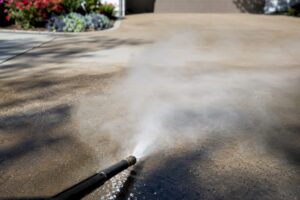
Abcbins has provided professional bin cleaning throughout Chicagoland since 1989, with recurring service plans available monthly, bi-monthly, quarterly, or on-demand to match your estate’s schedule and pest season. Every service uses eco-friendly, high-pressure sanitization that eliminates 99.99% of bacteria and removes the odor compounds that attract rodents and cockroaches. All wastewater is captured on-board in Abcbins’s recycling system, so nothing runs off into your landscaping or drainage. No need to be home. Schedule your first service or set up a recurring plan at abcbins.com.
Useful sources and further reading
These sources support the guidance in this article and are worth bookmarking for deeper reference:
- https://www.epa.gov/safepestcontrol/how-keep-pests-out-your-home
- https://www.epa.gov/safepestcontrol/integrated-pest-management-ipm-principles
- https://www.npmapestworld.org/
- https://extension.umn.edu/yard-and-garden-insects/termites
- https://exploringthenorth.com/luxury-home-pest-prevention/
- https://resident.com/resource-guide/2025/09/10/8-non-toxic-ways-to-prevent-pests-in-luxury-homes
- https://jameshallam.co.uk/pest-prevention-and-protection/
- https://abcbins.com/process