
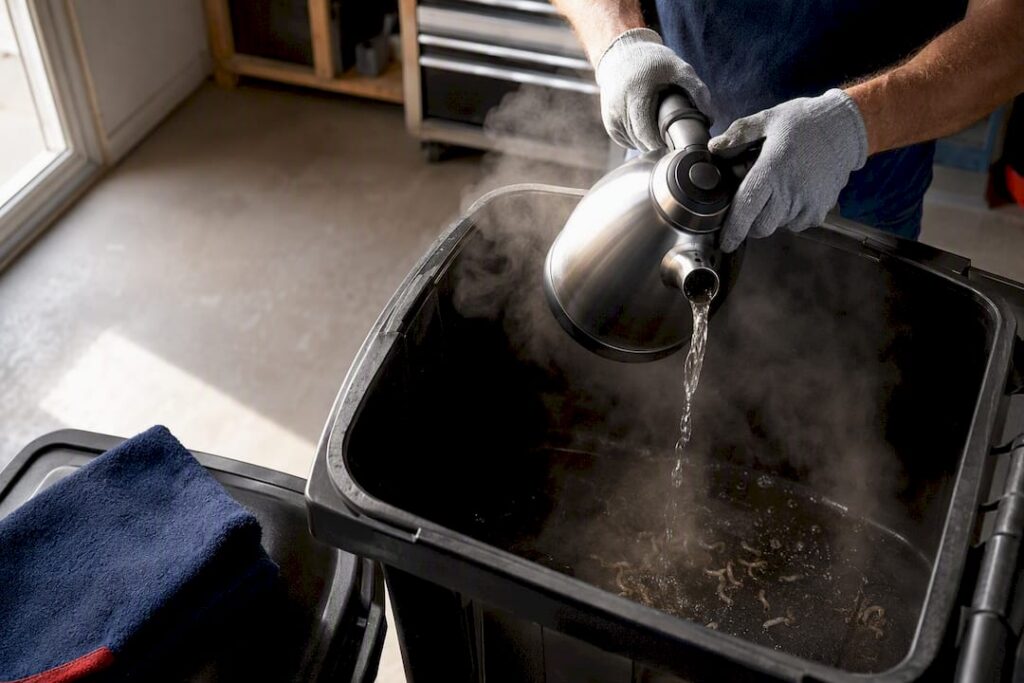
Boiling water kills trash can maggots on contact. Cut open or untie the infested bag, pour boiling water directly over the larvae, then double-bag the waste and haul it to the curb. Protect your hands from splashback, skip boiling water on thin plastic bins that can warp, and plan to deep-clean and dry the can right after, since damp residue is what invites the next batch of flies.
TL;DR:
- Boiling water kills maggots instantly and should be applied directly to infestations while avoiding warping thin plastic bins.
- Eggs hatch within 24 hours, and a full fly cycle can occur in as little as seven days under warm conditions, making timely action critical.
- Regular cleaning, including thorough scrubbing and drying of all bin parts, prevents recurring infestations caused by hidden eggs and pupae.
- Preventative measures like double-bagging organic waste and maintaining a tight lid seal drastically reduce the chances of fly breeding.
- Professional cleaning is recommended when infestations persist beyond two weeks or are hidden in cracks and seals that DIY methods can’t fully reach.
Table of Contents
- What Are Maggots in a Garbage Bin, and Are They Dangerous?
- How Do You Kill Maggots in a Trash Can Fast?
- How Do You Clean and Dry a Bin After Killing the Maggots?
- How Do You Prevent Maggots from Coming Back?
- When Should You Call a Professional Bin Cleaning Service?
- How Do You Clean the Area Around a Trash Can After an Infestation?
- How Should Bin Hygiene Change with the Seasons?
- Why the Real Fix Isn’t the One People Reach For First
- Get a Bin That Never Gets This Bad Again
- Sources
What Are Maggots in a Garbage Bin, and Are They Dangerous?
Those wriggling, pale, grain-of-rice larvae in your bin are almost always house fly or blow fly maggots, hatched from eggs a fly laid on rotting food, meat scraps, or anything wet and organic. They don’t bite and they don’t carry disease themselves, but the adult flies that produced them, and the ones that come to feed on them, can track bacteria from the garbage onto kitchen counters and food prep surfaces. That’s the real health concern, not the maggots crawling in the can.
Speed is what catches most homeowners off guard. Under warm conditions, flies can complete an entire life cycle from egg to adult in as little as 7 days, and eggs typically hatch within 24 hours of being laid. A single female fly can lay many eggs in one batch and repeat laying eggs multiple times over her life.
- Eggs hatch in about a day, sometimes less in hot weather.
- Larvae feed and grow for several days before crawling off to pupate.
- A full generation, egg to flying adult, can wrap up in a week.
That timeline means a bin that looked clean on trash day can host a full-blown infestation before the next pickup.
How Do You Kill Maggots in a Trash Can Fast?
You have four workable options, and they’re not all equal. Rank them by what’s actually in your garage and how bad the infestation is.
- Boiling water. This is the fastest, most reliable kill for maggots already inside the bin or a liner. Heat a full pot or kettle, pour it slowly and directly onto the maggots, and let it sit for a minute before dumping the liquid. Avoid this method on cheap, thin plastic bins in direct summer sun. They can warp or crack under near-boiling water. Wear gloves and stand back from the steam.
- Bleach solution. Mix about a third of a cup of bleach per gallon of water and pour it over the affected area, or use it during the scrub-down that follows. Open the garage door or work outside, keep kids and pets away while it’s wet, and never mix bleach with ammonia-based cleaners.
- Salt or diatomaceous earth. Both dehydrate small maggot populations and work well as a supplemental step inside a liner or along the bin floor, but they’re too slow to be your only weapon on a heavy infestation.
- Freezing. Practical only for a small bag you can seal and toss in a chest freezer overnight, not for a full outdoor can.
Aerosol insecticides labeled for household pests can help as a backup, but they’re a last resort for a trash bin, not a first move. If you use one, follow the label exactly, keep it away from anything food related, and ventilate the area before returning trash to the can.
Pro Tip: Keep a dedicated kettle or old pot near the garage during summer. Having hot water ready in under two minutes is the difference between killing an infestation at ten maggots and fighting it at two hundred.
How Do You Clean and Dry a Bin After Killing the Maggots?
Killing the maggots you can see is only half the job. Eggs, residue, and hidden pupae are what bring the problem back within days.
- Tie off and double-bag the infested liner before it goes anywhere near your car or curb.
- Pour a second round of boiling water into the empty can to loosen dried grime and kill anything that survived round one.
- Scrub the interior with dish detergent or a vinegar and water solution, working into corners and the base where residue collects.
- Rinse thoroughly, then apply a diluted bleach wipe-down if odor or staining persists.
Don’t stop at the interior walls. Larvae often crawl out of the bag before pupating, tucking into the lid seal, wheel wells, and the gap where the can meets the ground.
- Check and scrub the lid gasket and hinge area.
- Flip the can and hose off the base and wheels.
- Wipe down the concrete or pavement directly beneath it.
Drying matters as much as scrubbing. Rinsing a bin and leaving it wet creates exactly the damp, dark environment flies prefer for laying eggs again. Tip the can upside down in direct sun for an hour, or towel-dry the interior and prop the lid open until it’s bone dry.
Pro Tip: Never compost anything pulled from an infested bag. Bag it, seal it, and put it out with regular curbside trash, following your municipality’s disposal rules.
How Do You Prevent Maggots from Coming Back?
A clean bin today doesn’t mean much if the same conditions repeat next week. The checklist below covers what actually denies flies a place to lay eggs.
- Double-bag raw meat, dairy scraps, and anything with juice before it goes in the can, and squeeze out the air before tying it off.
- Use heavy-duty contractor bags instead of thin liners, especially in summer, since a torn bag is an open invitation.
- Line the bin floor with crumpled newspaper or a layer of baking soda to absorb moisture, since standing liquid is what draws flies in the first place.
- Inspect the lid seal regularly. A cracked or warped lid is one of the most common reasons infestations keep returning, since it gives flies an easy way in even when the bin looks closed.
- Keep the can elevated slightly off the ground and out of direct afternoon sun, which slows both odor buildup and larval development.
- Move bins away from doors, windows, and patio seating, and clear pet waste or fallen fruit nearby that gives flies another breeding option.
Pro Tip: Set a recurring phone reminder to check your lid seal every season. It takes fifteen seconds and catches the one issue that causes most repeat infestations.
When Should You Call a Professional Bin Cleaning Service?
DIY works for a one-time infestation caught early. It stops working when the same problem shows up month after month despite doing everything right.
- You’ve scrubbed and dried the bin properly, but maggots or odor return within two to three weeks.
- You can see pupae or larvae tucked into cracks, seams, or the lid hinge that you can’t fully reach with a hose.
- Physical limitations make lifting, scrubbing, or handling boiling water impractical.
- The smell has become a neighborhood problem, not just a your-driveway problem.
Extension research backs up why persistence matters more than the tool: sanitation and removing developmental sites are the actual fix, and chemical treatments only buy time if breeding material is still around. A pressure-washing service reaches the seals, hinges, and base crevices a garden hose can’t, which is exactly where pupae hide between cleanings. Regular professional sanitation breaks that cycle instead of just interrupting it for a week.
Pro Tip: If you’ve had two infestations in one summer, the issue probably isn’t your technique. It’s residue buildup in spots you physically can’t reach with a scrub brush.
How Do You Clean the Area Around a Trash Can After an Infestation?
Maggots that migrate before pupating don’t always stay inside the bin. They crawl onto driveways, patios, and porch steps looking for a dry, sheltered spot, which means the ground around your can needs the same attention as the can itself.
Start by sweeping up any visible debris, dried liquid trails, or stray maggots on the surface before applying any cleaner. This keeps organic material from soaking further into concrete or pavers, where it’s harder to remove later.
For concrete or asphalt, a bleach and water solution, roughly the same third-cup-per-gallon ratio used inside the bin, works well when scrubbed in with a stiff outdoor broom and rinsed thoroughly. On natural stone patios, switch to a vinegar-based cleaner since bleach can discolor certain stone finishes over time.
Pay close attention to expansion joints, gaps between pavers, and the shaded strip directly under the bin. These are the same dark, moist pockets that attract pupating larvae in the first place, and they’re easy to miss with a quick hose-down. A stiff-bristle brush and a few extra minutes here go further than another round of spray cleaner.

If the area sees a lot of foot traffic or the stains have set in, a pressure washer clears embedded residue that scrubbing alone leaves behind, especially on porous surfaces like unsealed concrete. Let everything air dry completely before setting the clean bin back in place. Putting a damp can back on a damp patio just resets the clock.
How Should Bin Hygiene Change with the Seasons?
Summer heat is the obvious danger window, since warm temperatures cut the fly life cycle down to about a week and turn any liquid in your bin into a breeding pool within days. Empty bins more frequently during heat waves, rinse weekly instead of monthly, and never let bags sit past pickup day if temperatures are climbing.
Fall brings a different risk: rotting yard waste and fallen fruit near the bin area attract flies even after cooking activity slows down. Clear leaves, windfall apples, or grass clippings away from the can’s footprint, and keep the lid latched since flies are still active until the first hard frost.
Winter is the easy season for most of the country, but don’t get complacent. A thaw in the middle of a cold stretch can wake up dormant pupae hiding in cracks from the fall. A quick check of the lid seal and base after any warm spell catches problems before spring arrives.
Spring is reset season. As temperatures climb back into fly-breeding range, this is the ideal time for a full deep clean, including the lid gasket, wheels, and the ground beneath the can, before the first real infestation of the year gets a head start.

Why the Real Fix Isn’t the One People Reach For First
Most advice on this topic stops at the kill step, boiling water, bleach, salt, and calls it done. That’s the easy 20% of the problem. The maggots you can see are never the whole infestation. The eggs and pupae tucked into a lid seal or a hairline crack in the base are what bring flies back within two weeks, and no amount of boiling water reaches those spots consistently.
The conventional advice also underplays drying. Homeowners hose out a bin, feel good about it, and unknowingly leave a damp interior that’s arguably more attractive to egg-laying flies than the mess they started with. Moisture, not odor, is the trigger extension researchers point to again and again.
If you take one thing from this article, prioritize the lid seal and the base of the can over the interior walls. That’s where recurring infestations actually start, and it’s the part homeowners check last, if they check it at all. DIY handles a single bad week. A cracked seal or a bin that’s been breeding flies for months needs more than a kettle of hot water.
— Jim
Get a Bin That Never Gets This Bad Again
If you’re tired of scrubbing seals and hauling boiling water to the curb every few weeks, a recurring curbside cleaning plan solves the problem at the source instead of chasing it after the fact. Abcbins runs eco-friendly, high-pressure sanitation that reaches the lid gasket, base, and wheel wells your hose can’t touch, killing 99.99% of the bacteria that draws flies back in the first place, and all the wastewater gets captured onboard instead of running into your yard or storm drain.
You don’t need to be home for it, and you don’t need to lift a finger. Whether you’re dealing with a one-time infestation or a bin that seems to breed flies every summer, a monthly, bi-monthly, or quarterly plan keeps the seals clean before they ever become a problem. If you’re in the area, book a curbside cleaning appointment and get your can handled before the next warm spell brings the flies back.
Sources
- Flies (UC IPM)
- How to Manage A Trash Can Maggot Infestation (TERRO)
- House fly (Virginia Tech Extension)
- Stop garbage juice from turning your trash can into a maggot farm (Tom’s Guide)


