Cleaning a paver patio typically runs $0.25 to $0.75 per square foot, while a combined cleaning-and-sealing job lands between $1.00 and $3.00 per square foot, according to Homewyse’s calculator data. Condition and sealer choice swing that range more than almost anything else. A patio with heavy efflorescence or years of built-up grime costs more to restore than one that just needs a seasonal rinse.
Here’s what that looks like in real dollars:
- 100 sq ft patio: roughly $25–$75 to clean, $100–$300 to clean and seal
- 200 sq ft patio: roughly $50–$150 to clean, $200–$600 to clean and seal
- 400 sq ft patio: roughly $100–$300 to clean, $400–$1,200 to clean and seal
Quick rule of thumb: most professional clean-and-seal projects on small-to-mid patios average around $400 total, per Angi’s cost data, though heavier prep work pushes that number up fast.
Key Takeaways
Patio paver cleaning costs $0.25 to $0.75 per square foot alone, or $1.00 to $3.00 per square foot with sealing included, and preparation quality determines whether that price protects your investment or wastes it.
| Point | Details |
|---|---|
| Know your baseline range | Budget $0.25–$0.75/sq ft for cleaning alone, $1.00–$3.00/sq ft for cleaning plus sealing. |
| Prep drives the real cost | Stain removal, joint re-sanding, and old sealer stripping matter more than the rinse itself. |
| Reseal every 3–5 years | Manufacturers recommend this interval to protect color and joint stability long term. |
| Match sealer to climate | Water-based sealers breathe better in humid areas; solvent-based gives a richer look with higher VOCs. |
| Choose a contractor with a real process | American Bin Cleaning offers eco-friendly pressure washing with on-board wastewater recycling across Chicagoland, plus one-time or recurring service plans. |
Table of Contents
- Patio Paver Cleaning Cost Breakdown by Service Component
- What Drives the Price Up or Down
- Paver Sealing Cost: Water-Based vs Solvent-Based Options
- DIY Paver Cleaning vs Hiring a Pro
- How to Get an Accurate Paver Cleaning Estimate
- How Long the Job Takes and When to Reseal
- Cost Examples by Patio Size and Service Tier
- Why Wastewater Handling Should Be Part of Your Decision
- Sources
Patio Paver Cleaning Cost Breakdown by Service Component
A contractor’s invoice isn’t just “cleaning.” It’s a stack of line items, and understanding each one helps you spot a lowball quote versus a fair one.
Inspection and assessment usually comes free with a quote, but it’s where a good contractor identifies problems a homeowner might miss, like hairline efflorescence or joint erosion that will affect the final price.
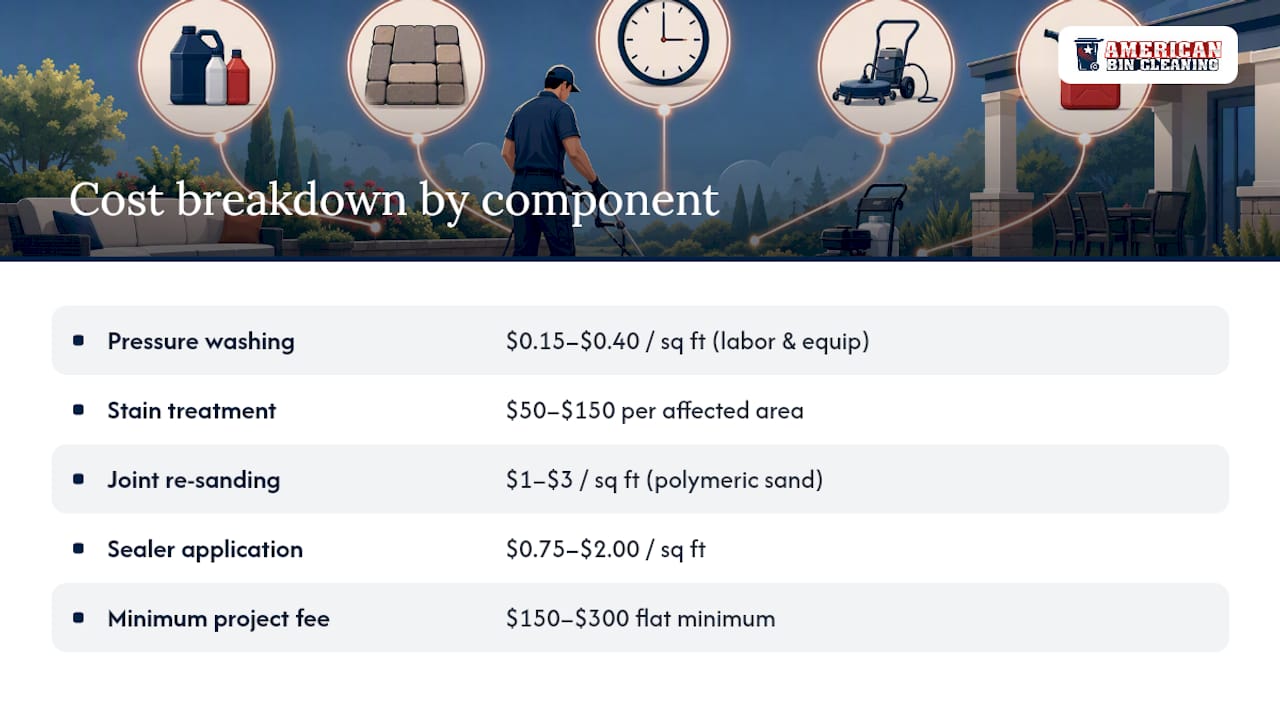
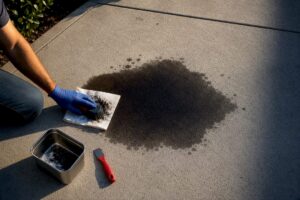
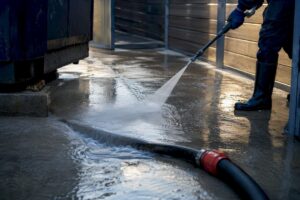
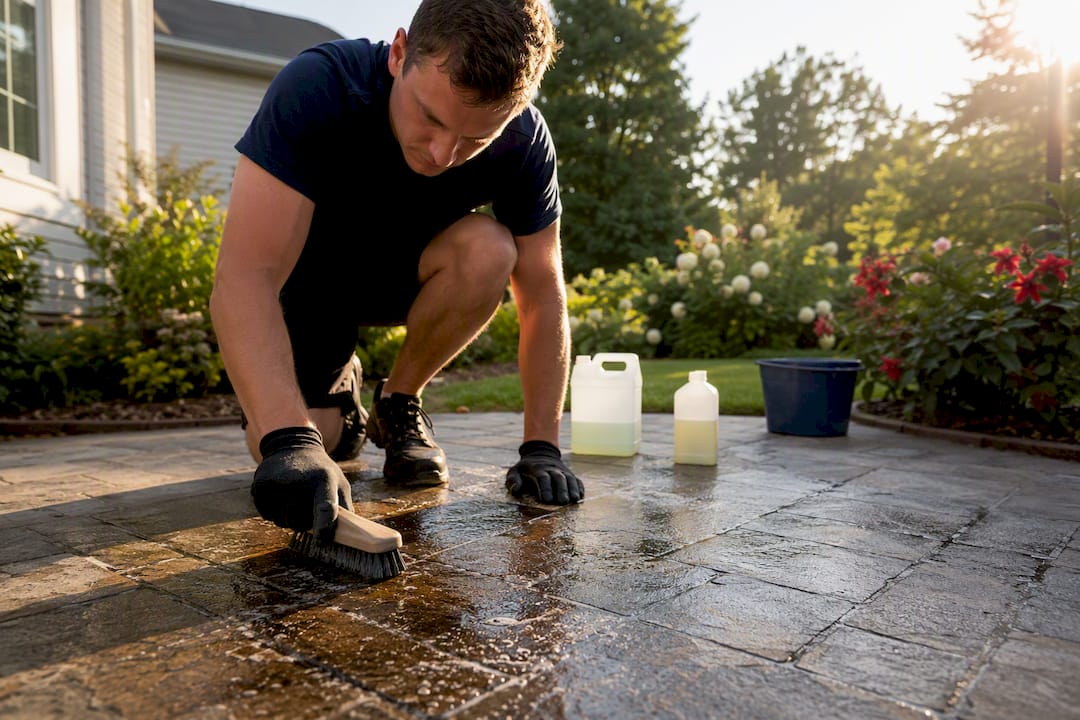
Pressure washing is the core service, typically priced at $0.15–$0.40 per square foot for labor and equipment alone. Stain treatment for oil, rust, or organic growth adds $50–$150 per affected area, since these require pretreatment chemicals and extra dwell time beyond a standard rinse.
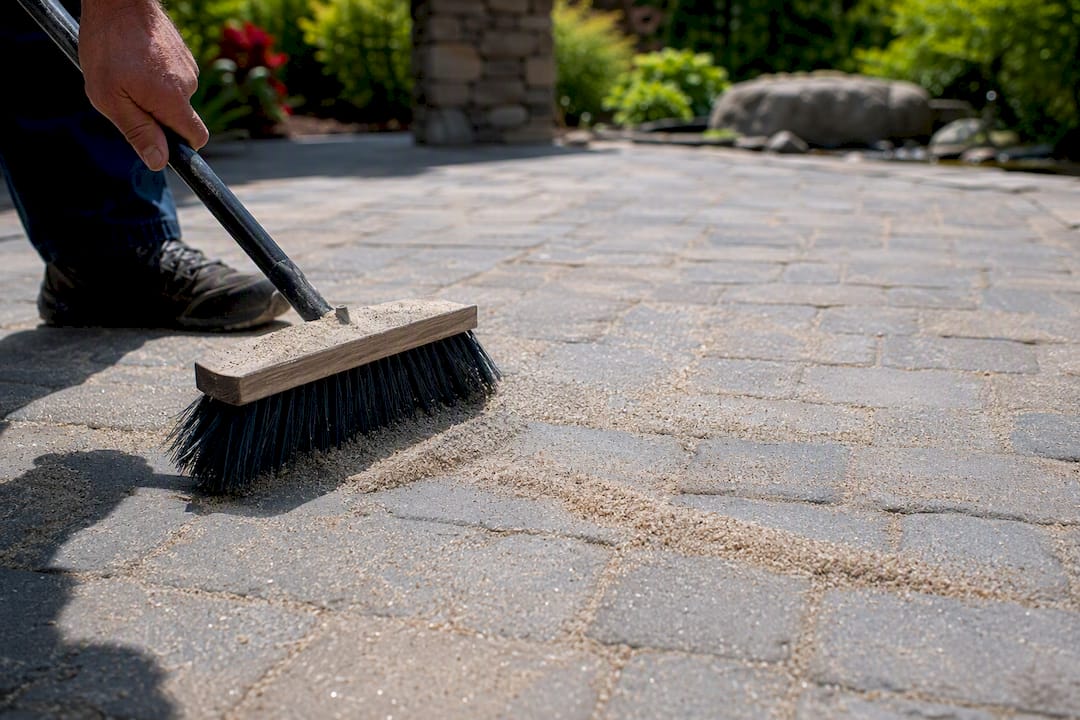
Joint re-sanding with polymeric sand runs about $1–$3 per square foot, and it’s often skipped by budget crews even though manufacturer guidance from Unilock treats it as essential to long-term joint stability. Sealer materials and application add another $0.75–$2.00 per square foot depending on product grade.
Most companies charge a minimum project fee of $150–$300 regardless of square footage, which covers travel, equipment setup, and wastewater management. That last item matters more than most homeowners realize: Deco Products’ contractor pricing framework notes that prep work, not the actual rinsing, is the real cost driver on any paver job. A contractor who can’t tell you how they’re handling runoff and dirty water is usually cutting corners somewhere else too.
What Drives the Price Up or Down
Three variables explain almost every price swing you’ll see between quotes for the same square footage.
- Paver material and finish. Natural stone (travertine, flagstone) is porous and absorbs stains deeper than concrete pavers, which means longer dwell times for cleaning agents and more careful pressure control to avoid surface damage. Expect natural stone jobs to run 15–30% higher than a comparable concrete job.
- Stain type and severity. Oil stains need degreasers and sometimes poultice treatments. Mold and algae respond to standard cleaners fairly quickly. Efflorescence, that chalky white mineral bloom, needs an acidic cleaner and neutralizing rinse, which adds both time and chemical cost.
- Access and geometry. A patio with tight side-yard access, lots of edging, steps, or planters built into the layout takes longer to clean than an open rectangle, and contractors price that extra time into the quote.
Season plays a role too. Spring and early summer are peak booking windows in most of the country, and regional labor data from the Bureau of Labor Statistics helps explain why quotes can vary 10–25% between metro areas, plus another 5–15% surcharge during peak-demand months.
Pro Tip: Book your cleaning and sealing job in late fall or early spring shoulder season if your climate allows it. You’ll often get faster scheduling and slightly better pricing than during peak spring rush.
Paver Sealing Cost: Water-Based vs Solvent-Based Options
Sealing isn’t mandatory, but manufacturers like Belgard and Unilock recommend it for high-traffic zones and stain-prone areas because it helps lock in joint sand and protects color from UV fading.
| Sealer Type | Material Cost | Application Cost | Typical Lifespan |
|---|---|---|---|
| Water-based (breathable) | $30–$50/gallon | $0.75–$2.00/sq ft | 3–4 years |
| Solvent-based (wet-look) | $150–$250 per 5-gallon bucket | $1.00–$2.00/sq ft | 3–5 years |
A standard 5-gallon bucket covers roughly 1,000 square feet and costs $150–$250, according to Angi’s pricing guide. That coverage math matters when you’re comparing DIY material costs against a professional quote that includes labor.
Solvent-based sealers give a richer, wet look but carry higher VOC content that the EPA flags as a ventilation concern during application. Water-based options are lower odor and breathe better, which matters most in humid climates where trapped moisture can cause a sealer to haze or peel.
DIY Paver Cleaning vs Hiring a Pro
DIY material and rental costs for a small patio typically run $75–$200. That covers a pressure washer rental ($40–$80/day), cleaning solution ($20–$40), and sealer if you’re doing that step yourself.
The problem isn’t the sealer, it’s the technique.
- Uneven pressure-washer distance causes surface etching on softer stone
- Sealing over damp pavers traps moisture and causes cloudy haze
- Skipping joint sand replacement lets weeds and ants back in within a season
- Cheap sealer applied too thick peels within a year, requiring a full strip-and-redo
Fixing a botched DIY seal job often costs more than hiring a professional would have in the first place, since stripping old sealer is its own labor-intensive service. If your patio is under 150 square feet, low-traffic, and made of standard concrete pavers in decent shape, DIY cleaning alone is reasonable. Add sealing, natural stone, or heavy staining to the mix, and hiring a pro almost always pencils out cheaper long-term. If you want the fuller math on where DIY costs hide, this breakdown of DIY versus professional cleaning economics walks through the same tradeoffs from another angle.
How to Get an Accurate Paver Cleaning Estimate
- Send photos of the full patio, including close-ups of any stains, cracked joints, or old sealer buildup, so contractors can quote against real conditions instead of guessing.
- Ask what’s included in the base price versus billed as an add-on: joint re-sanding, stain pretreatment, and old sealer stripping should each appear as separate line items.
- Get the square footage confirmed, not estimated, since contractors price per square foot and a rough guess skews the whole quote.
- Ask about their wastewater handling. A contractor who can’t explain where dirty runoff goes is a red flag, not a minor detail.
- Request the sealer brand and type in writing. “We’ll seal it” without a product name usually means the cheapest option available that day.
How Long the Job Takes and When to Reseal
A 200 square foot patio usually takes half a day to clean and a full day when sealing is included, since sealer needs a dry surface and 24 to 48 hours of cure time before foot traffic resumes.
- Plan reseal jobs every 3–5 years depending on sun exposure and traffic, per Unilock’s maintenance guidance
- Do a quick annual check each spring for joint sand loss, weed growth, or dulling sealer sheen
- Schedule shoulder-season bookings (late fall, early spring) when contractors have more open calendar slots
Cost Examples by Patio Size and Service Tier
| Patio Size | Budget (clean only) | Standard (clean + seal) | Premium (full prep + seal) |
|---|---|---|---|
| 100 sq ft | $25–$75 | $100–$300 | $100–$300 |
| 200 sq ft | $50–$150 | $200–$600 | $400–$1,200 |
| 300 sq ft | $50–$150 | $200–$600 | $400–$1,200 |
| 400 sq ft | $100–$300 | $400–$1,200 | $400–$1,200 |
- Budget tier means a spray-and-go rinse with no prep or sealer.
- Standard tier includes cleaning, joint re-sanding, and a mid-grade sealer application.
- Premium tier covers old sealer stripping, stain extraction, and a professional-grade breathable sealer with a workmanship warranty, the kind of full-protocol job that actually extends paver life instead of just refreshing its look.
Why Wastewater Handling Should Be Part of Your Decision
Choosing a contractor isn’t only about price per square foot. It’s also about what happens to the dirty water running off your patio during the job.
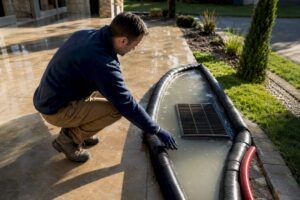
American Bin Cleaning has operated as a family owned business throughout Chicagoland since 1989, and that longevity comes from treating the operational details, not just the sales pitch, seriously. The company’s eco-friendly, high-pressure cleaning process captures wastewater in an on-board recycling system rather than letting runoff hit your lawn, storm drains, or a neighbor’s yard.
“Nothing gets dumped or allowed to run off into the environment,” is the standard American Bin Cleaning holds itself to on every job, whether it’s a curbside bin route or a residential patio.
- Family owned and operated since 1989
- On-board wastewater recycling on every pressure-washing job
- Serves homeowners and commercial property managers across Chicagoland
Homeowners weighing a full-prep sealing job against a quick clean are welcome to request references or examples of comparable local projects before booking.
When Full Prep Is Worth It, and When It Isn’t
If your patio uses natural stone, sits in direct sun most of the day, or handles daily foot traffic near a grill or pool, the full-prep approach is worth the extra cost. Porous materials in high-use zones degrade faster without proper joint sand and a breathable sealer holding things together.
If your patio is concrete, shaded, and used a few times a week, a standard clean without sealing is often enough for another year or two. Either way, budget for a reseal every 3 to 5 years if you want the color and joint stability to hold. Skipping that window is how a $400 job turns into a $1,200 restoration later.
— Jim
Get a Real Estimate for Your Patio
There are other routes to a clean patio: renting equipment yourself, hiring a general handyman, or calling a pop-up power-washing crew that shows up once and disappears. None of those come with a written scope, a wastewater plan, or a company that’s still answering the phone in five years.
American Bin Cleaning brings the same eco-friendly, high-pressure process and on-board wastewater recycling used on curbside bin routes to residential and commercial patios, driveways, and decks throughout Chicagoland. You get one-time service or a recurring plan, and every job includes an upfront look at your specific pavers, staining, and joint condition before pricing anything. Explore the residential pressure washing services page to see what’s included, or check the pressure washing checklist for homeowners before your first call. Ready to see what your patio would cost? Request a quote and get pricing based on your actual square footage and paver condition, not a generic estimate.
Sources
- Cost to Clean Pavers – 2026 Cost Calculator (Customizable)
- How Much Does Paver Cleaning And Sealing Cost in 2026?
- How to Price Paver Sealing Jobs: Contractor framework
- Paver Sealing Pros and Cons for Homeowners | Unilock
- Bls