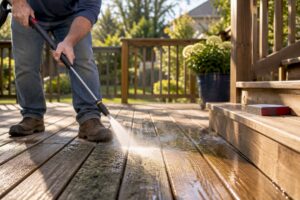

Pressure Wash or Sand Deck? Clean First, Homeowners (Under 1,300 PSI)
Decide whether to pressure wash or sand your deck. Clean first, let dry 3–7 days, stay under 1,300 PSI, and learn when it’s time to hire a pro.

Decide whether to pressure wash or sand your deck. Clean first, let dry 3–7 days, stay under 1,300 PSI, and learn when it’s time to hire a pro.

Find out when an HOA can enforce trash can rules, where to locate your CC&Rs, and simple fixes like screening or reminders to avoid fines.
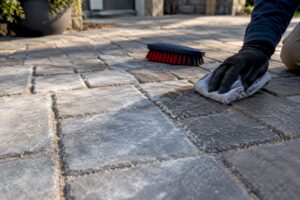
A safety first DIY plan to diagnose polymer versus efflorescence, try dry and light wet methods first, then follow manufacturer dilution, test, and rinse…

Safety-first field guide for property owners: use hot-water extraction and wastewater capture to remove baked-in gum without etching sidewalks or…

Test a single professional bin clean, watch how fast odor returns, then choose recurring if needed. Confirm the provider captures wastewater; $75 one-off…
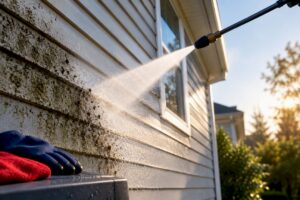
Decide whether hot or cold water is right for your driveway, deck, or dumpster pad. Learn when heat, sanitizing, and wastewater control justify power washing.
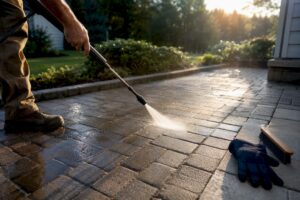
Learn how homeowners can pressure wash pavers safely at 500–1,500 PSI, protect joint sand, and refill joints with polymeric sand so it cures properly.
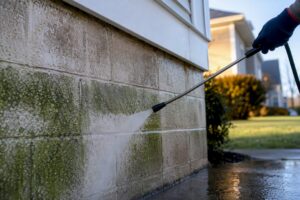
Learn when pressure washing removes mold, why soft-wash chemistry beats high PSI, and the EPA’s 10 square foot rule for homeowner cleanup.
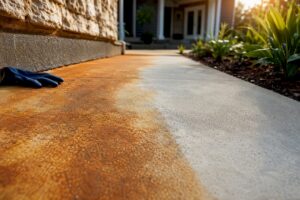
Start gentle: remove light concrete rust with soap or vinegar in 15 to 30 minutes; use oxalic chelators for set in stains and call a pro before muriatic acid.

Match cleanup to stain age: absorb fresh spills, use degreasers for days old stains, apply poultices for set in oil, or hire pro hot water cleaning with…
