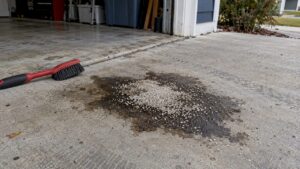
The safest way to clean a flagstone patio is to sweep it, scrub it with warm water and a mild dish detergent or a pH-neutral stone cleaner, and rinse it well. Pressure washing works too, but only on low settings with a wide fan tip held well back from the surface. Flagstone is natural, porous stone with joints that wash out easily, so the wrong cleaner or a narrow, hard jet does damage that no amount of scrubbing reverses. This guide covers what to use, what to avoid, how to handle green growth and dark stains, and whether to seal afterward.
TL;DR
- Start gentle: sweep, wet the stone, scrub with warm water and mild dish soap or a neutral stone cleaner, then flush with plain water.
- Avoid acidic products. They can dull or etch some natural stone.
- If you pressure wash, stay under 1,500 PSI, use a 40-degree or wider nozzle and keep it 12 to 18 inches from the stone.
- Treat algae, moss and black spots with a targeted solution, tested on a hidden spot first, and protect nearby plants.
- Sealing is optional for some stones. If your stone absorbs water, use a penetrating sealer on a dry, mild day.
Table of Contents
- Know your stone before you pick a cleaner
- What you need before you start
- Step-by-step: the gentle clean that works for most patios
- Pressure washing flagstone without wrecking the joints
- Removing algae, moss and dark spots
- Should you seal flagstone after cleaning?
- Protecting flagstone through a Midwest winter
- Common mistakes that damage flagstone
- Perspective
- Let us handle the cleaning
- FAQ
- Sources
Know your stone before you pick a cleaner
Flagstone is not one material. The term covers slabs of sandstone, limestone, bluestone, slate, quartzite and others, and they react differently to chemicals. The Natural Stone Institute says proper care starts with knowing the stone’s geological classification: whether it is calcareous (limestone, for example) or siliceous (sandstone and similar stones). It recommends mild, non-acidic cleaners, because acidic products can dull or etch calcareous stone.
In practice, that gives you a simple rule for any flagstone patio: if you do not know what the stone is, treat it as the more sensitive kind. Skip vinegar, muriatic acid, rust removers with acid and most “concrete etch” or “efflorescence” products. Those are tempting for stubborn patches, but they are the products most likely to leave a pale, rough, permanently dull spot.
A quick way to learn more about what you have:
- Check any paperwork from the installer or quarry. Many list the stone type.
- Look at the surface. Layered, gritty stone is often sandstone. Fine, smooth, gray-blue stone is often bluestone or slate.
- Do a water-drop test on a clean, dry spot. If the water soaks in and darkens the stone within a few minutes, it is porous and will stain more easily.
What you need before you start
Gather the basics so you can work in one pass without improvising with something harsh:
- A stiff-bristle push broom and a hand brush for the joints
- A garden hose with a spray nozzle
- A bucket and warm water
- Mild liquid dish detergent or a pH-neutral stone cleaner
- A deck brush or soft-to-medium scrub brush (not wire)
- Rubber gloves and eye protection
- A tarp or plastic sheeting for plants, siding and furniture legs you want to keep dry
Pick a cool, overcast day if you can. Cleaner dries on warm stone before you finish scrubbing, and it can leave streaks.
Step-by-step: the gentle clean that works for most patios
This is the method most homeowners should start with. It handles ordinary dirt, pollen, tree debris and light grime.
- Clear the patio. Move furniture, planters and grills. Pull weeds from the joints by hand.
- Sweep thoroughly. Dry sweeping removes loose grit, leaves and sand that would otherwise turn into mud and smear across the stone.
- Wet the surface. Hose the whole patio down first. Wet stone absorbs less cleaner, which helps prevent blotchy results.
- Mix your cleaner. The Natural Stone Institute points to a neutral cleaner, or mild liquid dishwashing detergent in warm water, as a safe choice. HGTV likewise suggests sweeping, hosing the patio off, and scrubbing stains with a detergent such as Dawn or Ajax mixed with water.
- Scrub in sections. Work an area of about 4 by 4 feet at a time with a deck brush, following the stone’s texture. Spend extra time on stained stones.
- Rinse completely. Flush with plain water until no suds remain. Soap residue attracts dirt and can leave a film.
- Let it dry. Give it a full day before judging the result. Wet stone always looks cleaner and darker than it will once dry.
If you wondered whether ordinary dish soap is fine on flagstone, the answer is yes: it is the detergent HGTV names for scrubbing stains, followed by a flush with plain water. Use a small amount. More soap does not clean better, it just takes longer to rinse.
Pressure washing flagstone without wrecking the joints
Pressure washing is the fastest way to lift years of grime, and it can be done safely on flagstone. The risk is not the machine, it is the settings. A narrow tip at high pressure can gouge soft stone, raise the surface in a patchy pattern and blast the sand or mortar out of the joints, which lets weeds in and lets stones shift.
Guidance from Dynamic Stone Tools is to keep natural stone below 1,500 PSI, use a 40-degree or wider fan nozzle and hold the nozzle at least 12 to 18 inches from the surface. Conservative settings help avoid etching and structural damage.
Safe settings at a glance
| Setting | Safer choice for flagstone | Avoid |
|---|---|---|
| Pressure | Under 1,500 PSI | Anything higher, especially on soft stone |
| Nozzle | 40-degree or wider fan tip | Zero-degree or narrow pencil jets |
| Distance | 12 to 18 inches or more | Close, lingering passes |
| Motion | Steady, overlapping sweeps | Stopping in one spot |
| Joints | Keep the spray off or angled away | Aiming straight down into the sand |
Technique that protects the stone
- Test first. Try a hidden corner. If the surface roughens or the joint material moves, lower the pressure or back away.
- Pre-wet and pre-treat. Let a mild cleaner do the work on grime so the water only has to rinse it away.
- Sweep in even strokes. Keep the wand moving parallel to the surface, overlapping each pass slightly. Stopping leaves stripes.
- Rinse in one direction. Push the dirty water toward a drain or lawn area, away from the house.
- Check the joints afterward. If sand or polymeric material has washed out, refill and compact it once the patio is dry.
Our own guide to pressure washing pavers at 500 to 1,500 PSI explains the joint-sand problem in more detail, and the same logic applies to flagstone laid on a sand or screenings base.
One more point from the stone-care side: Orijin Stone recommends having pressure washing done by a stone-cleaning professional to avoid permanent damage to the stone and its joint or grout lines. If your patio is valuable, old, mortared in a pattern you love or built from a stone you cannot identify, handing the job to an experienced crew is a sensible way to protect the investment.
Removing algae, moss and dark spots
In the Chicago area, shaded patios stay damp from spring through fall and turn green or black faster than sunny ones. Green slime is algae, fuzzy cushions in the joints are moss, and black freckles are usually mildew or lichen. Each gets a different approach.

Black or dark spots
HGTV notes that dark spots on flagstone can be treated with a dilute bleach solution of 1 part bleach to 10 parts water. It stresses testing first in an inconspicuous spot and protecting nearby plants. Follow these precautions at the point of use:
- Wet the surrounding lawn and plants with plain water and cover delicate ones.
- Wear gloves and eye protection, and work with good airflow.
- Never mix bleach with other cleaners, especially anything containing ammonia or acid.
- Rinse the stone thoroughly with clean water afterward.
If you have pets or children who use the patio, keep them off until it has been rinsed and is dry.
Algae and moss
If you prefer to avoid bleach, an oxygen-based cleaner is an option. HD Chemicals, a UK supplier, describes sodium percarbonate as an effective, biodegradable cleaner for algae and moss on patios. Check the label of any product you buy for use on natural stone, and test a hidden spot, since stone varies.
For moss in joints, scrape or pull the bulk out by hand first, then treat the stain left behind. If moss keeps coming back on concrete and stone surfaces around the home, our piece on eco-friendly moss control on concrete covers the conditions that feed it.
Quick reference by stain
| What you see | Likely cause | Where to start |
|---|---|---|
| Green film | Algae | Mild cleaner scrub, or oxygen-based cleaner after a test |
| Fuzzy green in joints | Moss | Remove by hand, then treat residue |
| Black spots | Mildew or lichen | Diluted bleach solution after a test, plants protected |
| General gray dullness | Dirt, pollen, weathering | Detergent scrub and thorough rinse |
| Oil or grease | Grill spatter, drips | Absorb first, then scrub with dish detergent |
Should you seal flagstone after cleaning?
It depends on the stone and how you use the patio. The Natural Stone Institute says sealing is optional for some stones, and that an impregnating product makes stone more stain-resistant, not stain-proof. So a freshly cleaned patio does not automatically need a sealer.
If your stone is porous and the water-drop test shows it absorbing, Dynamic Stone Tools recommends penetrating impregnating sealers for outdoor stone, applied once the stone has dried completely. It also advises sealing only when the stone surface is between 50°F and 80°F and not in direct, intense sunlight. For most of our service area, that points to late spring or early fall, on a dry, overcast stretch.
A practical sequence:
- Clean the patio and rinse thoroughly.
- Let it dry fully, often a day or two in dry weather.
- Run the water-drop test on a few spots.
- If it absorbs, choose a penetrating (impregnating) sealer made for outdoor natural stone and follow the label.
- Apply thin, even coats and wipe off excess so it does not leave a sheen.
Protecting flagstone through a Midwest winter
Cleaning is only half of upkeep. Northern Illinois and southern Wisconsin winters bring freeze-thaw cycles and de-icing. Dynamic Stone Tools advises against rock salt (sodium chloride) on stone in cold climates because it causes chemical deterioration of the stone and its sealer, and names calcium chloride or sand as safer choices.
If you also deal with exterior cleaning in cold weather, our overview of winter pressure washing explains why ice and runoff are a concern. For timing across the year, the pressure washing schedule by surface gives a sense of how often different surfaces typically need attention.
Common mistakes that damage flagstone
- Using acid. It is the fastest route to etched, dull patches on calcareous stone.
- Going in too close. Many damaged patios come from a narrow tip held a few inches away.
- Skipping the test spot. Stone from one patio can behave very differently from stone on the next street.
- Letting cleaner dry on the stone. Work in sections and keep the surface damp.
- Ignoring the joints. Washed-out sand invites weeds and shifting stones, so check and refill after cleaning.
- Using wire brushes. They leave metal particles that rust and stain.
Perspective
We have cleaned surfaces around Chicagoland homes since 1989, and the pattern is consistent: patios get damaged by impatience far more than by dirt. People want the stone clean in an hour, so they reach for the strongest tool or the harshest bottle.
Our approach is the opposite. We match the method to the surface, keep pressure conservative on natural stone, and treat the joints as part of the patio, not as an afterthought. Our process is designed to be eco-friendly, and our on-board recycling system captures wastewater so it does not run off into your lawn, beds or storm drains.
If your flagstone is a significant part of your home’s look, a professional wash is a straightforward way to get a clean result without guessing at settings, and to have your time back for the weekend.
Bill
Let us handle the cleaning
If you would rather not spend a Saturday on your knees with a brush, our residential pressure washing service covers driveways, homes, decks and other outdoor surfaces across Chicagoland. We are family owned, our process is eco-friendly, and you do not need to be home while we work. Tell us what your patio is made of when you book so the job is planned around the stone.
While we are at your property, many customers also add curbside trash bin cleaning. Our bin cleaning plans are published at $35 per 4 weeks for monthly service, $45 per quarter for quarterly service and $75 for a one-off on-demand cleaning. For a broader look at what exterior cleaning typically includes, see our homeowner’s guide to pressure washing services.
FAQ
What is a good cleaner for flagstone?
A neutral stone cleaner or a mild liquid dish detergent in warm water is the safest everyday choice, according to the Natural Stone Institute. Avoid acidic products, since they can dull or etch some natural stone. Always rinse with plain water afterward.
Can I use Dawn dish soap on my flagstone patio?
Yes. HGTV recommends scrubbing flagstone stains with Dawn or Ajax mixed with water and then flushing the surface with plain water. Use a small amount and rinse thoroughly so no film is left behind.
Should a flagstone patio be sealed?
Not always. Sealing is optional for some stones, and a sealer makes stone more stain-resistant, not stain-proof. If your stone absorbs water in a drop test, a penetrating sealer applied to dry stone between 50°F and 80°F is the usual approach.
What PSI is safe for pressure washing flagstone?
Keep it under 1,500 PSI with a 40-degree or wider nozzle held 12 to 18 inches away, and test a hidden spot first. Keep the spray off the joints so the sand stays in place. If you are unsure about your stone, a professional can set this up for you.
How often should I clean a flagstone patio?
Most patios benefit from a sweep and rinse several times a season, with a deeper wash once a year. Shaded, damp patios may need attention sooner because algae and moss grow faster there.
Sources
- Natural Stone Institute: Learn About Cleaning Products for Natural Stone
- HGTV: How to Clean Patios
- Dynamic Stone Tools: Outdoor Stone Maintenance for Patios, Pools and Kitchens
- Orijin Stone: Care and Maintenance of Your Stone
- HD Chemicals: Cleaning Decking, Patios and Outdoor Furniture Using Sodium Percarbonate